There comes a point in life where you begin to notice that nearly everyone is reaching for something that helps them breathe a little easier. Not because people are weak. Because being human can hurt.
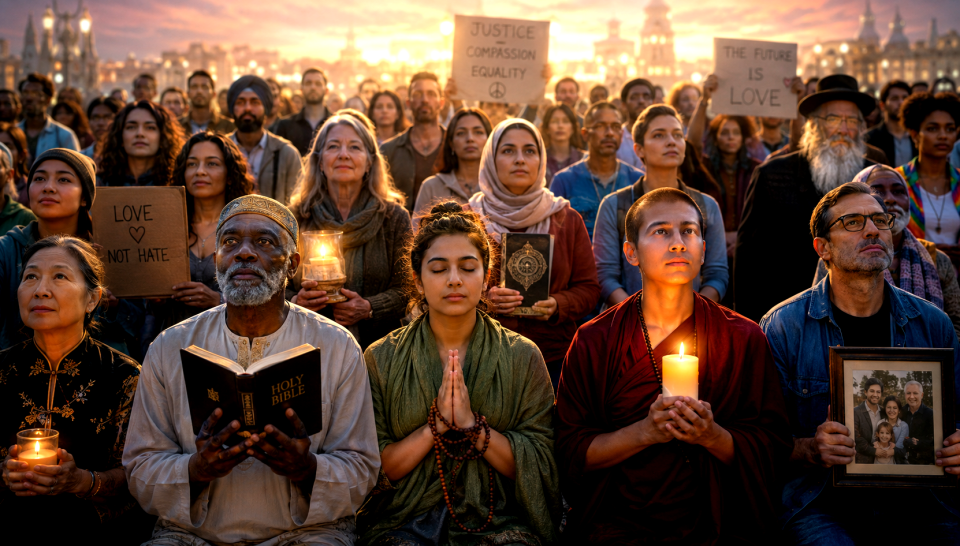
We are all carrying something. Financial pressure. Loneliness. Health struggles. Fear about the future. Grief over the past. Questions without answers. And when the weight becomes too much, the mind naturally searches for relief, meaning, reassurance, and hope.
And honestly, I think we’re all doing the best we can with what we have. <3
Some people find comfort in faith. Some in science. Some in politics. Some in spirituality. Some in self-help. Some in prayer. Some in meditation. Some in activism. Some in conspiracy. Some in entertainment. Some in community. Some in numbing themselves long enough to get through another day.
Everyone is trying to stabilize their emotional world somehow.
And I believe it is important that we learn how to speak about these things with compassion instead of arrogance.
Because once you understand this, you stop seeing people merely as “wrong,” and begin seeing them as human beings trying to manage uncertainty, pain, fear, and hope in the best way they currently know how.
That changes the conversation.
Within Christianity, for example, many believers find tremendous peace in the promise that Jesus will return, restore justice, heal suffering, and establish a better reality beyond the hardships of this present world. For countless people, this belief is not merely theological. It is emotional oxygen. It helps them endure loss, poverty, illness, injustice, and disappointment.
And whether someone interprets scripture literally, symbolically, mystically, historically, or devotionally, the emotional result can still be deeply real: comfort, hope, direction, meaning, forgiveness, and relief.
Others find reassurance in the idea that humanity is evolving into higher consciousness. Some believe hidden technologies or secret knowledge will eventually free humanity. Others place hope in political systems, social reform, economic change, disclosure movements, or the emergence of better leadership.
Every generation seems to create stories about rescue.
“The right leader is coming.”
“The corrupt system is collapsing.”
“The hidden truth is about to be revealed.”
“The world is about to change.”
“Justice is finally coming.”
“Good people will finally be vindicated.”
And sometimes these stories become incredibly elaborate.
People may begin believing that hated public figures have secretly been arrested, replaced, cloned, removed, judged, exposed, or defeated behind the scenes. These narratives often provide emotional satisfaction because they resolve tension psychologically before reality visibly changes.
The story becomes emotional pain relief.
That does not necessarily mean the believer is stupid.
It means they are human.
Human beings are storytellers by nature. We organize reality through narrative. We interpret uncertainty through symbols, explanations, predictions, and emotional frameworks that help us feel safer inside a very unpredictable world.
Even outside religion or conspiracy, this happens constantly.
A person may believe:
“If I just manifest correctly, everything will change.”
“If I buy this program, my suffering will end.”
“If I finally find the right relationship, I’ll feel whole.”
“If I obtain secret knowledge others don’t have, I’ll finally feel secure.”
“If I become spiritually advanced enough, pain will disappear.”
Again, none of this deserves mockery.
Because underneath nearly all belief systems is the same human longing:
“I want relief.”
“I want meaning.”
“I want safety.”
“I want justice.”
“I want love.”
“I want peace.”
“I want this all to make sense.”
That is profoundly human.
And this is why prayer, worship, meditation, visualization, fasting, healing work, philosophy, personal growth, spiritual practice, and even community movements can feel so powerful. They organize emotional energy. They create coherence. They give structure to uncertainty. They help the mind and body move from chaos toward stability.
Sometimes they even create measurable positive change.
Hope itself is powerful.
But there is also something important we must gently acknowledge:
Relief is not always the same thing as truth.
Sometimes a belief comforts us because it is accurate.
Sometimes it comforts us because it is emotionally useful.
And sometimes we simply do not yet know which is which.
That is where humility becomes sacred.
I have found that some of the wisest people are not necessarily the ones who claim absolute certainty. They are the ones who can remain open, thoughtful, compassionate, curious, and grounded while navigating uncertainty.
Especially without becoming hateful toward people who believe differently.
Because once we become emotionally addicted to being “right,” we stop searching for truth and begin defending identity.
That is dangerous in religion.
Dangerous in politics.
Dangerous in spirituality.
Dangerous in science.
Dangerous everywhere.
So how do we reason out what is manageably true for ourselves without becoming cynical, fearful, or judgmental?
I believe it begins with a few simple principles.
First, notice how a belief affects your life.
Does it make you more loving?
More grounded?
More compassionate?
More peaceful?
More responsible?
More honest?
More emotionally stable?
More forgiving?
More connected to reality?
Or does it make you fearful, angry, superior, isolated, paranoid, hateful, or obsessed?
Because the fruit of a belief matters.
Second, allow room for mystery.
Not everything must be forced into immediate certainty. Some things may remain partially unresolved for a while. Mature spirituality and mature thinking can tolerate unanswered questions without collapsing emotionally.
Third, separate emotional comfort from evidence.
It is okay to admit:
“This comforts me.”
“This inspires me.”
“This gives me hope.”
Without necessarily claiming:
“Therefore it must absolutely be factual in every detail.”
That distinction alone can save people from tremendous conflict.
Fourth, remain teachable.
The moment we believe we have nothing left to learn, growth slows dramatically. Life has a way of humbling all of us eventually.
And finally, try to remember that most people are not your enemy.
Most are simply trying to survive emotionally, spiritually, financially, physically, and psychologically in a complicated world.
Some do that through Christianity.
Some through meditation.
Some through politics.
Some through alternative spirituality.
Some through science.
Some through philosophy.
Some through community.
Some through imagination.
Some through hope itself.
And perhaps the deeper question is not merely:
“What do you believe?”
But:
“What kind of human being are your beliefs helping you become?”
Because if a belief system helps someone become more loving, more responsible, more peaceful, more forgiving, more compassionate, and more genuinely helpful to others, there may already be something valuable happening there worth respecting.
Even while we continue searching for deeper truth together.