Let’s say you are a member of a team of scientists whose job is to run tests on mice 24/7 just to see how they react to certain stimuli or are forced to make their way through some series of circumstances or to see how they respond to threats or dangerous situations.
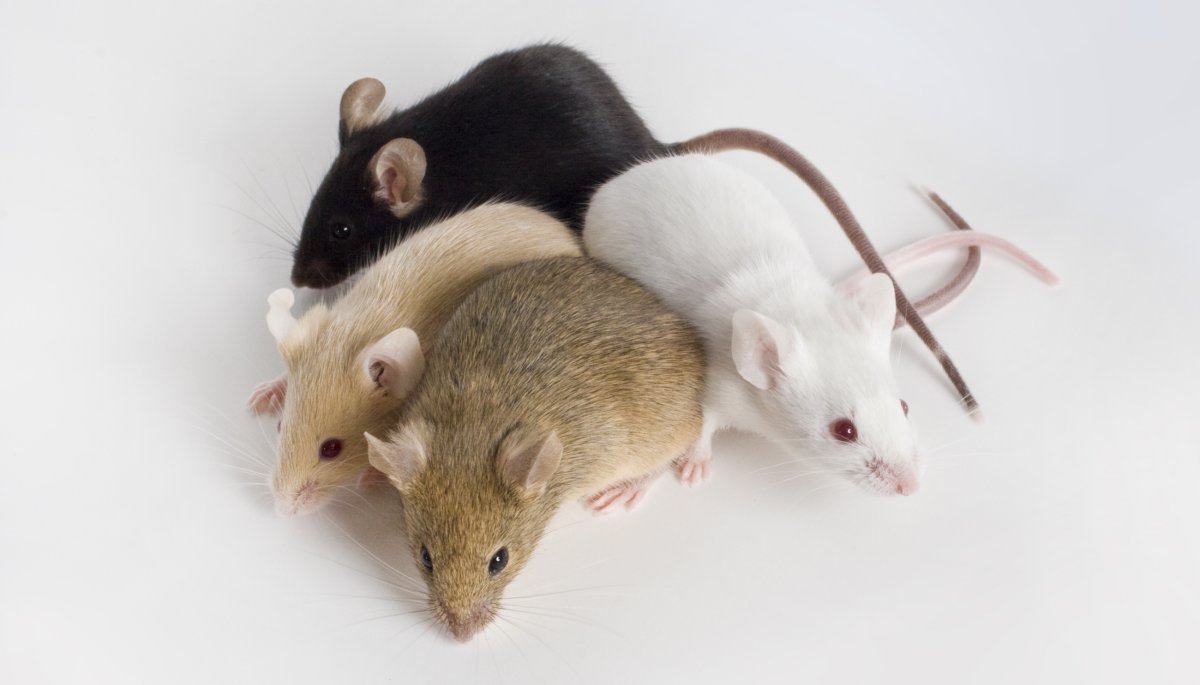
You and your team have a nearly unlimited amount of space in your laboratory, and thanks to the fact that your test subjects multiply, there is never any shortage of them. Their tendency to continue to multiply could exceed the number of tests that could be run on them.
Losing some test subjects along the way is expected and a normal part of the scientific process. Granted, if their populace becomes overwhelming, riskier or disastrous tests could be run to thin out their tendency to overpopulate every so often.
With the exception of the first pair of mice that came to the laboratory while it was being built, all the mice have been born into this laboratory environment. To them, this is their home, and all the lights, testing equipment, and observation gear are their normal environment, and they are quite content to accept their lives as they are.
They know that their basic needs will be met, with few interruptions, for the most part, but they will have to endure some challenges.
You and your colleagues are the scientists charged with devising an endless supply of these challenges to see how they react and how you can manipulate them en solo or en masse.
Long ago, even with the first pair of mice, the founders of this project determined that fear was the most powerful weapon that could be wielded in an effort to control the behavior of the mice.
Every now and then, in the course of an experiment on a group of mice (sometimes a very large group), one of the mice will stop amidst the flow of energy. It will stop in its tracks and look up as if to stare one of the scientists in the eyes.
In that moment, this mouse experienced a moment of clarity, essentially triggered by something in the DNA bestowed by the original mice. That first pair of mice knew what it was like to be free, to wander and frolic in wide-open spaces, to not have anyone or anything experiment on them. And this cellular memory was passed onto every mouse they spawned.
Every now and then, a mouse (though not all mice) experiences that moment when they break character and start to see things clearly.
It’s not a problem for the scientist. Simply rapping on the glass or frightening the mouse in some way quickly returns the mouse to its “natural state” of being a faithful test subject.
Occasionally, a mouse will often have these moments of clarity, and they are quickly identified, marked, and tracked. If their resistance to participate in the experiments continues or becomes problematic, they are set aside and become test subjects of experiments designed to break their inclination to see things as they really are or other types of experiments that could have the most dire results.
The team has agreed that one subject (or group of subjects) must not compromise the entire project.
Unless, of course, the team has selected a mouse to be a part of an experiment to see what effect it might have on other mice in its social circle. This is an entirely different type of experiment, and it may be one of the experiments you, as a member of the scientific team, might enjoy the most.
I think you, as the scientist, have the most fantastic job in this scenario. You get to control everything, which to the mice, all seem very natural and normal, supernatural, or as acts of God. To be the lab mice? Not so much, but it is what it is.
As the scientist, you can expose certain mice to information but not others to see what happens. You can program or expose one mouse to all kinds of drama and trauma, then throw it in with another group of mice to see what happens. You can put chemicals in their food or water and chart the results. You can expose them to “natural disasters” and track the data. The opportunities are endless.
And every once in a while, if you’re feeling anxious, you can run your own experiment, just to see what happens in some crazy scenario that maybe no one else would have even thought of trying, just to satisfy your own sense of morbid curiosity.
Not to worry; after all, they are only mice.
Even if the mice think they are more than test subjects in a laboratory, limited to this lab environment, the fact remains: They are.
Try as they might, it is highly unlikely that any one of them could escape the boundaries of the laboratory. Though a few have, over the years, escaped the lab to live the life which they knew to be possible, a life of freedom enjoyed by their ancestors.
Every time one escapes, new procedures and protections are put in place to make sure it never happens again.
You can be sure, right now, one of them is thinking about what life would be like outside the lab.