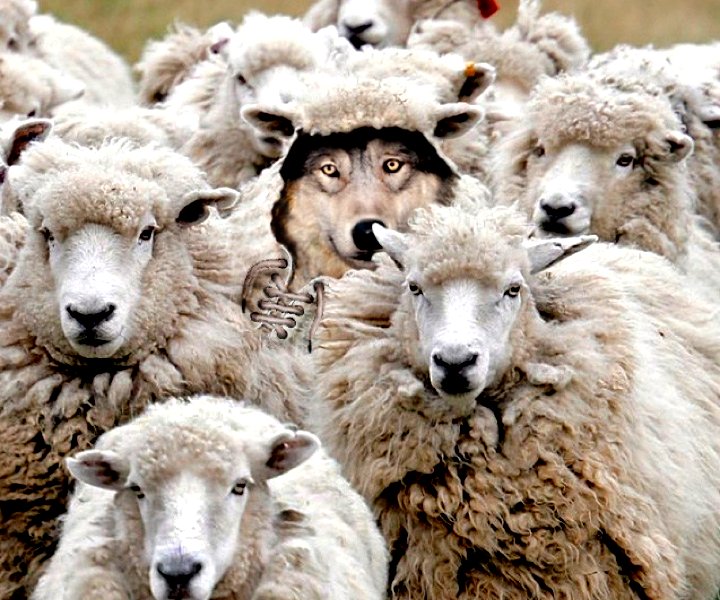
In life, you may encounter people who are not as they represent themselves, and when they are stealthy in their approach to control or manipulate others, we refer to such a person as a wolf in sheep’s clothing.
The Origins of the Phrase
The term has biblical roots, with Jesus warning, “Beware of false prophets, which come to you in sheep’s clothing, but inwardly they are ravening wolves” (Matthew 7:15). Similarly, Aesop’s fable tells of a wolf disguising itself with a sheep’s pelt to move freely among the flock, preying on the herd unnoticed. Eventually, the wolf is discovered by the shepherd and pays the ultimate price for its deception, suggesting that no matter how clever or stealthy the wolf may be, the truth will inevitably come to light.
The Modern-Day Wolf
Today’s wolves in sheep’s clothing are just as cunning, seamlessly integrating into social circles and expertly masking their true intentions. Their primary skill lies in deception—telling people what they want to hear and adapting to any environment to gain trust and manipulate others for their own gain, be it profit, entertainment, or pleasure.
Recognizing a Wolf in Sheep’s Clothing
Just like Aesop’s shepherd, you might sense something isn’t quite right in your social circle. A gut feeling may prompt you to scan your surroundings for inconsistencies or red flags. By observing closely, you may spot certain telltale signs that expose the wolf among the flock.
1. Their Stories Don’t Add Up
Wolves are adept storytellers. They craft convincing narratives based on information they’ve gathered from others or the internet, making their tales sound authentic.
However, their web of lies often unravels over time. Inconsistencies may emerge as they forget details or contradict themselves. When questioned, they quickly spin new stories to cover their tracks with smooth and convincing rationalizations.
2. They’re Always on the Move
A wolf in sheep’s clothing rarely stands still. They keep a steady pace, always moving to avoid detection. Their mission requires constant activity, whether it’s forming new alliances or shoring up their image of trustworthiness.
These individuals excel at developing bonds quickly, especially with those who are trusting or eager to see the best in people. They charm their way into hearts with silver-tongued persuasion, building a network of allies to protect their hidden agenda.
3. They Play on Your Emotions
Wolves know how to manipulate emotions to their advantage. Initially, they’ll make everything about you, creating an exhilarating connection designed to release bonding hormones and make you feel deeply attached.
Once they have you hooked, their focus shifts. Suddenly, everything becomes about them. You may feel obligated to cater to their needs out of guilt or a sense of loyalty. Be wary of this tactic—it’s a calculated strategy to maintain control.
4. They Have a Short Attention Span
Wolves operate with a clear agenda, and they’re not interested in detours. Veering off course makes them anxious, and they’ll work quickly to steer things back to their desired path.
They’re also easily bored, constantly seeking new distractions or challenges to keep themselves entertained. This restlessness often leads to juggling multiple tasks at once, with little regard for completion or follow-through. Their lifestyle is fast-paced and superficial, leaving no time for depth or genuine enjoyment.
5. Their Mind Breaks Character
Even the most skilled wolves can slip up. While their game is tight on the surface, their mind may wander in moments that require focus or authenticity.
In group settings like meetings or discussions, their detachment may become apparent through subtle cues—shifting body language, distracted eye movements, or a fleeting expression that reveals their inner thoughts. In those moments, they’ve checked out, mentally plotting their next move or fantasizing about a favorable outcome.
Protecting Yourself from the Wolf
Being aware of these signs is the first step to protecting yourself from manipulation. Trust your instincts—if something feels off, it probably is. Here’s how you can safeguard your energy and relationships:
-
- Stay Observant: Pay attention to inconsistencies in their stories or behavior.
- Set Boundaries: Limit how much personal information you share and how much access they have to your life.
- Avoid Emotional Manipulation: Recognize when your emotions are being exploited and take a step back to assess the situation objectively.
- Maintain a Support Network: Surround yourself with trustworthy friends and allies who can help you spot red flags.
The Wolf’s Downfall
Like Aesop’s fable, the wolf in sheep’s clothing will eventually reveal their true nature. Whether through a slip of the tongue, a moment of inattention, or the inability to maintain their façade, the truth has a way of coming to light.
While you can’t always prevent encountering a wolf, you can protect yourself by staying vigilant and trusting your intuition. And remember, as clever as they may seem, a wolf can only hide for so long before their disguise falls apart.
In the end, the shepherd always uncovers the truth.