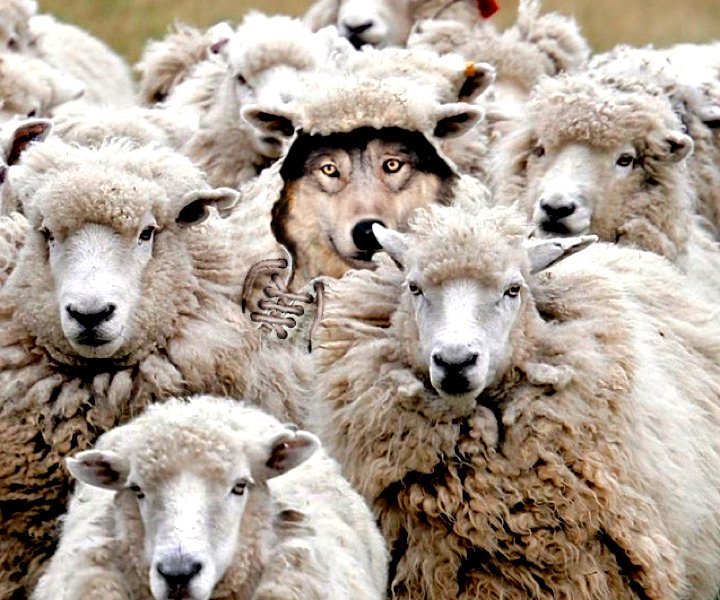
There comes a time in every soul’s journey when we must awaken to a sobering truth: not everyone who appears kind, helpful, or wise is operating from a place of love. Some are not who they claim to be. Some wear masks so convincing that even the most discerning hearts are caught off guard.

These are the wolves in sheep’s clothing—chameleons of deception who wear the costume of trust, kindness, and authority, only to manipulate, exploit, and drain others of energy, money, time, innocence, or hope.
The Hidden Predator Among Us
A wolf in sheep’s clothing can look like a friend, a lover, a mentor, a coworker, a healer, or even a spiritual leader. They may speak your language, mirror your dreams, and validate your pain. But beneath the surface lies a self-serving agenda—control, power, profit, or emotional vampirism.
They infiltrate your life not by force, but by subtle charm. They do not break down doors—they knock gently, smile warmly, and wait for you to invite them in.
And once inside, the game begins.
How They Show Up in Life
-
- As the Too-Good-to-Be-True Lover
They say everything you want to hear. They “love-bomb” you, showering you with affection and praise early on. But over time, the warmth turns cold. The support becomes control. Their love becomes a weapon. And you’re left wondering where that magical person disappeared to.
“He made me feel like I was the most beautiful woman in the world. But later, I was afraid to speak, to breathe wrong. I lost myself trying to keep his love.”
-
- As the Expert or Authority Figure
Whether it’s a health coach, a financial advisor, or a spiritual teacher, wolves sometimes wear lab coats or robes. They appear knowledgeable, even enlightened. But their goal isn’t your growth—it’s your obedience, dependence, or investment in their system.
“She convinced me to stop seeing my doctor and only follow her ‘natural healing protocol’—which cost thousands. I didn’t just lose money—I lost my health.”
-
- As the Fake Friend
These wolves love the role of confidant, but they’re not truly on your side. They feed off your drama, your secrets, and your vulnerabilities. They sabotage behind the scenes, all while acting concerned.
“I confided in her about my struggles, and later found out she told everyone… then said she was ‘just trying to get me help.’”
-
- As the Savior or Martyr
They offer to rescue you, help you, fix you—sometimes even financially or emotionally. But later, they hold their kindness over your head, demand loyalty, or expect you to become their emotional caretaker.
“He helped me when I was down, but then made me feel guilty every time I tried to leave or set boundaries.”

The Damages They Inflict
The true cost of encountering a wolf in sheep’s clothing isn’t just measured in money or time—it’s often counted in trauma, lost trust, and internal confusion.
-
- Emotional Damage: Anxiety, low self-esteem, PTSD, people-pleasing
- Financial Exploitation: Debt, scam investments, toxic dependency
- Social Isolation: Wolves often separate you from your support system
- Spiritual Confusion: Loss of faith in people, institutions, or intuition
- Energetic Drain: You feel perpetually tired, uncertain, or unsafe
But here’s the good news—this is not where your story ends.

How to Detect a Wolf—Early and Often
Your soul is equipped with a built-in GPS: intuition. And the more you awaken, the more precise that guidance becomes.
1. Trust Your Gut
Even when someone says all the right things, energy never lies. If something feels off, it probably is. Don’t explain away your own warning signs.
2. Look for Inconsistencies
Wolves often have trouble keeping their stories straight. Their version of events changes depending on who they’re talking to. Ask yourself: Do their actions match their words consistently?
3. Notice the Rush
Beware of anyone who tries to fast-track intimacy, commitment, or investment. True alignment unfolds naturally. Wolves often create false urgency to trap you.
4. Watch How They Handle “No”
Healthy people respect boundaries. Wolves react with guilt trips, anger, or manipulation when you say “no.” Their mask often slips when they feel rejected or challenged.
5. Test Before You Trust
Especially with mentors, healers, or helpers—test their advice. Do your own research. Check references. Ask tough questions. Wolves hate scrutiny.
What To Do About It
If you suspect someone is not who they seem, don’t panic—but do protect your energy.
-
- Pause: Don’t be rushed into anything. Create time and space for clarity.
- Pray or Meditate: Center yourself in divine guidance. Ask for discernment.
- Limit Access: Reduce how much of your heart, home, or wallet you offer.
- Call in Support: Talk to someone you trust who isn’t under the wolf’s spell.
- Exit Gracefully: You don’t owe an explanation to someone who came to deceive.
“Sometimes God removes people from your life for your protection. Don’t run after them.”

From Victim to Victor
You may feel embarrassed or even devastated if you’ve fallen for a wolf in the past. But remember: only the open-hearted, trusting, and loving are targeted by wolves. That is not a weakness—it’s your divine gift.
Your heart is not broken—it is being refined.
Every encounter teaches you something. Every betrayal births greater clarity. And now, you are stronger, wiser, and more aligned with your true path.
Let this be your awakening, not your undoing.
The Light Always Wins
In a world full of masks, be the real thing. Keep showing up with integrity, authenticity, and love. Not every person is a wolf. There are many fellow light-bearers walking this path beside you.
Stay open—but stay aware.
And when you spot a wolf, smile, bless them from afar, and walk away. Your destiny is too great to be delayed by counterfeit connections.
“You are not here to be used—you are here to shine.”
Keep shining.
— David M. Masters, author of Trust Betrayal, How to Deal with a Psychopath & Psychopath Victims’ Toolkit