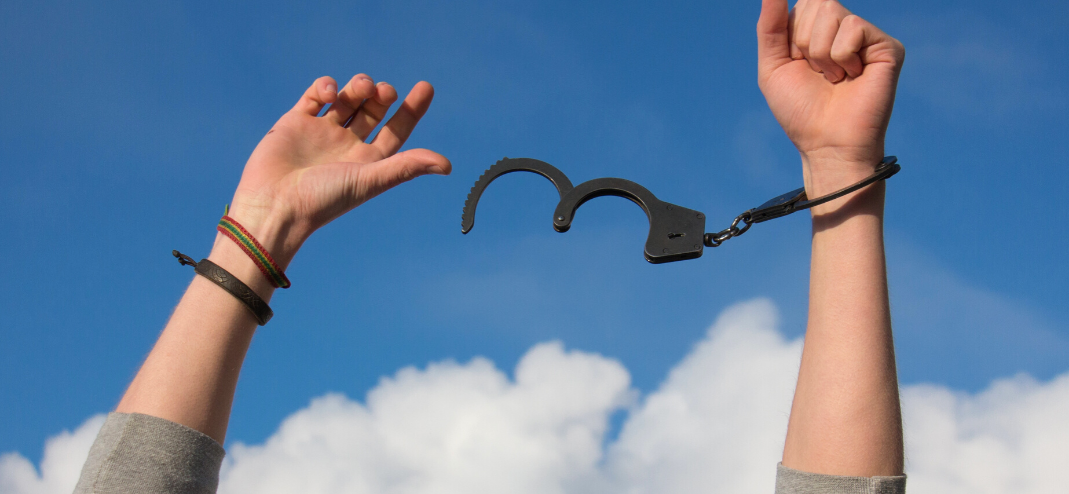
Thank God, Trauma Victims and Addicts Found a Way to Survive

It’s easy to judge from the outside, to say they should just quit, just stop, just be normal. But if you’ve never felt the weight of trauma so heavy that you can barely breathe, if you’ve never had your nervous system rewired by abuse to expect pain instead of peace, then you have no idea. You don’t know what it’s like to live in a world that feels unsafe, unkind, and utterly unbearable without something—anything—to take the edge off. And thank God, they found something.

    • Try walking a mile in the shoes of an addict.
    • You don’t know until you know.

Addiction isn’t just about the substance or the behavior—it’s about survival from those unspoken things you could hardly imagine. It’s about finding a way to function in a world that never gave them the tools to cope in the first place. It’s about numbing out just enough to make it through another day. And while society shames them for it, locks them up, or shuns them, the truth is that addiction has kept many people alive who might not otherwise be here.

Is it healthy? No. Is it sustainable? Probably not. But without it, many would have already opted out of life altogether.

What Can You Do?

Love them.

Not the kind of love that says, “I love you, but…” Not the kind of love that is secretly hoping to fix them or make them more like you. No, what they need is unconditional love—the kind that doesn’t demand change, the kind that meets them where they are without judgment or expectation.

And that kind of love? It’s otherworldly.

You can’t force them to be like you, no matter how desperately you want to. You can’t reason them out of addiction, preach them into sobriety, or incarcerate them into freedom. All of that pressure, all of that expectation—it only pushes them further into despair, further into seeking relief in the one thing that has never abandoned them.

What Unconditional Love Looks Like for Someone Struggling with Addiction

    • See them as a person, not a problem. They are not “an addict.” They are a human being who is trying to survive in the only way they know how.
    • Don’t judge their coping mechanism. You don’t have to agree with their choices, but understand that their addiction is serving a purpose in their life, even if that purpose is only to numb deep pain.
    • Listen without fixing. They don’t need another lecture. They need to be heard.
    • Let go of your expectations. Loving them doesn’t mean expecting them to change, and it doesn’t mean waiting for them to get better. It means accepting them as they are.
    • Be a safe place. If they can trust you to be there for them without shame or pressure, they may open up when they’re ready.
    • Acknowledge their pain. Addiction is not the problem—it’s a response to pain. Instead of focusing on the addiction, acknowledge the hurt that led them there.
    • Don’t take their actions personally. If they relapse, lie, or push you away, remember—it’s not about you. Addiction rewires the brain, and their choices may not always make sense.
    • Be patient. Change, if it happens, happens on their timeline—not yours.
    • Don’t enable, but don’t abandon. There’s a balance between not feeding their addiction and not leaving them alone in their suffering.
    • Offer hope, but don’t force it. Plant small seeds of possibility, but don’t expect them to take root overnight.

Understanding Relapse

Even if they want to change, even if they start to imagine a life without addiction, relapse is part of the process for many.

    • Don’t be disappointed in them.
    • Don’t tell them they’ve failed.
    • Don’t give up on them.

Every step forward, even if followed by two steps back, is still part of their journey. And it is their journey. Not yours.

Will You Lose Them?

Maybe.

Many of us have. There’s nothing more heartbreaking than watching someone you love slip away, either slowly through addiction or suddenly through an overdose, suicide, or some reckless act of desperation. But their path is their own.

And in the end, all you can do is love them through it, bless them along their journey, and know that you did everything in your power to make them feel seen and accepted.

Because once they’re gone, it’s too late to love them unconditionally.

So love them now.

    • Love them without conditions.
    • Love them without expectation.

And be grateful that, for today, they’re still here.

Because some days, that’s enough.

 

Is Addiction Blocking You?

The people I work with are highly motivated to achieve particular goals and to do good work in the world. People often refer to me as a motivator, but to tell the truth, I am not. The people who come to me already have all the motivation they need to accomplish what they desire.

What I do see them struggle with, in their search for accomplishment, are certain blockages that keep them from making forward progress. One such block I see preventing them from achieving the success they seek is addiction.

Addiction is a curious blocker of all the good things this life is trying to bring to us. I have some experience with treating addiction. I started my ministry back in the day with a Christian addiction treatment program, and what I learned is that God Source Energy is a powerful treatment for addiction.

Spirituality to Overcome Addiction

There are many methods to approach integrating God into a treatment program, but in my experience, those who overcame their addictions for life did so by incorporating the name of “Jesus” into their regular spiritual routines. A noticeable 30% increase in success with only a 3% recidivism rate.

I am not suggesting that any treatment for addiction is better than any other, but that freedom from addiction is necessary for any sustainable high level of success.

Addiction Barrier

Why? Because addiction creates a barrier between you, solely in your flesh, and higher energies which you would have access to for assistance in your project which is hugely beneficial if you are trying to make the leap from where you are to where you want to be.

I am not talking about anything religious. Access to these higher energies is available to anyone who wants them. All that is required is that you desire access to them. You need to be open and not actively blocking access to them.

Addictions have an energetic vibration that creates something like a force field that actually inhibits access to these higher energies. This energetic field can be pierced for access even when one is actively participating within the energetic field of addiction.

Is addiction blocking you?

If you are having trouble making it to the next level in your journey, you could be facing blockages that are preventing you from energetic assistance from beyond your physical 3D experience. Yes. You could do great things in your flesh, but your efforts would be multiplied exponentially if you could access and energize your project(s) with energy from above. Addiction is a common blocker of these powerful celestial support systems.

These are methods that we used in Christian rehab and outreach. We discovered that prayer, intense concentration, and meditative desire to connect to your higher source could pierce the energetic barrier, and again, reciting the name of Jesus in one’s attempt to break through the barrier did achieve 30% quicker access and more sustained connection to higher source energy. No particular belief in Jesus was necessary or required.

When we think about addictions, alcohol and illegal drugs come to mind, but other addictions also come with this energetic vibration that blocks access to your higher power, including addictions to prescription drugs, gambling, eating disorders, sex, and other obsessive behaviors.

Three Most Powerful Tools for Beating Addiction

1. Prayer
2. Visualization
3. Modeling

The most powerful tools that we used in breaking through the deluge of addiction are the power of prayer and fervent visualization of being on the other side, free of the addiction. Visualizing and modeling. Modeling is the taking on the personality and life of the person you imagine yourself to be free from the addiction. Like putting on a suit of clothes and pretending to be that person.

After pretending for a while, you begin to feel more comfortable and confident with the new you, free from addiction, and with access to your higher energies, you can sustain this new you for the rest of your life.

These are still the powerful tools that I use today in my practice. Keeping in mind that the name of Jesus will yield a 30% increase in efficacy and energetic infusion throughout the process, if the client is so inclined.

Without the addiction barrier, you can achieve a healthy balance in life, as addiction is the enemy of balance.

Freedom from addiction is a powerful way to maximize your efforts to live a better life, your best life, and make the world a better place.


Alcoholics Drug Addicts and Freedom from Addiction

I owe a great deal of the person who I have become to the work I did early in my ministry. I worked in a religious drug and alcohol recovery rate that boasted a verifiable less than 3 percent recidivism rate. Compared to any other method of treatment, this was nothing less than miraculous.

I think it still goes on today with likely similar results, though I think that people with addictions are less likely to consider a religious solution to their vices these days unless it was the only option to get out of some legal entanglement and you can apprehend some conflict of interest in that scenario.

What about Alcoholics Anonymous (AA) and all its variations? Well, for one, it does (and they do) rely heavily on leaning on the poser of God to deal with and hopefully overcome the strong compulsion that these kinds of addictions can present the victim with. There is a strong community of support of others who either have overcome or continue to struggle with the attending addiction.

While AA and its shirt-tailed cousins, are very popular and can be hugely effective over time, recidivism is still high, like 40 to 60% which is the average range of any drug or alcohol treatment modality. I think that says, with almost any type of intervention, half of the addiction victims will emerge from the process victorious. And interestingly, this same group of people will love highly resilient lives with the ability to overcome nearly any challenge they may face in life.

This suggests that half of the people who succumb to addictive persuasions do have the tendency to be distracted and lured into the addictive behavior, but also have the ability to tarry through the healing process with immense power and wisdom on the other side of the experience. They may fall victim to another vice, completely different from the one(s) they have previously overcome, which leads to a cycle. A cycle of passionate exploration with a potential of loss of self while on a particular exploration.

Since those early 3 percent days, I have always been intrigued by that religious method, which I would be resistant to using in the present-day because it would be considered too cultish in its structured approach, yet there were important takeaways that I do embrace and continue to have in my therapeutic toolkit today.

5 Steps to Freedom from Addiction

#1: Access Higher Power

Never underestimate the power of God,

or any energetic deity or power outside of oneself to enable anyone to miraculously change.

#2: You Are Unique

Avoid the curse of “labelizng”

or identifying with the vice, as focusing on the past will unavoidably draw you back under its spell

#3: You Are Victorious

Never be the victim

Victims have no true power over what may have happened in the past

#4: You Are Responsible

Take full responsibility

This sounds crazy, but there are many methods to get a person from here to there

#5: You Are a New Person

Transform through metamorphosis

Become someone completely new and start a new life that does not acknowledge or include the vice

I know that last one, becoming a “new person,” has you wriggling in your boots. It doesn’t sound right and definitely exposes its religious roots. You might think no one (or very few) would be interested in having a religious transformative experience to release one’s addiction(s).

I don’t (or very rarely) use the religious experience to invoke this transformative process anymore. I am much more likely to use the process of “modeling” borrowed from Hypnotherapy and Neurolinguistic Programming (NLP), encouraging the client to model his or her new life after someone they admire or could aspire to be.

Top Inspirational Celebrities

I have seen many people emerge from this process leading new lives inspired by celebrities, like

Lebron James, Keanu Reeves, Tom Hanks, George Clooney, Hugh Jackman, Dave Chappelle

Taylor Swift, Lady Gaga, Ellen Degeneres, Sarah Jessica Parker, Tyra Banks, Oprah Winfrey

I am not a person who follows celebrities. I know some celebrities but none of these, and I am very impressed at how these celebrities in particular do seem to inspire people to transform their lives based on the impressions they have left on the lives of my clients, to whom they are perfect strangers. I cannot testify to how these celebs actually live their lives, but I can say that I have seen the effects they have had on my clients to live new lives inspired by them. In that respect, they do appear to be incredible people.

Also, to be noted, is that I have come to a place where I am very tolerant and non-judgmental, something I borrowed from AA and Eastern religion, as well as not being deeply connected to any desired outcome which I borrowed from NLP and Reiki, because, after all is said and done, aren’t we all just doing the best we can with what we have? (I know I am. Why wouldn’t anyone else also be doing the same?)

I use these five steps currently in my practice, and not everyone will embrace them but most of my clients are open to them because they trust me and my (sometimes) unconventional ways of achieving powerful results that lead to metamorphosis in the lives of my clients.

While this short list of 5 steps to overcoming any addiction seems simplistic, the depth of each of these topics run very deep and the interpretation and deployment of them must be adjusted to each person and their addiction differently, based on the client’s life experience, so there is no rigidity in the process.

Being a more fluid process, which is not easily whittled down into a back and white step-by-step sequence makes it difficult for academics to consider. Yet there are many therapists, counselors, and coaches who are more sensitive and intuitive in nature and use my methods to help their clients who struggle with addictions.