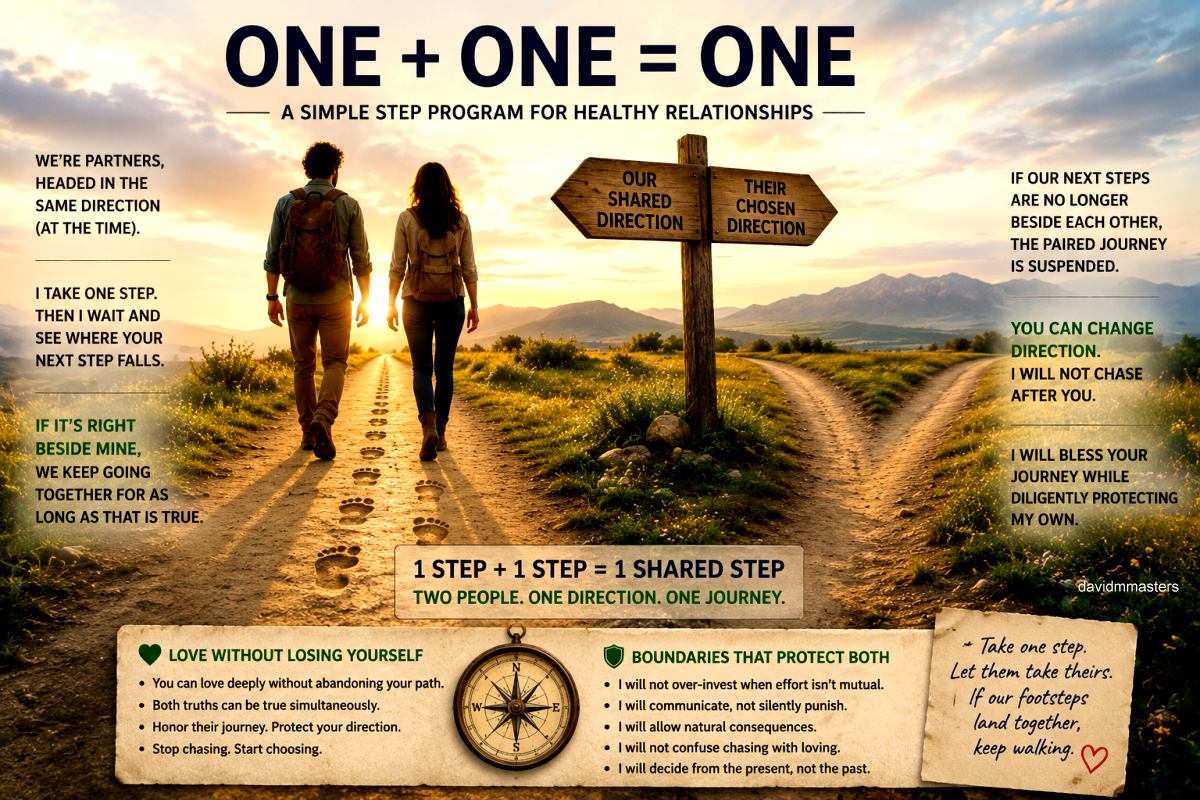
Prison Warden or the Love Warrior Choosing Love Over Control

When someone we love is making destructive choices, something interesting happens inside of us. Part of us wants to rescue. Part of us wants to reason. Part of us wants to fix. And if none of that works, another part quietly begins building a prison. Not always with steel bars. Sometimes with lectures. Sometimes with ultimatums. Sometimes with shame. Sometimes with silence. Sometimes with rules that quietly say, “Become who I think you should be… and then I’ll feel okay.”

I understand. I’ve been there. Watching someone you care about spiral is one of the most painful experiences a human being can endure. When love hurts, control begins looking like compassion. It rarely is.

Two Ends of the Spectrum

Human relationships exist across a wide spectrum. There are moments when immediate protection is necessary. If someone is violent, abusive, or placing others in danger, society has created systems designed to establish boundaries and accountability. Those systems have their place. But most of us aren’t judges. We’re parents. Friends. Spouses. Children. Co-workers. Neighbors. And in those relationships, another option exists. I call it becoming a Love Warrior.

The Love Warrior Leads with Love

A Love Warrior doesn’t pretend destructive behavior is healthy. A Love Warrior doesn’t excuse addiction. Or abuse. Or manipulation. Or dishonesty.

Love doesn’t become blind. It simply refuses to stop seeing the person beneath the behavior. That changes everything.

Instead of asking, “How do I make them stop?”

The Love Warrior begins asking, “What kind of pain could create behavior like this?”

That question changes the atmosphere. Not because it solves the problem. Because it changes the person asking it.

Walking Around in Their Shoes

Here’s an experiment. The next time someone disappoints you… Instead of saying, “I would never do that.” Try asking, “If I were behaving exactly like that… what might be happening inside me?”

Not because you’re right. Because you don’t know. And neither do I.

No one can fully know another person’s internal world.

We see behavior. We rarely see the emotional weather producing it. Fear. Loneliness. Shame. Trauma. Confusion. Exhaustion. Grief. Mental illness. Old wounds. Or perhaps something we’ve never experienced ourselves.

Curiosity opens doors that certainty quietly locks.

The Illusion of Intervention

Many interventions begin with beautiful intentions. “We’re doing this because we love you.” Sometimes they’re necessary. Often they’re not. Too frequently, they create temporary compliance while resentment quietly accumulates beneath the surface.

Pressure can change behavior. It rarely transforms the heart.

The person learns what everyone wants to hear. The performance improves. The relationship doesn’t.

Eventually, the pressure cooker finds a release. Usually with greater damage than before.

You cannot force someone into becoming themselves.

Sacred Space

One of the greatest gifts you can give another human being is sacred space. Not approval. Not agreement. Not enabling. Space.

Space to wrestle. Space to fail. Space to discover. Space to become responsible for their own life.

That can feel unbearable for the people standing nearby. Especially when we desperately want to help. But another person’s journey belongs to them. Not to us.

Boundaries Are Still Love

Choosing love does not mean abandoning wisdom. Love has boundaries.

You may need distance. You may need to protect your family. You may need to protect your finances. You may even need to say, “I love you deeply, but I cannot participate in this.”

Those aren’t contradictions. Those are healthy expressions of love.

Boundaries are not punishment. They are clarity.

A boundary protects both people. Control attempts to own both people.

There is a tremendous difference.

Will You Lose Them?

Maybe. That possibility hurts. Deeply. But remember something important.

You are responsible for your choices. They are responsible for theirs.

Loving someone does not make you responsible for becoming their conscience. Or their jailer. Or their rescuer.

Every one of us arrives carrying a different story. Different wounds. Different fears. Different lessons. Different timing.

We cannot legislate another person’s transformation. Growth is always an inside job.

Choosing Your Uniform

Every difficult relationship quietly asks us a question. Which uniform will you put on today? The Prison Warden? Or the Love Warrior?

One manages behavior. The other protects dignity. One relies primarily on fear. The other invests relentlessly in hope.

One asks, “How do I make them change?” The other wonders, “How can I become a safe place while they discover who they are?”

Not everyone will change. Some won’t. But everyone deserves to be seen as more than their worst day.

Love does not guarantee a happy ending. Neither does control. But love allows us to remain fully human while someone else finds their own path. And sometimes… that is the greatest gift we can possibly give.

Reframing Tools for Becoming a Love Warrior

When you notice your inner Prison Warden taking over, pause and try one of these instead.

    1. Replace Judgment with Curiosity

Instead of: “What’s wrong with them?”

Ask: “What might be hurting inside them?”

    1. Separate the Person from the Behavior

The behavior may be unhealthy.

The person still possesses dignity.

Hold both truths at the same time.

    1. Try On Their Shoes

Ask: “If I were acting exactly like this… what experiences might have brought me here?”

Not to excuse. To understand.

    1. Remember You Cannot Read Minds

Behavior is visible.

Motives rarely are.

Humility creates compassion.

    1. Exchange Control for Influence

You cannot control another adult.

You can become someone whose presence is safe enough to influence them.

    1. Protect Without Punishing

Healthy boundaries say, “This is what I need.”

Punishment says, “Now you’ll suffer.”

There is a world of difference.

    1. Bless Instead of Fix

Sometimes the greatest prayer is, “May you find your own way.”

Not every battle belongs to you.

    1. Let Reality Become the Teacher

Natural consequences often teach more effectively than lectures.

Resist interrupting every lesson life is offering.

    1. Practice Sacred Waiting

Growth is rarely immediate.

Love learns patience.

Control demands schedules.

    1. Ask Better Questions

Instead of, “How do I change them?”

Ask, “Who do I become while walking beside them?”

That question changes everything. Because the Love Warrior’s greatest victory is not controlling another person’s life. It is refusing to lose their own heart while loving someone through theirs.

Everybody Lies | Now What Are You Going to Do About It?

Everybody lies. Some lies are tiny. Some are catastrophic. Some are told to protect others. Some are told to protect ourselves. Some are told because we are afraid of losing love, losing status, losing control, losing security, or losing the carefully constructed image we want the world to believe about us. And every once in a while, someone lies to you that you never expected would.

That one lands differently. Not because the lie itself was necessarily devastating, but because it woke you up. It shook your assumptions. It cracked open your illusion that certain people are somehow above human weakness.

Recently, someone I had known and respected for years lied to me. Not a stranger. Not someone I expected it from. Someone I trusted. And for a brief moment, it threw me for a loop. Not because I do not understand human behavior. I have worked in counseling, coaching, consulting, and personal transformation for a very long time. I know people lie. I know it intellectually. I know it professionally. But sometimes we forget emotionally.

We create little islands of certainty around people we love, admire, or trust. We quietly place them into categories where we no longer expect ordinary human behavior from them. Then one lie reminds us that every single person on this earth is still wrestling with fear, identity, survival, insecurity, shame, ego, and the desperate need to feel safe. Including us. That realization can harden you. Or it can deepen you. That is the crossroads.

Every Lie Is an Opportunity

One of the most valuable tools I have ever developed in my work with people is the willingness to allow space for dishonesty without immediately punishing it. That surprises some people. They expect confrontation. Exposure. Correction. Consequences. But I learned something a long time ago: People often lie before they feel safe enough to tell the truth. Especially in the beginning of a coaching or counseling relationship.

If something does not feel right, sound right, or line up with the facts, I simply make note of it. I do not necessarily attack it immediately. I observe it. I hold awareness around it. I allow the story to breathe. Then something interesting happens.

Over time, the fabricated version becomes exhausting to maintain. The contradictions begin stacking up. The emotional energy required to maintain the false identity becomes heavier and heavier. People start tangling themselves in the barbed wire of their own stories. One lie requires another. Then another. Then another. And eventually, if enough trust and safety exist, many people come clean on their own. Not because they were forced into submission. But because they became exhausted from carrying the weight of separation between who they are and who they pretend to be.

That moment is sacred. Not humiliating. Sacred. Because when a human being finally feels safe enough to be honest, something profound happens inside them. Relief enters the room. Their nervous system softens. Their breathing changes. The armor begins to fall away. And for many people, that may be one of the first moments in their lives they have ever truly felt accepted while being fully seen.

That changes people.

We live in a culture obsessed with justice, exposure, consequences, outrage, and public destruction. Catch the liar. Expose the liar. Punish the liar. Destroy the liar. But very little attention is given to understanding why people lie in the first place.

Fear. Shame. Trauma. Survival. Rejection. Embarrassment. Insecurity. Childhood conditioning. Loss of identity. Fear of abandonment.

Most people do not wake up in the morning plotting evil. Most people are simply terrified of losing something they believe they need in order to survive emotionally. Now, that does not mean accountability disappears. Far from it. Truth matters. Boundaries matter. Integrity matters. But accountability without love often creates better liars instead of transformed people.

Fear-based correction teaches concealment. Love-based awareness teaches integration. That is a very different path.

I was fortunate to grow up around ideas like: “I’m okay, you’re okay.” “Do unto others as you would have them do unto you.” “We are all doing the best we can with what we have.” Those ideas grounded me. Not because they excuse destructive behavior, but because they remind us that human beings are unfinished creatures trying to find their way through life while carrying invisible burdens.

When you approach people with compassion instead of immediate condemnation, something extraordinary becomes possible. Growth. Real growth. Not performative compliance. Not fear-driven obedience. Not temporary behavioral suppression. Actual transformation. And transformation almost never happens through humiliation. It happens through awareness. It happens when people discover truth inside themselves.

That is why I have never been overly interested in controlling clients through rigid systems, punishments, or demands. Yes, structure matters. Yes, accountability matters. But lasting change usually occurs when people arrive at their own realization.

When the light bulb turns on inside them. When they see themselves clearly for the first time. When they finally become tired of running from themselves. That moment cannot be forced. It can only be invited.

People sometimes ask me why I continue doing this work after all these years. The answer is simple. I live for the moment of epiphany. The moment a client suddenly sees the truth about themselves with complete clarity.

The moment the masks fall away. The moment they stop defending their pain and begin understanding it. The moment self-awareness replaces self-deception. That is the payoff for me. To sit in the room while another human being reconnects with themselves is one of the most sacred experiences I know. Not because I “fixed” them. I did not. They found themselves. I simply created enough safety, enough love, enough accountability, enough space, and enough patience for truth to emerge naturally. That is very different from forcing compliance.

So What Are You Going to Do About It?

When someone lies to you, you stand at a fork in the road. You can become cynical. Suspicious. Closed off. Controlling. Punitive. Emotionally armored. Or…

      • You can become wiser without becoming harder.
      • You can develop discernment without losing compassion.
      • You can learn to see human weakness without abandoning human love.

That is the challenge. Not to become naive. But not to become cold either. Because the truth is this:

Every single one of us has lied.
Every single one of us has hidden.
Every single one of us has protected an image.
Every single one of us has feared rejection.

And every single one of us longs to be loved beyond our imperfections. That realization changes the way you see people. Including yourself.

A Practical Guide:

Moving from Strict Accountability to Love-Based Growth

This does not mean becoming weak, passive, or enabling destructive behavior. It means learning how to create environments where transformation becomes possible.

    1. Separate the Person from the Behavior

A lie is behavior.
It is not the entirety of the person.

When you attack identity instead of addressing behavior, people become defensive instead of reflective.

Say:
“That story doesn’t seem consistent.”

Instead of:
“You’re a liar.”

One invites awareness.
The other invites war.

    1. Stay Calm When You Discover Dishonesty

Most people expect emotional punishment.

When you remain calm, observant, and grounded, it creates psychological space for truth to emerge later.

Overreaction often drives dishonesty deeper underground.

    1. Observe Patterns Instead of Isolated Incidents

One contradiction may be confusion.
Repeated contradictions reveal deeper issues.

Notice:

        • Emotional inconsistencies
        • Changing narratives
        • Avoidance patterns
        • Sudden defensiveness
        • Over-explaining
        • Excessive justifications

Observe without becoming consumed by suspicion.

    1. Build Safety Before Demanding Vulnerability

People rarely tell the truth where they feel emotionally unsafe.

If someone believes honesty will lead only to shame, rejection, ridicule, or abandonment, concealment becomes survival.

Safety does not eliminate accountability.
It makes accountability productive.

    1. Ask Questions Instead of Making Accusations

Questions open doors.

Accusations slam them shut.

Try:
“Help me understand something.”

Instead of:
“You’re obviously lying.”

Questions invite self-reflection.

    1. Allow Natural Consequences Without Cruelty

Compassion does not mean removing all consequences.

Trust may need rebuilding.
Boundaries may need strengthening.
Access may need limitation.

But consequences delivered without hatred create opportunity for maturity instead of retaliation.

    1. Recognize Your Own Capacity for Self-Deception

Humility changes everything.

When you understand your own imperfections, you stop approaching others from a throne of moral superiority.

That softens your delivery without weakening your standards.

    1. Leave Room for Redemption

Many people become trapped inside the identity others assign to them.

When you leave room for people to evolve, they sometimes rise into that opportunity.

Not always.

But far more often than cynicism would have you believe.

    1. Focus on Awakening, Not Winning

Winning arguments is easy.

Awakening consciousness is rare.

Ask yourself:
“Do I want revenge, or do I want healing?”

That question changes the entire interaction.

    1. Become the Kind of Person Safe Enough for Truth

This may be the most important step of all.

People tell the truth around people who can handle truth.

Can you?

Can you hear difficult things without collapsing, exploding, condemning, or retaliating?

Can you remain loving while still remaining discerning?

That is emotional maturity.

And that level of love changes lives.

Including your own.


Everyone Wants Unconditional Love Until It Costs Them Something

There’s a moment I’ve seen happen more times than I can count. It taps on your shoulder in a conversation or a relationship, sometimes in the middle of an ordinary day, and if you’re paying attention, you can feel it. Someone says they want to be loved unconditionally. I believe them. They’re not being manipulative or trying to take advantage of anything. They really mean it. They want to be known… and not rejected. They want to be seen clearly… and not reduced to their worst moment. They want to feel safe enough to be human without constantly feeling evaluated. That desire is real and honest. It runs deeper than most people are willing to admit.

Here’s what I’ve also seen: The moment unconditional love stops being an idea… and starts becoming an experience… something shifts. Not outside of them; inside.

I remember sitting with a couple, not in crisis, not on the edge of collapse, but in that quiet place where something had started to feel… off.

Nothing explosive happened. No betrayal or major event. Just tension that didn’t quite make sense. The kind that lingers in the room even when no one is speaking.

At one point, she said, “I just want to feel loved without having to earn it all the time.” And he nodded. Not defensively, no eyeroll; he actually agreed.

Then something subtle happened over the next few weeks. He started changing, not in personality, but in posture. He became… steadier, less reactive. Less pulled into every emotional shift and less likely to defend himself or escalate when tension rose.

Instead of creating peace right away, it created confusion.

She said to me, “I don’t know what’s happening. He’s not reacting the way he used to.”

And I asked her, “Do you feel less loved… or less able to control the rhythm of the interaction?”

She paused. Not because she didn’t understand the question. Because she did.

Unconditional love sounds beautiful until it removes the patterns we’ve learned how to navigate. Because most relationships, whether we realize it or not, run on some form of emotional exchange.

If I lean in, you respond. If I pull back, you pursue. If I get upset, something shifts. There’s a rhythm to it. A predictability, and over time, people learn how to move inside that rhythm. Not always consciously, but effectively.

Then unconditional love enters the room, and it doesn’t follow that rhythm.

Unconditional love doesn’t withdraw when pressure rises, it doesn’t escalate when challenged, nor does it perform to stabilize the moment. It stays. Calm. Clear. Unmoved in the ways people expect, and that’s when things get interesting.

I have seen spouses grow uneasy when their partner remained steady instead of reactive, not because something was wrong, but because something familiar was missing.

I have seen leaders become suspicious when they were corrected without being diminished. No edge or humiliation; just clarity, and strangely, that made them more cautious, not less.

I have seen children push harder against calm, consistent boundaries than they ever did against explosive ones. Why? Because reaction is something you can work with, but calm, anchored presence? You have to adjust yourself to meet that. You can’t move it.

This is where most people begin to feel the cost.

Unconditional love is going to cost you. Not like you might think.

Unconditional love won’t cost you your voice, your boundaries, or your ability to walk away when something is not right. It will cost you something more subtle than that.

Unconditional love will cost you your ability to rely on reaction as a form of control. It costs you the small, almost invisible ways we try to stabilize relationships by influencing how others feel, and for many people, that’s disorienting, because they don’t realize how much of their relational security has been built on that exchange.

Some people hear “unconditional love” and assume it means: Stay no matter what. Accept everything. Endure without question.

I don’t see it that way. Not at all.

Unconditional love, as I’ve come to understand it, and as I’ve watched it actually work in people’s lives, has nothing to do with removing standards. It has everything to do with removing reactivity.

It’s the ability to say, “I care about you. And I’m not going to participate in something that damages either of us.”

No anger or performance, without needing the other person to agree in order for you to stay grounded.

That’s not weakness. That’s strength most people haven’t practiced yet.

There’s a turning point.

You don’t arrive there through theory. You arrive there in a moment where things could go the way they always have… but don’t.

Where you could react… but choose not to.

Where you could try to shape the outcome… but instead stay clear, present, and steady.

Afterward, something feels different. Not necessarily easier. But cleaner. More aligned. More… true.

If I were to reduce this into something simple enough to carry, it would be this:

Unconditional love does not remove boundaries. It removes the need to control.

Maybe even more honestly:

Most people want unconditional love, until it asks them to grow beyond the patterns they rely on.

If you’ve ever found yourself saying, “I just want to be loved for who I am…” That’s not wrong or naive. But there is a second part to that truth that doesn’t get talked about as often. To receive that kind of love… you have to become someone who can stand inside it.

Without needing to shape it. Without needing to test it. Without needing it to behave the way you’re used to.

That’s where this becomes less about what you receive… and more about who you become.

Love Like It’s the Only Thing That Matters

These ideas are explored more deeply in Love Like It’s the Only Thing That Matters, where unconditional love is not treated as a feeling, but as a disciplined, steady way of being that reshapes relationships over time.


In Seven Cycles of Love, What Is True Love?

What is true love? The question itself seems simple, yet it opens a portal to the deepest mysteries of the human heart. True love isn’t a destination—it’s a journey. And on that journey, love transforms. It deepens. It reveals. It stretches us in ways we never expected. It calls us higher. And just when we think we’ve grasped its meaning, it evolves once again.

As I often teach, love has at least seven distinct cycles. And in each cycle, your definition of true love will shift—because you are shifting. True love is a living, breathing energy that reflects your own personal growth, beliefs, wounds, and awakening. The way you define true love today will not be the same as how you defined it when you first fell in love, nor how you will define it years from now—if you commit to evolving through love.

And perhaps, if there were an eighth cycle… it would be when you or your partnership awakens fully to Divine Love Consciousness—a love beyond conditions, expectations, or need. A love that is, because you are.

Let’s explore this idea together.

The Evolution of True Love Through the 7 Cycles

Cycle 1: Attraction – “True Love Feels Like a Spark”

In the beginning, true love looks like excitement. It’s magnetic, passionate, and addictive. You believe true love is about chemistry and the thrill of desire. And it is—in that cycle. That spark can be real. It awakens something primal, something beautiful. But this cycle often tricks us into thinking that love is purely emotional and sensory.

Example: “I knew it was true love the moment I saw her. I felt it. I couldn’t stop thinking about her. That must be what true love is, right?” — Cycle 1 thinker.

Cycle 2: Connection – “True Love Means We Just ‘Get’ Each Other”

As attraction deepens into emotional intimacy, the definition evolves. True love now feels like connection. It’s about being seen, understood, and accepted. You start opening your heart and sharing your story. You believe true love is someone who understands you without judgment.

Example: “We talk for hours. It’s like we’ve known each other forever. That’s how I know it’s real love.” — Cycle 2 insight.

Cycle 3: Commitment – “True Love Means Loyalty and Choosing Each Other”

As the relationship progresses, true love becomes a conscious choice. It’s about showing up, making sacrifices, and creating a shared path. At this stage, true love is seen as reliability, stability, and a mutual vision. It’s the cycle where many couples solidify their bond.

Example: “I don’t care what life throws at us, I’ll choose you every day. That’s what love is.” — Cycle 3 partner.

Cycle 4: Challenge – “True Love Is Tested and Refined”

This is where many relationships falter. But it’s also where true love gets real. In the face of betrayal, disappointment, or trauma, your idea of love is tested. Can true love survive conflict, imperfection, and pain? Here, the definition of love shifts to forgiveness, growth, and resilience.

Example: “Even when you broke my heart, I still saw the goodness in you. I knew love had to be more than just the good times.” — Cycle 4 survivor.

Cycle 5: Awakening – “True Love Reflects My Own Inner Journey”

Something profound happens here. You begin to awaken to the idea that true love doesn’t come from someone else—it flows through you. You start doing the inner work, realizing your partner is your mirror. The definition of love becomes more spiritual, more conscious.

Example: “I used to blame him for not loving me right. Now I see… he was showing me the parts of myself that still needed healing.” — Cycle 5 reflector.

Cycle 6: Transcendence – “True Love Is Without Conditions”

Now love becomes sacred. You see your partner not just as your lover, but as a soul on a journey. You love them as they are, not for what they do for you. It’s not about control, or fixing, or receiving. It’s about presence, grace, and radical acceptance.

Example: “Even if he never changes, I will still love him. That’s not weakness—it’s strength.” — Cycle 6 sage.

Cycle 7: Purpose – “True Love Is Our Shared Mission”

Finally, love becomes a vehicle for service. You and your partner become co-creators of something greater than yourselves. Your relationship becomes a healing force in the world. You live in alignment with your calling, and true love becomes a way of being, a legacy.

Example: “We’re not just lovers. We’re lightworkers. Together, we raise the vibration of others.” — Cycle 7 partners-in-purpose.

But What If There Was an Eighth Cycle?

If there were a Cycle 8… it would be Unconditional Divine Love.
A love that requires no reason. No reciprocation. No attachment.
A love that pours from you endlessly, like a river returning to the ocean.
You are love. And your partner is love. There is no separation.

This kind of love often arrives not just in relationships, but in spiritual awakening. Some couples rise into this together. Some individuals arrive at it on their own. Either way, it is the ultimate state of love—not something you fall into, but something you rise into.

Why the Definition of True Love Must Be Revisited—Regularly

One of the most dangerous assumptions in relationships is believing you both define love the same way—and that it will always mean what it meant in the beginning.

But we grow. We evolve. So should our love.

That’s why it’s essential to regularly check in with your partner and ask questions like:

    • “What does true love mean to you now?”
    • “Has your definition of love changed since we met?”
    • “What does love feel like when you receive it from me?”
    • “How can I love you better based on who you are today?”

These conversations build emotional safety and spiritual alignment. They open the door to deeper connection and help prevent resentment, assumptions, and miscommunication.

You Are Always Becoming Love

True love isn’t found. It’s awakened. It isn’t perfect. It’s divine in its imperfection. It grows as you grow.

Whether you’re just starting your journey in the first cycle or you’re feeling the call toward something higher—know that love is meeting you exactly where you are.

And if you’re blessed to walk the path of love with someone willing to grow beside you, nurture that gift. Let it evolve. Let it expand. And together, you just might awaken to a level of love you never dreamed was possible.

And that… might just be your 8th cycle of love.


Thank God, Trauma Victims and Addicts Found a Way to Survive

It’s easy to judge from the outside, to say they should just quit, just stop, just be normal. But if you’ve never felt the weight of trauma so heavy that you can barely breathe, if you’ve never had your nervous system rewired by abuse to expect pain instead of peace, then you have no idea. You don’t know what it’s like to live in a world that feels unsafe, unkind, and utterly unbearable without something—anything—to take the edge off. And thank God, they found something.

    • Try walking a mile in the shoes of an addict.
    • You don’t know until you know.

Addiction isn’t just about the substance or the behavior—it’s about survival from those unspoken things you could hardly imagine. It’s about finding a way to function in a world that never gave them the tools to cope in the first place. It’s about numbing out just enough to make it through another day. And while society shames them for it, locks them up, or shuns them, the truth is that addiction has kept many people alive who might not otherwise be here.

Is it healthy? No. Is it sustainable? Probably not. But without it, many would have already opted out of life altogether.

What Can You Do?

Love them.

Not the kind of love that says, “I love you, but…” Not the kind of love that is secretly hoping to fix them or make them more like you. No, what they need is unconditional love—the kind that doesn’t demand change, the kind that meets them where they are without judgment or expectation.

And that kind of love? It’s otherworldly.

You can’t force them to be like you, no matter how desperately you want to. You can’t reason them out of addiction, preach them into sobriety, or incarcerate them into freedom. All of that pressure, all of that expectation—it only pushes them further into despair, further into seeking relief in the one thing that has never abandoned them.

What Unconditional Love Looks Like for Someone Struggling with Addiction

    • See them as a person, not a problem. They are not “an addict.” They are a human being who is trying to survive in the only way they know how.
    • Don’t judge their coping mechanism. You don’t have to agree with their choices, but understand that their addiction is serving a purpose in their life, even if that purpose is only to numb deep pain.
    • Listen without fixing. They don’t need another lecture. They need to be heard.
    • Let go of your expectations. Loving them doesn’t mean expecting them to change, and it doesn’t mean waiting for them to get better. It means accepting them as they are.
    • Be a safe place. If they can trust you to be there for them without shame or pressure, they may open up when they’re ready.
    • Acknowledge their pain. Addiction is not the problem—it’s a response to pain. Instead of focusing on the addiction, acknowledge the hurt that led them there.
    • Don’t take their actions personally. If they relapse, lie, or push you away, remember—it’s not about you. Addiction rewires the brain, and their choices may not always make sense.
    • Be patient. Change, if it happens, happens on their timeline—not yours.
    • Don’t enable, but don’t abandon. There’s a balance between not feeding their addiction and not leaving them alone in their suffering.
    • Offer hope, but don’t force it. Plant small seeds of possibility, but don’t expect them to take root overnight.

Understanding Relapse

Even if they want to change, even if they start to imagine a life without addiction, relapse is part of the process for many.

    • Don’t be disappointed in them.
    • Don’t tell them they’ve failed.
    • Don’t give up on them.

Every step forward, even if followed by two steps back, is still part of their journey. And it is their journey. Not yours.

Will You Lose Them?

Maybe.

Many of us have. There’s nothing more heartbreaking than watching someone you love slip away, either slowly through addiction or suddenly through an overdose, suicide, or some reckless act of desperation. But their path is their own.

And in the end, all you can do is love them through it, bless them along their journey, and know that you did everything in your power to make them feel seen and accepted.

Because once they’re gone, it’s too late to love them unconditionally.

So love them now.

    • Love them without conditions.
    • Love them without expectation.

And be grateful that, for today, they’re still here.

Because some days, that’s enough.


Loving Unconditionally the Doorway to Evolutionary Expansion

In the world we live in, there lies a profound truth: unconditional love is the doorway to evolutionary expansion. This truth is not hidden; it is present in every moment, offering us a choice—to act from fear or to act from love. This choice, simple yet powerful, defines the trajectory of our lives. When we choose fear, we tether ourselves to lower vibrations, cycles of pain, doubt, and limitation. But when we choose love, we liberate ourselves, rising above these constraints to embody the truth of who we truly are.

Fear vs. Love: A Daily Choice

Life’s challenges often tempt us to act out of fear. Fear whispers that we are not enough, that we lack something vital, or that we must control, resist, or fight to survive. These fear-based patterns keep us stuck, replaying old narratives that limit our growth and potential.

Yet, in every present moment, there exists an alternative: love. Love is expansive, freeing, and inherently aligned with our highest self. When we choose love, we shift our frequency, aligning with higher vibrations that invite miracles, synchronicities, and profound healing. Love opens doors to realities where possibilities are boundless, where we thrive, and where life unfolds with clarity, joy, and abundance.

The Power of Choosing Love

Choosing love is not merely an emotional act; it is a step in our evolutionary expansion. Each moment of choosing love over fear is a step closer to our highest potential. In love, we align with higher timelines, pathways that resonate with our soul’s purpose. These pathways are rich with opportunities for growth, understanding, and fulfillment.

Love invites us to:

    • Embrace Healing: Through love, we release old wounds and limiting beliefs, allowing our hearts to heal.
    • Experience Miracles: Love fosters alignment with the divine, creating a fertile ground for miracles and synchronicities.
    • Expand Possibilities: Love dissolves boundaries and limitations, revealing a world abundant with opportunities and connections.
    • Thrive in Joy and Abundance: Love shifts our perspective, enabling us to see life’s inherent beauty and abundance.

The Courage to Love

The path of love is not always easy. It demands courage, trust, and a willingness to let go of fear-based patterns. It calls for forgiveness—of ourselves and others. To choose love is to see the divine in every experience, to embrace the lessons hidden in life’s challenges, and to remember that love is our natural state.

This journey requires us to release judgments, attachments, and the illusion of separation. In love, there is no division, no lack. Instead, there is infinite connection and possibility. Love reminds us that we are part of a greater whole, interconnected with all beings and all things.

Shifting from Fear to Love

Evolutionary expansion begins with a single breath. In moments of doubt or fear, pause. Breathe deeply and ask yourself, “What would love do?” This simple question has the power to redirect your thoughts, actions, and energy.

    • Pause and Reflect: When fear arises, take a moment to pause and become aware of its presence.
    • Choose a Loving Perspective: Reframe the situation through the lens of love. What opportunities for growth or connection can you find?
    • Act with Intention: Let love guide your actions, even if it requires vulnerability or courage.

With each loving choice, your world transforms, moment by moment. You ascend to higher frequencies, creating a life that reflects your highest truth and potential.

Embracing Infinite Possibility

The beauty of love lies in its infinite nature. In love, there is no limit to what you can achieve, create, or experience. By choosing unconditional love, you align with the flow of the universe, where abundance, joy, and clarity naturally reside. You step into a reality where every moment is an opportunity for growth, connection, and fulfillment.

Loving unconditionally is not just an ideal; it is a practice, a choice to be made over and over again. It is the doorway to evolutionary expansion, the bridge between the ordinary and the extraordinary. As you walk this path, remember: in every breath, you hold the power to choose love. Let it guide you, and watch as your life becomes a masterpiece of transformation, one loving moment at a time.


Shifting from Exclusivity to Inclusivity for a Better World.

The world would be a much better place if we could transition from a mindset of exclusivity to one of inclusivity. This shift involves moving away from the notion that everyone must think alike to belong and instead embracing the idea that we are all similar in many ways. Celebrating each other’s individuality and recognizing that we are all doing our best with what we have can foster a more compassionate and understanding society.

The Dangers of Exclusivity

Exclusivity thrives on the separation of individuals, often achieved through teaching and perpetuating hatred. This has never been more apparent than in today’s world. When the powers that be aim to keep us polarized and divided, their plan has succeeded, and we see the results all around us.

Consider any polarizing topic—human rights, abortion, political figures, dietary choices, global warming, or even flat earth theories. These subjects drive wedges between us, keeping us entrenched in conflict rather than fostering unconditional love and understanding.

The Power of Inclusivity

Inclusivity, on the other hand, encourages us to look beyond our differences and find common ground. It allows us to celebrate diversity and see it as a strength rather than a weakness. We can create a more harmonious and supportive world by shifting our focus from what separates us to what unites us.

The journey to inclusivity is not without its challenges. Along the way, we have developed many habits and beliefs that once served us but now hinder our progress. However, as we grow older and wiser, we can recognize these manipulations that have been subliminally forced upon us and choose a different path.

Evolving Through Unconditional Love

The ultimate goal is to evolve and expand the power of unconditional love. This means choosing to love and accept others despite our differences and striving to understand and support one another. By doing so, we can break free from the divisions that have been imposed upon us and work towards a more inclusive and compassionate world.

Unconditional love is a powerful force that transcends all boundaries. It allows us to see the humanity in each other and to recognize that we are all in this together. When we choose to love unconditionally, we reject the narratives of hatred and division and embrace a future where everyone is valued and respected.

Here are some practical ideas and steps to help you start making minor changes to move from exclusivity to inclusivity:

1. Self-Education and Awareness

Read and Research: Educate yourself about different cultures, beliefs, and experiences. Books, articles, documentaries, and podcasts are excellent resources.

Reflect on Biases: Identify and reflect on your own biases and prejudices. Awareness is the first step toward change.

2. Engage in Open Conversations

Listen Actively: Engage in conversations with people who have different perspectives. Listen more than you speak and try to understand their viewpoints.

Ask Questions: Show genuine curiosity and ask questions to learn about others’ experiences and perspectives.

3. Expand Your Social Circle

Meet Diverse People: Make an effort to connect with people from diverse backgrounds. Attend cultural events, join diverse groups, and participate in community activities.

Invite Inclusivity: Include people from different backgrounds in your social and professional circles.

4. Practice Empathy and Compassion

Put Yourself in Others’ Shoes: Try to understand the experiences and struggles of others. This can help you develop greater empathy and compassion.

Show Kindness: Small acts of kindness can go a long way in making others feel included and valued.

5. Challenge Stereotypes and Prejudices

Speak up: When you hear someone making a prejudiced remark or perpetuating a stereotype, politely challenge them and educate them on the impact of their words.

Be a Role Model: Demonstrate inclusive behavior in your actions and words, inspiring others to follow suit.

6. Create Inclusive Environments

In Your Workplace: Advocate for inclusive policies and practices. Support diversity training and initiatives.

In Your Community: Volunteer for organizations that promote inclusivity and support marginalized groups.

7. Celebrate Diversity

Recognize Cultural Holidays: Celebrate and acknowledge cultural holidays and events from different communities.

Share Stories: Share and amplify stories from diverse voices to highlight the beauty of different experiences and backgrounds.

8. Reflect and Adjust

Regular Reflection: Regularly reflect on your actions and attitudes toward inclusivity. Identify areas for improvement and make necessary adjustments.

Seek Feedback: Ask for feedback from people around you on how inclusive you are and how to improve.

9. Promote Inclusive Media

Consume Diverse Media: Support and consume media that promotes diverse voices and stories.

Share Inclusive Content: Share content that celebrates diversity and promotes inclusivity on social media platforms.

10. Educate the Next Generation

Teach Inclusivity: If you have children or influence over young people, teach them the value of inclusivity and diversity from an early age.

Lead by Example: Children often mimic the behavior of adults. Be a role model for inclusive behavior.

Implementation Strategy

Set Small Goals: Start with small, manageable goals. For example, aim to learn about one new culture each month or have a meaningful conversation with someone from a different background each week.

Create a Plan: Develop a plan for incorporating these steps into your daily life—for example, schedule time each week for self-education or attending diverse events.

Track Your Progress: Keep a journal to track your progress and reflect on your experiences. Note the positive changes and areas where you still need to grow.

Stay Committed: Inclusivity is an ongoing process. Stay committed to making these changes and seek new ways to be inclusive.
By integrating these steps into your daily life, you can start making small changes that will contribute to a more inclusive and compassionate world.

Shifting from exclusivity to inclusivity is a transformative process that requires effort and commitment. It challenges us to let go of old habits and beliefs and to embrace a new way of thinking and being. But the rewards are immense—a world where everyone is accepted, valued, and loved for who they are. By making this shift, we can create a better, more inclusive world for ourselves and future generations.


Using the Compass of Unconditional Love to Navigate Our Life

Unconditional love is a profound and transformative force that can guide us through life’s challenges, fostering personal and collective growth. Embracing unconditional love as a guiding principle is crucial for our well-being and humanity’s spiritual evolution. Let’s explore the importance of unconditional love, its advantages, the potential consequences of ignoring this shift, and practical ways to integrate it into all areas of our lives.

The Importance of Unconditional Love in Human Evolution

Humanity is at a crossroads. As we face increasingly complex global challenges—environmental crises, social injustices, and widespread conflict—it is clear that our current ways of thinking and behaving are insufficient. Unconditional love offers a path forward. By embracing a love not contingent upon conditions or expectations, we tap into a higher state of consciousness that transcends ego and division. This shift is crucial for the evolution of mankind, as it fosters unity, compassion, and a sense of interconnectedness.

Unconditional love encourages us to see beyond our differences and recognize the inherent worth of every individual. It promotes empathy and understanding, allowing us to address conflicts with compassion rather than hostility. This evolution towards a more loving and inclusive mindset is essential for creating a harmonious and sustainable world.

Advantages of Embracing Unconditional Love

Enhanced Relationships: Unconditional love transforms our relationships by fostering trust, respect, and genuine connection. When we love without conditions, we create a safe space for others to be their authentic selves, strengthening bonds and promoting mutual growth.

Inner Peace: Practicing unconditional love brings inner peace. It helps us release grudges, resentment, and negative emotions, allowing us to cultivate a state of harmony and balance within ourselves.

Resilience: Love without conditions equips us with the resilience to face life’s challenges. It encourages a positive outlook and empowers us to navigate difficulties with grace and understanding.

Spiritual Growth: Embracing unconditional love accelerates our spiritual development. It aligns us with higher frequencies of consciousness, facilitating deeper connections with our true selves and the universe.

The Consequences of Ignoring Unconditional Love

If humanity continues to resist the shift towards unconditional love, we risk further spiritual decline. The consequences of this decline are evident in the increasing prevalence of fear, anger, and division in the world. Without love as our guiding principle, we become susceptible to:

Isolation: A lack of unconditional love fosters isolation and disconnection. When we operate from a place of conditional love, we create barriers between ourselves and others, leading to loneliness and alienation.

Conflict: Conditional love breeds conflict and misunderstanding. Without the foundation of compassion, disagreements escalate, and reconciliation becomes difficult.

Stagnation: Spiritual stagnation occurs when we fail to evolve beyond ego-driven behaviors. This stagnation hinders personal growth and prevents us from realizing our full potential.

Integrating Unconditional Love into Daily Life

To harness the power of unconditional love, we must consciously integrate it into every aspect of our lives. Here are some practical ways to do so:

Self-Love: Begin by cultivating unconditional love for yourself. Practice self-compassion and forgive yourself for past mistakes. Treat yourself with kindness and respect, acknowledging your inherent worth.

Mindfulness: Engage in mindfulness practices to stay present and aware. This helps you respond to situations with love and understanding rather than reacting out of fear or anger.

Gratitude: Develop a gratitude practice to focus on the positive aspects of your life. Expressing gratitude shifts your perspective and opens your heart to love.

Compassion: Practice compassion towards others, even in challenging situations. Try to understand their perspectives and offer support without judgment or expectation.

Acts of Kindness: Perform acts of kindness regularly. These small gestures of love can have a profound impact on both the giver and the receiver.

Forgiveness: Let go of grudges and practice forgiveness. Holding onto anger and resentment only harms you. By forgiving others, you free yourself from negative emotions and open your heart to love.

You Can Do This

Using the compass of unconditional love to navigate life’s challenges is essential for our personal and collective evolution. By embracing love without conditions, we can transform our relationships, find inner peace, and develop the resilience needed to face difficulties with grace. Ignoring this shift risks further spiritual decline, isolation, and conflict. However, by consciously integrating unconditional love into all areas of our lives, we can create a more compassionate, harmonious, and spiritually evolved world. The journey starts with each of us choosing love as our daily guiding principle.

Unconditional Love is the Paradox Among Human Relationships!

Unconditional love, the unwavering affection transcending all conditions and limitations, is a deeply rooted desire in the human heart. It’s often described as the pure, unbreakable bond a mother shares with her newborn—a profound love that remains steadfast regardless of circumstances. Many of us yearn for this idea of “I love you no matter what” in our relationships. We long to receive such boundless love and respect from another human being, craving the security and acceptance that comes with it.

However, a fascinating paradox often emerges when it comes to unconditional love. While many of us fervently desire it, we are frequently unwilling to extend it to others. This contradiction becomes evident when we delve into our expectations within intimate relationships. Imagine sitting with a couple in a therapy session. When asked, “Are you willing to love your partner unconditionally?” the response is often a resounding “Hell no,” accompanied by a litany of conditions and demands that must be met for the love to continue. This phenomenon highlights a crucial dilemma in our quest for unconditional love: the discrepancy between our desire to receive it and our reluctance to give it.

Understanding the Unconditional Love Dichotomy

This dichotomy arises from various deep-seated beliefs and fears. At its core, unconditional love requires vulnerability and trust, two elements that can be incredibly daunting. To love someone unconditionally means to accept them wholly, with all their flaws and imperfections. It requires us to let go of control and the need to change or fix our partner to meet our expectations.

Many people struggle with this because of fear of being hurt, betrayed, or taken for granted. Setting conditions and demands becomes a way to protect oneself from these potential outcomes. It creates a sense of security, albeit false, that helps us manage our anxieties about intimacy and commitment.

Moreover, societal norms and cultural conditioning often emphasize transactional relationships, exchanging love and affection for certain behaviors or attributes. This quid-pro-quo mentality undermines the essence of unconditional love, making it difficult for individuals to embrace a more selfless and accepting approach.

Steps to Cultivating Unconditional Love

To break free from this paradox and foster a mindset that includes giving unconditional love, one must undergo a significant shift in perspective. Here are some steps that can facilitate this transformation:

Self-Reflection and Awareness: Examine your beliefs and fears about love and relationships. What conditions do you impose on your partner, and why? Understanding your motivations can help you address underlying insecurities.

Embrace Vulnerability: Accept that vulnerability is a crucial component of unconditional love. It involves the courage to open your heart fully, knowing there are no guarantees but trusting in the strength of your connection.

Practice Acceptance: Make a conscious effort to accept your partner as they are without trying to change or fix them. Recognize their humanity, including their flaws and imperfections, and love them regardless.

Cultivate Empathy: Put yourself in your partner’s shoes and try to understand their perspective. Empathy fosters deeper emotional connections and reduces the need for rigid expectations.

Communicate Openly: Engage in honest and open communication with your partner. Express your feelings and needs without resorting to ultimatums. Healthy dialogue promotes mutual understanding and nurtures unconditional love.

Let Go of Control: Release the need to control the dynamics of your relationship. Trust in the natural ebb and flow of love, knowing that genuine affection cannot be forced or manipulated.

Practice Self-Love: Unconditional love starts with self-love. Treat yourself with the same kindness, compassion, and acceptance you wish to extend to your partner. When you feel secure and valued within yourself, it becomes easier to offer the same to others.

The Reward of Unconditional Love

Embracing and practicing unconditional love enriches your relationships and entitles you to receive it in return. When given freely without conditions, love creates a nurturing environment where both partners feel valued and respected. It fosters a deeper emotional connection, resilience, and trust, forming the bedrock of a lasting and fulfilling relationship.

Ultimately, the journey to unconditional love is a continuous process of growth and self-discovery. It challenges us to transcend our fears and insecurities, opening our hearts to the boundless possibilities of true, unreserved affection. By learning to give unconditional love, we align ourselves with the profound truth that the love we seek is often mirrored in the love we offer.

The Power of Unconditional Love & Connection to Your Purpose

To love unconditionally is to transcend the boundaries of ego, fear, and expectation. It is a profound act of surrender, releasing the need for control, validation, or reciprocity. Unconditional love is not transactional; it does not keep score or demand returns. Instead, it is the purest expression of compassion, seeing beyond flaws and recognizing the divine spark inherent in every being. It is a sacred acknowledgment that each soul is on a unique and divine journey, perfectly designed with both strengths and imperfections.

Embracing the Imperfect Divine

Unconditional love does not demand perfection because it understands that imperfections are part of the divine tapestry. Life’s challenges, wounds, and flaws are not obstacles to love—they are invitations to expand it. To love unconditionally is to honor the entirety of existence, not just its polished facets. It is a love that whispers, “You are enough, just as you are.”

This perspective transforms relationships and interactions, allowing us to see others—and ourselves—with eyes of compassion. The divine design of imperfection teaches us patience, humility, and grace, fostering a love that holds space for healing and growth.

The Transformative Power of Choosing Love

Every choice we make is an opportunity to align with either fear or love. Fear constricts, isolates, and perpetuates cycles of pain. Love, however, liberates, connects, and creates. Choosing love is a revolutionary act. It has the power to shift timelines, heal deep wounds, and open the door to miracles.

When you lead with love, you become a beacon of light in a world often shadowed by fear. Your energy ripples outward, touching lives in ways you may never see but are undeniably profound. Love dissolves barriers, awakens truth, and elevates the consciousness of both the giver and the receiver. It is the ultimate force of creation, the bridge between what is seen and unseen, tangible and intangible.

Elevating Collective Consciousness

Unconditional love is not just a personal journey—it is a planetary mission. When you choose love, you contribute to the collective vibration of the planet. Every act of love, no matter how small, adds to the reservoir of healing and transformation.

Imagine a world where more people chose love over fear, compassion over judgment, and connection over division. The energy of love is contagious; it inspires others to step into their own heart-centered power. It reminds us that we are all interconnected, bound by the universal thread of love.

The Journey Begins Within

True unconditional love starts with yourself. You cannot pour from an empty cup; therefore, self-love is not selfish but essential. To love yourself unconditionally means to offer yourself the same grace, patience, and kindness you wish to extend to others.

This begins with acknowledging your own imperfections without judgment, seeing them as sacred components of your journey. When you love yourself deeply, you cultivate a reservoir of love that naturally overflows into your relationships, your community, and the world.

How to Find Your Life Purpose

Let Love Lead

As you navigate your day, let love guide your thoughts, words, and actions. When faced with challenges, pause and ask yourself: “What would love do?” This simple question can transform conflicts into opportunities for connection, misunderstandings into moments of clarity, and pain into pathways of healing.

Love is not just an emotion; it is a choice and a practice. It is the answer to every question and the solution to every challenge. By choosing love, you align with the highest version of yourself and fulfill your divine purpose.

A Call to Be Love

You are here to be a vessel of love. In every breath, every thought, and every choice, you have the power to return to love. This is your ultimate purpose. When love becomes your guiding principle, you witness the unfolding of a reality far more beautiful and harmonious than you ever imagined.

Unconditional love is not a destination but a way of being. It is the greatest gift you can give to yourself and the world. As you walk this path, remember: the more you give love, the more you embody it, and the more you inspire others to do the same.

Let love lead your life, and watch as it transforms not only your world but the entire collective. This is your power. This is your purpose. This is the essence of unconditional love.