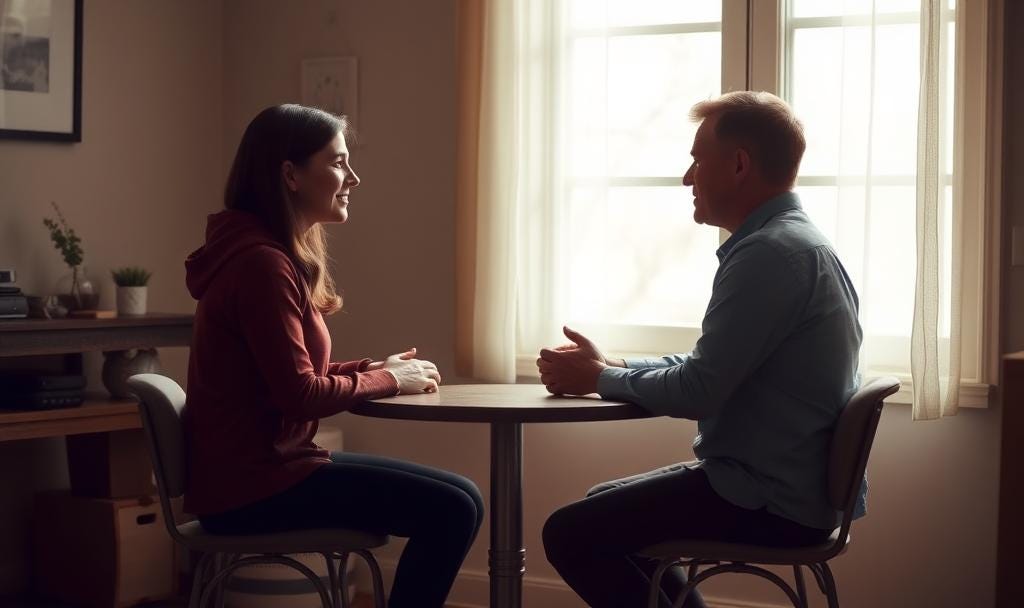
Prison Warden or the Love Warrior Choosing Love Over Control

When someone we love is making destructive choices, something interesting happens inside of us. Part of us wants to rescue. Part of us wants to reason. Part of us wants to fix. And if none of that works, another part quietly begins building a prison. Not always with steel bars. Sometimes with lectures. Sometimes with ultimatums. Sometimes with shame. Sometimes with silence. Sometimes with rules that quietly say, “Become who I think you should be… and then I’ll feel okay.”

I understand. I’ve been there. Watching someone you care about spiral is one of the most painful experiences a human being can endure. When love hurts, control begins looking like compassion. It rarely is.

Two Ends of the Spectrum

Human relationships exist across a wide spectrum. There are moments when immediate protection is necessary. If someone is violent, abusive, or placing others in danger, society has created systems designed to establish boundaries and accountability. Those systems have their place. But most of us aren’t judges. We’re parents. Friends. Spouses. Children. Co-workers. Neighbors. And in those relationships, another option exists. I call it becoming a Love Warrior.

The Love Warrior Leads with Love

A Love Warrior doesn’t pretend destructive behavior is healthy. A Love Warrior doesn’t excuse addiction. Or abuse. Or manipulation. Or dishonesty.

Love doesn’t become blind. It simply refuses to stop seeing the person beneath the behavior. That changes everything.

Instead of asking, “How do I make them stop?”

The Love Warrior begins asking, “What kind of pain could create behavior like this?”

That question changes the atmosphere. Not because it solves the problem. Because it changes the person asking it.

Walking Around in Their Shoes

Here’s an experiment. The next time someone disappoints you… Instead of saying, “I would never do that.” Try asking, “If I were behaving exactly like that… what might be happening inside me?”

Not because you’re right. Because you don’t know. And neither do I.

No one can fully know another person’s internal world.

We see behavior. We rarely see the emotional weather producing it. Fear. Loneliness. Shame. Trauma. Confusion. Exhaustion. Grief. Mental illness. Old wounds. Or perhaps something we’ve never experienced ourselves.

Curiosity opens doors that certainty quietly locks.

The Illusion of Intervention

Many interventions begin with beautiful intentions. “We’re doing this because we love you.” Sometimes they’re necessary. Often they’re not. Too frequently, they create temporary compliance while resentment quietly accumulates beneath the surface.

Pressure can change behavior. It rarely transforms the heart.

The person learns what everyone wants to hear. The performance improves. The relationship doesn’t.

Eventually, the pressure cooker finds a release. Usually with greater damage than before.

You cannot force someone into becoming themselves.

Sacred Space

One of the greatest gifts you can give another human being is sacred space. Not approval. Not agreement. Not enabling. Space.

Space to wrestle. Space to fail. Space to discover. Space to become responsible for their own life.

That can feel unbearable for the people standing nearby. Especially when we desperately want to help. But another person’s journey belongs to them. Not to us.

Boundaries Are Still Love

Choosing love does not mean abandoning wisdom. Love has boundaries.

You may need distance. You may need to protect your family. You may need to protect your finances. You may even need to say, “I love you deeply, but I cannot participate in this.”

Those aren’t contradictions. Those are healthy expressions of love.

Boundaries are not punishment. They are clarity.

A boundary protects both people. Control attempts to own both people.

There is a tremendous difference.

Will You Lose Them?

Maybe. That possibility hurts. Deeply. But remember something important.

You are responsible for your choices. They are responsible for theirs.

Loving someone does not make you responsible for becoming their conscience. Or their jailer. Or their rescuer.

Every one of us arrives carrying a different story. Different wounds. Different fears. Different lessons. Different timing.

We cannot legislate another person’s transformation. Growth is always an inside job.

Choosing Your Uniform

Every difficult relationship quietly asks us a question. Which uniform will you put on today? The Prison Warden? Or the Love Warrior?

One manages behavior. The other protects dignity. One relies primarily on fear. The other invests relentlessly in hope.

One asks, “How do I make them change?” The other wonders, “How can I become a safe place while they discover who they are?”

Not everyone will change. Some won’t. But everyone deserves to be seen as more than their worst day.

Love does not guarantee a happy ending. Neither does control. But love allows us to remain fully human while someone else finds their own path. And sometimes… that is the greatest gift we can possibly give.

Reframing Tools for Becoming a Love Warrior

When you notice your inner Prison Warden taking over, pause and try one of these instead.

    1. Replace Judgment with Curiosity

Instead of: “What’s wrong with them?”

Ask: “What might be hurting inside them?”

    1. Separate the Person from the Behavior

The behavior may be unhealthy.

The person still possesses dignity.

Hold both truths at the same time.

    1. Try On Their Shoes

Ask: “If I were acting exactly like this… what experiences might have brought me here?”

Not to excuse. To understand.

    1. Remember You Cannot Read Minds

Behavior is visible.

Motives rarely are.

Humility creates compassion.

    1. Exchange Control for Influence

You cannot control another adult.

You can become someone whose presence is safe enough to influence them.

    1. Protect Without Punishing

Healthy boundaries say, “This is what I need.”

Punishment says, “Now you’ll suffer.”

There is a world of difference.

    1. Bless Instead of Fix

Sometimes the greatest prayer is, “May you find your own way.”

Not every battle belongs to you.

    1. Let Reality Become the Teacher

Natural consequences often teach more effectively than lectures.

Resist interrupting every lesson life is offering.

    1. Practice Sacred Waiting

Growth is rarely immediate.

Love learns patience.

Control demands schedules.

    1. Ask Better Questions

Instead of, “How do I change them?”

Ask, “Who do I become while walking beside them?”

That question changes everything. Because the Love Warrior’s greatest victory is not controlling another person’s life. It is refusing to lose their own heart while loving someone through theirs.


What “Don’t Throw the Baby Out with the Bathwater” Really Is

One of my early ministry mentors, Brother Bryan, had a saying he repeated often. “Don’t throw the baby out with the bathwater.” At the time, I smiled politely. I understood the words, but I wasn’t sure I understood their weight. Years later, I think I finally do.

The old expression comes from a simple picture. After everyone in the household had bathed, the water was dirty. Really dirty. When it was finally time to dump the tub, you had one more job. Make sure the baby isn’t still in it.

The point wasn’t about bathing. It was about judgment. It was about remembering that something precious can be hidden among things that genuinely need to be discarded.

I think we’ve become remarkably skilled at doing the opposite.

Today, we often throw away the baby first.

    • Someone hears that a priest abused a child. Suddenly, every priest becomes suspect.
    • A teacher commits a terrible crime. Now every teacher must prove they are safe.
    • A police officer acts dishonorably. Every officer wears the stain.
    • A politician lies. Therefore, politicians can’t be trusted.
    • A man betrays his wife. “Once a cheater, always a cheater.”
    • Someone commits a felony. “They’ll always be a criminal.”
    • One member of a race behaves badly. The entire race inherits the accusation.
    • One immigrant.
    • One business owner.
    • One coach.
    • One pastor.
    • One doctor.
    • One stepfather.
    • One teenager.
    • One generation.
    • One denomination.
    • One political party.

Our minds are astonishingly quick at taking one painful story and quietly attaching it to millions of people we’ve never met. Perhaps it’s because our brains are trying to protect us.

Patterns help us survive. If one berry made someone sick, avoid berries. If one cave held a bear, check caves carefully.

Those instincts served our ancestors well. But human beings are not berries.

People are not statistics. And they certainly are not headlines. The news has a difficult job. It reports what is unusual. Very few reporters stand outside a school to announce that every child arrived safely today.

No one interrupts your dinner because another hundred thousand fathers came home from work, hugged their children, and quietly loved their families.

Ordinary goodness is rarely spectacular enough to become breaking news. Extraordinary failure almost always is.

The problem isn’t that we hear about terrible things. The problem is that we begin believing terrible things are ordinary. And somewhere along the way, our curiosity quietly dies.

    • We stop asking.
    • We stop meeting individuals.
    • We stop allowing people to surprise us.

Instead, we file them. Category. Label. Case closed.

Jesus seemed unusually unwilling to do that. He met people one person at a time.

    • Tax collector.
    • Roman soldier.
    • Religious leader.
    • Woman at the well.
    • Fisherman.
    • Leper.
    • Thief.

He somehow managed to see the individual without pretending the problem didn’t exist.

That takes wisdom. It’s easy to condemn an entire group. It’s harder to remain curious. Curiosity isn’t naïve. Curiosity simply refuses to let someone else’s story become everyone else’s sentence.

    • I’ve known remarkable pastors.
    • I’ve known terrible pastors.
    • I’ve known honest business owners.
    • I’ve known dishonest ones.
    • I’ve known people with criminal records who became among the safest, kindest human beings I’ve ever met.

I’ve also known people with spotless résumés who quietly destroyed lives.

Character doesn’t travel in packs. Neither does integrity.

Every human being deserves the dignity of being encountered before being categorized.

Brother Bryan was right. Don’t throw the baby out with the bathwater.

You may discover that the thing worth protecting was there all along. Perhaps the real baby isn’t the person you’re judging. Perhaps it’s your own ability to see people clearly. And that’s something worth protecting.

Everybody Lies | Now What Are You Going to Do About It?

Everybody lies. Some lies are tiny. Some are catastrophic. Some are told to protect others. Some are told to protect ourselves. Some are told because we are afraid of losing love, losing status, losing control, losing security, or losing the carefully constructed image we want the world to believe about us. And every once in a while, someone lies to you that you never expected would.

That one lands differently. Not because the lie itself was necessarily devastating, but because it woke you up. It shook your assumptions. It cracked open your illusion that certain people are somehow above human weakness.

Recently, someone I had known and respected for years lied to me. Not a stranger. Not someone I expected it from. Someone I trusted. And for a brief moment, it threw me for a loop. Not because I do not understand human behavior. I have worked in counseling, coaching, consulting, and personal transformation for a very long time. I know people lie. I know it intellectually. I know it professionally. But sometimes we forget emotionally.

We create little islands of certainty around people we love, admire, or trust. We quietly place them into categories where we no longer expect ordinary human behavior from them. Then one lie reminds us that every single person on this earth is still wrestling with fear, identity, survival, insecurity, shame, ego, and the desperate need to feel safe. Including us. That realization can harden you. Or it can deepen you. That is the crossroads.

Every Lie Is an Opportunity

One of the most valuable tools I have ever developed in my work with people is the willingness to allow space for dishonesty without immediately punishing it. That surprises some people. They expect confrontation. Exposure. Correction. Consequences. But I learned something a long time ago: People often lie before they feel safe enough to tell the truth. Especially in the beginning of a coaching or counseling relationship.

If something does not feel right, sound right, or line up with the facts, I simply make note of it. I do not necessarily attack it immediately. I observe it. I hold awareness around it. I allow the story to breathe. Then something interesting happens.

Over time, the fabricated version becomes exhausting to maintain. The contradictions begin stacking up. The emotional energy required to maintain the false identity becomes heavier and heavier. People start tangling themselves in the barbed wire of their own stories. One lie requires another. Then another. Then another. And eventually, if enough trust and safety exist, many people come clean on their own. Not because they were forced into submission. But because they became exhausted from carrying the weight of separation between who they are and who they pretend to be.

That moment is sacred. Not humiliating. Sacred. Because when a human being finally feels safe enough to be honest, something profound happens inside them. Relief enters the room. Their nervous system softens. Their breathing changes. The armor begins to fall away. And for many people, that may be one of the first moments in their lives they have ever truly felt accepted while being fully seen.

That changes people.

We live in a culture obsessed with justice, exposure, consequences, outrage, and public destruction. Catch the liar. Expose the liar. Punish the liar. Destroy the liar. But very little attention is given to understanding why people lie in the first place.

Fear. Shame. Trauma. Survival. Rejection. Embarrassment. Insecurity. Childhood conditioning. Loss of identity. Fear of abandonment.

Most people do not wake up in the morning plotting evil. Most people are simply terrified of losing something they believe they need in order to survive emotionally. Now, that does not mean accountability disappears. Far from it. Truth matters. Boundaries matter. Integrity matters. But accountability without love often creates better liars instead of transformed people.

Fear-based correction teaches concealment. Love-based awareness teaches integration. That is a very different path.

I was fortunate to grow up around ideas like: “I’m okay, you’re okay.” “Do unto others as you would have them do unto you.” “We are all doing the best we can with what we have.” Those ideas grounded me. Not because they excuse destructive behavior, but because they remind us that human beings are unfinished creatures trying to find their way through life while carrying invisible burdens.

When you approach people with compassion instead of immediate condemnation, something extraordinary becomes possible. Growth. Real growth. Not performative compliance. Not fear-driven obedience. Not temporary behavioral suppression. Actual transformation. And transformation almost never happens through humiliation. It happens through awareness. It happens when people discover truth inside themselves.

That is why I have never been overly interested in controlling clients through rigid systems, punishments, or demands. Yes, structure matters. Yes, accountability matters. But lasting change usually occurs when people arrive at their own realization.

When the light bulb turns on inside them. When they see themselves clearly for the first time. When they finally become tired of running from themselves. That moment cannot be forced. It can only be invited.

People sometimes ask me why I continue doing this work after all these years. The answer is simple. I live for the moment of epiphany. The moment a client suddenly sees the truth about themselves with complete clarity.

The moment the masks fall away. The moment they stop defending their pain and begin understanding it. The moment self-awareness replaces self-deception. That is the payoff for me. To sit in the room while another human being reconnects with themselves is one of the most sacred experiences I know. Not because I “fixed” them. I did not. They found themselves. I simply created enough safety, enough love, enough accountability, enough space, and enough patience for truth to emerge naturally. That is very different from forcing compliance.

So What Are You Going to Do About It?

When someone lies to you, you stand at a fork in the road. You can become cynical. Suspicious. Closed off. Controlling. Punitive. Emotionally armored. Or…

      • You can become wiser without becoming harder.
      • You can develop discernment without losing compassion.
      • You can learn to see human weakness without abandoning human love.

That is the challenge. Not to become naive. But not to become cold either. Because the truth is this:

Every single one of us has lied.
Every single one of us has hidden.
Every single one of us has protected an image.
Every single one of us has feared rejection.

And every single one of us longs to be loved beyond our imperfections. That realization changes the way you see people. Including yourself.

A Practical Guide:

Moving from Strict Accountability to Love-Based Growth

This does not mean becoming weak, passive, or enabling destructive behavior. It means learning how to create environments where transformation becomes possible.

    1. Separate the Person from the Behavior

A lie is behavior.
It is not the entirety of the person.

When you attack identity instead of addressing behavior, people become defensive instead of reflective.

Say:
“That story doesn’t seem consistent.”

Instead of:
“You’re a liar.”

One invites awareness.
The other invites war.

    1. Stay Calm When You Discover Dishonesty

Most people expect emotional punishment.

When you remain calm, observant, and grounded, it creates psychological space for truth to emerge later.

Overreaction often drives dishonesty deeper underground.

    1. Observe Patterns Instead of Isolated Incidents

One contradiction may be confusion.
Repeated contradictions reveal deeper issues.

Notice:

        • Emotional inconsistencies
        • Changing narratives
        • Avoidance patterns
        • Sudden defensiveness
        • Over-explaining
        • Excessive justifications

Observe without becoming consumed by suspicion.

    1. Build Safety Before Demanding Vulnerability

People rarely tell the truth where they feel emotionally unsafe.

If someone believes honesty will lead only to shame, rejection, ridicule, or abandonment, concealment becomes survival.

Safety does not eliminate accountability.
It makes accountability productive.

    1. Ask Questions Instead of Making Accusations

Questions open doors.

Accusations slam them shut.

Try:
“Help me understand something.”

Instead of:
“You’re obviously lying.”

Questions invite self-reflection.

    1. Allow Natural Consequences Without Cruelty

Compassion does not mean removing all consequences.

Trust may need rebuilding.
Boundaries may need strengthening.
Access may need limitation.

But consequences delivered without hatred create opportunity for maturity instead of retaliation.

    1. Recognize Your Own Capacity for Self-Deception

Humility changes everything.

When you understand your own imperfections, you stop approaching others from a throne of moral superiority.

That softens your delivery without weakening your standards.

    1. Leave Room for Redemption

Many people become trapped inside the identity others assign to them.

When you leave room for people to evolve, they sometimes rise into that opportunity.

Not always.

But far more often than cynicism would have you believe.

    1. Focus on Awakening, Not Winning

Winning arguments is easy.

Awakening consciousness is rare.

Ask yourself:
“Do I want revenge, or do I want healing?”

That question changes the entire interaction.

    1. Become the Kind of Person Safe Enough for Truth

This may be the most important step of all.

People tell the truth around people who can handle truth.

Can you?

Can you hear difficult things without collapsing, exploding, condemning, or retaliating?

Can you remain loving while still remaining discerning?

That is emotional maturity.

And that level of love changes lives.

Including your own.


The Quiet Loneliness of Strong People, Whom No One Checks On

There is a kind of loneliness that doesn’t look like loneliness. It doesn’t announce itself, ask for help, or break down in obvious ways. It shows up in the lives of strong people. Those who are capable, the ones who handle things, and whom others lean on without hesitation. They are often admired, respected, and even relied upon, yet rarely checked on.

Why Strong People Are Often Overlooked

Strong people give off a certain signal. They seem steady, composed, and seem like they’ve got it handled, so others assume they’re fine. Not because they don’t care, but because strength is often misread as invulnerability. Capability gets mistaken for capacity. Reliability gets mistaken for endless reserves, and slowly, quietly, the strong ones become invisible in their own struggles.

Strength is often mistaken for invulnerability.

Most strong people didn’t choose strength as a personality trait; they learned it. They learned it because someone had to be steady. Because chaos didn’t leave room for collapse, and showing emotion felt unsafe, inconvenient, or unhelpful, so they adapted.

They became the listener, the fixer, the calm presence in the room, and over time, they learned an unspoken rule:

Don’t burden others. Don’t make it about you.

That rule may have kept things functioning, but it often came at a cost.

What Loneliness Looks Like When You’re the Strong One

This kind of loneliness isn’t loud. It looks like being surrounded by people, yet rarely asked how you’re really doing. It feels like always being the one others turn to, while having no one to turn to yourself, and shows up as exhaustion that rest doesn’t quite fix.

Strong people often feel grateful, and tired at the same time. Grateful to be trusted, tired of always being the container, and because they’re good at holding things together, their quiet need for care often goes unnoticed.

Strength Doesn’t Eliminate the Need for Support

Strength does not cancel the human need for connection. Being capable doesn’t mean being self-sustaining. Being resilient doesn’t mean being unaffected, and being dependable doesn’t mean being unbreakable.

Capability is not the same as capacity.

Strong people still need to be seen, need to be asked, and need space where they don’t have to perform competence. And when that space is missing, loneliness settles in… quietly, patiently, without drama.

Why Strong People Rarely Ask for Help

Not because they don’t need it, but because they don’t want to disappoint expectations. They don’t want to reverse roles. They’ve learned that asking feels like weakness, even when it isn’t.

Many strong people worry that if they stop being strong, everything will fall apart. So they keep going, keep showing up, carrying more than anyone realizes, and the loneliness deepens… not from lack of people, but from lack of reciprocity.

Strong people don’t need rescuing.
They need to be seen.

What Changes When Strong People Are Finally Seen

Something remarkable happens when a strong person is genuinely checked on; not casually or politely, but sincerely.

When someone asks (and actually means it) the armor can soften. The load can shift and the nervous system can finally exhale.

Strong people don’t need to be rescued; they need permission to be human.

A Quiet Invitation

If you are the strong one, this is not a call to harden. It’s an invitation to let yourself be known, even a little, by someone safe. To allow support without explaining or justifying it. To remember that strength includes discernment, not self-denial.

And if you know a strong person, check on them. Not because they’re failing, but because they matter.

The strongest people in the room are often the loneliest, not because they are distant, but because they are dependable, and in that moment when someone finally sees them, not for what they do but for who they are, something essential begins to heal.

Strength doesn’t mean standing alone.

Sometimes, it means letting someone stand with you.


Q: What’s the Difference Between Being Nice and Being Loving

There is a great deal of confusion that causes unnecessary pain. Many people believe they are being loving when, in reality, they are being nice, and many people believe love should feel gentle all the time, when in truth, love often feels honest first. Niceness seeks approval, love seeks truth, and understanding the difference can change how you relate to everyone in your life, including yourself.

How Niceness Became the Substitute for Love

Niceness is often learned early. It comes from wanting to belong, from wanting to avoid conflict, and learning that keeping others comfortable feels safer than being honest.

Nice people are polite. They’re agreeable. They try not to upset anyone. They smooth things over. They say “yes” when they mean “no,” and they swallow discomfort to keep the peace, and while niceness isn’t malicious, it’s also not courageous, because niceness is driven by fear, fear of rejection, disapproval, or loss of connection.

Love is not.

“Niceness avoids tension.
Love tells the truth.”

What Niceness Does, and Why It Fails

Niceness avoids tension. Love moves through it. Niceness says what will be accepted. Love says what is needed.

Niceness keeps the surface calm, but often allows deeper harm to continue unchallenged. It tolerates behaviors that quietly erode trust, intimacy, and self-respect, all in the name of being “good.”

Over time, niceness breeds resentment. Not because people are ungrateful, but because truth was never invited into the relationship, and relationships built without truth eventually collapse under the weight of what was never said.

What Love Is Willing to Do That Niceness Is Not

Love is willing to risk discomfort for the sake of integrity. Love tells the truth calmly, without cruelty, it sets boundaries without drama. Love names problems without attacking people, and it allows others their reactions without trying to manage them.

“You can be kind without being dishonest.”

Love understands something niceness does not: You can be kind without being dishonest, and you can be compassionate without being passive.

Why Understanding This Difference Is Critical Now

We are living in a time when many people feel exhausted, misunderstood, and quietly resentful, not because they don’t care, but because they’ve been taught to suppress truth in order to appear loving.

But suppression is not connection, silence is not peace, and self-erasure is not kindness.

Love creates safety not by avoiding truth, but by handling it well.

That’s why love can feel firmer than niceness and why it often brings relief, even when it brings tension.

How to Tell Whether You’re Being Nice or Loving

Here’s a simple reflection.

If you’re being nice, you’re probably asking:
“How do I keep everyone comfortable?”

If you’re being loving, you’re more likely asking:
“What is honest, kind, and necessary right now?”

Niceness protects appearances. Love protects what matters.

Niceness wants to be liked. Love wants to be real.

“Love protects what matters.
Niceness protects appearances.”

What Loving Looks Like in Everyday Life

Love doesn’t shout, but it also doesn’t disappear.

It looks like:

      • Saying no without overexplaining
      • Disagreeing without contempt
      • Allowing disappointment without rescuing
      • Speaking truth without needing to win
      • Letting others feel their feelings without absorbing them

Love trusts that real connection can survive honesty. Niceness is not so sure.

Seek Understanding and Clarity

The world does not need more polite silence, it needs people who can be kind and clear, compassionate and truthful, gentle and grounded.

Being nice may keep things smooth for a while, but being loving builds relationships that last, and once you feel the difference, you won’t want to go back.


You Don’t Need to Be Fixed – You Need to Be Remembered

At some point, many well-meaning people were taught a subtle lie. That something about them was broken. That they were behind. That they needed improvement before they were acceptable. That healing meant becoming someone else. It didn’t usually come from cruelty. It came from systems built around fixing problems instead of remembering truth. But here is something worth sitting with, slowly and honestly: You don’t need to be fixed. You need to be remembered.

How We Learned to See Ourselves as Problems

In a world obsessed with optimization, it’s easy to start viewing yourself as a project instead of a person.

What’s wrong with me?
What do I need to correct?
Why am I not there yet?

Even personal growth can quietly turn into self-criticism when the focus shifts from awareness to deficiency. Improvement becomes pressure. Healing becomes homework. And suddenly, the very tools meant to help us begin reinforcing the belief that we are somehow incomplete.

Most people aren’t broken.
They’re disconnected.

But the truth is more gentle and far more powerful. Most people aren’t broken. They’re disconnected. Disconnected from their inner compass, and their intuition. Disconnected from their own story, and the parts of themselves they learned to abandon in order to survive.

That’s not damage. That’s adaptation.

The Difference Between Healing and Fixing

Fixing assumes something is fundamentally wrong. Healing assumes something essential is still intact.

Healing doesn’t rush. It doesn’t shame. Healing doesn’t demand perfection before permission. Healing remembers what was buried, not what was lost. And for many people, the deepest relief comes not from learning something new, but from finally being allowed to stop fighting themselves.

Why “Being Fixed” Is So Exhausting

Trying to fix yourself keeps you focused on you’re not good enough. Not calm enough. Not confident enough. Not healed enough. Not spiritual enough. Not productive enough.

That constant self-monitoring drains energy. It fragments attention. It turns life into a performance where you’re always one step away from being “better,” but never fully here.

Remembering, on the other hand, brings you home.

Remembering restores coherence, reconnects you to what already works, and allows growth to emerge naturally instead of being forced.

Remembering Who You Were Before the World Told You Otherwise

Before the rules. Before the conditioning. Before the comparisons. There was a version of you that trusted itself more than it doubted. A version that felt, sensed, knew, without needing constant validation or explanation.

That part didn’t disappear, it just learned to be quiet.

Healing isn’t becoming someone new.
It’s returning to what’s still intact.

Healing is often less about adding layers and more about removing interference. Less about becoming someone new and more about reclaiming what was always there.

What Remembering Looks Like in Real Life

Remembering doesn’t mean you stop growing, it means growth stops being violent.

It looks like:

      • Treating yourself with the same patience you give others
      • Listening to your body instead of overriding it
      • Allowing emotions without judging them
      • Setting boundaries without needing a dramatic backstory
      • Letting progress be organic instead of forced

You stop asking, “What’s wrong with me?”
And start asking, “What am I ready to remember?”

That shift changes everything.

Why This Perspective Is So Important Right Now

We are living in a time where people are overwhelmed, over-stimulated, and over-diagnosed with their own inadequacy.

The constant message is: Do more. Be more. Fix this. Correct that.

But the soul doesn’t respond to pressure, it responds to safety, and when people feel safe enough to remember who they are, healing happens naturally, without coercion, without exhaustion, without shame.

A Final Truth Worth Carrying Forward

You don’t need to earn your worth. You don’t need to repair your existence. You don’t need to become someone else to be whole.

You need space, compassion, and remembrance, because nothing essential about you is missing, it’s waiting. And when you remember, growth stops feeling like a struggle and starts feeling like a return.

That’s not fixing. That’s coming home.


Love Is Not Weakness – Why Real Love Requires Strength

Somewhere along the way, love got mislabeled. Not suddenly or maliciously. Just gradually, until love was no longer seen as strong, but soft… no longer intelligent, but sentimental… no longer courageous, but passive. And that misunderstanding has cost us more than we realize.

Love is not weakness, and it never was. What is weak is the version of love many of us were taught to perform, the kind that avoids truth, tolerates harm, and sacrifices self-respect just to keep the peace. That isn’t love. That’s fear, dressed up as virtue.

Why Love Is Often Mistaken for Weakness

For many people, love became confused with being agreeable. Staying quiet, enduring too much, giving endlessly, even when wisdom was already whispering, “This isn’t healthy anymore.” But love has never required self-erasure.

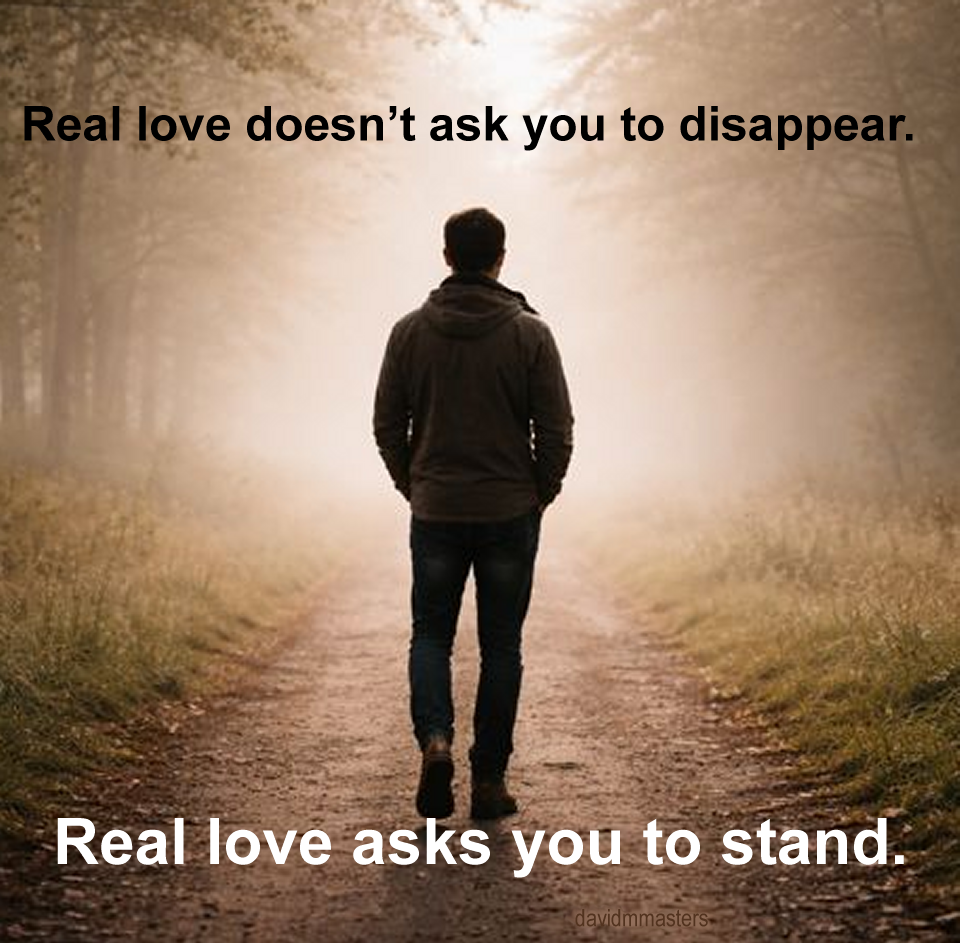
Real love doesn’t ask you to shrink, betray yourself, or abandon your values. It doesn’t demand silence while your spirit erodes. When love looks like disappearance, what’s actually happening is survival; not wisdom. And survival strategies, while understandable, are not the same thing as truth.

Real Love Is Strength Under Control

When you strip away the confusion, something important becomes clear: Love is not fragile. Love is strong. In fact, real love is strength under control.

It takes strength to tell the truth without attacking. Strength to hold a boundary without slamming a door, the strength to walk away without bitterness, and to stay without resentment.

Love doesn’t beg. Love doesn’t manipulate. Love does not guilt or coerce.

Love stands. And because it stands, it can feel threatening to systems built on fear, control, or compliance. That’s one reason love has so often been rebranded as weakness, because calling it weak makes it easier to dismiss, exploit, or override.

Love Requires Courage, Not Avoidance

Avoidance is easy. Numbing is easy. Shutting down is easy. Going along to get along is easy.

Love is not.

Love requires presence, and presence requires courage.

Every meaningful act of love asks something of us. It asks us to stay awake when it would be easier to check out. To remain open without being naive. To forgive without forgetting, and protect what matters without becoming hard.

There is nothing weak about that.

What Happens When Love Loses Its Strength

When love is misunderstood, people learn the wrong lessons.

They learn to:

      • Overgive until they are depleted
      • Confuse endurance with virtue
      • Call self-betrayal kindness
      • Call silence peace

Eventually, they burn out; not because they loved too much, but because they were never taught how to love wisely.

Love without strength collapses. Strength without love hardens. But love with strength? That’s where healing lives.

Love as a Stabilizing Force in a Chaotic World

Strong love doesn’t escalate. Strong love doesn’t need to win, and doesn’t require an audience.

Strong love listens without surrendering discernment. Strong love sees clearly without condemning, and acts deliberately rather than reactively.

This is why love changes rooms. Why it disarms aggression, restores dignity, and endures long after louder forces burn themselves out.

Not because love is soft, but because love is grounded.

What Loving with Strength Looks Like in Real Life

When love is rooted in strength, it shows up practically:

      • You can say no without guilt
      • You can disagree without contempt
      • You can care deeply without carrying what isn’t yours
      • You can leave without hatred
      • You can stay without losing yourself

You stop confusing being liked with being loving, and stop confusing being needed with being valued.

Your love develops a spine.

Why This Love Elevation Can’t Wait

The world doesn’t need weaker people trying harder to be nice. It needs grounded people who can love without fear. People who can hold truth and compassion in the same breath. People who don’t collapse under pressure, or harden under disappointment.

Love is not weakness. Love is not passivity or submission.

Love is clarity. Love is courage and strength—fully awake.

And when you live from that place, you don’t just change your relationships. You change the world around you.

That’s the kind of love this world has always needed.

The Danger of “This Is the Only Way”

It amazes me when someone insists, sometimes so demandingly, that their experience proves the only way to accomplish a thing. I understand why it happens. You have been longing for something, maybe even praying for it, pouring your time, heart, and soul into the pursuit. You have tried countless approaches, weathered disappointment, and faced your share of doubt. Then, one day, the door swings wide open. Your dream comes true. Your miracle unfolds before your very eyes.

You think, “Wow! This is amazing!” And in that rush of gratitude and exhilaration, you feel compelled to share what you have discovered. Not because you are a narcissist or seeking fame, but because you want others to experience what you have experienced. You want to hand them the key that unlocked the door for you.

You think, “If people could just do what I did, they could have what I have.”

But here is the truth: That is not the way it works.

Why People Do Not Resonate With “Your Way”

You can study your journey, refine it into a step-by-step process, and present it to the world in a way you believe is crystal clear. And still, many people will not follow it. Or if they do, they will not achieve the same results. Why?

Here are just a few reasons:

    • They do not believe it will work for them.
    • They are not ready for the commitment.
    • Their priorities differ from yours.
    • They have past trauma or resistance you did not have.
    • They do not like your personality or teaching style.
    • They want faster results.
    • They are skeptical of anything that sounds “too good to be true.”
    • Their life circumstances are different.

And the biggest reason of all…

They Are Not You

Even if someone followed your process down to the letter, they still might not achieve your miracle. Why? Because so many hidden factors were working in your favor when you experienced your breakthrough:

    • Your geographic location at the time.
    • Your DNA and unique biology.
    • Your energetic vibration in that moment.
    • The emotional and spiritual deposits you had already made in your “escrow account.”
    • The way unseen forces, call them “planetary alignment” if you will, conspired in your favor.

These variables do not duplicate easily, and they matter more than most people realize.

The Myth of “The Only Way”

Yes, there are systems that can be duplicated with a high degree of success, maybe 95 percent of the time, but those are rare. In most cases, the claim of “100 percent foolproof if you just do what I say” is wildly overstated.

Take cancer, for example. Doctors often declare, “This is the only way!” Then you have people who have tried alternative approaches shouting just as loudly, “No, THIS is the way!”

As I often say, “If you do a good search on the Internet, you will find over 250 different natural cures for cancer.” And here is the thing, many of them have validity.

It is easy to get stuck in paralysis of analysis, overwhelmed by the sheer volume of options, until you think, “Forget it. I will just do whatever the doctor says.” But this same overwhelm can happen in any area:

    • Building a business.
    • Growing wealth.
    • Achieving better health.
    • Expanding spiritual awareness.
    • Deepening connection to God.
    • Finding happiness.

I Am a Systems Guy, But…

I build and teach systems. I know they work. And in a moment of passion, I might even blurt out, “This is the way!”

What I mean is, “This is the only way I know that works like this, gives these results, or worked for me.” That is different than claiming it is the one and only possible way for everyone.

Because in reality, anything can work for anybody, with varying results.

The Real Formula for Results

Here is the process that never fails:

    1. Do your research.
    2. Make a decision to do a thing, not just try it.
    3. Do it fully.
    4. Review your results.
    5. Decide to keep going, adjust, or try something else.

Repeat until you achieve your desired outcome, or a better one you did not expect.

That is it. That is the guaranteed system. The results will be yours and yours alone, because they will be shaped by everything that makes you uniquely you.

A Word of Caution About Rigidity

If you assert that your way is the only way, and you hold that position rigidly, you run the risk of alienating the very people who could benefit from what you have to share in other areas of life. When people feel pressured or judged for not following your exact method, they often disengage entirely, even from the parts of your wisdom that could truly help them.

So share your ideas with passion, but also with humility. Present your way as a way, not the way. Let people explore it, adapt it, and find their own path forward. This approach not only keeps the door open, it allows your message to travel further and touch more lives.

So the next time you are tempted to declare “This is the only way!”, remember: what is the way for you might be one of many ways for someone else. Share your path, but leave room for others to walk their own.

That is not just good advice, it is respect for the infinite possibilities of life.


What’s Behind the Scenes When Their Actions Don’t Make Sense

It’s easy to judge people based on their actions. We do it almost automatically. Someone lies, cheats, steals, abandons, lashes out—or worse—and we find ourselves labeling them, building our case against them, feeling angry, hurt, betrayed. But what if… there’s more to the story? What if behind every incomprehensible act, behind every betrayal, every offense, there’s a secret wound, an invisible history, or a desperate coping mechanism we cannot see?

When we slow down and open our hearts to this possibility, we begin to understand:
People act out of their pain more often than out of pure malice.

The Hidden Stories Behind Their Actions

Consider these real-life examples:

A Girl Who Refused to Speak

After a traumatic event, a once-vivacious young girl became mute, refusing to speak to anyone. Adults labeled her stubborn, willful, and difficult, exacerbating her isolation.

Behind the scenes:
In I Know Why the Caged Bird Sings by Maya Angelou, young Maya stopped speaking after enduring sexual abuse at the hands of someone she trusted. She believed her voice had the power to cause harm and withdrew into silence as a means of protecting those around her. Her silence wasn’t rebellion—it was a profound act of self-blame and sorrow, a coping mechanism crafted by a young mind overwhelmed by grief and fear.

A Wife’s Secret Life

James noticed a growing emotional distance in his marriage, despite a seemingly active intimate life at home. His world shattered when he discovered that his wife, Olivia, was working as a prostitute during the day. Attempts at counseling failed when she denied everything and disappeared without closure.

Behind the scenes:
As shared in Infidelity: James and Olivia Smith (Shirli Kieffer), Olivia had endured horrific sexual abuse starting at age four, and successive abusive marriages left deep, untreated scars. For Olivia, prostitution became a way to reclaim a sense of control and value. When confronted, she chose the only identity she knew how to survive within, rather than face the overwhelming pain of her hidden wounds.

A Boy’s Desperation to Feed His Family

A young boy was caught stealing food from a local grocery store. Many in the community branded him as a delinquent, a troublemaker headed down a dark path.

Behind the scenes:
In The Glass Castle by Jeannette Walls, it’s revealed that this boy—and many others like him—stole food not out of malice, but out of desperate necessity. Neglected by alcoholic and unstable parents, the children often went days without eating. Stealing became a survival skill, not a character flaw. Their thefts were acts of love for each other, efforts to protect one another in a chaotic and unforgiving world.

A Con Man’s Hollow Heart

A professional con artist seduced strong, capable women, only to rob them emotionally and financially before moving on to orchestrate larger frauds against organizations and communities.

Behind the scenes:
As outlined in How to Deal with a Psychopath (David M Masters), the con man’s early abandonment at a religious orphanage and exposure to abuse likely shaped his detached, predatory ways. Whether by nature or nurture, he learned to survive by exploiting others—a tragic, vicious cycle born of early betrayal, leaving behind a trail of broken hearts and devastated lives.

A Soldier’s Self-Destructive Return

After returning from combat, a once-disciplined soldier began engaging in reckless behavior, struggling with addiction and alienating his loved ones. To outsiders, he seemed irresponsible and broken.

Behind the scenes:
In Tribe: On Homecoming and Belonging by Sebastian Junger, it’s explained that many returning veterans face an unbearable gap between the tight-knit communities they knew in war and the isolated, individualistic society they return to. These self-destructive actions often stem from profound loneliness, moral injury, and a loss of belonging. The soldier’s behavior isn’t merely a lack of discipline—it’s the visible expression of invisible wounds too deep for words.

A Mother’s Deadly Request

A son was approached by his mother with a shocking request: to kill her husband. Though he declined, he did so with love, saying he could not abandon his own young family.

Behind the scenes:
As revealed in Psychopath Victims Toolkit (David M Masters), this mother had been deeply abused since childhood and later became entangled with dangerous individuals involved in high-level criminal activities. To her, asking her son to commit murder wasn’t an act of hatred—it was a desperate solution formed by years of trauma, manipulation, and survival in a violent underworld.

A Call to Compassion

Behind every seemingly irrational or hurtful act, there is a story.
It doesn’t excuse the behavior. It doesn’t make the pain caused any less real.
But it invites us to replace knee-jerk judgment with compassion and curiosity.

Next time someone’s actions make no sense—before you build your case against them—consider asking yourself:

    • What unseen battle might they be fighting?
    • What hidden wounds might be bleeding inside them?
    • What distorted realities or desperate strategies might they have adopted just to survive?

It doesn’t mean we have to expose ourselves to harm. Boundaries are sacred. But understanding allows us to release anger, heal faster, and open our hearts wider—both to ourselves and to others.

As I often say,

“Everyone you meet is fighting a battle you cannot see. Treat them with kindness whenever possible. And when it’s not possible, treat yourself with kindness by letting go.”

You are never wrong to choose compassion. And you are never wrong to protect your own light. Both can exist together.

When you can see behind the curtain of human behavior, even just a little bit, you’ll discover a deeper truth:

Love is the only real healer.

The more you give it—even silently—the more this world begins to heal.


Sources referenced:


How Can a Person with a Compassionate Heart: Help an Addict?

I anticipate receiving some criticism for this perspective, but many compassionate individuals who wish to help those less fortunate often encounter drug addicts or other types of addicts and attempt to assist them. In reality, the most effective way to help them is to accept them as they are, provide them with money for their addiction if needed, and pray for them as they continue on their journey.

I began my ministry with Teen Challenge, and Mary and I extended this work through our Spiritual Boot Camp and Street Fellowship ministries. Our hearts were always full of compassion for those less fortunate. My experience with Teen Challenge equipped me with the skills necessary to work with drug addicts. The key lies in quickly determining the addict’s needs.

If they require money for drugs, the most compassionate and least painful approach is to give them the money, bless them, and send them on their way. The goal is not to judge, convert, or save them but to love and pray for them.

But I Don’t Want to Support Their Addiction

No, you’d rather judge them because they are not like you. This is where your love and compassion fail. Their addiction is not about you, it’s about them, and believe me, you have no idea what they are going through, and you have no clue about how precious this addiction is to them at this time in their life. It is obviously more important than food, a roof over their head, or any resemblance to what you might consider a normal life.

So love them, and give them money to support their addiction, or judge them and love them not. Either way, pray for them. They are doing the best they can with what they have, and so are you. No difference.

However, the approach differs entirely when an addict seeks assistance to change their life circumstances. In such cases, a tailored plan is essential. While a standardized plan may serve as a starting point, it is crucial to remain flexible and adaptable to effectively address each individual’s unique needs, aiding in their personal and spiritual growth.

The conundrum arises when addicts feign a desire to change, which can be particularly enticing for ministries like ours. We have often been deceived by high-functioning drug addicts who exploited our compassion and kindness to gain resources that could have aided many others. Over time, one develops a better sense of identifying these manipulative behaviors and mitigating resource loss.

This scenario is likely experienced by compassionate individuals attempting to help addicts independently. They may open their hearts, wallets, homes, and families to a high-functioning drug addict, who eventually exploits their generosity, leaving them to face the consequences.

Therefore, exercise caution when offering help. Consider supporting experienced ministries or organizations like Teen Challenge, which also assists adults, even though it initially focused on teens when David Wilkerson founded it.

How Can a Person with a Compassionate Heart, Like You, Help an Addict?

Helping a drug addict can be both profoundly rewarding and incredibly challenging, especially if you approach it with a loving and compassionate heart. Many individuals, driven by a deep sense of empathy, feel compelled to reach out to those less fortunate, including drug addicts, to offer assistance and support. This impulse to help is a beautiful testament to human kindness, but it also requires a nuanced understanding of addiction and the complexities involved in providing effective aid.

The Dual Nature of Compassionate Help

Compassionate individuals often find themselves at a crossroads when trying to help drug addicts. On one hand, their unconditional love and desire to help can make a significant positive impact. On the other hand, they might face substantial difficulties due to the unpredictable and often manipulative behaviors associated with addiction.

Loving Them As They Are

One of the most profound ways to help a drug addict is to love them as they are. This means accepting them without judgment and recognizing their humanity despite their struggles. By offering unconditional love, you provide a foundation of trust and support that can be incredibly meaningful to someone battling addiction.

However, this approach also suggests blessing them with some money for drugs and praying for them. This perspective acknowledges that, at times, enabling an addict to meet their immediate needs without trying to change them can be a form of compassionate support. It emphasizes non-judgment and the importance of maintaining a relationship based on respect and empathy.

Practical Support and the Need for Change

When an addict expresses a genuine desire to change their life circumstances, the approach must shift significantly. In these cases, practical support and a structured plan become essential. This is where experience and training, such as that gained through programs like Teen Challenge, come into play. These programs equip individuals with the skills needed to identify the specific needs of addicts quickly and accurately.

The Challenge of Deception

A significant challenge in helping drug addicts is discerning genuine needs from manipulation. High-functioning addicts, in particular, can be adept at exploiting the compassion of others to access resources. This deception can drain valuable resources that could have been used to help others genuinely seeking change.

Experienced ministries and organizations often develop a keen sense of identifying these manipulative behaviors. However, compassionate individuals working independently may find it more difficult to detect such deception, leading to potentially significant emotional and financial losses.

Striking a Balance

The key to effectively helping drug addicts lies in striking a balance between compassion and caution. Here are some guidelines to consider:

    • Unconditional Love: To truly help a drug addict, we must start with acceptance. Loving them as they are, without judgment, is essential. Addiction is a complex struggle, and compassion can be a powerful force for change.
    • Financial Assistance: Sometimes, the most immediate need is money for drugs. While this might seem counterintuitive, providing a small amount can prevent desperate actions and reduce harm. Blessing them without conditions acknowledges their humanity.
    • Prayer: Spiritual support matters. Praying for the addict’s well-being, healing, and transformation can have a profound impact. It connects us to their struggle on a deeper level.

The Realities

    • Individual Needs Vary: There’s no one-size-fits-all solution. Each addict’s circumstances differ, so flexibility is crucial. A cookie-cutter approach won’t suffice.
    • High-Functioning Addicts: Some addicts are adept at manipulation. They exploit compassion, draining resources meant for others. Recognizing these con artists is vital.
    • Balancing Caution and Kindness: We must exercise caution when we want to help. Offering resources—whether money, shelter, or emotional support—requires discernment. Protecting ourselves and others is essential.

Practical Steps

    • Educate Yourself: Learn about addiction, its signs, and available resources. Understand the local support systems.
    • Collaborate with Experienced Organizations: Ministries like Teen Challenge have expertise. Supporting established programs ensures resources reach those who genuinely seek change.
    • Set Boundaries: Compassion doesn’t mean being naive. Set clear boundaries to prevent exploitation.

Helping a drug addict with a loving and compassionate heart is a noble but complex endeavor. It requires a delicate balance of acceptance, practical support, and awareness of potential manipulation. By approaching this challenge with an open heart and a discerning mind, compassionate individuals can make a meaningful difference in the lives of those struggling with addiction while also protecting their own well-being and resources.