Tomorrow Doesn’t Need Your Permission Amidst Uncertain Times

There are seasons of life when tomorrow feels exciting. A new job. A new relationship. A long-awaited vacation. A dream finally beginning to take shape. And then there are seasons when tomorrow feels like something to survive. Loss has a way of doing that.
Grief rearranges the furniture inside the soul. What once felt familiar suddenly feels foreign. Ordinary routines require extraordinary effort. Even getting dressed, making coffee, or answering a text message can feel surprisingly heavy.

People on the outside may not notice. But inside, everything has changed. Perhaps that’s why so many people quietly wonder if something is wrong with their faith.

“I know what I believe,” they tell themselves. “So why does everything still feel so uncertain?”

The truth is, uncertainty has never been a sign that faith has disappeared. Sometimes it is simply evidence that life has become larger than the answers we currently possess.

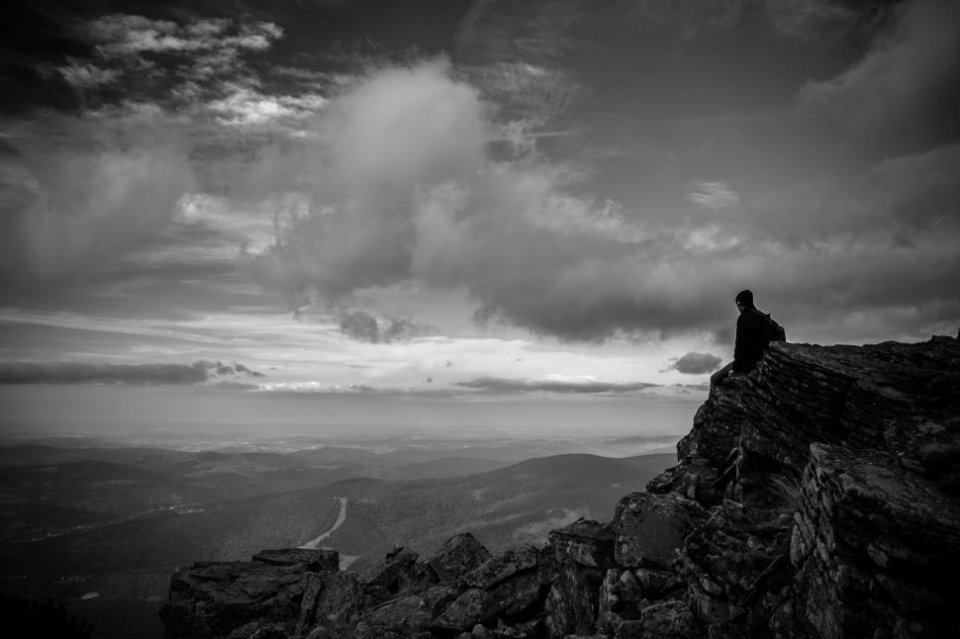
We often imagine faith as standing confidently on a mountaintop with both hands lifted toward heaven. But much of real faith doesn’t look like that at all.

    • It looks like making breakfast after you’ve cried yourself to sleep.
    • It looks like driving to work with an empty seat beside you.
    • It looks like paying bills you never expected to face alone.
    • It looks like praying without eloquence because all the polished words have worn out.

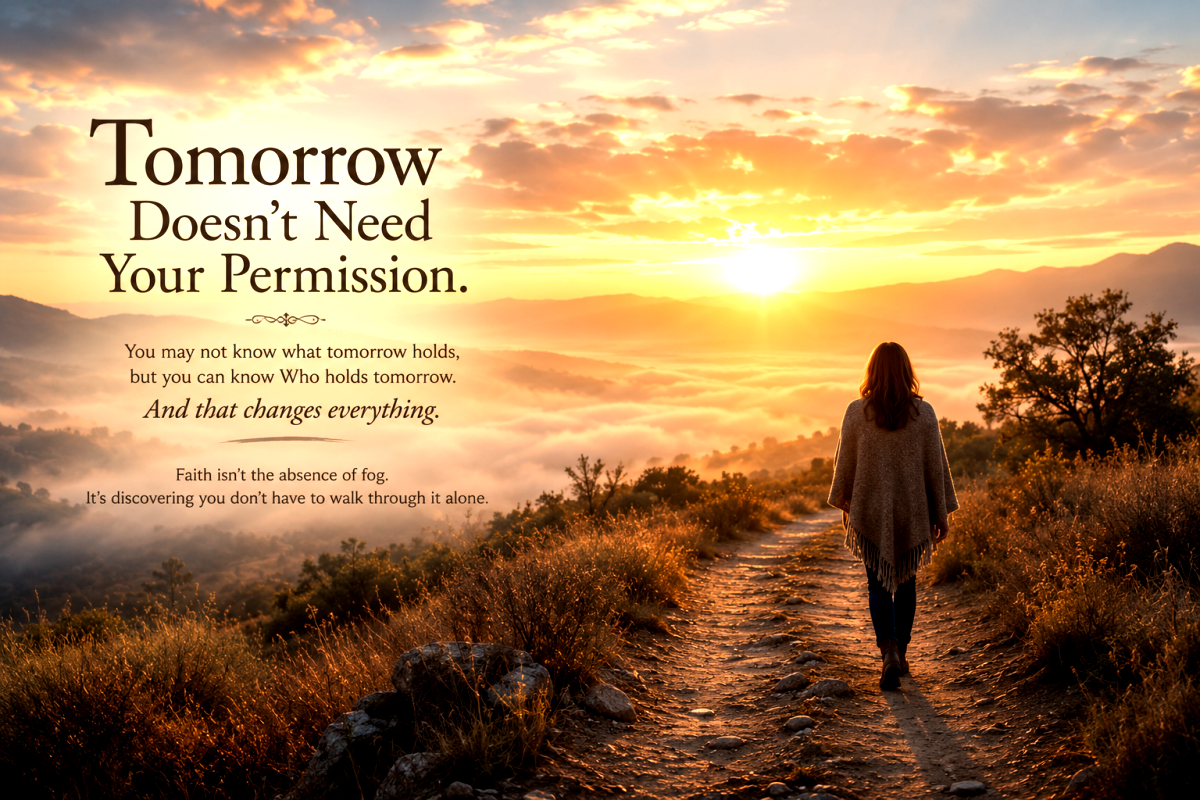
Sometimes faith is simply taking one more step when the road ahead disappears into fog. Not because the fog has lifted. Because Love hasn’t.

There is something deeply human about wanting tomorrow explained. \

    • We want details.
    • We want guarantees.
    • We want a map with every twist highlighted before we take the first step.
    • We want to know how long the pain will last.
    • We want to know that the people we love will be okay.
    • We want to know that we will be okay.

Life smiles kindly at those questions… and answers very few of them. Instead, something quieter is offered.

Presence. Not explanations. Presence. Not certainty. Presence.

The older I get, the more I notice that God often gives us enough light for today while keeping tomorrow folded safely in His own hands.

At first, that can feel frustrating. We would rather receive an itinerary. Instead, we receive companionship. Perhaps certainty was never the greater gift. Perhaps companionship always was.

That realization doesn’t erase grief. It doesn’t suddenly refill the empty chair at the dinner table. It doesn’t silence the ache that catches you off guard when you hear a familiar song, smell someone’s cologne, or walk past the grocery shelf where they always reached for the same brand of coffee.

Love remembers. And remembrance can be both beautiful and painful.

Yet somewhere in that sacred tension, another realization quietly begins to emerge.

The Father has not abandoned you simply because the road became difficult. He has not stepped away because your prayers have become shorter. He has not become disappointed because your confidence occasionally gives way to tears.

Some of the strongest faith you’ll ever discover doesn’t look strong at all.

    • It looks like whispering, “Father… please stay close.”
    • It looks like choosing kindness when your heart is tired.
    • It looks like getting out of bed one more morning.
    • It looks like believing that even if you cannot see beyond today, the One who loves you already can.

Perhaps faith isn’t the absence of fog. Perhaps faith is discovering you don’t have to walk through it by yourself.

If today feels uncertain, you’re in good company.

Throughout history, countless men and women of deep faith have stood where you are standing now. They didn’t always understand what God was doing. They didn’t always receive immediate answers. They didn’t always feel courageous. But they discovered something that certainty could never have taught them.

God is often most deeply experienced in the places where we finally run out of our own ability to see.

Maybe that’s where you are today.

If so, be gentle with yourself.

    • You are allowed to miss someone.
    • You are allowed to feel overwhelmed.
    • You are allowed to have questions that remain unanswered for a while.
    • You are allowed to rest.

God has never required perfect emotional weather before walking with His children. He has always been willing to meet them in storms.

If all you can manage today is one small step… take one.

If all you can pray is, Fatherstay close.”  That is enough.

If all you can do is breathe deeply and trust that Love has not forgotten your address… that is enough too.

Tomorrow will arrive when it arrives. And when it does, you may discover something beautiful. The strength you needed wasn’t waiting for you yesterday. It will arrive with tomorrow’s grace. Because the Father has always been faithful that way.

You may not be able to see tomorrow. Neither can anyone else. But perhaps the goal was never to see farther. Perhaps it was simply to discover that Love can see farther than you can…

and has been quietly walking beside you the entire time.

The Quiet Loneliness of Strong People, Whom No One Checks On

There is a kind of loneliness that doesn’t look like loneliness. It doesn’t announce itself, ask for help, or break down in obvious ways. It shows up in the lives of strong people. Those who are capable, the ones who handle things, and whom others lean on without hesitation. They are often admired, respected, and even relied upon, yet rarely checked on.

Why Strong People Are Often Overlooked

Strong people give off a certain signal. They seem steady, composed, and seem like they’ve got it handled, so others assume they’re fine. Not because they don’t care, but because strength is often misread as invulnerability. Capability gets mistaken for capacity. Reliability gets mistaken for endless reserves, and slowly, quietly, the strong ones become invisible in their own struggles.

Strength is often mistaken for invulnerability.

Most strong people didn’t choose strength as a personality trait; they learned it. They learned it because someone had to be steady. Because chaos didn’t leave room for collapse, and showing emotion felt unsafe, inconvenient, or unhelpful, so they adapted.

They became the listener, the fixer, the calm presence in the room, and over time, they learned an unspoken rule:

Don’t burden others. Don’t make it about you.

That rule may have kept things functioning, but it often came at a cost.

What Loneliness Looks Like When You’re the Strong One

This kind of loneliness isn’t loud. It looks like being surrounded by people, yet rarely asked how you’re really doing. It feels like always being the one others turn to, while having no one to turn to yourself, and shows up as exhaustion that rest doesn’t quite fix.

Strong people often feel grateful, and tired at the same time. Grateful to be trusted, tired of always being the container, and because they’re good at holding things together, their quiet need for care often goes unnoticed.

Strength Doesn’t Eliminate the Need for Support

Strength does not cancel the human need for connection. Being capable doesn’t mean being self-sustaining. Being resilient doesn’t mean being unaffected, and being dependable doesn’t mean being unbreakable.

Capability is not the same as capacity.

Strong people still need to be seen, need to be asked, and need space where they don’t have to perform competence. And when that space is missing, loneliness settles in… quietly, patiently, without drama.

Why Strong People Rarely Ask for Help

Not because they don’t need it, but because they don’t want to disappoint expectations. They don’t want to reverse roles. They’ve learned that asking feels like weakness, even when it isn’t.

Many strong people worry that if they stop being strong, everything will fall apart. So they keep going, keep showing up, carrying more than anyone realizes, and the loneliness deepens… not from lack of people, but from lack of reciprocity.

Strong people don’t need rescuing.
They need to be seen.

What Changes When Strong People Are Finally Seen

Something remarkable happens when a strong person is genuinely checked on; not casually or politely, but sincerely.

When someone asks (and actually means it) the armor can soften. The load can shift and the nervous system can finally exhale.

Strong people don’t need to be rescued; they need permission to be human.

A Quiet Invitation

If you are the strong one, this is not a call to harden. It’s an invitation to let yourself be known, even a little, by someone safe. To allow support without explaining or justifying it. To remember that strength includes discernment, not self-denial.

And if you know a strong person, check on them. Not because they’re failing, but because they matter.

The strongest people in the room are often the loneliest, not because they are distant, but because they are dependable, and in that moment when someone finally sees them, not for what they do but for who they are, something essential begins to heal.

Strength doesn’t mean standing alone.

Sometimes, it means letting someone stand with you.


The Power of One Thing, Done Every Day for 90 Days

There is a pattern so reliable that once you see it, you can’t unsee it. The pattern shows up in health recoveries that defied medical expectations, in artists who seemed to “come out of nowhere,” in businesses that began with pocket change and became engines of freedom, and bodies rebuilt, voices refined, fortunes formed, and lives reclaimed. The pattern is not talent, luck, or even motivation. It is one simple, controllable action, done every day, long enough to change identity.

Ninety days is not mystical, but it is long enough for resistance to surface and short enough for commitment to stay intact. Over and over again, history shows that when people cross this threshold, outcomes stop being random.

Below is a cross-disciplinary look at the best, clearest examples of this paradigm in action.

Health Recovery & Defying Prognosis

Stephen Hawking
Given only a few years to live with ALS, Hawking survived for decades—not by denial, but by daily engagement with purpose, intellect, and adaptation. His life was not saved by intensity, but by continuity.

Christopher Reeve
Told recovery was impossible, Reeve committed to daily respiratory training, physical therapy, and mental discipline. He exceeded expectations not by “trying harder,” but by never stopping the small things.

Selma Blair
Blair’s return to public life followed daily mobility, immune support, and self-regulation practices, sustained quietly over time.

Pattern:
Recovery followed daily agency, not dramatic intervention.

Weight Loss, Body Recomposition & Physical Comebacks

Adele
Her transformation came from consistent daily movement and nutrition structure, not extremes.

Tiger Woods
Multiple surgeries didn’t end his career—daily mobility, swing fundamentals, and recovery rituals rebuilt it.

Eliud Kipchoge
World-record performance was built on daily controlled miles and recovery, not heroic workouts.

Pattern:
Bodies respond to boring consistency faster than to intensity.

Bodybuilding, Modeling & Physical Aesthetics

Arnold Schwarzenegger
Built legend not just with lifting, but with daily posing practice, refining mind-muscle connection.

Frank Zane
Iconic symmetry emerged from daily micro-adjustments, not bulk obsession.

Tyra Banks
“Smizing” and camera confidence came from daily facial control and posing drills.

Pattern:
Aesthetic mastery is trained daily, not discovered.

Songwriting, Acting & Performance Arts

Ed Sheeran
Wrote thousands of songs through daily writing and live performance. Hits were inevitable by volume.

Taylor Swift
Maintains daily songwriting habits, even outside album cycles.

Meryl Streep
Renowned for daily accent and character drills—freedom built on repetition.

Jerry Seinfeld
Famously used a daily joke-writing chain, never breaking it.

Pattern:
Creative brilliance is the output of streaks, not inspiration.

Business Creation From Nothing

Sara Blakely
Built Spanx by making sales calls every day, refining one pitch at a time.

Phil Knight
Nike began with daily shoe selling out of a trunk—relationship by relationship.

Pat Flynn
After being laid off, committed to daily content and service, letting trust compound.

Pattern:
Capital follows daily execution, not ideas.

Starting With Almost Nothing: Micro-Capital Strategies

One client’s insight—saving $5.55/day for 90 days to create a $500 business seed—is not an anomaly. It’s a blueprint.

    • Daily micro-saving → first asset (tools, inventory, hosting)
    • Daily flipping → rolling capital
    • Daily sales outreach → commission cash flow
    • Daily content → attention asset → monetization
    • Daily reinvestment → stacked ventures

Ninety days trains inevitability.

Why This Works When Most Plans Fail

Most people fail because they:

    • Try to change too much at once
    • Rely on motivation instead of structure
    • Quit before identity shifts

Ninety days forces three things:

    1. Decision removal – no daily debate
    2. Identity change – “this is who I am now”
    3. Compounding – effort starts working for you

This is why wildly different outcomes—health, wealth, art, recovery—can share the same engine.

What If It Doesn’t Work?

The question that always comes up is, “But what if it doesn’t work?”

It’s a fair question, but it’s also the wrong stopping point.

If you are not on your deathbed, if you still have breath, awareness, and agency, then nothing has failed. One 90-day cycle that doesn’t produce the outcome you hoped for is not a verdict. It’s training.

Here’s the part most people miss:

When you complete 90 days of doing anything, even if the goal doesn’t land, you are no longer the same person who started.

You’ve trained:

    • Discipline under boredom
    • Follow-through without emotional reward
    • Structure instead of impulse
    • Identity instead of intention

That alone puts you ahead of most people.

So if the outcome wasn’t what you wanted, the response is not quitting. The response is repositioning.

    • You don’t abandon the process.
    • You refine the aim.
    • You adjust the strategy.
    • You choose a different “one thing.”

And now—this is important—you do it as someone who already knows how to show up daily. That’s a massive advantage.

Most people quit at discouragement because they think effort without immediate reward means they’re “bad at this.” In reality, they simply haven’t stayed in motion long enough to find the right lever.

Breakthroughs are rarely the first attempt. They are usually the second, third, or fourth well-executed cycle.

    1. The first 90 days teach you how to do 90 days.
    2. The next 90 teach you what works.
    3. The next 90 compound everything.

This is why persistence isn’t blind stubbornness; it’s intelligent endurance.

You don’t cling to a failed outcome. You keep the habit and swap the target. Same discipline. New direction. Better odds.

It comes down to this: People who eventually “make it” are not those who always pick the right goal. They’re the ones who never stop running 90-day experiments on themselves.

So don’t quit. If something didn’t work, reposition. If the strategy was off, adjust. If the timing was wrong, keep moving. Do something else for another 90 days.

Because every cycle strengthens the muscle that actually matters, the one that makes breakthroughs inevitable. And when it finally clicks, it won’t feel like luck. It will feel like recognition.

You’ll realize you were never failing. You were training for the version of you that couldn’t quit anymore.

The Only Question That Matters

Not: What’s the best program?
Not: What if it doesn’t work?
Not: What will people think?

The question that changes everything is: What is one small action I can do every day for the next 90 days—without negotiation?

Not forever or perfectly. Just long enough. Because once someone proves they can do one thing daily, they’ve unlocked the master key.

After that, results stop being mysterious. They become predictable, and when people ask how you did it, you won’t have a dramatic answer.

You’ll simply say: “I did one thing. Every day. Long enough.”

That’s not motivation; it’s mastery.