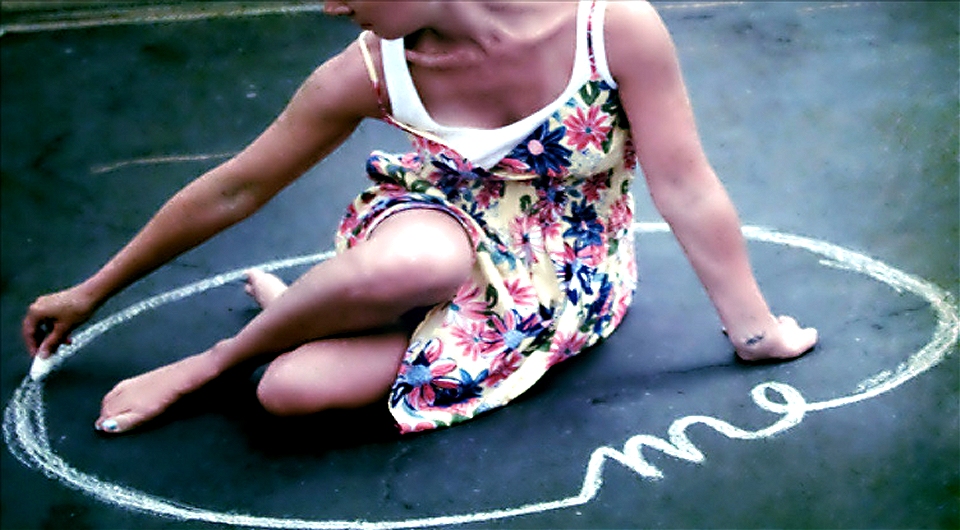
Prison Warden or the Love Warrior Choosing Love Over Control

When someone we love is making destructive choices, something interesting happens inside of us. Part of us wants to rescue. Part of us wants to reason. Part of us wants to fix. And if none of that works, another part quietly begins building a prison. Not always with steel bars. Sometimes with lectures. Sometimes with ultimatums. Sometimes with shame. Sometimes with silence. Sometimes with rules that quietly say, “Become who I think you should be… and then I’ll feel okay.”

I understand. I’ve been there. Watching someone you care about spiral is one of the most painful experiences a human being can endure. When love hurts, control begins looking like compassion. It rarely is.

Two Ends of the Spectrum

Human relationships exist across a wide spectrum. There are moments when immediate protection is necessary. If someone is violent, abusive, or placing others in danger, society has created systems designed to establish boundaries and accountability. Those systems have their place. But most of us aren’t judges. We’re parents. Friends. Spouses. Children. Co-workers. Neighbors. And in those relationships, another option exists. I call it becoming a Love Warrior.

The Love Warrior Leads with Love

A Love Warrior doesn’t pretend destructive behavior is healthy. A Love Warrior doesn’t excuse addiction. Or abuse. Or manipulation. Or dishonesty.

Love doesn’t become blind. It simply refuses to stop seeing the person beneath the behavior. That changes everything.

Instead of asking, “How do I make them stop?”

The Love Warrior begins asking, “What kind of pain could create behavior like this?”

That question changes the atmosphere. Not because it solves the problem. Because it changes the person asking it.

Walking Around in Their Shoes

Here’s an experiment. The next time someone disappoints you… Instead of saying, “I would never do that.” Try asking, “If I were behaving exactly like that… what might be happening inside me?”

Not because you’re right. Because you don’t know. And neither do I.

No one can fully know another person’s internal world.

We see behavior. We rarely see the emotional weather producing it. Fear. Loneliness. Shame. Trauma. Confusion. Exhaustion. Grief. Mental illness. Old wounds. Or perhaps something we’ve never experienced ourselves.

Curiosity opens doors that certainty quietly locks.

The Illusion of Intervention

Many interventions begin with beautiful intentions. “We’re doing this because we love you.” Sometimes they’re necessary. Often they’re not. Too frequently, they create temporary compliance while resentment quietly accumulates beneath the surface.

Pressure can change behavior. It rarely transforms the heart.

The person learns what everyone wants to hear. The performance improves. The relationship doesn’t.

Eventually, the pressure cooker finds a release. Usually with greater damage than before.

You cannot force someone into becoming themselves.

Sacred Space

One of the greatest gifts you can give another human being is sacred space. Not approval. Not agreement. Not enabling. Space.

Space to wrestle. Space to fail. Space to discover. Space to become responsible for their own life.

That can feel unbearable for the people standing nearby. Especially when we desperately want to help. But another person’s journey belongs to them. Not to us.

Boundaries Are Still Love

Choosing love does not mean abandoning wisdom. Love has boundaries.

You may need distance. You may need to protect your family. You may need to protect your finances. You may even need to say, “I love you deeply, but I cannot participate in this.”

Those aren’t contradictions. Those are healthy expressions of love.

Boundaries are not punishment. They are clarity.

A boundary protects both people. Control attempts to own both people.

There is a tremendous difference.

Will You Lose Them?

Maybe. That possibility hurts. Deeply. But remember something important.

You are responsible for your choices. They are responsible for theirs.

Loving someone does not make you responsible for becoming their conscience. Or their jailer. Or their rescuer.

Every one of us arrives carrying a different story. Different wounds. Different fears. Different lessons. Different timing.

We cannot legislate another person’s transformation. Growth is always an inside job.

Choosing Your Uniform

Every difficult relationship quietly asks us a question. Which uniform will you put on today? The Prison Warden? Or the Love Warrior?

One manages behavior. The other protects dignity. One relies primarily on fear. The other invests relentlessly in hope.

One asks, “How do I make them change?” The other wonders, “How can I become a safe place while they discover who they are?”

Not everyone will change. Some won’t. But everyone deserves to be seen as more than their worst day.

Love does not guarantee a happy ending. Neither does control. But love allows us to remain fully human while someone else finds their own path. And sometimes… that is the greatest gift we can possibly give.

Reframing Tools for Becoming a Love Warrior

When you notice your inner Prison Warden taking over, pause and try one of these instead.

    1. Replace Judgment with Curiosity

Instead of: “What’s wrong with them?”

Ask: “What might be hurting inside them?”

    1. Separate the Person from the Behavior

The behavior may be unhealthy.

The person still possesses dignity.

Hold both truths at the same time.

    1. Try On Their Shoes

Ask: “If I were acting exactly like this… what experiences might have brought me here?”

Not to excuse. To understand.

    1. Remember You Cannot Read Minds

Behavior is visible.

Motives rarely are.

Humility creates compassion.

    1. Exchange Control for Influence

You cannot control another adult.

You can become someone whose presence is safe enough to influence them.

    1. Protect Without Punishing

Healthy boundaries say, “This is what I need.”

Punishment says, “Now you’ll suffer.”

There is a world of difference.

    1. Bless Instead of Fix

Sometimes the greatest prayer is, “May you find your own way.”

Not every battle belongs to you.

    1. Let Reality Become the Teacher

Natural consequences often teach more effectively than lectures.

Resist interrupting every lesson life is offering.

    1. Practice Sacred Waiting

Growth is rarely immediate.

Love learns patience.

Control demands schedules.

    1. Ask Better Questions

Instead of, “How do I change them?”

Ask, “Who do I become while walking beside them?”

That question changes everything. Because the Love Warrior’s greatest victory is not controlling another person’s life. It is refusing to lose their own heart while loving someone through theirs.

Everyone Wants Unconditional Love Until It Costs Them Something

There’s a moment I’ve seen happen more times than I can count. It taps on your shoulder in a conversation or a relationship, sometimes in the middle of an ordinary day, and if you’re paying attention, you can feel it. Someone says they want to be loved unconditionally. I believe them. They’re not being manipulative or trying to take advantage of anything. They really mean it. They want to be known… and not rejected. They want to be seen clearly… and not reduced to their worst moment. They want to feel safe enough to be human without constantly feeling evaluated. That desire is real and honest. It runs deeper than most people are willing to admit.

Here’s what I’ve also seen: The moment unconditional love stops being an idea… and starts becoming an experience… something shifts. Not outside of them; inside.

I remember sitting with a couple, not in crisis, not on the edge of collapse, but in that quiet place where something had started to feel… off.

Nothing explosive happened. No betrayal or major event. Just tension that didn’t quite make sense. The kind that lingers in the room even when no one is speaking.

At one point, she said, “I just want to feel loved without having to earn it all the time.” And he nodded. Not defensively, no eyeroll; he actually agreed.

Then something subtle happened over the next few weeks. He started changing, not in personality, but in posture. He became… steadier, less reactive. Less pulled into every emotional shift and less likely to defend himself or escalate when tension rose.

Instead of creating peace right away, it created confusion.

She said to me, “I don’t know what’s happening. He’s not reacting the way he used to.”

And I asked her, “Do you feel less loved… or less able to control the rhythm of the interaction?”

She paused. Not because she didn’t understand the question. Because she did.

Unconditional love sounds beautiful until it removes the patterns we’ve learned how to navigate. Because most relationships, whether we realize it or not, run on some form of emotional exchange.

If I lean in, you respond. If I pull back, you pursue. If I get upset, something shifts. There’s a rhythm to it. A predictability, and over time, people learn how to move inside that rhythm. Not always consciously, but effectively.

Then unconditional love enters the room, and it doesn’t follow that rhythm.

Unconditional love doesn’t withdraw when pressure rises, it doesn’t escalate when challenged, nor does it perform to stabilize the moment. It stays. Calm. Clear. Unmoved in the ways people expect, and that’s when things get interesting.

I have seen spouses grow uneasy when their partner remained steady instead of reactive, not because something was wrong, but because something familiar was missing.

I have seen leaders become suspicious when they were corrected without being diminished. No edge or humiliation; just clarity, and strangely, that made them more cautious, not less.

I have seen children push harder against calm, consistent boundaries than they ever did against explosive ones. Why? Because reaction is something you can work with, but calm, anchored presence? You have to adjust yourself to meet that. You can’t move it.

This is where most people begin to feel the cost.

Unconditional love is going to cost you. Not like you might think.

Unconditional love won’t cost you your voice, your boundaries, or your ability to walk away when something is not right. It will cost you something more subtle than that.

Unconditional love will cost you your ability to rely on reaction as a form of control. It costs you the small, almost invisible ways we try to stabilize relationships by influencing how others feel, and for many people, that’s disorienting, because they don’t realize how much of their relational security has been built on that exchange.

Some people hear “unconditional love” and assume it means: Stay no matter what. Accept everything. Endure without question.

I don’t see it that way. Not at all.

Unconditional love, as I’ve come to understand it, and as I’ve watched it actually work in people’s lives, has nothing to do with removing standards. It has everything to do with removing reactivity.

It’s the ability to say, “I care about you. And I’m not going to participate in something that damages either of us.”

No anger or performance, without needing the other person to agree in order for you to stay grounded.

That’s not weakness. That’s strength most people haven’t practiced yet.

There’s a turning point.

You don’t arrive there through theory. You arrive there in a moment where things could go the way they always have… but don’t.

Where you could react… but choose not to.

Where you could try to shape the outcome… but instead stay clear, present, and steady.

Afterward, something feels different. Not necessarily easier. But cleaner. More aligned. More… true.

If I were to reduce this into something simple enough to carry, it would be this:

Unconditional love does not remove boundaries. It removes the need to control.

Maybe even more honestly:

Most people want unconditional love, until it asks them to grow beyond the patterns they rely on.

If you’ve ever found yourself saying, “I just want to be loved for who I am…” That’s not wrong or naive. But there is a second part to that truth that doesn’t get talked about as often. To receive that kind of love… you have to become someone who can stand inside it.

Without needing to shape it. Without needing to test it. Without needing it to behave the way you’re used to.

That’s where this becomes less about what you receive… and more about who you become.

Love Like It’s the Only Thing That Matters

These ideas are explored more deeply in Love Like It’s the Only Thing That Matters, where unconditional love is not treated as a feeling, but as a disciplined, steady way of being that reshapes relationships over time.


They Get Angry When You Set Boundaries

Don’t be surprised when people get upset at you when you’re going about the business of setting boundaries in your life. Often the first response you are met with is some form of rage. When you begin to take a stand for yourself and protect your own sacred space, they get angry when you set boundaries.

Bullies are used to having the upper hand and getting what they want. When somebody starts drawing lines in the sand, insisting that they not be crossed, this rocks the bully’s world. They are bound to respond negatively, out loud or more silently/passive aggressively. Either way, you know your decision to stand up for yourself has upset them.

If you’re dealing with someone who is angry because you’ve asserted your right to set and enforce a boundary, then chances are the responsibility lies with you for allowing this person to take advantage of your generosities or overpower you prior to having to set this boundary.

At first, the inconvenience may have been mild enough that you were able to overlook it, but after a while, it was clear that you were being taken advantage of, and now it’s time to take care of business.

If your bully is masterful, don’t be surprised when he or she responds with vile accusations of your being at fault, or insisting that you are the bully who is inconsiderate and trying control or manipulate the bully. This intimidation tactic will work sometimes to get the bully what he or she wants. Be prepared for it and don’t fall for it.

It’s not that these people are bad, wrong, or broken. They simply have not learned how to respect the rights of other people up ‘til now. By your setting of boundaries and sticking to them, you are helping the bullies learn that rights of others exist and should be respected. They may learn this valuable lesson from you and others who start to exercise their rights to their own sacred space over time.

So, how do you respond when someone expresses anger at your enforcement of a boundary?

Taking the high road would be not responding at all. Think of this as his or her protesting too much or acting out as his or her inner child tantrum runs wild. Maintain a compassionate state of mind and do not respond. Let the bully fully express his or her rage as much as possible but don’t take it personally.

Remember, the problem, here, is not with you, no matter what they say. Zip your lip, understand that he or she is doing the best he or she can do with the tools that he or she has at the time, and walk away with your boundary firmly in place.

There is nothing to feel bad about. Things are as they are, and people will respond in whatever way seems to fit their state of mind at the time. That’s the way it is. And if someone doesn’t respect your right to set and adhere to a boundary you’ve set, that’s on them, not on you.

The setting of boundaries is one of the methods you can use to keep from losing your energy. Take it back and keep people from draining your energy by limiting the control that bullies, toxic friends, or energy vampires might have had over you.

Setting Boundaries

Are you ready to move your life to the next level?

It’s necessary for you to clearly define your work area. It’s the same thing as having an office at your workplace so that you can have the ability to close the door and concentrate on the important things that need tending to in an effort to maximize your effectiveness.

The same goes for your life. You need to create for yourself a safe area to do the work of planning, preparing, growing and expanding so that you can move to the next level. To accomplish this, you must create healthy boundaries.

setting boundaries

Establishing Healthy Boundaries

Before you can go about setting boundaries to hold the sacred space for you to conduct your personal work, you might consider taking some time to go inside and discover within yourself where your boundaries ought to be located.

You know when someone in your circle of influence says or does something that doesn’t make you feel good. In fact, it may make you feel downright bad. Easy: draw a line in the sand right there. Write it down and keep going, until you have demarcated your personal safe zone.

But wait, there’s more…

Who are the people in your life who drain your personal reserves, toxic people who destroy your sense of wellbeing, who disrespect, hurt or abuse you? See them clearly for who they are, and begin to consider protecting your sacred space from these emotional (and/or physical) intruders.

Setting Boundaries

Find ways to either control the space between you and them or protect your personal space from their negative influence. Inform people what is acceptable and what is not acceptable as you define and protect your sacred space with love and respect.

This was an expensive step for me in my practice as I work with a lot of type A personalities who regularly disrespected me – not in an effort to berate me directly, but as a way to fully express themselves while we conducted deep work – while is it was effective, it didn’t make me feel good in those moments.

I had to establish a boundary and be willing to back it up. The day I drew the line in the sand, I called each person who would have crossed the line in the past, had I established it. I clearly communicated to them about my decision to set this clear boundary and enforce it. Enforcing it would mean severing our professional relationship. I had to come to the point where I valued myself enough, that I would no longer let people disrespect me, no matter how much they were willing to pay me to let them do it.

Some of the clients were offended and severed the relationship at the conclusion of the call. A few stayed but crossed the line and I promptly cut them off, and they departed disgruntled, while others continued to work with me, keeping their emotions in check when directed at me.

This helped me to create an exciting safe place for me to work, filled with love and mutual respect, empowering my clients and I to flourish within the space that we do our best work together.

Setting Boundaries

Once you establish a boundary, you must go about the work of setting boundaries by clearly defining them with the potential offenders, as they should be allowed the courtesy of honoring your boundary out of respect to you.

In terms of the more violent offenders, it may be counterproductive to approach them face to face. You need not face extraordinary drama or abuse when setting boundaries. In this case, it may be in your best interest to just create distance – a safe space – between you and the more difficult people in your life. You will be better off without them.

Enforcing Boundaries

Unfortunately, setting boundaries without enforcing them is folly. Enforcing the boundaries you have set can be the most difficult part of the boundary process. It may include saying goodbye to people you care for, love, admire, respect (or in my case, pay you good money). Nevertheless, if you’re setting boundaries, you must enforce them.

You will discover, as you define and protect your space, you will attract more centered, supportive and loving people to fill the vacancies left by those who moved away from your circle of influence and thrive as you continue to pursue the sacred work of you and achieving your highest and best.