A Return to Love by Marianne Williamson

Sometimes you run across a book which is so timelessly written that it is inspirational at all times. Every time you revisit it, new revelations appear via changes in your own evolution. Such a book is A Return to Love by Marianne Williamson.
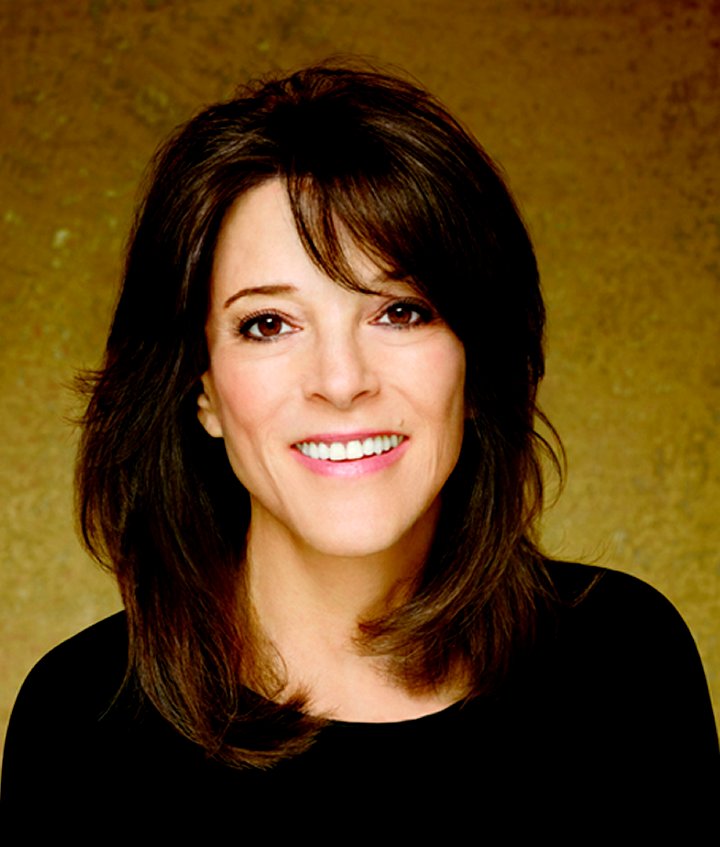
While the basis of Williamson’s work is based on a Course in Miracles, don’t let that inhibit your potential to gain access to her intuitive interpretations of the course’s material.

The Jewish author who is well-educated and incredibly intelligent details her breakthrough to love via the course’s materials. A Return to Love awakens and inspires all its readers of the possibilities which avail themselves to us, if we only believe, see, and refuse to deceive, ourselves and others.

If you know what it’s like to run into a relationship only to find that heartbreak and discontent are the rewards for your daring to take a chance for love, Williamson’s book will offer inspiration and hope, while challenging your base beliefs which fail to serve you in any authentic manner.

Williamson is transparent about her own experiences and relationships as she bears all to the reader in a smart and honest manner, delineating her own failed attempts at looking for love in all the wrong places.

If you are willing to embrace the material, you can separate yourself from your ego and bask in the presence of your empowered personal freedom. Loving and caring for yourself and allowing this love to expand and envelop not just potential suitors, but anyone that comes within a stone’s throw of you.

If you choose, you could let go of your critical view of others and insecurities which set you and your partner up for a tragic failure. At one moment you can be flying high “in love,” only to leave behind a smoldering crash site.

I applaud Williamson’s daring to challenge readers to consider the idea of entertaining the idea of unconditional love, a primarily unpopular point of view these days in a world overpopulated by wounded victims of Hollywood-inspired love.

Yet, if you dare to choose to love unconditionally, you are rewarded by an unrestrained peace, harmony, and love which spreads across the expanse of your life.

Relationships provide us with opportunities to see those pieces of us which lay hidden within our psyches, tucked away, and preventing us from becoming our highest selves. Understanding this creates a new perspective on all relationships, even – and more importantly – romantic relationships.

Romantic relationships allow us to be naked, not physically so much as emotionally. As you stand before your mate emotionally exposed, those hidden parts of you rise to the surface, and you can become aware of what stands between you and your greatest love.

From this perspective, if you are triggered by your loved one, it is not an assault; it is an invocation to look deep inside and an opportunity to grow and change. This is the miracle of true love.

Approaching love with a divine combination of humility, love of yourself, and passionate love, without judging others or usurping power or ideals over your mate, ushers in the basis of unconditional love, “I love you no matter what,” in contrast to, “I love you if…”

Marianne Williamson’s prayer for impending love goes something, like this:

“Dear God, You know and I know, I have more potential for neurosis in this area than in any other.

Please take my attraction, my thoughts and feelings about this person and use them for your purposes.

Let this relationship unfold according to Your will.

Amen.” ~ Marianne Williamson

For more information see: A Return to Love by Marianne Williamson

Unconditional Love Makes You Angry

You’re not alone if the idea of unconditional love makes you angry.

You’ve been trained to desire unconditional love. You want to be loved for who you are, everything, the good, the bad, your adorable traits and the mistakes you have made and may make from this day forward. To feel as though you could be accepted and loved no matter what is what you long for.

You can look back on decisions and actions you’ve initiated in your past didn’t turn out the way you planned and may have turned out badly, possibly making you look and feel stupid. You know you could have done better if given a second chance. After all, your intentions were pure when you did it or allowed it to happen.

To be loved, regardless of the stupid things you’ve done in the past, not judged for those things you could have done better and understood as if anyone in the same situation might have done the same thing seems reasonable. And this is what you long for.

While this kind of unconditional love is what you desire, to imagine the offering of such a love to another feels like a preposterous proposition. This is when the idea of unconditional love makes you angry.

What? Love someone no matter what? Do you think I’ve learned nothing from all the pain I’ve endured throughout the course of my life? Have you lost your mind?

If I’ve learned anything, I know you can’t trust anyone, particularly someone you care about, and the more you care about them, the more they will hurt you, and the less you can trust them.

You have surrounded yourself with a protective forcefield in an effort to keep yourself safe from disappointment or risk of being hurt.

Congratulations. You’ve built for yourself and voluntarily checked-in to your hospital fortress where you can find the love you seek from within and heal, because life has been hard, and you need this time to focus on you, isolated from potential harm.

No one would blame you for feeling bad, sad, or mad while suffering from your wounds in your love hospital for recovery. While recovering from these wounds, of course, the idea of unconditional love makes you angry, anyone else in the same situation would feel the same way.

You are suffering from a form of Post-Traumatic Stress Disorder (PTSD), not unlike any other form of PTSD.

If it weren’t for the support of others in their own various stages of love wound recovery, you would be totally alone and isolated in your fortress hospital, and with others who have are also suffering from love’s wounds you develop a supportive camaraderie. This kind of support can prolong your healing as you feel more comfortable in treatment than taking the risk of re-engaging in life outside the walls.

Isn’t the idea of checking one’s self into an isolated healing environment to become well enough to leave the facility and start to live your life again? To not do so transforms your hospital into a prison of your own making to serve out our own self-imposed life sentence. You needn’t suffer the extreme self-abuse of exercising your own love death penalty.

You’re better than that.

You can heal. In fact, you may be far more healed than you believe yourself to be. How many completely healthy people are in hospitals or recovery programs far past their healing because it’s safer to be in the hospital than to face your fears outside in the real world?

It’s time to get up and ambulate. Get outside and exercise your ability to love.

You can still exercise love when the idea of unconditional love makes you angry. No need to push through to unconditional love, but to start loving a little at a time would be highly beneficial.

You might find it helpful to see others as just like you.

You understand yourself so well and you would never intentionally do anything to hurt anyone else, unless in that moment, you felt like you had no other choice, as you were in fully engulfed in the fight-or-flight response. You felt like you had no other option(s).

You don’t have to love what someone else does, but you can still love the person.

Isn’t that what you want?

That is not to say that you allow anyone to abuse you. You have the right and obligation to separate yourself from dangerous situations, but let those situations be an authentic potential risk to you, your body, your mind, or your spirit. Don’t let your fear-inspired imagination to override your ability to find potential danger everywhere you look.

Instead, look to understand and realize that the person with whom you are feeling conflict is looking back at you in the mirror. If you were that person, having lived the same life, you would have done the same thing.

You can feel compassion for that person (not feeling “sorry” for them because that insinuates your superiority), trying to understand what it might like to be like to have to feel as though you might feel like you have to live life, like that. It could make you sad, and even react in a less defensive manner.

Even if the idea of unconditional love makes you angry, don’t let it stop you. Find ways to exercise your love. Start with letting friends in a little deeper. Find a child to love. Make occasions for you to engage in activities that you love, and allow your activities to grow to include more people to participate in those things that you love in public.

Get up. Get out of your love hospital, even if only briefly at first, and one day you will find you no longer rely on your self-restraint and self-imposed love prison sentence.

You have complete control of your release date. You get to leave early based on your healing and good behavior if you want to.

Maybe today is the day.

Write down today’s date, mark it on the calendar, and walk out on your own accord.

Set yourself free.

The greatest love is waiting for you.

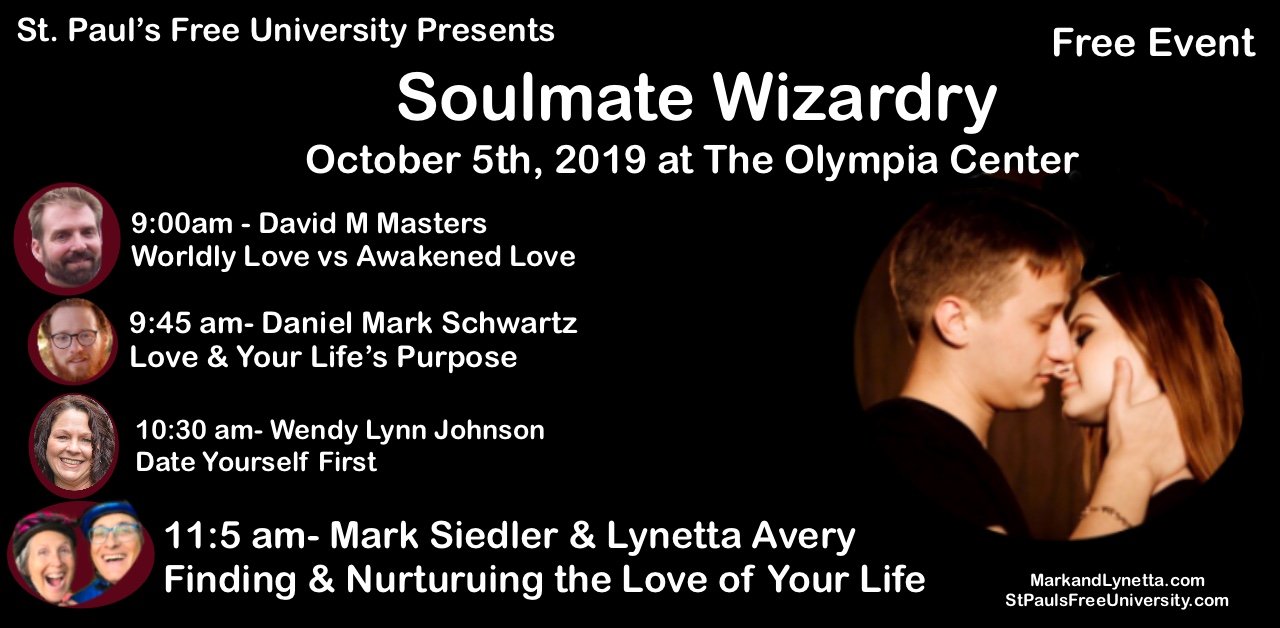
See you at the Soulmate Wizardry event.

Nakedness in Relationships

Relationships can be scary, especially the more intimate the relationship the greater the exposures. There are various degrees of nakedness in relationships. In less intimate relationships there is less nakedness, while the most intimate relationships include full nudity.

The Journey to True Intimacy

In every relationship, there are degrees of nakedness—not physical nakedness, but emotional, mental, and spiritual nakedness. It’s about peeling back the layers that shield your most authentic self. While casual relationships require little vulnerability, the most profound connections demand total emotional nudity—a state where nothing is hidden, and everything is shared.

The Universal Desire for Connection

As human beings, we all crave connection. We want to be seen, heard, and understood for who we truly are. Beneath the surface, we long to drop our masks, to let go of the carefully constructed persona we present to the world.

This public version of you—this polished, composed act—is a reflection of how you want to be perceived. You’ve spent years crafting it, and to most people, it’s convincing. But deep down, you know it’s not the whole story.

Behind those layers lies the real you—the vulnerable, unfiltered, unadorned you. The part of you that longs to be accepted without pretense.

The Layers We Wear

We reveal ourselves in layers, carefully and selectively, depending on the nature of the relationship. With acquaintances, we stay safely covered, showing only what’s necessary to maintain social norms. With friends and family, we shed some of those layers, offering glimpses of our true selves.

But even with those we hold closest, we often keep certain layers intact. There’s a part of us that remains hidden, guarded, afraid of judgment or rejection.

And yet, deep inside, we yearn for something more. We long for a relationship where we can strip away every layer, where we can be entirely naked—not just in body, but in heart and soul.

What Does It Mean to Be Truly Naked?

True nakedness in a relationship is about being fully exposed—allowing someone to see the scars, the fears, the dreams, and the vulnerabilities that make you who you are. It’s not just about sharing what makes you happy or what makes you laugh, but also revealing the moments of sadness, insecurity, and doubt that have shaped your journey.

It’s the kind of intimacy where your partner knows:

    • What has hurt you in the past.
    • The fears that keep you awake at night.
    • The dreams that make your heart race.
    • What makes your soul sing, beyond the superficial.

This level of nakedness is the foundation of true intimacy. It’s about entrusting someone with the most vulnerable parts of yourself and trusting that they will hold those pieces with care.

The Fear of Vulnerability

Even as we desire this profound connection, fear holds us back. Can we trust someone with our most intimate truths? What if they judge us? What if they use our vulnerability against us?

For many, these fears aren’t hypothetical. You may have experienced betrayal before—confiding in someone, only to have them dismiss your feelings, betray your trust, or weaponize your openness.

These painful experiences teach us to build walls, to keep others at a safe distance. But while walls protect us from pain, they also keep us from love.

The Promise of a Soul Mate

The rarest and most beautiful relationships are those where two people meet in full nakedness—seeing and accepting each other completely.

This is the essence of a romantic soul mate. It’s not about perfection; it’s about authenticity. A soul mate is someone who loves you not despite your flaws, but because of them. Someone who treasures your scars as part of your story and holds space for your growth and healing.

Throughout life, you may encounter many potential soul mates—some as friends, some as lovers. But fear often prevents us from exploring these connections fully. How many people, later in life, look back with regret, wishing they had taken the chance to be vulnerable with someone who might have been the love of their life?

Overcoming Fear

To experience true intimacy, you must be willing to confront your fears. Vulnerability is risky, but it’s the only path to genuine connection.

When fear arises, replace the “what ifs” of doubt with the “what ifs” of possibility:

    • “What if this person is the one who will truly understand me?”
    • “What if I allow myself to be seen, and it leads to the most fulfilling relationship of my life?”

Don’t let fear hold you back. Take small steps toward openness. Share a little more of yourself each time. Be honest about your feelings, even when it’s uncomfortable.

Avoiding Regret

Life is too short to be ruled by “what ifs.” Don’t let potential soul mates pass you by because you were too afraid to be vulnerable. Yes, there’s risk in opening your heart, but there’s far greater risk in never trying.

Your soul mate is out there. They may not come wrapped in the package you expect, and the relationship may not fit neatly into societal labels, but they are waiting for you. All they need is for you to take the first step.

The Beauty of Nakedness

True intimacy isn’t about perfection. It’s about being real. Nakedness in a relationship means showing up as your whole self—raw, vulnerable, and unfiltered.

This kind of connection is rare, but it’s worth the effort. It’s the kind of love that heals wounds, strengthens your soul, and brings joy beyond measure.

Take the leap. Open your heart. Embrace the beauty of being fully seen and fully loved.

This is the gift of nakedness in relationships—the ultimate act of courage and the deepest expression of love.

You Know I Love You No Matter What You Do

The words we all need to memorize and speak to everyone as often as possible are, “You know I love you no matter what you do.” These words can change people and the planet we all inhabit.

How often do you look around and see what’s wrong with the world, what someone else is doing wrong, noticing things that just aren’t right, and you get frustrated?

You get acclimated to seeing things that are wrong at a very early age, when you were enjoying life, playing, having a good time… then all of a sudden, your parent bursts into your playtime and asks, “Did you do that?”

You could tell your parent was not happy about whatever it is. You didn’t do anything wrong, but your play did result in the thing your parent is questioning you about, so you nod your head and say, “Yes.”

Your honesty was rewarded by a scolding and you are promptly sent to your room. Your feelings are hurt because you didn’t do anything wrong, and you sense the injustice of someone you loved, depended on, cared deeply about, and trust is broken.

At the earliest of ages, you have become keenly aware that the world is a cruel place, full of people who may not be what you think they are, betrayal, and injustice, and you learn to lie, rather than to tell the truth, because you don’t deserve to be mistreated, like that.

Welcome to the world as we know it.

What if, instead, your parent said, “You know, I love you no matter what you do,” then asked you if you were responsible for whatever it was, and did not punish you for being honest?

What if, instead, your parent hugged you said, “That’s okay. I know you didn’t mean to do that. You were just going on about your life and having a good time. You didn’t even notice that thing. You are perfect, just the way you are. That thing can be fixed or replaced. You can’t. You’re precious.

“You know I love you no matter what you do.”

Instantly, your whole world changes.

The world at large changes, too, as you are offered this bit of love and kindness, instead of criticism or judgment, as the predominance of fear is replaced by the power of love, the whole planet is benefited from even the smallest act of it in the life of only one child.

What if that was the approach offered to many children? The impact would be exponential.

And it doesn’t stop there.

What if you were to apply this same concept to your partner? How do you think that might affect your relationship? “I love you no matter what you say, no matter what you do.”

What if you started treating your loved ones, friends and family the same way?

Try it at work…

You could go as far as applying this simple concept to every incongruent situation, circumstance, confrontation, situation, news flash, or negative thought with,

“You know I love you no matter what you do.”

Not followed by a, “but.” Just accepting that things are the way they are. The damage is done. You can’t go back in time and change it. You will have to fix or replace it, anyway.

You could go about the fixing of a thing, or scenario, and think of it as an upgrade, making it better than it was before, and celebrate the newness of it.

Or you could criticize and judge, just like you learned to, you were trained to do, and suffer the consequences of living in discomfort and keeping those around you in fear of not meeting your expectations.

For me and my house,

You know, I love you no matter what you do.

See you at the Soulmate Wizardry event.

Evolution of Love in Relationships

Then there is an emerging new paradigm in terms of romantic love and relationships which is altering the landscape of love and the partnering of two people. In this new style of loving and growing both independently and corporately there is no competition or discord as there is only love.

This, radical and expanded form of love is the evolution of love in relationships is non-competitive nor manipulative and centers around the idea of unconditional love.

The love as presented in the 7 phases of love is traditional romantic love. For couples to navigate modern-day, traditional love, entire industries, and even the government are supported by both the function and dysfunction of love and relationships in this fashion.

As a growing number of couples are moving into this evolutionary new style of expansive growth and love, already there are pairs of people who have not made a conscious effort to create this type of loving relationship.

Most of the couples living their lives amidst this evolution of love in relationships have made a conscious effort to allow this type of love to emerge and flourish in their lives, and the process is not easy, as it runs counter-intuitively to everything you’ve been taught, learned, or thought was expected of you in love and relationships.

Still, there are these couples who simply have arrived at healthy caring and loving unconditional love naturally. This is a clear indication that this is the next step in romantic love and relationships, and when this evolutionary love reaches critical mass, the entire world in which we live will change dramatically.

The world, which is based on the dysfunction of traditional love will no longer become sustainable and it will fall, making way for a new world of peace and harmony for all people and future generations.

This new love revolution is based on a combination of ancient traditions, emerging thought, and consciousness, resulting in a freely empowered style of love and loving that has both been long forgotten and never realized among the human race until now.

It’s not for everyone, as many surviving couples today are well-skilled and trained in the science of love as represented in the 7 phases of love, but if you’re feeling like there’s something more, a deeper, more sustainable and evolutionary love out there, your heart may be inviting you to move on to this expansive love.

If you feel you might like to participate in this new style of love and loving, you might consider investigating the idea for yourself.

Consider joining the evolutionary love revolution in loving like you never have before, in a higher, more satisfying style of love and loving, which promotes a better life, your best life, and makes the world a better place.

New love awaits you and yours. Seek out Awakening to True Love or any of the other emerging workshops and/or resources, if you dare enter the world of unconditional love by choice, coming to a bookstore and other media outlets near you.

An Awakening to True Love Workshop may be coming to your location.

True love will never be the same, again.

See you at the Soulmate Wizardry event.

No Matter What You Say No Matter What You Do

With all this talk about love, growing and expanding in love, raising your love vibration, and unconditional love, you might find it difficult to say (think and feel), “I love you no matter what you say. No matter what you do.”


It seems like the idea of no matter what you say no matter what you do is a far stretch from reality. No one would blame you if you thought it was impossible or beyond belief that anyone could say such a thing without lying or being deceptive. Yet, there are times when you, yourself, are likely to have loved to that degree.

If you think about it, you have probably held a newborn baby or a new puppy in your arms, and in that moment as you look into the eyes of that baby or puppy, it’s easy to say, think and/or feel, “I love you no matter what you say. No matter what you do.”

Even though you came into this life as a baby who was unconditionally loveable and unconditionally loving, fascinated by and loving everyone and everything no matter what, you were raised, reared, and reprogrammed to love conditionally.

Then later in life, very possibly right now, you are awakening to or intrigued by, the idea of there being such a thing as unconditional love. You might be wondering why no one seems to be able to love you no matter what you say no matter what you do. And while you can love somebody so much, “no matter what,” seems like just too much to ask due to your social programming or personal beliefs.

Understand there is no wrong way or right way to love. We all love the best we can and if you do not have much love for yourself, you will not have a well of love to draw from within to share with others. Loving the best you can is the best you can do and you are blessed to have any love at all, no matter how small.

The unlimited unconditional love of God is infinite and all around you. This infinite unconditional love permeates every cell of your body. Do not panic if the idea of all life and you being made of and animated by unconditional love. Just keep your mind open enough to consider if there was no love in you, your body would fall to the floor, lifeless.

You are unconditional love, though you have been conditioned by family, friends, and society to believe that love is an elusive energy which exists outside of yourself, if it exists at all. This sets the scenario where true love, if you haven’t given up on it altogether, can only be found in some other person. Disney and Hollywood have helped shore up this idea.

In your search for love, you doubtlessly have discovered that love (the love you have been taught to seek) is not what it’s cracked up to be and your experience has led you to believe love is misleading, dishonest, painful, and not worth it, at least not for long. Your experiences in love can reinforce a negative perspective in relation to this idea of love, and you may come to the conclusion, “There is no such thing as love.”

If you would like to be loved no matter what you say no matter what you do, then you must ignite the flame of unconditional love which is within you, and turn it to and focus it upon yourself.

Up until now, you have probably been your own worst enemy, second-guessing and berating yourself, seeing yourself as a victim of life. Not if you love yourself unconditionally.

If you want to love or be loved unconditionally, you must love yourself no matter what you say no matter what you do first.

When you love yourself no matter what you say no matter what you do, you can then share your love as it overflows from you and to those who you love and the world all around you, unconditionally.

I know it’s a stretch because you’ve been trained to believe that no one can be trusted, but in the vibration of unconditional love, trust doesn’t matter.

In your conditional state of love, you think, “But what if…?”

In unconditional love there is no what if; there is only I love you no matter what you say no matter what you do.

If you are not ready to conceive of the idea of unconditional love, there is no judgment, you are not doing it wrong. Just find a way to love the best way you can, for love is really the only pure energy which permeates all of life. Find it. Get it and give it any way you can.

Here, you are loved no matter what you say no matter what you do.

I Love You No Matter What

I talk about love, I’ve been in the love promotion business since I was a teenager, but what is love? Granted, love is many things and can be expressed and felt, imagined and contracted in so many ways, but what is love, really?

Love is one of the most profound and universal experiences we have, yet it remains one of the most misunderstood. At its highest and purest form, love transcends conditions, expectations, and circumstances. This kind of love—unconditional love—is the pinnacle of human connection. It says, “I love you no matter what.”

But what does it truly mean to love someone unconditionally, and how can we strive to embody this extraordinary love in our lives?

What Is Unconditional Love?

Unconditional love is love without limits. It’s not contingent on how someone behaves, what they achieve, or how they make us feel. It’s a commitment to love someone for who they are, flaws and all, without the expectation of reciprocity or change.

This doesn’t mean ignoring unhealthy behavior or staying in harmful situations. Instead, unconditional love acknowledges someone’s humanity—their strengths, weaknesses, and imperfections—and loves them anyway.

A Love Beyond Conditions

Most love in the world is conditional. We love people because of what they do for us, how they make us feel, or how they fit into our lives. Conditional love says:

    • “I love you because you make me happy.”
    • “I love you as long as you meet my expectations.”
    • “I love you if you don’t change.”

Unconditional love is different. It says:

    • “I love you because you exist.”
    • “I love you even when it’s hard.”
    • “I love you no matter what.”

This doesn’t mean unconditional love is blind or that it tolerates harmful behavior. Healthy boundaries are essential. But unconditional love isn’t about what someone does—it’s about who you choose to be.

Jesus as the Ultimate Model of Unconditional Love

For those who seek inspiration, Jesus Christ offers one of the clearest examples of unconditional love. His love wasn’t reserved for the righteous or the kind—it extended to everyone, even those who mocked, rejected, and crucified him.

When Jesus said, “Greater love hath no man than this, that a man lay down his life for his friends” (John 15:13), he demonstrated the ultimate act of selflessness. But his love didn’t stop with his friends. It encompassed strangers, outcasts, and even enemies.

This is the gold standard of love: to love without expectation or limitation, to give even when it costs you everything.

Unconditional Love in Relationships

Applying unconditional love to romantic relationships can feel overwhelming. In a culture where relationships are often treated as disposable, the idea of loving someone unconditionally—through sickness, poverty, and hardship—feels almost radical.

Unconditional love doesn’t mean accepting abuse or neglect. It means committing to love someone through the inevitable ups and downs of life. It’s about staying when things get hard, forgiving when mistakes are made, and continuing to love even when the feelings waver.

The Challenges of Unconditional Love

Unconditional love is not for the faint of heart. It demands vulnerability, selflessness, and a willingness to embrace discomfort. It challenges us to:

    1. Love Through Disappointment: People will let us down. They’ll make mistakes, break promises, and fall short of our expectations. Unconditional love says, “I see your imperfections, and I love you anyway.”
    2. Forgive Freely: Forgiveness is the cornerstone of unconditional love. It means letting go of resentment and choosing love, even when it’s hard.
    3. Prioritize the Heart Over the Head: The mind often resists unconditional love, labeling it as impractical or dangerous. But the heart knows that true love transcends logic.

Can You Love Without Limits?

Many people shy away from unconditional love because it feels too risky. What if the other person doesn’t reciprocate? What if they hurt you? What if it’s one-sided?

These are valid concerns, but unconditional love isn’t about guarantees. It’s not about controlling the outcome or ensuring your love is returned. It’s about choosing to love fully and freely, trusting that the act of loving itself is enough.

The Transformative Power of Unconditional Love

Unconditional love isn’t just a gift to others—it’s a gift to yourself. When you love unconditionally:

    • You Release Expectations: Letting go of conditions frees you from disappointment and resentment.
    • You Embrace Peace: Loving without limits creates a sense of inner calm and fulfillment.
    • You Expand Your Capacity to Love: Each act of unconditional love strengthens your ability to love others—and yourself—more deeply.

Practical Ways to Practice Unconditional Love

    1. Start with Yourself: You can’t love others unconditionally until you love yourself the same way. Embrace your imperfections, forgive your mistakes, and honor your journey.
    2. Focus on the Heart: When your mind tries to impose conditions, shift your focus to your heart. Ask yourself, “What would love do in this moment?”
    3. Practice Forgiveness: Let go of grudges and resentments. Forgiveness is a cornerstone of unconditional love.
    4. Show Up Consistently: Love is a verb. Show your love through your actions, even when it’s inconvenient or challenging.
    5. Extend Grace: Understand that everyone is doing the best they can with the tools they have. Approach others with compassion and empathy.

The Ultimate Question: Are You Ready?

Unconditional love raises the bar impossibly high. It challenges you to love when it’s hard, forgive when it’s undeserved, and give when there’s no guarantee of return.

But for those who are brave enough to embrace it, unconditional love is transformative. It deepens your relationships, enriches your soul, and brings you closer to the divine.

When you love unconditionally, you’re not just saying, “I love you.” You’re saying, “I love you no matter what.” And in those words lies the true power of love.

See: Awakening to True Love Workshop