Just like anyone, I’ve faced those proverbial forks in the road where the choice isn’t obvious. Should I go this way or that? What I’ve learned over time is that decision-making and time management don’t have to be complicated—they just need systems that work for you. Let me walk you through my favorite methods that help me navigate confusion and stay productive, along with a few more techniques you might find helpful.

When I’m confronted with a choice, the first thing I turn to is a T-chart. It’s a simple yet powerful tool. I divide the options into two columns—positives and negatives for each choice. Writing it out gives clarity and structure to what might otherwise feel overwhelming. Once I’ve listed everything, if one side clearly outweighs the other, I base my decision on that outcome.
But sometimes, it’s not that simple. What if it’s a tie?
Adding Weight to Your Options
When the T-chart alone doesn’t deliver a clear winner, I add weight to each item. You can use anything uniform—washers, coins, or even pre-1982 pennies, which are excellent conductors of energy, if you have a collection like mine. I assign a number of pennies to each item based on the energy or importance I feel it carries, then weigh the options. The heavier pile wins my vote.
Still tied? No problem. That’s when I turn to a pendulum. It can be as simple as a string and a nut or any weighted object that swings freely. A pendulum gives three potential answers: yes, no, or the frustrating round-and-round (like waiting for a slow internet connection).
The Game-Changer: Muscle Testing
Eventually, I discovered muscle testing (also called applied kinesiology). It’s a technique that helps me connect to my subconscious and bypass analysis paralysis. Using simple tests to gauge my body’s responses, I get clear yes-or-no answers. For me, this method demystifies decision-making entirely.
Decision Journaling
Another technique I use is decision journaling. When facing a big choice, I write down:
-
-
- The situation
- My options
- How I feel about each choice
- The reasons behind my decision
-
Not only does this help me process my thoughts, but it also creates a record I can look back on. Over time, I’ve been able to identify patterns in my decision-making and improve how I approach challenges.
The 10/10/10 Rule
If I’m stuck on a decision, I use the 10/10/10 Rule:
-
-
- How will I feel about this choice in 10 minutes?
- How will I feel in 10 months?
- How will I feel in 10 years?
-
This method shifts my focus from immediate emotions to long-term outcomes, helping me make choices that align with my deeper values and goals.
The “Regret Test”
Sometimes I ask myself: If I don’t do this, will I regret it later? If the answer is yes, it’s a clear sign to move forward. This approach is particularly helpful for decisions about opportunities that might not come again.
Managing Time to Boost Productivity and Balance
Time management is just as crucial as decision-making. If you don’t manage your time, your time will manage you! Here are some of the strategies I use to keep my schedule balanced and productive.
The Skittles Time Management Method
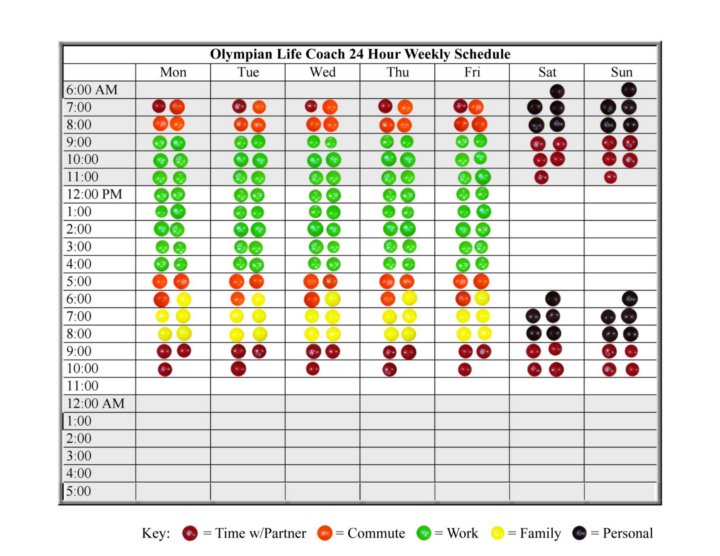
I love the Skittles Time Management method which involves creating a weekly calendar and using brightly colored Skittles candies to map out how I use each hour.
Here’s how it works:
-
- Assign each color of Skittles to a specific activity or category. For example:
- Red: Work
- Green: Exercise
- Yellow: Family time
- Orange: Relaxation
- Purple: Personal growth
- Go through your weekly schedule and mark out each hour with the corresponding Skittle.
- Step back and look at the distribution of colors.
- Assign each color of Skittles to a specific activity or category. For example:
This visual method helps me spot areas that need adjustment or find hours where I’m wasting time on less productive activities.
The Pomodoro Technique
When tackling a task, I often use the Pomodoro Technique (developed by Francesco Cirillo in the late 1980s) to stay focused:
-
- Set a timer for 25 minutes and work on one task without distractions.
- When the timer goes off, take a 5-minute break.
- Repeat this cycle four times, then take a longer 15-30 minute break.
Breaking work into short, focused intervals helps me stay productive without burning out.
Batching Similar Tasks
To save mental energy, I group similar tasks together. For example, I’ll respond to all emails at once, make all phone calls back-to-back, or do all creative brainstorming in a single session. This minimizes the time and energy wasted on task-switching.
The 2-Minute Rule
If a task takes less than two minutes, I do it immediately. This rule keeps small tasks from piling up and becoming overwhelming.
Weekly Planning Sessions
At the start of each week, I set aside 30 minutes to:
-
- Review my goals.
- Schedule my priorities.
- Block out time for rest and self-care.
Having a plan in place gives me a clear roadmap for the week and helps me stay on track.
Learn to Say No
One of the most effective time management tools is the word “no.” I evaluate every request or opportunity against my goals and values. If it doesn’t align, I politely decline. Saying no to less important things gives me more time for what truly matters.
Review
-
- Simplify Decision-Making: Use T-charts, weighted options, pendulums, muscle testing, decision journaling, and long-term thinking tools like the 10/10/10 Rule or the Regret Test.
- Visualize Your Time: The Skittles calendar offers a colorful and fun way to assess how you’re spending your hours.
- Maximize Productivity: Techniques like the Pomodoro Method, task batching, and the 2-Minute Rule help you get more done with less stress.
- Plan Ahead: Weekly planning sessions ensure you prioritize your goals while leaving room for rest.
- Protect Your Time: Learn to say no to distractions and commitments that don’t align with your values.
By combining these strategies, you can make decisions faster, manage your time better, and create a life that feels balanced and purposeful. Which of these methods resonates with you the most? Let me know if you’d like help getting started!