Deductive Reasoning the Key to Unlock Clarity in Uncertainty

Let’s be honest: life doesn’t come with a manual. Every day, you’re faced with choices, decisions, and people whose motives may be less than transparent. You’re navigating a world full of unknowns, uncertainties, and—let’s face it—sometimes flat-out deception. But what if you could give yourself an edge? That edge is deductive reasoning, the key to unlock clarity in uncertainty.

It’s not magic. It’s not perfect. But it’s one of the most reliable tools you can have in your toolkit for making sense of what’s going on around you. Think of it as a flashlight in the dark. You may not see everything, but you’ll see enough to take your next step with confidence.

Let’s break it down.

How to Use Deductive Reasoning

Deductive reasoning is simply drawing logical conclusions based on what you know. It works from the general to the specific, narrowing down possibilities until you land on the most reasonable explanation.

It’s the difference between guessing blindly and making an educated guess.

Here’s the basic process:

    1. Look at the Past.
      The greatest predictor of future behavior is past behavior. If someone has consistently acted a certain way, odds are high they’ll keep doing it. Want to know if a business partner is trustworthy? Look at how they’ve treated past partners. Want to know if a product will work? Look at its track record.
    2. Check the Stats.
      What does the data say? Statistics aren’t perfect, but they give you a starting point. If 90% of people with certain traits behave in a particular way, and you’re dealing with someone who fits that profile, don’t ignore the numbers. You’re not prejudging—you’re stacking the odds in your favor.
    3. Go Simple (Occam’s Razor).
      The simplest explanation is usually the right one. If you’re trying to figure out why someone ghosted you, the answer is probably exactly what it looks like—they lost interest or were scared of confrontation. Not that they were abducted by aliens.

Already, you’re working smarter than most people who flounder in wishful thinking, denial, or emotional chaos.

But here’s where it gets exciting: you can stack even more tools on top of deductive reasoning to create a nearly bulletproof system.

Other Tools to Supercharge Your Deductive Reasoning

While deductive reasoning is powerful, it’s not infallible. People change. Circumstances shift. Hidden agendas lurk beneath polished surfaces.

That’s why it’s wise to combine deductive reasoning with other methods of discernment.

Here are some you can layer in:

Intuition.
Sometimes, your gut knows what your mind hasn’t processed yet. Pay attention to subtle feelings of unease or excitement—they can be early warning signs or confirmations. Intuition doesn’t replace logic, but it works beautifully alongside it.

Muscle Testing (Applied Kinesiology).
Muscle testing taps into your subconscious or energetic system to verify truths that might not be visible on the surface. While it shouldn’t stand alone, adding muscle testing to your reasoning stack can flag hidden inconsistencies or validate conclusions—especially when dealing with smooth-talking deceivers.

Ask Better Questions.
The quality of your conclusions is directly tied to the quality of your questions. Instead of asking, “Why did this happen to me?” ask, “What patterns led to this?” or “What assumptions am I making that need testing?”

Triangulate Sources.
Don’t rely on a single source of information. Cross-reference what you’re being told. This applies whether you’re vetting a news story, a romantic interest, or a business opportunity. Multiple independent confirmations strengthen your conclusion.

Behavioral Baselines.
Establish a baseline of normal behavior for a person or system before making judgments. If someone suddenly deviates from their baseline, that’s a clue worth investigating.

Pattern Recognition.
Learn to see patterns over time. A one-off incident doesn’t tell you much. But repeated patterns? Those are gold. Deductive reasoning thrives on patterns, so train your eye to spot them.

Mentor Input.
Run your conclusions by someone wiser or more experienced. A trusted mentor can help catch blind spots you didn’t see.

Archetypal Analysis.
And now, let’s add a deeper layer: archetypes.

Every human being operates from universal archetypal patterns—recurring character types that show up in myths, stories, and psychology across time and cultures. You don’t have to be a psychologist to recognize them.

Is someone showing up as a Victim, always casting blame and avoiding responsibility? A Saboteur, undermining their own success? A Lover, led by passion and connection? A Warrior, driven by courage and conquest?

When you begin to see people’s dominant archetypes, you gain insight into their motivations, weaknesses, and likely behavior under stress.

For example:

    • The Victim archetype will seek pity and use manipulation to avoid accountability.
    • The Saboteur will find a way to ruin opportunities even when everything’s going right.
    • The Hero will push through obstacles but may neglect self-care.
    • The Shadow Lover may seduce with charisma but fear true intimacy.

By recognizing these patterns, you add another predictive layer to your reasoning. It’s not about labeling people, but about spotting tendencies that help you forecast probable outcomes.

Why This Works

Each tool—logic, data, intuition, muscle testing, archetypal analysis—acts like a filter. Even if deception slips past one filter, it’s unlikely to sneak past them all.

When you combine these tools, you’re not just reacting to life. You’re reading the field. You’re decoding behaviors. You’re living as a conscious, discerning participant rather than a blind follower.

And yes, you’ll still be wrong sometimes. Nobody gets it right 100% of the time. But you’ll be right most of the time. And that’s enough to save you from heartbreak, scams, betrayal, wasted time, and poor decisions more often than not.

Putting It All Together

Let’s say you’re vetting a new romantic partner.

    • You look at their past relationship history (deductive reasoning, past data).
    • You check statistics (what do studies say about their attachment style?).
    • You keep it simple (Occam’s razor: are they really that “busy,” or just not prioritizing you?).
    • You notice a knot in your stomach (intuition: something’s off).
    • You muscle test whether their claims align with their truth.
    • You ask questions that reveal deeper motivations.
    • You spot their archetypal patterns (are they Lover? Saboteur? Victim?).

By the time you’ve layered these insights, you’re no longer relying on one flimsy clue. You’re seeing a whole picture.

And that, my friend, is power.

Final Thoughts: Becoming a Master of Discernment

Deductive reasoning isn’t about being suspicious, cynical, or jaded. It’s about equipping yourself to see things as they are, so you can respond wisely, lovingly, and powerfully.

Life rewards those who are discerning. And discernment is built on the steady layering of logic, intuition, experience, insight, and yes—even the timeless wisdom of the archetypes.

Use all your tools. Trust yourself. And when in doubt? Ask:

    • “What’s the simplest explanation?”
    • “What patterns am I seeing?”
    • “What archetype am I dealing with?”

Then step forward boldly, knowing you’ve done your homework.

And remember: The truth is always there. You just need enough light to see it.


How to Make Better Decisions and Manage Our Time Effectively

Just like anyone, I’ve faced those proverbial forks in the road where the choice isn’t obvious. Should I go this way or that? What I’ve learned over time is that decision-making and time management don’t have to be complicated—they just need systems that work for you. Let me walk you through my favorite methods that help me navigate confusion and stay productive, along with a few more techniques you might find helpful.

When I’m confronted with a choice, the first thing I turn to is a T-chart. It’s a simple yet powerful tool. I divide the options into two columns—positives and negatives for each choice. Writing it out gives clarity and structure to what might otherwise feel overwhelming. Once I’ve listed everything, if one side clearly outweighs the other, I base my decision on that outcome.

But sometimes, it’s not that simple. What if it’s a tie?

Adding Weight to Your Options

When the T-chart alone doesn’t deliver a clear winner, I add weight to each item. You can use anything uniform—washers, coins, or even pre-1982 pennies, which are excellent conductors of energy, if you have a collection like mine. I assign a number of pennies to each item based on the energy or importance I feel it carries, then weigh the options. The heavier pile wins my vote.

Still tied? No problem. That’s when I turn to a pendulum. It can be as simple as a string and a nut or any weighted object that swings freely. A pendulum gives three potential answers: yes, no, or the frustrating round-and-round (like waiting for a slow internet connection).

The Game-Changer: Muscle Testing

Eventually, I discovered muscle testing (also called applied kinesiology). It’s a technique that helps me connect to my subconscious and bypass analysis paralysis. Using simple tests to gauge my body’s responses, I get clear yes-or-no answers. For me, this method demystifies decision-making entirely.

Decision Journaling

Another technique I use is decision journaling. When facing a big choice, I write down:

      • The situation
      • My options
      • How I feel about each choice
      • The reasons behind my decision

Not only does this help me process my thoughts, but it also creates a record I can look back on. Over time, I’ve been able to identify patterns in my decision-making and improve how I approach challenges.

The 10/10/10 Rule

If I’m stuck on a decision, I use the 10/10/10 Rule:

      • How will I feel about this choice in 10 minutes?
      • How will I feel in 10 months?
      • How will I feel in 10 years?

This method shifts my focus from immediate emotions to long-term outcomes, helping me make choices that align with my deeper values and goals.

The “Regret Test”

Sometimes I ask myself: If I don’t do this, will I regret it later? If the answer is yes, it’s a clear sign to move forward. This approach is particularly helpful for decisions about opportunities that might not come again.

Managing Time to Boost Productivity and Balance

Time management is just as crucial as decision-making. If you don’t manage your time, your time will manage you! Here are some of the strategies I use to keep my schedule balanced and productive.

The Skittles Time Management Method

I love the Skittles Time Management method which involves creating a weekly calendar and using brightly colored Skittles candies to map out how I use each hour.

Here’s how it works:

    1. Assign each color of Skittles to a specific activity or category. For example:
      • Red: Work
      • Green: Exercise
      • Yellow: Family time
      • Orange: Relaxation
      • Purple: Personal growth
    2. Go through your weekly schedule and mark out each hour with the corresponding Skittle.
    3. Step back and look at the distribution of colors.

This visual method helps me spot areas that need adjustment or find hours where I’m wasting time on less productive activities.

The Pomodoro Technique

When tackling a task, I often use the Pomodoro Technique (developed by Francesco Cirillo in the late 1980s) to stay focused:

    1. Set a timer for 25 minutes and work on one task without distractions.
    2. When the timer goes off, take a 5-minute break.
    3. Repeat this cycle four times, then take a longer 15-30 minute break.

Breaking work into short, focused intervals helps me stay productive without burning out.

Batching Similar Tasks

To save mental energy, I group similar tasks together. For example, I’ll respond to all emails at once, make all phone calls back-to-back, or do all creative brainstorming in a single session. This minimizes the time and energy wasted on task-switching.

The 2-Minute Rule

If a task takes less than two minutes, I do it immediately. This rule keeps small tasks from piling up and becoming overwhelming.

Weekly Planning Sessions

At the start of each week, I set aside 30 minutes to:

    1. Review my goals.
    2. Schedule my priorities.
    3. Block out time for rest and self-care.

Having a plan in place gives me a clear roadmap for the week and helps me stay on track.

Learn to Say No

One of the most effective time management tools is the word “no.” I evaluate every request or opportunity against my goals and values. If it doesn’t align, I politely decline. Saying no to less important things gives me more time for what truly matters.

Review

    1. Simplify Decision-Making: Use T-charts, weighted options, pendulums, muscle testing, decision journaling, and long-term thinking tools like the 10/10/10 Rule or the Regret Test.
    2. Visualize Your Time: The Skittles calendar offers a colorful and fun way to assess how you’re spending your hours.
    3. Maximize Productivity: Techniques like the Pomodoro Method, task batching, and the 2-Minute Rule help you get more done with less stress.
    4. Plan Ahead: Weekly planning sessions ensure you prioritize your goals while leaving room for rest.
    5. Protect Your Time: Learn to say no to distractions and commitments that don’t align with your values.

By combining these strategies, you can make decisions faster, manage your time better, and create a life that feels balanced and purposeful. Which of these methods resonates with you the most? Let me know if you’d like help getting started!


The Dark Side of Using Muscle Testing for Human Lie Detector

Muscle testing, also known as applied kinesiology, is a fascinating and, in many ways, revolutionary tool. Originally developed as a technique for assessing physical health, it has grown into a broader practice where people use it to determine truth or deception in various aspects of life. However, while muscle testing offers unique insights, it also reveals an unsettling reality about human interactions. When misused or over-relied upon, it can lead to disappointment, disillusionment, and even a deep sense of isolation.

Understanding Muscle Testing as a Lie Detector

Muscle testing works on the principle that the body responds differently to truth and falsehood, often tightening or loosening slightly depending on the integrity of the statement or subject in question. When properly applied, it can help determine whether a given piece of information resonates as “true” or “false” to the body’s inner wisdom. With minimal training and a focus on self-clearing for accuracy, anyone can learn to use muscle testing as a tool to reveal hidden aspects of their lives, particularly to discern truth from deception.

At first, the allure of muscle testing lies in its power to offer clarity. For many, the initial experience is thrilling and almost addictive. Television ads, news reports, political claims, and even close relationships can be put to the test. Each session feels like peeling back a layer of social veneer to reveal what’s really underneath.

The Disillusionment: Realizing the Scope of Deception

For those who begin using muscle testing as a universal lie detector, there often comes a sobering moment of revelation. After repeated testing, many discover a substantial amount of deception surrounds them. In my experience, I found that a staggering 96% of those tested proved to be deceptive to varying degrees after extensively muscle-testing people around me.

Even among the 4% who were honest, I found that honesty didn’t always equate to kindness or sensitivity. Of those who were truthful, 75% were blunt or even rude, and only a small fraction were gentle in their honesty. This experience can be disheartening, as it sheds light on the difficulty of finding authentic, compassionate communication.

I also noted a curious trend among the deceptive individuals: many were truthful only about 10% of the time. The rest of their statements were tinged with various forms of misrepresentation. This discovery leads to an inevitable question: If so many people around me are lying, what’s the point of testing?

Coping with the Dark Side of Truth

The process of uncovering widespread deception can be deeply unsettling, leaving some feeling detached and disillusioned. The initial thrill of knowing “the truth” can soon transform into a sense of betrayal. Realizing that even loved ones, mentors, or respected figures might be embellishing, withholding, or outright lying can be jarring. It’s a process that can feel lonely as if you are seeing behind a curtain that others are unaware of or don’t wish to acknowledge.

As I discovered, coming to terms with this reality often requires adopting a new perspective: respecting others’ rights to their version of truth—even if it includes deception. After all, in the United States, freedom of speech protects even the right to lie, to embellish, and to portray a version of reality that may be far from objective truth.

A Balanced Approach to Muscle Testing

After moving through the phases of excitement and disillusionment, many find a balanced way to use muscle testing in their lives. It’s common to become more selective about when and how to use it, focusing on practical applications rather than analyzing the statements of others. For instance, some may use it to test the efficacy or suitability of foods, supplements, or other health-related products rather than assessing people’s honesty.

This moderated approach allows the practitioner to respect others’ boundaries and refrain from wielding muscle testing as a judgmental tool. It becomes a method of self-care rather than a source of mistrust or alienation.

Embracing the Gray Areas of Truth

Ultimately, muscle testing as a lie detector highlights a profound truth about human interaction: honesty is complex, and people are complicated. Not everyone intentionally deceives, and many communicate in ways that, while not strictly true, may reflect their fears, hopes, or misunderstandings. Accepting these shades of gray can bring a sense of peace and acceptance to those who have ventured deeply into the practice.

Knowing how to access the truth at such an intimate level can be powerful, but it also carries a responsibility. It’s easy to get caught up in testing every statement, every relationship, and every interaction, only to find that perfect honesty is rare. Recognizing the right to privacy, subjectivity, and even embellishment allows the practitioner to navigate the world with compassion, reserving muscle testing for matters of personal significance rather than as a lens of judgment.

Muscle testing can provide valuable insights, but using it with tolerance, respect, balance, and an open heart is essential. Truth is a continuum, and while muscle testing may reveal facts, it cannot capture the complex layers of human expression, belief, and intent. By integrating this awareness, the practitioner can find a renewed sense of connection to themselves and others, understanding that truth exists in many forms—and each has its own place in the intricate matrix of life.


Muscle Testing: Part of Our Evolutionary Intellectual Growth

Since the dawn of humanity, intelligence has been a key factor in mankind’s evolution, shaping how societies develop and interact with the world. As hunter-gatherers, humans initially relied on sharp instincts and natural telepathy to navigate their environment. Over millennia, intelligence evolved, rising in parallel with technological innovations. However, over the past few thousand years, as agriculture, societal structures, and technological advancements took hold, many factors began to stifle the natural rise of human intelligence.

Agriculture introduced settled living, which contributed to hierarchical structures, creating a need for laborers and, in many cases, slaves. The expansion of farming and the division of labor meant fewer individuals were required to think critically for survival, contributing to a decline in mental sharpness across large portions of society. As governments and religions became more centralized, manipulation of these structures further restricted free-thinking, often serving the interests of those in power. In particular, systems of control emerged that limited access to education and knowledge, thus maintaining social order but suppressing individual intelligence and spiritual growth.

This era, sometimes called the “Dark Ages” or Kali Yuga in Hindu traditions, saw a decline in collective consciousness. However, with the Enlightenment of the 1700s, human intelligence began to rise again. European intellectual movements fostered advancements in science, philosophy, and the arts. The resurgence of critical thinking and a deeper quest for knowledge marked the beginning of humanity’s climb back toward higher intelligence and awareness.

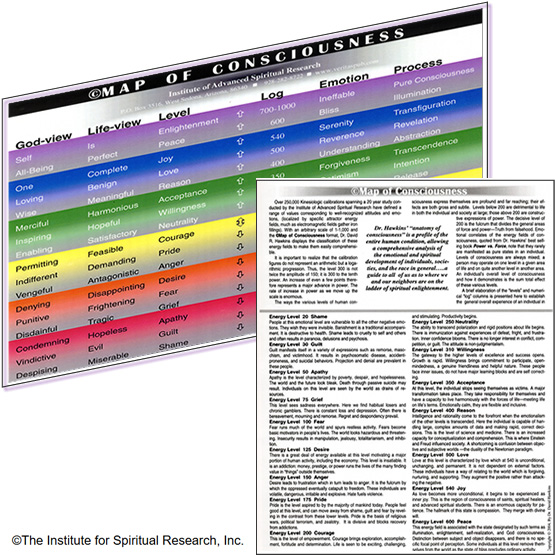
In recent decades, tools like muscle testing have been introduced to bypass societal and governmental restrictions on truth and knowledge. Dr. David Hawkins popularized muscle testing as a way to access an “infinite knowledge database.” Hawkins demonstrated that the body’s physiological responses could reveal truths about everything from personal health to universal knowledge. Using this technique, his “Map of Consciousness” is a framework to measure levels of truth, consciousness, and awareness.

Although muscle testing is not telepathy as ancient humans may have practiced it, it provides a modern tool to access higher truths, bypass societal controls, and unlock deeper understanding. Muscle testing enables individuals to ask yes or no questions that their body can respond to, offering a form of lie detection and access to information beyond conventional means.

As we continue on an upward trajectory of intelligence and consciousness, tools like muscle testing serve as bridges to greater awareness. While technology has offered numerous benefits, it has also contributed to distractions and limitations in human cognition. The challenge now is to harness the power of these tools, like muscle testing, to continue the rise in intelligence and move toward a more enlightened future, individually and collectively.

Humanity’s resurgence of intelligence mirrors our journey from the dumbing down of the Kali Yuga through the Enlightenment and into a new era of potential, where tools like muscle testing help reclaim the lost wisdom of ages past. By tapping into this method, humanity can continue to grow, expanding both mental and spiritual horizons while accessing the timeless knowledge available to all.

Heart-led Acceptance and Transforming Relationships in Peace

Preparation for life’s challenges begins with a shift in mindset. Instead of resisting situations that have caused irritation or suffering, affirming readiness can transform your experience. Consider this affirmation:

“I am ready to experience what I previously resisted—in this case, my partner not showing me more loving care and attention.”

This acceptance brings peace, breaking the cycle of suffering. As you cultivate happiness and contentment within yourself, the energy you project naturally draws others closer. Improved relationships often follow as positivity inspires connection and mutual understanding.

Releasing Resentments with Byron Katie’s Method

Byron Katie’s method, as described in Loving What Is, provides a powerful framework for letting go of resentments. Her four-question process offers a psychotherapeutic way to:

    1. Identify a troubling thought.
      Example: “My partner doesn’t care enough about me.”
    2. Ask the following questions:
      • Is it true?
      • Can you absolutely know it’s true?
      • How do you react when you believe that thought?
      • Who would you be without that thought?
    3. Shift the thought.
      Transform “My partner doesn’t care enough about me” to “I don’t care enough about myself” or “I don’t show enough care toward my partner.”

This reframing reveals new perspectives, helping you dissolve emotional pain and find peace. Practicing this method consistently can shift your relationship with yourself and others.

When Deeper Patterns Persist: The Role of Kinesiology

While emotional work is transformative, deeper patterns may require additional exploration. Subconscious beliefs often drive persistent issues. This is where kinesiology, through muscle testing, becomes invaluable.

Kinesiology accesses the subconscious mind to uncover hidden stressors, patterns, or beliefs contributing to emotional and physical challenges. Once identified, specific exercises or remedies can help restore balance.

For instance:

    • Persistent anxiety might stem from unresolved childhood fears.
    • Physical symptoms, like chronic pain, may link to emotional suppression.

By addressing these root causes, kinesiology facilitates profound healing.

Holistic Healing: Integrating Mind and Body

Kinesiology is particularly effective as part of a holistic approach to healing. Many physical ailments have emotional or stress-related origins. For example:

    • Chronic back pain might arise from dehydration, limiting beliefs, or financial stress.
    • Digestive issues could reflect an inability to “digest” emotional turmoil.

By identifying these stressors, kinesiology complements therapies like homeopathy, osteopathy, and acupuncture, creating a comprehensive treatment plan.

This integration of mind and body promotes true well-being, targeting both symptoms and their underlying causes.

The Importance of Emotional Healing

At the heart of any healing process is the need to release what is making us unwell. Emotional wounds such as anger, resentment, or guilt often manifest as physical or mental ailments. Addressing these factors through psychotherapy, kinesiology, or other modalities is essential for recovery.

    • Unresolved anger can lead to hypertension or chronic tension.
    • Prolonged resentment may manifest as digestive issues or immune dysfunction.

Letting go of emotional baggage clears the way for healing and growth.

Psychotherapy’s Role in Emotional Health

Psychotherapy is a versatile tool for addressing emotional health. It’s not solely for severe mental illness—it benefits anyone seeking growth and clarity. Its value extends beyond the emotional realm: studies show psychotherapy can enhance physical health outcomes, such as recovery from surgery.

Psychotherapy helps to:

    • Uncover and resolve past traumas.
    • Reframe negative thought patterns.
    • Build resilience in the face of life’s challenges.

For those seeking balance, psychotherapy complements holistic approaches, fostering a deeper connection between mind and body.

Cultivating Peace and Healing

Acceptance, emotional healing, and holistic tools like kinesiology offer profound pathways to well-being. By embracing challenges with readiness and releasing what no longer serves us, we free ourselves from cycles of suffering.

Tools like Byron Katie’s method, kinesiology, and psychotherapy guide us toward deeper understanding, peace, and transformation. As we heal and cultivate contentment, our relationships and lives reflect this newfound harmony.

Healing begins with a single step: accepting what is and choosing to grow.

Home Use: How You Can Use Applied Kinesiology Muscle Testing

Applied Kinesiology (AK) muscle testing evaluates the body’s response to various stimuli by testing muscle strength. Traditionally used by chiropractors and health practitioners, this method can potentially be learned and used by the average person at home. Imagine having a truth-telling tool that helps you make important decisions in your everyday life. This article explores how AK muscle testing can be used in domestic situations and provides examples of its potential applications.

What is AK Muscle Testing?

AK muscle testing involves applying pressure to a muscle and assessing its ability to resist. Practitioners believe that the body’s muscles respond differently to truths and falsehoods, allowing them to uncover hidden truths and make informed decisions.

Learning AK Muscle Testing at Home

While trained practitioners typically perform AK muscle testing, the basics can be learned and practiced at home. Here’s how you can get started:

  • Learn the Basics
    • Study online tutorials and books or attend a workshop to understand the principles of AK muscle testing.
  • Practice Muscle Testing
    • Start by testing simple statements. For example, say “My name is [your name]” and test your muscle strength. Then, observe the difference and say something false like “My name is [a different name].”
  • Stay Neutral
    • To get accurate results, stay relaxed and neutral. Avoid letting your emotions or biases influence the test.

Using AK Muscle Testing for Everyday Decisions

Here are some examples of how AK muscle testing can be used to answer important questions at home:

  • Job Interviews
    • Are you wondering if you should apply for a job? Muscle test the statement, “I should apply for this job,” to see if your muscles stay strong or weaken.
  • Nutritional Choices
    • Unsure if a particular nutrient is good for you? Try a muscle test with the nutrient in your hand and see how your muscles respond.
  • Class Enrollment
    • Deciding whether to enroll in a class? Test the statement, “I should enroll in this class,” to get guidance.
  • Homework Check
    • Are you curious if your child did their homework? Test the statement, “My child did their homework,” to find out.
  • Relationship Concerns
    • Have suspicions about a relationship? Test the statement, “My partner is faithful,” to see your body’s response.
  • Car Troubles
    • Are you unsure if the mechanic’s diagnosis is correct? Test the statement, “The problem with my car is the fuel pump,” to check.
  • Shopping Decisions
    • Are you wondering if you’re getting a good deal on a car? Before making a purchase, test the statement, “This car is a good deal.”
  • Footwear Choices
    • Deciding between two pairs of shoes? Test which pair is better for you.
  • Meeting Decisions
    • Dreading a meeting? Test the statement, “It is in my best interest to attend this meeting” to decide.
  • Investment Choices
    • Unsure about an investment? Test the statement, “This is a good investment,” to guide your decision.

Benefits of Using AK Muscle Testing at Home

  • Quick Decisions
    • Muscle testing can answer your questions quickly, helping you make decisions more efficiently.
  • Personal Empowerment
    • Muscle testing can empower you to trust your body’s wisdom and make choices that align with your best interests.
  • Media Verification
    • Some individuals use muscle testing to verify news stories, checking the accuracy of reported events or the authenticity of reported victims.
  • Personal Decision-Making
    • People use muscle testing in everyday decisions, from choosing foods to determining the truthfulness of individual interactions.
  • Versatility
    • Muscle testing can be applied to various aspects of your life, from health and relationships to shopping and career decisions.

Applied Kinesiology muscle testing is a powerful tool that can be learned and used at home for everyday decision-making. By understanding and practicing the basics, you can unlock the potential of this technique to answer important questions and guide your choices. Muscle testing offers a unique way to tap into your body’s wisdom and make informed decisions whether you’re deciding on a job, a purchase, or a relationship.

My Favorite read on Applied Kinesiology Muscle Testing is Power vs. Force: The Hidden Determinants of Human Behavior (1985) by David R. Hawkins, M.D. Ph.D.


Using Muscle Testing to Discern Accuracy in an Investigation

Muscle testing, a cornerstone of applied kinesiology, has intrigued many due to its purported ability to uncover truths and solve mysteries. Beyond its traditional use in diagnosing health imbalances, muscle testing has reportedly been employed in various unconventional yet fascinating ways. Muscle testing has demonstrated its potential as a unique investigative tool, from solving crimes and locating contraband to acting as a lie detector. This article explores the application of muscle testing in discerning truth, highlighting real-world examples and discussing its broader implications.

The Basics of Muscle Testing

Muscle testing involves assessing the body’s response to stimuli by measuring muscle strength. Practitioners of applied kinesiology believe that the body’s muscles can react to truths and falsehoods, allowing the tester to gain insights beyond conventional means. The underlying principle is that the body’s energy fields change when exposed to different stimuli, including statements or questions, which can then be detected through muscle strength variations.

Real-World Applications of Muscle Testing
Solving Crimes

Case Example: In some reported instances, muscle testing has been used to assist in solving crimes. For example, a proficient practitioner might muscle-test various leads or suspects to narrow down the focus of an investigation. While traditional methods provide concrete evidence, muscle testing can offer intuitive guidance to expedite the process.
Locating Missing Persons or Bodies

Case Example: Muscle testing has also been applied to locate missing persons or deceased bodies. Practitioners may use maps or dowsing rods combined with muscle testing to pinpoint locations. In one documented case, muscle testing helped direct search efforts, discovering a body that had eluded traditional search methods.
Finding Hidden Contraband

Case Example: Police and security teams have reportedly used muscle testing to find hidden illegal weapons or drugs. By muscle testing items or areas, practitioners can identify suspicious spots that warrant further inspection. This method provides an additional layer of scrutiny, complementing standard search techniques.
Detecting Lies

Case Example: Muscle testing can serve as a lie detector. Practitioners ask the subject to make statements while testing muscle strength. A strong response typically indicates truth, while a weak response suggests deceit. This method has been used informally to verify the honesty of witnesses or suspects in investigations.

The Process of Using Muscle Testing to Discern Truth

Preparation: The practitioner and subject must be relaxed and focused. Ensuring a calm environment is crucial for accurate results.

Baseline Testing: Establishing a baseline response is essential. To determine their natural responses, the practitioner tests the subject’s muscle strength with known truths and falsehoods.

Questioning: The practitioner asks specific questions or presents statements while testing the muscle response. Consistency and clarity in questioning are vital.

Interpretation: The practitioner interprets the muscle responses to discern truth. A strong response indicates agreement with the statement, while a weak response suggests disagreement or falsehood.

Success Stories and Anecdotal Evidence

While scientific validation of muscle testing as a lie detection tool is limited, numerous anecdotal reports highlight its potential:

Media Verification: Some individuals use muscle testing to verify news stories, checking the accuracy of reported events or the authenticity of reported victims.

Personal Decision-Making: People use muscle testing in everyday decisions, from choosing foods to determining the truthfulness of personal interactions.

Skepticism and Controversy

Despite its fascinating applications, muscle testing as a truth-discerning tool remains controversial. Critics argue it lacks scientific rigor and can be influenced by the tester’s biases or expectations. Skeptics emphasize the importance of empirical evidence and caution against relying solely on muscle testing for critical decisions.

Conclusion

Within the realm of applied kinesiology, muscle testing offers a unique and intriguing method for discerning truth. Its applications in solving crimes, locating contraband, and detecting lies highlight its potential as a powerful investigative tool. However, while anecdotal success stories abound, it is crucial to approach muscle testing with an open mind and a critical perspective. As interest in alternative truth-seeking methods grows, muscle testing may continue to gain recognition for its unconventional yet compelling insights.


Power vs. Force David Hawkins

You just never know when you’re going to connect to something that is important and ancient all in the same moment. This is what occurred to me while I was in training for a new modality and was introduced to Power vs. Force by David Hawkins as a supplementary text.

It was one of those not-so-rare discoveries that I made long after others in the know had been aware of it, not unlike Louise Hay’s You Can Heal Your Life.

Dr. David R. Hawkins

In Power vs. Force, I found Hawkins covering a lot of information I’d already encountered, such as kinesiology, and he presents us with the powerful gift of the “map of consciousness,” a priceless tool for both personal and spiritual growth.

His map of consciousness lists the range of human conditions and emotions divided into two categories. As you may have guessed, they are Power and Force.

Click on the following image for Hawkins’ Map of Consciousness.


Anger, which calibrates at 150 in the Map of Consciousness is often the tipping point leading to either negative progression or positive, depending on the response of the person who is expressing anger. Courage, which resonates at 200 is the dividing line between Force (vibratory states below 200) and Power (200 and above) generally enables one to move further up the scale, if he or she can keep from falling to a lower level vibration for whatever reason.

Power is of the spirit, it includes all those states and feelings which are pure, authentic, true, nurturing, and filled with love and above.

We are led to believe contrarily, that Force is the most powerful approach to life, to dominate and control others, to compare ourselves with others, and at the deepest levels feeling depressed, dejected, suicidal, or losing all will to live.

Force represents all thought and effort of the flesh. All things which are possible via our abilities and capabilities, our brute strength. Power, on the other hand, represents the wherewithal and strength accessed from without, beyond the capabilities of mankind, unconditional love, all that is God, and the power of the universe.

Alternative healing and treatment modalities may use various forms of kinesiology to enhance their abilities to interact and intervene in the lives of themselves and others. I know many Chiropractors well-versed in the use of kinesiology as well as many other alternative practitioners and doctors. The practice is more commonly referred to as muscle-testing.

A common use of muscle testing is the outstretched arm of a patient. Items can be placed in the opposing hand of the patient and tested to whether or not the item being held in the opposing hand is good or beneficial for the patient, while the practitioner applies downward pressure to the outstretched arm. If the item being held is beneficial, the arm will remain rigid. If the item is not good for the patient, the arm will weaken and be able to be pushed down.

Likewise, this same method can be used for just about anything which can be answered “yes” or “no” in the universe. Theoretically, by drilling-down using a succession of yes or no answers, anyone who practices kinesiology could practically discover the truth of most anything.

If the idea does not inspire you, think about this excerpt from the forward of Hawkins’ book:

IMAGINE-what if you had access to a simple yes-or-no answer to any question you wished to ask? A demonstrably true answer…. Any question. Think about it. There’s the obvious: “Jane is seeing another guy.” (Y/N?) Johnny is telling the truth about school. (Y/N?) But it’s only a short step to: “This is a safe investment.” (Y/N?) or “This career is worthy of my pursuit.” (Y/N?)

Hawkins also possessed a keen awareness of the truth continuum with the knowledge that all truth was subjective, based on the perspective of the observer at a particular point in time and space.

The most startling bit of information is that all of this is a free gift to all of us. It is built into each of us and can be accessed by any human being, though practice is necessary for most of us to develop any level of accuracy. I have known some people to who were born with the natural ability to access the process of kinesiology intuitively, not knowing there was such a name for the process.

While sounding quite “Woo-woo” on the surface, kinesiology has survived the test of time and weathered scientific testing, and it is practiced by traditional medical practitioners and doctors, as well as allopathic.

You can see the enormous value and impact that kinesiology and Hawkins’ Map of Conscious can have in the world of healing, therapeutic science, self-improvement, and spiritual awakening.

davidmmasters.com is an independent educational and coaching site. References to books, authors, or frameworks are made for commentary and transformative discussion only and do not imply endorsement or affiliation.


Exercise Caution When Using Muscle Testing as a Lie Detector

When I first encountered the concept of muscle testing as a lie detector, I was both fascinated and skeptical. The idea that I could use such a simple technique to cut through layers of deception in my life was tantalizing. With little training, anyone could learn this skill, provided they cleared themselves mentally and emotionally beforehand. So, I dove in.

At first, muscle testing felt like unveiling a superpower. I could test almost anything—advertisements, political speeches, news stories, even conversations with family, friends, and romantic interests. The results were astonishingly clear. I was on a mission to see what was true and what wasn’t, and I felt like a detective peeling back the layers of lies surrounding me.

The clarity was empowering until it wasn’t. After several months of testing everything in my life, a harsh reality set in. I started to realize that a surprising number of people around me—people I admired, trusted, and held in high regard—weren’t telling the truth. In fact, I found that 96% of the people I interacted with regularly were, at least occasionally, deceptive.

For the 4% who were honest with me, I quickly realized honesty doesn’t always come with kindness. About 75% of them were blunt or even rude when speaking the truth, with only a fraction being gentle or neutral. Of the majority who were deceptive, they seemed to mix a small percentage of truth (around 10%) with the rest being various forms of BS. After seeing this pattern repeat across countless interactions, I felt disillusioned.

I was living in a reality where the people I interacted with, day in and day out, were either masking the truth or delivering it in a way that felt harsh or inconsiderate. Eventually, the question that kept coming to mind was, What’s the point of muscle testing if everyone is full of it? It was exhausting to confront the inconsistencies, embellishments and outright lies at every turn.

It took me a while to process and accept this new understanding of the world around me. My initial fascination with muscle testing as a lie detector had soured into a disheartening awareness of the pervasiveness of deception. I reached a point where I simply accepted it as the norm—truth and deception were layered intricately into everyday life, and it seemed this wasn’t going to change.

These days, I’ve chosen a different path. I now reserve muscle testing for specific situations, mainly health-related decisions, like testing foods and supplements. I’m careful not to dig too deeply into others’ personal truths or embellishments. After all, we all have the right to our version of reality, even if it strays from the objective truth. In the U.S., freedom of speech protects the right to embellish or lie—it’s part of our First Amendment rights.

So don’t worry—I’ve found my balance again. I no longer need to test everyone around me. I trust in my own center, and unless a situation affects me directly and significantly, I refrain from using muscle testing in personal affairs. It’s a relief, really. Knowing the truth about everything may sound empowering, but it’s a heavy burden to carry. For now, I choose to let people be themselves, and I choose to muscle test only where it truly matters.