Muscle Testing: Part of Our Evolutionary Intellectual Growth

Since the dawn of humanity, intelligence has been a key factor in mankind’s evolution, shaping how societies develop and interact with the world. As hunter-gatherers, humans initially relied on sharp instincts and natural telepathy to navigate their environment. Over millennia, intelligence evolved, rising in parallel with technological innovations. However, over the past few thousand years, as agriculture, societal structures, and technological advancements took hold, many factors began to stifle the natural rise of human intelligence.

Agriculture introduced settled living, which contributed to hierarchical structures, creating a need for laborers and, in many cases, slaves. The expansion of farming and the division of labor meant fewer individuals were required to think critically for survival, contributing to a decline in mental sharpness across large portions of society. As governments and religions became more centralized, manipulation of these structures further restricted free-thinking, often serving the interests of those in power. In particular, systems of control emerged that limited access to education and knowledge, thus maintaining social order but suppressing individual intelligence and spiritual growth.

This era, sometimes called the “Dark Ages” or Kali Yuga in Hindu traditions, saw a decline in collective consciousness. However, with the Enlightenment of the 1700s, human intelligence began to rise again. European intellectual movements fostered advancements in science, philosophy, and the arts. The resurgence of critical thinking and a deeper quest for knowledge marked the beginning of humanity’s climb back toward higher intelligence and awareness.

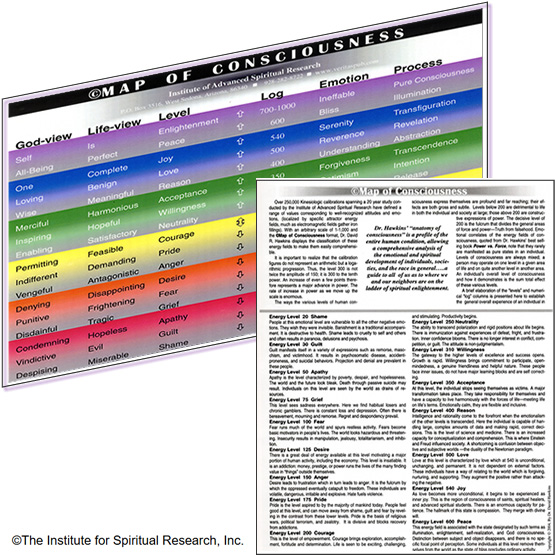
In recent decades, tools like muscle testing have been introduced to bypass societal and governmental restrictions on truth and knowledge. Dr. David Hawkins popularized muscle testing as a way to access an “infinite knowledge database.” Hawkins demonstrated that the body’s physiological responses could reveal truths about everything from personal health to universal knowledge. Using this technique, his “Map of Consciousness” is a framework to measure levels of truth, consciousness, and awareness.

Although muscle testing is not telepathy as ancient humans may have practiced it, it provides a modern tool to access higher truths, bypass societal controls, and unlock deeper understanding. Muscle testing enables individuals to ask yes or no questions that their body can respond to, offering a form of lie detection and access to information beyond conventional means.

As we continue on an upward trajectory of intelligence and consciousness, tools like muscle testing serve as bridges to greater awareness. While technology has offered numerous benefits, it has also contributed to distractions and limitations in human cognition. The challenge now is to harness the power of these tools, like muscle testing, to continue the rise in intelligence and move toward a more enlightened future, individually and collectively.

Humanity’s resurgence of intelligence mirrors our journey from the dumbing down of the Kali Yuga through the Enlightenment and into a new era of potential, where tools like muscle testing help reclaim the lost wisdom of ages past. By tapping into this method, humanity can continue to grow, expanding both mental and spiritual horizons while accessing the timeless knowledge available to all.

Heart-led Acceptance and Transforming Relationships in Peace

Preparation for life’s challenges begins with a shift in mindset. Instead of resisting situations that have caused irritation or suffering, affirming readiness can transform your experience. Consider this affirmation:

“I am ready to experience what I previously resisted—in this case, my partner not showing me more loving care and attention.”

This acceptance brings peace, breaking the cycle of suffering. As you cultivate happiness and contentment within yourself, the energy you project naturally draws others closer. Improved relationships often follow as positivity inspires connection and mutual understanding.

Releasing Resentments with Byron Katie’s Method

Byron Katie’s method, as described in Loving What Is, provides a powerful framework for letting go of resentments. Her four-question process offers a psychotherapeutic way to:

    1. Identify a troubling thought.
      Example: “My partner doesn’t care enough about me.”
    2. Ask the following questions:
      • Is it true?
      • Can you absolutely know it’s true?
      • How do you react when you believe that thought?
      • Who would you be without that thought?
    3. Shift the thought.
      Transform “My partner doesn’t care enough about me” to “I don’t care enough about myself” or “I don’t show enough care toward my partner.”

This reframing reveals new perspectives, helping you dissolve emotional pain and find peace. Practicing this method consistently can shift your relationship with yourself and others.

When Deeper Patterns Persist: The Role of Kinesiology

While emotional work is transformative, deeper patterns may require additional exploration. Subconscious beliefs often drive persistent issues. This is where kinesiology, through muscle testing, becomes invaluable.

Kinesiology accesses the subconscious mind to uncover hidden stressors, patterns, or beliefs contributing to emotional and physical challenges. Once identified, specific exercises or remedies can help restore balance.

For instance:

    • Persistent anxiety might stem from unresolved childhood fears.
    • Physical symptoms, like chronic pain, may link to emotional suppression.

By addressing these root causes, kinesiology facilitates profound healing.

Holistic Healing: Integrating Mind and Body

Kinesiology is particularly effective as part of a holistic approach to healing. Many physical ailments have emotional or stress-related origins. For example:

    • Chronic back pain might arise from dehydration, limiting beliefs, or financial stress.
    • Digestive issues could reflect an inability to “digest” emotional turmoil.

By identifying these stressors, kinesiology complements therapies like homeopathy, osteopathy, and acupuncture, creating a comprehensive treatment plan.

This integration of mind and body promotes true well-being, targeting both symptoms and their underlying causes.

The Importance of Emotional Healing

At the heart of any healing process is the need to release what is making us unwell. Emotional wounds such as anger, resentment, or guilt often manifest as physical or mental ailments. Addressing these factors through psychotherapy, kinesiology, or other modalities is essential for recovery.

    • Unresolved anger can lead to hypertension or chronic tension.
    • Prolonged resentment may manifest as digestive issues or immune dysfunction.

Letting go of emotional baggage clears the way for healing and growth.

Psychotherapy’s Role in Emotional Health

Psychotherapy is a versatile tool for addressing emotional health. It’s not solely for severe mental illness—it benefits anyone seeking growth and clarity. Its value extends beyond the emotional realm: studies show psychotherapy can enhance physical health outcomes, such as recovery from surgery.

Psychotherapy helps to:

    • Uncover and resolve past traumas.
    • Reframe negative thought patterns.
    • Build resilience in the face of life’s challenges.

For those seeking balance, psychotherapy complements holistic approaches, fostering a deeper connection between mind and body.

Cultivating Peace and Healing

Acceptance, emotional healing, and holistic tools like kinesiology offer profound pathways to well-being. By embracing challenges with readiness and releasing what no longer serves us, we free ourselves from cycles of suffering.

Tools like Byron Katie’s method, kinesiology, and psychotherapy guide us toward deeper understanding, peace, and transformation. As we heal and cultivate contentment, our relationships and lives reflect this newfound harmony.

Healing begins with a single step: accepting what is and choosing to grow.

Power vs. Force David Hawkins

You just never know when you’re going to connect to something that is important and ancient all in the same moment. This is what occurred to me while I was in training for a new modality and was introduced to Power vs. Force by David Hawkins as a supplementary text.

It was one of those not-so-rare discoveries that I made long after others in the know had been aware of it, not unlike Louise Hay’s You Can Heal Your Life.

Dr. David R. Hawkins

In Power vs. Force, I found Hawkins covering a lot of information I’d already encountered, such as kinesiology, and he presents us with the powerful gift of the “map of consciousness,” a priceless tool for both personal and spiritual growth.

His map of consciousness lists the range of human conditions and emotions divided into two categories. As you may have guessed, they are Power and Force.

Click on the following image for Hawkins’ Map of Consciousness.


Anger, which calibrates at 150 in the Map of Consciousness is often the tipping point leading to either negative progression or positive, depending on the response of the person who is expressing anger. Courage, which resonates at 200 is the dividing line between Force (vibratory states below 200) and Power (200 and above) generally enables one to move further up the scale, if he or she can keep from falling to a lower level vibration for whatever reason.

Power is of the spirit, it includes all those states and feelings which are pure, authentic, true, nurturing, and filled with love and above.

We are led to believe contrarily, that Force is the most powerful approach to life, to dominate and control others, to compare ourselves with others, and at the deepest levels feeling depressed, dejected, suicidal, or losing all will to live.

Force represents all thought and effort of the flesh. All things which are possible via our abilities and capabilities, our brute strength. Power, on the other hand, represents the wherewithal and strength accessed from without, beyond the capabilities of mankind, unconditional love, all that is God, and the power of the universe.

Alternative healing and treatment modalities may use various forms of kinesiology to enhance their abilities to interact and intervene in the lives of themselves and others. I know many Chiropractors well-versed in the use of kinesiology as well as many other alternative practitioners and doctors. The practice is more commonly referred to as muscle-testing.

A common use of muscle testing is the outstretched arm of a patient. Items can be placed in the opposing hand of the patient and tested to whether or not the item being held in the opposing hand is good or beneficial for the patient, while the practitioner applies downward pressure to the outstretched arm. If the item being held is beneficial, the arm will remain rigid. If the item is not good for the patient, the arm will weaken and be able to be pushed down.

Likewise, this same method can be used for just about anything which can be answered “yes” or “no” in the universe. Theoretically, by drilling-down using a succession of yes or no answers, anyone who practices kinesiology could practically discover the truth of most anything.

If the idea does not inspire you, think about this excerpt from the forward of Hawkins’ book:

IMAGINE-what if you had access to a simple yes-or-no answer to any question you wished to ask? A demonstrably true answer…. Any question. Think about it. There’s the obvious: “Jane is seeing another guy.” (Y/N?) Johnny is telling the truth about school. (Y/N?) But it’s only a short step to: “This is a safe investment.” (Y/N?) or “This career is worthy of my pursuit.” (Y/N?)

Hawkins also possessed a keen awareness of the truth continuum with the knowledge that all truth was subjective, based on the perspective of the observer at a particular point in time and space.

The most startling bit of information is that all of this is a free gift to all of us. It is built into each of us and can be accessed by any human being, though practice is necessary for most of us to develop any level of accuracy. I have known some people to who were born with the natural ability to access the process of kinesiology intuitively, not knowing there was such a name for the process.

While sounding quite “Woo-woo” on the surface, kinesiology has survived the test of time and weathered scientific testing, and it is practiced by traditional medical practitioners and doctors, as well as allopathic.

You can see the enormous value and impact that kinesiology and Hawkins’ Map of Conscious can have in the world of healing, therapeutic science, self-improvement, and spiritual awakening.

davidmmasters.com is an independent educational and coaching site. References to books, authors, or frameworks are made for commentary and transformative discussion only and do not imply endorsement or affiliation.