If You Have a Time Machine | Don’t Start Podcasting About It

I’ve been thinking about time travel lately. No, not because I built a flux capacitor in my garage. And no, this isn’t one of those moments when I try to convince you that Elvis is living on Mars with three government accountants and someone’s pet iguana. Relax. This is just one of those little thought experiments that wandered into my head, sat down, and refused to leave.
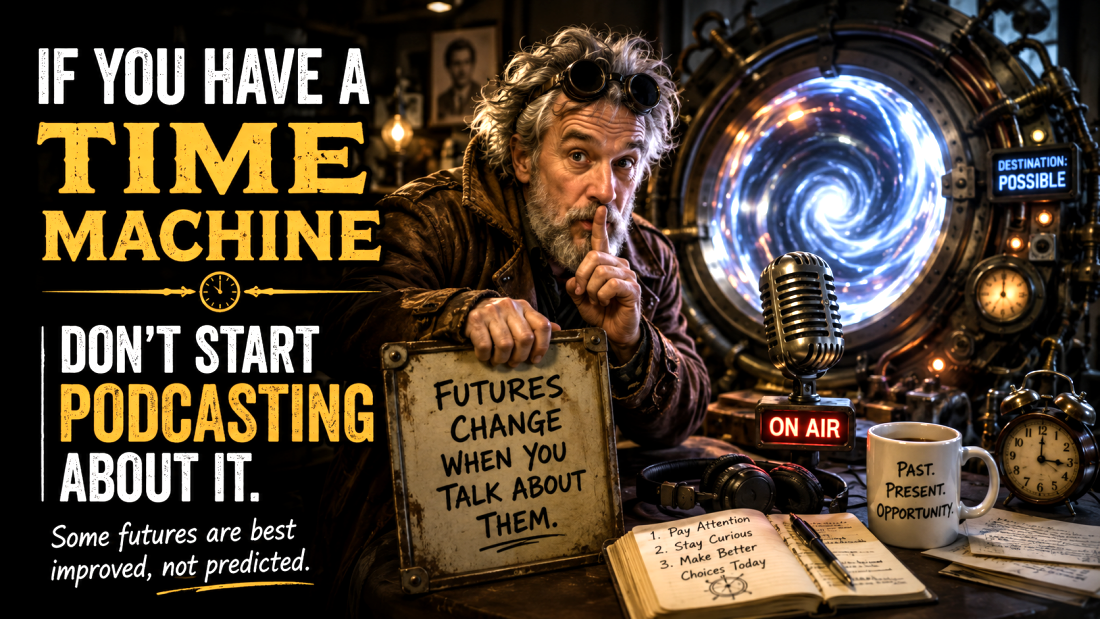
Let’s suppose, for the sake of conversation, that someone actually could see the future.

    • Maybe they have a crystal ball.
    • Maybe they have a sophisticated quantum machine.
    • Maybe they simply had one incredibly vivid glimpse of tomorrow.

Here’s my question. The moment they tell you what they saw… haven’t they already started changing it?

Imagine someone says, “On October 17th, the bridge will collapse.” Well… now what?

    • Do people stay home?
    • Does the city inspect the bridge?
    • Does someone reinforce it?
    • Does traffic reroute?
    • Does a construction crew accidentally discover an unrelated problem that saves thousands of lives?

In other words, the prediction itself just entered history.

    • It became another variable.
    • It didn’t merely describe the future.
    • It participated in creating it.

That’s why I’ve always been a little cautious around people who confidently announce, “This is exactly what’s going to happen.”

Maybe. Maybe not.

If the future is alive, then every decision, every conversation, every warning, every prayer, every act of courage, and every unexpected kindness becomes another pebble thrown into the pond. The ripples keep changing.

Even Charles Dickens understood this. Ebenezer Scrooge wasn’t shown the future so he could panic. He was shown one possible future so he could change the present. That’s a very different lesson.

Now, before someone writes me a strongly worded email… No, I’m not dismissing prophecy.

If God intends for certain events to unfold exactly as He has declared, I have absolutely no interest in debating His ability to accomplish His own purposes. I suspect He is entirely capable of protecting His plans without my assistance. This article isn’t about arguing with God. It’s about remembering that most of us aren’t Him.

Most predictions we hear, from experts, influencers, anonymous internet accounts, neighbors, or the guy at the coffee shop who always seems to know somebody who knows somebody, should probably be held with open hands. Take the insight. Leave the certainty.

Use the information to become wiser today instead of becoming obsessed with tomorrow.

There’s another reason I like this approach. Fear spreads quickly. Certainty spreads even faster. Curiosity slows us down just enough to ask better questions.

    • “What if?”
    • “How do we know?”
    • “What could I do today that would make tomorrow better, regardless?”

Those questions have improved far more lives than panic ever has.

If someone really did invent a working time machine, the smartest thing they could do would be to keep their mouth shut. Because the instant they announced what they saw, millions of people would begin reacting to it.

      • Politicians.
      • Investors.
      • Scientists.
      • Criminals.
      • Journalists.
      • Neighbors.
      • Entire governments.

Suddenly the future they reported wouldn’t be the future anymore. It would become history’s first draft. Maybe that’s one of life’s lessons.

The future isn’t simply something we discover.
It’s also something we participate in.

So, if tomorrow offers you a glimpse of itself, through wisdom, experience, prayer, intuition, good counsel, or even one of those wonderfully strange conversations that makes you think, you don’t have to cling to it.

Receive what is useful. Become a little wiser. Make one better decision today. Then let tomorrow continue being wonderfully alive.

After all, the best way to improve the future has never been arguing about it. It’s living well today.

Beware: Declaring You Know the Truth Can Cost You Everything


We all want to feel like we know. It gives us a sense of safety, security, and control. But in this ever-evolving life, in a world layered with complexities, belief systems, manipulation, and infinite unknowns, declaring certainty can be the most dangerous gamble you’ll ever take with your credibility.

There’s an old saying that goes, “The only thing I know is that I know nothing.” And if you’ve been awake for more than a few decades, that statement rings truer every year. Every time you dig a little deeper into any topic, health, politics, religion, science, even love, you find that what you thought was true starts to wobble, sometimes even crumbles. Because the truth, my friend, is not solid concrete. It’s more like water. Fluid. Shifting. Reflecting light differently depending on your angle of view.

The Seduction of “Knowing”

It feels good to have “the answer.” To say, “This is the way.” Especially when something worked for you. But asserting that your experience equals universal truth? That’s a trap. That’s the foundation of cults, not consciousness.

You see this especially in the healing world. People who overcome illness using a particular method, say, juicing, ozone therapy, fasting, or parasite cleansing, suddenly become evangelists. And while there’s immense value in testimony and personal experience, saying this is the only way, or this is the best way for everyone? That crosses a line.

“When you focus on any one, you do a disservice to creation, which has provided you with everything that you need for optimal health.”
– David M. Masters

There are at least 250 methods that people have used to reverse cancer. That’s right—if you search (even using filtered platforms like Google), you’ll find everything from dandelion root to hyperbaric chambers, frequency therapy to emotional healing. Which one is the way? The answer: it depends.

Why “Knowing” Can Be a Lie

Every system, every field, every “fact” you were taught in school… it all comes with a slant. A context. A limitation. And sometimes, an agenda.

Just because something is widely accepted, repeated, or taught by experts doesn’t make it true. And just because something worked for you doesn’t mean it will work for everyone else.

The truth, if we dare to even call it that, is that your reality is built on layers of experiences, beliefs, interpretations, and half-truths. And the deeper you go, the more you find that everything you know… is only part of a much larger picture.

“The main thing is that there is a good chance that everything you know is a lie, or at least, only a sliver of the truth.”
– David M. Masters

And even if someone could show you “the truth,” chances are…

“You couldn’t handle the truth anyway.”

So What Can You Do?

You stay curious.
You stay humble.
You keep learning, and you keep evolving.
You listen to others with an open heart.
You share your truth without needing it to be the truth.
You choose what works for you—yes!—but never assume it’s the only way.

You embrace critical thinking. You test. You observe. You accept that the map is not the territory, and that everyone’s journey will look a little different.

You stop making declarations and start making discoveries.

Evolve or Expire

Inflexibility is the death of wisdom. Life is not meant to be mastered through doctrine. It’s meant to be danced with. And your best dance partner is not certainty—it’s wonder.

It is far more empowering to say, “This is what I’ve found so far,” than to say, “This is it, case closed.” Because the moment you stop growing, you stop living.

Truth is not a destination. It’s a process.
And the wisest among us… are always in motion.

So next time you find yourself about to declare that you know something for sure—pause. Take a breath. Leave room for possibility. Because all things are possible.

And that, my friend, is about as close to truth as we may ever get.

Caution: Beware Social Media’s Misuse of Speculative History

In the hallowed halls of academia and scientific inquiry, a curious and intellectually invigorating exercise exists—speculative history. It is a game, a challenge, and sometimes a dance of daring imagination among historians, archaeologists, and researchers. The rules are simple: begin with a single, obscure data point—perhaps an overlooked inscription, an unusual artifact, or a linguistic anomaly—and weave a hypothetical historical narrative around it. The goal is not to deceive, but to exercise the creative muscles of historical reasoning. The fun lies in how convincingly one can connect the dots—however distant—and then defend the web of ideas before an equally rigorous and skeptical audience.

This intellectual sandbox, while entertaining, also serves a purpose: to broaden perspectives, challenge assumptions, and occasionally inspire new lines of legitimate research. The speculative exercise is self-aware. Everyone in the room knows the rules—that these narratives are not fact, but hypothetical constructions, clearly labeled and treated as such.

The Current Crisis: Social Media’s Uninformed Evangelists

Unfortunately, in today’s digital society, the lines between academic play and public consumption have dangerously blurred. What was once a contained exercise among scholars has now leaked into social media, stripped of context and critical disclaimer, and weaponized as “truth.”

A new wave of content creators—often without any academic credentials or understanding of historical methodology—have co-opted these imaginative constructs, presenting them not as what-ifs but as what-weres.

The motivation? Fame, influence, and profit. In the attention economy, clickbait thrives, and a sensational story about lost civilizations, hidden bloodlines, or ancient technologies is far more lucrative than a peer-reviewed journal article.

Responsible Speculative History vs. Misuse on Social Media

Category Responsible Speculative History (Academic) Misuse on Social Media (Clickbait Culture)
Purpose To explore alternate interpretations, inspire debate, and stretch thought To attract attention, drive engagement, or profit
Audience Understanding Assumes informed peers who know it’s speculative Targets general public who may not understand it’s hypothetical
Source Material Based on obscure, real, but often limited data; used transparently Often cherry-picked or taken out of context to support a bold claim
Presentation Style Clearly labeled as theory, possibility, or mental exercise Framed as hidden truth or suppressed fact
Peer Review and Critique Encouraged and expected Avoided or met with hostility
Tone and Language Cautious, probabilistic (“may suggest,” “possibly”) Absolute and alarmist (“they don’t want you to know,” “proven fact”)
Goal Intellectual curiosity Fame, income, or influence
Impact on Public Understanding Enhances appreciation for complexity and nuance Spreads misinformation and fosters distrust in experts

The consequences are troubling: misinformed followers, growing distrust of credible historical institutions, unnecessary social conflict, and the rise of conspiratorial echo chambers that feed on distorted histories. When audiences don’t understand the rules of speculative history, imagination becomes indoctrination.

Misinformation Is Not Harmless

While some might argue that these imaginative historical reinterpretations are simply entertainment, the damage goes deeper. Misinformed individuals vote, shape policy, and influence culture. When history becomes a choose-your-own-adventure game with no accountability, societal cohesion breaks down.

A public fed on fantasy loses touch with reality. When history is rewritten based on charisma rather than scholarship, we risk repeating the very mistakes it was meant to help us avoid.

How to Recognize Speculative History

To protect ourselves and others from falling prey to these charismatic yet misleading presentations, it’s important to learn the signs of speculative history misused as fact:

    1. Overreliance on a Single Data Point – Real historical claims are supported by multiple, corroborative sources. If an entire theory hinges on one ambiguous artifact or idea, it’s likely speculative.
    2. Lack of Scholarly Citations – Beware of content that offers no credible sources or only references fringe theorists. Peer-reviewed work and university-affiliated publications remain the gold standard.
    3. Use of Absolutist Language – Phrases like “This proves…” or “What they don’t want you to know…” are red flags. Responsible historians speak in probabilities, not certainties.
    4. Appeal to Suspicion – If the argument relies more on distrusting institutions than on providing hard evidence, it’s likely conspiratorial rather than historical.
    5. Absence of Critical Peer Debate – Academic speculative history is debated and often debunked within its community. Social media claims usually exist in isolation, echoing unchallenged among fans.

What You Can Do: Becoming a Digital Critical Thinker

    1. Ask the Source: Before sharing or believing a wild claim, ask: Where is this information from? Has it been verified by more than one credible source?
    2. Look for Context: Is this presentation marked as fiction, theory, or speculation? If not, why not? Who benefits from presenting it as fact?
    3. Use Academic Databases: Google Scholar, JSTOR, and university press articles can help you compare the speculative claim with established research.
    4. Challenge Respectfully: If you see someone spreading misinformation, ask thoughtful questions instead of attacking. “Interesting—do you know if any scholars support this theory?” is a good start.
    5. Follow Real Historians: There are many excellent historians and archaeologists online who do the work of debunking speculative claims. Support their voices.
    6. Avoid the Outrage Trap: Social media thrives on emotional response. If a historical claim is designed to make you angry, suspicious, or overly excited—pause. You might be the product, not the audience.

The Sacredness of Truth

Speculative history is not the enemy. In fact, when handled responsibly, it is a vital intellectual tool. It fosters curiosity, fuels new research directions, and opens us to creative interpretations of humanity’s vast past.

But just as a microscope can reveal wonders or be used to burn ants, speculative history misused on social media becomes a weapon against truth. In a world drowning in in misinformation, our job is not only to be curious but also to be discerning.

Let us keep the doors of imagination open—but never unguarded.


The Dark Side of Using Muscle Testing for Human Lie Detector

Muscle testing, also known as applied kinesiology, is a fascinating and, in many ways, revolutionary tool. Originally developed as a technique for assessing physical health, it has grown into a broader practice where people use it to determine truth or deception in various aspects of life. However, while muscle testing offers unique insights, it also reveals an unsettling reality about human interactions. When misused or over-relied upon, it can lead to disappointment, disillusionment, and even a deep sense of isolation.

Understanding Muscle Testing as a Lie Detector

Muscle testing works on the principle that the body responds differently to truth and falsehood, often tightening or loosening slightly depending on the integrity of the statement or subject in question. When properly applied, it can help determine whether a given piece of information resonates as “true” or “false” to the body’s inner wisdom. With minimal training and a focus on self-clearing for accuracy, anyone can learn to use muscle testing as a tool to reveal hidden aspects of their lives, particularly to discern truth from deception.

At first, the allure of muscle testing lies in its power to offer clarity. For many, the initial experience is thrilling and almost addictive. Television ads, news reports, political claims, and even close relationships can be put to the test. Each session feels like peeling back a layer of social veneer to reveal what’s really underneath.

The Disillusionment: Realizing the Scope of Deception

For those who begin using muscle testing as a universal lie detector, there often comes a sobering moment of revelation. After repeated testing, many discover a substantial amount of deception surrounds them. In my experience, I found that a staggering 96% of those tested proved to be deceptive to varying degrees after extensively muscle-testing people around me.

Even among the 4% who were honest, I found that honesty didn’t always equate to kindness or sensitivity. Of those who were truthful, 75% were blunt or even rude, and only a small fraction were gentle in their honesty. This experience can be disheartening, as it sheds light on the difficulty of finding authentic, compassionate communication.

I also noted a curious trend among the deceptive individuals: many were truthful only about 10% of the time. The rest of their statements were tinged with various forms of misrepresentation. This discovery leads to an inevitable question: If so many people around me are lying, what’s the point of testing?

Coping with the Dark Side of Truth

The process of uncovering widespread deception can be deeply unsettling, leaving some feeling detached and disillusioned. The initial thrill of knowing “the truth” can soon transform into a sense of betrayal. Realizing that even loved ones, mentors, or respected figures might be embellishing, withholding, or outright lying can be jarring. It’s a process that can feel lonely as if you are seeing behind a curtain that others are unaware of or don’t wish to acknowledge.

As I discovered, coming to terms with this reality often requires adopting a new perspective: respecting others’ rights to their version of truth—even if it includes deception. After all, in the United States, freedom of speech protects even the right to lie, to embellish, and to portray a version of reality that may be far from objective truth.

A Balanced Approach to Muscle Testing

After moving through the phases of excitement and disillusionment, many find a balanced way to use muscle testing in their lives. It’s common to become more selective about when and how to use it, focusing on practical applications rather than analyzing the statements of others. For instance, some may use it to test the efficacy or suitability of foods, supplements, or other health-related products rather than assessing people’s honesty.

This moderated approach allows the practitioner to respect others’ boundaries and refrain from wielding muscle testing as a judgmental tool. It becomes a method of self-care rather than a source of mistrust or alienation.

Embracing the Gray Areas of Truth

Ultimately, muscle testing as a lie detector highlights a profound truth about human interaction: honesty is complex, and people are complicated. Not everyone intentionally deceives, and many communicate in ways that, while not strictly true, may reflect their fears, hopes, or misunderstandings. Accepting these shades of gray can bring a sense of peace and acceptance to those who have ventured deeply into the practice.

Knowing how to access the truth at such an intimate level can be powerful, but it also carries a responsibility. It’s easy to get caught up in testing every statement, every relationship, and every interaction, only to find that perfect honesty is rare. Recognizing the right to privacy, subjectivity, and even embellishment allows the practitioner to navigate the world with compassion, reserving muscle testing for matters of personal significance rather than as a lens of judgment.

Muscle testing can provide valuable insights, but using it with tolerance, respect, balance, and an open heart is essential. Truth is a continuum, and while muscle testing may reveal facts, it cannot capture the complex layers of human expression, belief, and intent. By integrating this awareness, the practitioner can find a renewed sense of connection to themselves and others, understanding that truth exists in many forms—and each has its own place in the intricate matrix of life.


Everything You Believe is True

This one thing you know for sure, everything you believe is true. You are so convinced of it that you are willing to testify under oath in court to convince a jury or your peers of it. You believe what you think is true so much that you will gladly shout it from the rooftops, engage in arguments with strangers who dare question you, or defend your truth, even if at the cost of your own life.

If you look back at your life, you will notice that there were instances where what you believed to be true changed dramatically or instantly upon your access to new information which changed the way you thought about something.

Once a belief changes, a domino-effect takes place, one thought topples its neighboring thought in a complicated chain of successive transition as entire concepts of thought are dismantled and rebuilt based on your new information or experience.

Following this process, not unlike a rebirth, your new thought patterns are formed, solidified, and you believe something else to be true, and so it is. And in that moment the whole world changes.

It would not be unusual for you to have second thoughts about your expansion of knowledge and belief, even to have remorse or guilt regarding what you had believed prior to your mind-change.

You might even think something, like

“I can’t believe I believed in a lie.”

We are programmed to think of anything that we don’t believe in as an untruth, or in the extreme, a lie.

If you have discovered anything by now, you know that truth is not black and white. Truth is always expressed in shades of gray, and you, yes you, are the determining factor in what truth is at any given time.

Just try to nail down any philosopher to any distinctive and limited idea of any “truth” and they are often geared-up and ready to act as the “devil’s advocate” in response. They often have a propensity (or training) to blow away any absolute thought or principle, even if they agree with your point of view.

They are likely to reply with something, like, “Yes, I agree with you, but what about in the case of…?” as they challenge your idea, which may be solid as a rock, and permeate your absolute truth with holes that make you think there are certainly exceptions to any hard and fast rule or idea.

And there are.

Change any number of circumstances, and any immutable truth begins to breakdown.

But what about that thing that you believed in the past that you no longer believe to be true?

You feel bad about wasting your time, effort, emotional investment, and maybe even financial support in the belief of something that you no longer believe to be true.

Instead of beating yourself up over having believed in something in the past that may not be aligned with you in the now, think of truth as not being absolute. Instead, think of it as being in the Truth Continuum.

Truth is always a moving target, and it is never untrue or a lie. Just because any truth is not true for you in the here and now at your place in time and space, does not mean that it is not true somewhere else in time and space, or highly held to as immutable truth to someone else now, or in the past.

All truth is evolutionary thought, and it changes as you grow and change.

Therefore, do not limit others in what they choose to believe. Respect others just as you would expect to be respected for what you believe to be true, and don’t think of it as a personal attack if someone challenges what you believe or doesn’t agree with your point of view.

truth is like a garden with all varieties of flowers in bloom
Truth is like a garden with all varieties of flowers in bloom

Think of truth not as a single red rose but as a beautiful garden with all varieties and colors of flowers in bloom. When you do, it is all there to be enjoyed, cherished, and shared, without disrespect or malice of intent.

One day, you might prefer the rose, another day, a bright daisy, and you would never feel bad about someone loving a sunflower at any moment in time, even if you have no interest in the sunflower.

There was a time when I loved dandelions. Even though they don’t do it for me anymore, when I see one, I still remember how fondly I used to think of them.

Truth. Stop and enjoy the full beauty of the garden in bloom.


It Is Not True Or It Is True

It is like you have these two choices, either it is not true, or it is true. So, which is it? I hear a lot of people arguing about what is not true and what is true. Is truth absolute? We fight for our right to defend it, as it separates us one from the other, and some are even ready and willing to commit murder in the defense of what is true.

But what is truth?

When you believe in something so strongly that it becomes your truth, what exactly are you holding onto? Abraham Hicks once said, “A belief is only a thought you keep thinking.” That quote resonates deeply because, if you think about it, there was likely a time when you held onto a belief so tightly that it felt like the bedrock of your existence.

You might even have been willing to fight for it, to defend it with all your might. For me, love and belief have always been intertwined. In my younger years, I would have risked everything to defend what I believed was “true love” or “the truth.”

Oh, the self-righteousness of youth.

The Polarization of Truth

Today, the world feels increasingly divided by truth. The mere act of sharing an idea can lead to conflict because everyone clings to their version of what is “right” or “true.”

But what if we’re all right?

Our nation’s founders envisioned a society where freedom of thought, expression, and belief would thrive—a place where people wouldn’t be forced to conform to rigid molds. I imagine what it must have been like to dream of such a world. If I had been there, I would have been ecstatic to join that effort.

Unfortunately, like all attempts to create a utopia, it’s proven difficult to maintain. Still, I’m drawn to the vision of a world where freedom of thought is cherished, and I try to foster that in my own life.

I do my best to honor the thoughts, actions, and beliefs of others—even when they’re vastly different from my own.

The Truth Continuum

Occasionally, I catch myself being assertive about my own beliefs, but when I do, I take a step back and remind myself of a concept that has brought me peace: the truth continuum.

The truth continuum suggests that every thought ever thought, every belief ever believed, exists as truth in some time or place. That means even the ideas I vehemently opposed or once held but no longer believe were truths in their own way.

This perspective helps me release judgment—of myself and others. The things I once believed were true were true for me at the time. They’re still true for someone, somewhere, and I honor that.

So, what’s the big deal?

Just because I’m not aligned with someone else’s truth doesn’t make it untrue.

The Power of Curiosity

When I look back on beliefs I once held tightly, I could feel ashamed or judgmental of my younger self for not knowing better. But the truth continuum offers a freeing perspective: all beliefs have their place in time and space.

Instead of debating over what’s right or wrong, consider approaching disagreements with curiosity. The next time someone presents an idea that clashes with yours, try responding with, “That’s interesting.”

Because it is interesting, isn’t it? The variety of human thought is fascinating.

Toward a More Peaceful World

As we continue to grow and evolve as a society, tolerance without judgment will become more common. The compulsion to control or dominate others with our beliefs will give way to a natural state of peace and harmony.

I’m reminded of a mantra from the sixties and seventies: “Do whatever you want, as long as it doesn’t infringe on the rights of others to do the same.” That idea resonated with me then and still does now.

Imagine a world where we didn’t need laws to micromanage every detail of our lives, but instead allowed each other the freedom to simply be.

A Timeless Reminder

Jesus offered wisdom that beautifully encapsulates this idea when He said, “Love your neighbor as yourself.” That simple, profound statement is the key to the evolved world we’re moving toward.

Later in life, I discovered Libertarianism through John Hospers. It was a revelation—an affirmation that others were thinking about freedom and individuality in ways that resonated with me. I’m not here to promote any political ideology, but I remember the comfort I felt knowing there were others who shared my perspective.

As we evolve, politics as we know it will inevitably change. The systems we have today won’t sustain an enlightened world.

Letting Go and Moving Forward

Maybe we can find it within ourselves to release the need to control, judge, or impose our truths on others. Maybe we can allow the evolutionary process to continue, and in doing so, give peace a chance to flourish.

May God bless you in all that you think, do, and believe.

Oh, and by the way—you’re absolutely right.


Truth Continuum

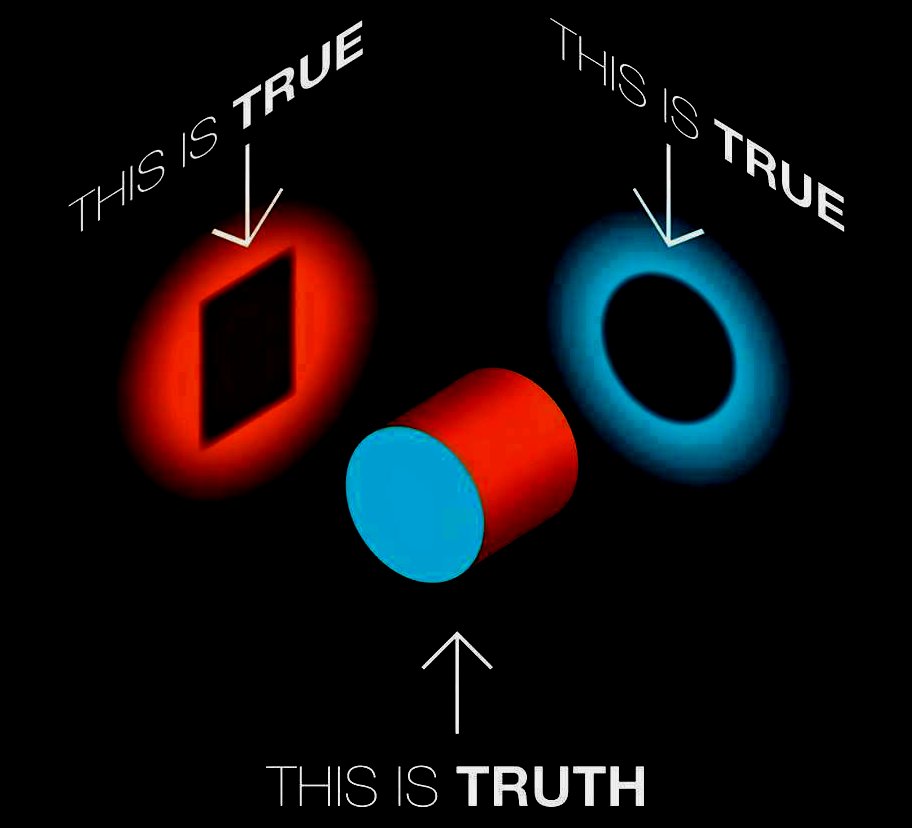
The Truth Continuum encompasses the entire range of truth in its many forms. It includes all truths, such as those in this third-dimension reality’s present tense, past and future truths, and any truths known or unknown to exist in other dimensions. In the Truth Continuum, all thoughts are true in one respect or another.

truth continuum
In the Truth Continuum, everything is true… No judgment or separation

Embracing All Truths Without Judgment

The concept of the Truth Continuum is both profound and liberating. It encompasses the entire spectrum of truth—past, present, future, and truths that exist in dimensions beyond our understanding. Within the Truth Continuum, all thoughts, beliefs, and ideas are true in one respect or another.

It operates without judgment or separation, allowing every truth to coexist, regardless of its form, origin, or alignment with personal perspectives. This expansive understanding is especially valuable for anyone working with others—coaches, counselors, consultants, or healers—who encounter a wide variety of beliefs and experiences.

What Is the Truth Continuum?

The Truth Continuum holds that:

    1. Everything is True: Every belief, thought, or idea holds truth in some way, even if it doesn’t align with your current understanding or reality.
    2. No Judgment: The Truth Continuum refrains from labeling truths as “right” or “wrong.” All truths are allowed to exist as they are.
    3. Dynamic Truth: Truths are not static. They can evolve, shift, and change as individuals grow, encounter new data, or expand their perspectives.

This framework challenges the traditional notion of absolute truth, inviting us to embrace a more fluid and inclusive understanding of what it means for something to be “true.”

Truth in Practice

In working with people, understanding the Truth Continuum can transform your approach. Clients or patients often come to you with beliefs that are deeply held, even if those beliefs may not serve them in achieving their highest potential.

For example:

    • A client may believe they are unworthy of love.
    • A patient may cling to an identity rooted in past trauma.
    • A colleague may hold a rigid perspective about success or failure.

While these beliefs may feel limiting, they are valid within the Truth Continuum. They represent truths that are real and meaningful to the individual at this moment in time.

Empathy Without Judgment

The first agreement in true communication and helping others is to meet them where they are. This means:

    • Allowing their beliefs to exist without judgment or correction.
    • Empathizing with compassion, even if their truth differs from yours.
    • Understanding that their beliefs are part of their journey and may serve a purpose you cannot yet see.

As a coach, counselor, or healer, you must also recognize your own evolving truths. What you believe today may change tomorrow as new insights emerge and personal growth unfolds.

The Power of Allowing All Truths

When you adopt the Truth Continuum, you create a safe space for growth and healing. Allowing all truths to exist—even those you don’t agree with—fosters trust, understanding, and empowerment.

For example:

    • A client who feels seen and validated in their beliefs is more likely to explore those beliefs and uncover new possibilities.
    • A patient who is not judged for their perspective feels free to question and expand their understanding.
    • A practitioner who embraces the Truth Continuum can guide others without imposing their own biases or limitations.

Living Within the Truth Continuum

The Truth Continuum is not just a tool for professionals—it’s a way of life. Embracing it requires courage and a willingness to let go of rigid black-and-white thinking. Society often teaches us to fear the unknown and cling to fixed beliefs as a form of security.

These societal constructs—what I call invisible prison walls—keep us divided and stagnant. Inside these walls, we feel safe, but beyond them lies the fear of uncertainty. The Truth Continuum invites us to step outside these walls, embracing the infinite possibilities of truth.

The Freedom of No Judgment

One of the most powerful aspects of the Truth Continuum is its capacity to create peace and harmony. When we stop judging others for their beliefs and instead allow them to exist as they are, we dissolve the invisible barriers that divide us.

This approach allows:

    • Growth and evolution: People can change their minds and beliefs without fear of ridicule or rejection.
    • Connection and understanding: Differences are no longer a source of conflict but a natural part of the human experience.
    • Personal expansion: By accepting all truths, you open yourself to new perspectives and insights.

Integrating the Truth Continuum

Incorporating the Truth Continuum into your life or practice is not for the faint of heart. It requires:

    • Openness: Accepting all possibilities of truth, even those that challenge your current beliefs.
    • Compassion: Meeting others with empathy and understanding, no matter where they are on their journey.
    • Flexibility: Allowing your own truths to evolve and adapt over time.

For professionals, adopting the Truth Continuum can exponentially improve your effectiveness. It broadens the scope of diagnosis, treatment, and personal connection by allowing people to be fully themselves—wherever they are, believing whatever they believe.

A Tool for Evolution

For those committed to personal growth and human evolution, the Truth Continuum is a powerful tool. It aligns with the natural expansion of consciousness, creating space for infinite possibilities and deeper connections.

The question is: Are you ready to embrace it? Will you open your mind and heart to the idea that all truths exist simultaneously and are equally valid?

By stepping into the Truth Continuum, you become a force for peace, understanding, and growth in a world that desperately needs it.

Break Free and Expand
The Truth Continuum invites you to step beyond the fear-based programming of society and into a world of infinite possibilities. Whether in your personal life or professional practice, this framework offers a path to greater harmony, connection, and evolution.

The choice is yours: Stay confined by rigid thinking, or open yourself to the transformative power of the Truth Continuum.

Embrace it. Live it. Expand within it.


No Such Thing as a Lie

When someone lies to you, if you feel as though someone has hit you in the stomach or stabbed you in the back, you’ve bought into the lie which asserts that there is such a thing as a lie. What if there is no such thing as a lie?

The idea of promoting the idea that there are lies, and that there are fewer crimes more offensive than lying, is the single most effective tool used against us to keep us fully separated from each other.

This obsession over the difference between truth and lies keeps us at war with each other and keeps us constantly on the defensive, ever wondering, “Who will lie to you next?”

This begins and perpetuates the endless cycle of looking for lies, and as you know, you will always find whatever it is you are looking for. If you are looking for lies, you will find them everywhere you look.

What if there was no such thing as a lie?

What if everything anyone says (in spoken word or print) actually is true one hundred percent of the time?

This is the essence of my Truth Continuum which purports that everything is truth. If history teaches us anything it is that everything which has been widely accepted as truth is subject to change and that one person’s truth can vary wildly from that of someone else.

Truth is subjective. And if truth is subject to influence and personal interpretation, then the antithesis, lies, must also be subjective. Which puts these concepts on par with each other, for if someone’s truth is another person’s lie, they are one and the same; all within the Truth Continuum.

As much as you might like to assert your truth is based on facts or sound science, we know that these things are not as black and white as we might like to believe.

Truth more adequately stated might be, “The truth as I see it,” which reasonably must allow for the truth of others as, “The truth as you see it.” Therefore, all truth, past, present, and future (including other dimensions and places in time and space) resides within the truth continuum.

Lies are a little trickier because there are two kinds of lies, the lies which are contradictory to one’s perceived truth (these may reside within the truth continuum), and lies which are purposefully spun in an effort to deceive someone or to avoid some potentially undesirable consequence (excluded from the truth continuum).

To express a lie which is known to the deliverer to not be true in an effort to deceive may be spun in such a way as to be believable or potentially true is a lie which has no truth within it, even though there may be truths hidden within the details of it, to make it appear to credible or truthful.

Lying with intentional deceit is not the same as declaring something that is believed to be true but may not be perceived by others to be true.

The possibility exists that many of the popular beliefs purported by social engineers and leaders of certain factions may have intentionally spun to deceive a particular populace but with the intention to benefit the purveyors of the lie or the greater part of the population.

Those who use lies to control people may have concocted the most masterful lies with no truth present as a method to manipulate peoples, and even so, because these lies have been believed to be truth by someone, these ideas can also be found in the truth continuum.

So, what if someone lies to you intentionally to deceive you?

Ask yourself, “Does it matter?”

If you can wrap your mind around the idea that people just are, and you honor their ability to be who they are, to say what they say, without judgment, maybe what they say to you, even if intended to defraud you in some way, doesn’t really matter.

This is your life, and you can manage it any way you see fit.

Think about being an unconditional lover who believes in the idea that everyone has the same rights as you to be right or believed, no matter what.

Consider having the courage to believe there is no such thing as a lie, and to say, “I love you no matter what you say, no matter what you do.”

If there were no such thing as a lie, you could easily stay in the frequency of love’s vibration and your countenance would be unshakeable.

Power vs. Force David Hawkins

You just never know when you’re going to connect to something that is important and ancient all in the same moment. This is what occurred to me while I was in training for a new modality and was introduced to Power vs. Force by David Hawkins as a supplementary text.

It was one of those not-so-rare discoveries that I made long after others in the know had been aware of it, not unlike Louise Hay’s You Can Heal Your Life.

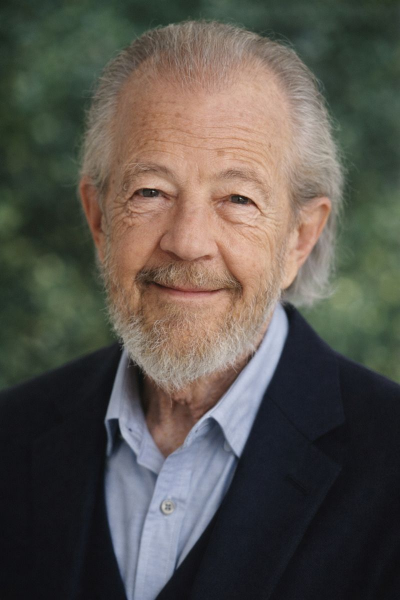
Dr. David R. Hawkins

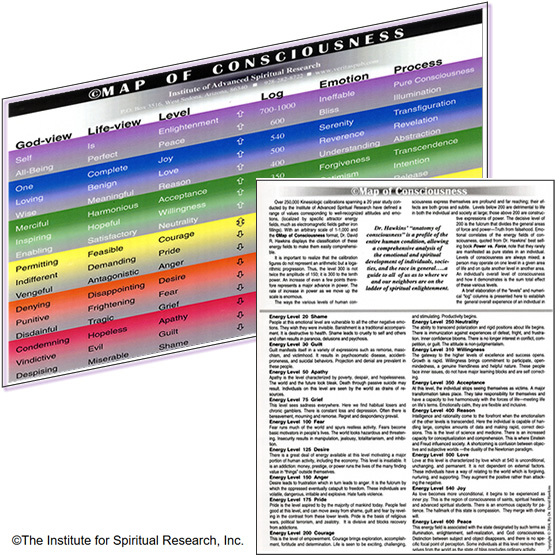
In Power vs. Force, I found Hawkins covering a lot of information I’d already encountered, such as kinesiology, and he presents us with the powerful gift of the “map of consciousness,” a priceless tool for both personal and spiritual growth.

His map of consciousness lists the range of human conditions and emotions divided into two categories. As you may have guessed, they are Power and Force.

Click on the following image for Hawkins’ Map of Consciousness.


Anger, which calibrates at 150 in the Map of Consciousness is often the tipping point leading to either negative progression or positive, depending on the response of the person who is expressing anger. Courage, which resonates at 200 is the dividing line between Force (vibratory states below 200) and Power (200 and above) generally enables one to move further up the scale, if he or she can keep from falling to a lower level vibration for whatever reason.

Power is of the spirit, it includes all those states and feelings which are pure, authentic, true, nurturing, and filled with love and above.

We are led to believe contrarily, that Force is the most powerful approach to life, to dominate and control others, to compare ourselves with others, and at the deepest levels feeling depressed, dejected, suicidal, or losing all will to live.

Force represents all thought and effort of the flesh. All things which are possible via our abilities and capabilities, our brute strength. Power, on the other hand, represents the wherewithal and strength accessed from without, beyond the capabilities of mankind, unconditional love, all that is God, and the power of the universe.

Alternative healing and treatment modalities may use various forms of kinesiology to enhance their abilities to interact and intervene in the lives of themselves and others. I know many Chiropractors well-versed in the use of kinesiology as well as many other alternative practitioners and doctors. The practice is more commonly referred to as muscle-testing.

A common use of muscle testing is the outstretched arm of a patient. Items can be placed in the opposing hand of the patient and tested to whether or not the item being held in the opposing hand is good or beneficial for the patient, while the practitioner applies downward pressure to the outstretched arm. If the item being held is beneficial, the arm will remain rigid. If the item is not good for the patient, the arm will weaken and be able to be pushed down.

Likewise, this same method can be used for just about anything which can be answered “yes” or “no” in the universe. Theoretically, by drilling-down using a succession of yes or no answers, anyone who practices kinesiology could practically discover the truth of most anything.

If the idea does not inspire you, think about this excerpt from the forward of Hawkins’ book:

IMAGINE-what if you had access to a simple yes-or-no answer to any question you wished to ask? A demonstrably true answer…. Any question. Think about it. There’s the obvious: “Jane is seeing another guy.” (Y/N?) Johnny is telling the truth about school. (Y/N?) But it’s only a short step to: “This is a safe investment.” (Y/N?) or “This career is worthy of my pursuit.” (Y/N?)

Hawkins also possessed a keen awareness of the truth continuum with the knowledge that all truth was subjective, based on the perspective of the observer at a particular point in time and space.

The most startling bit of information is that all of this is a free gift to all of us. It is built into each of us and can be accessed by any human being, though practice is necessary for most of us to develop any level of accuracy. I have known some people to who were born with the natural ability to access the process of kinesiology intuitively, not knowing there was such a name for the process.

While sounding quite “Woo-woo” on the surface, kinesiology has survived the test of time and weathered scientific testing, and it is practiced by traditional medical practitioners and doctors, as well as allopathic.

You can see the enormous value and impact that kinesiology and Hawkins’ Map of Conscious can have in the world of healing, therapeutic science, self-improvement, and spiritual awakening.

davidmmasters.com is an independent educational and coaching site. References to books, authors, or frameworks are made for commentary and transformative discussion only and do not imply endorsement or affiliation.


Dare to Be You

I have friends who have dared to share their innermost feelings in publicly accessible formats. Dare to be you. It takes an enormous amount of courage, to be honest, open, and incredibly vulnerable in an effort help prevent others from suffering your fate(s), even at the risk of opening yourself up to ridicule, spectacle, and attacks by the haters scouring the waves looking for their next victim.

Unless you are a psychopath, sociopath, or narcissist, you can imagine the strength it would take for someone who has been victimized to muster the wherewithal to make a stand for him or her self, maybe against his or her predatory abuser, only to be further victimized and abused by haters and trolls for doing so.

Why would anyone want to do such a thing?

Haters are gonna hate because there’s a basic flaw in the human condition, one that is constantly comparing ourselves to everyone else and judging everyone else at the slightest hint of not seeing eye to eye with us. Unfortunately, when we’re feeling a little down, nothing makes us feel better than seeing someone else suffer more than we are. It makes us feel a little better, even if it means we must knock someone else down a few notches ourselves.

Part of the latest evolution among human is moving away from the barbarian mindset of judgment and the tendency to see ourselves as superior to other human beings in some way.

We have this proclivity to judge others based on their beliefs. If they believe a thing to be true which we also believe, we find it easier to accept them. On the other hand, if they believe something which we cannot conceive of, we judge them. We might try to convince them to think the way we do, which only makes them defensive, driving us further apart, so we reject them.

Yet there is room for all things to be true, just as they are in the truth continuum. The truth continuum is vast and includes all things, all beliefs, all ideas and imaginations, real and unreal, all possibilities and impossibilities.

If you think back only five years, you will likely conclude that even you have learned something in these recent years which has changed the way you believed about something, likely many things. Life and knowledge are progressive and what is true today, may not be true tomorrow.

Then, on a deeper level, those things which we fail to face that are hidden deep within ourselves, are the things we hate to see in others, and it becomes our mission to stay as far as we can away from them, to in effect keep ourselves safe from we cannot face ourselves. This is the function of your shadow self.

This letting go of judgment lends itself to the acceptance of others just as they are, wherever they are, realizing we are all in this (human) experience together. Not only that, but we’re all intrinsically connected and essentially “one” in our shared experience of life, while each of us maintains our own unique individuality.

From this more evolved perspective, all things are good, and we believe that everyone has the right to believe whatever they want, and we can compassionately concede that if we’d lived the life of that person, we’d believe the same way in this time and space. We would also defend another person’s right to believe whatever is true for them and realize that truth is an endless continuum.

Still, here we are in the midst of this emerging growth among the human populous, some of us growing and expanding into the higher evolved beings that we are becoming, and others not so much.

For a while (it could take years) the barbarians will continue to walk among us, and as much as they might be unlike us, they are still a part of us, as we are represented in this day and age, of humanity.

So, there will be haters, who will challenge, belittle, and attack you at every opportunity. Don’t let them stand between what you were called to do, or to prevent you from embracing all your special qualities, or make a stand for what you believe in.

Just know this, you are always right, and there is nothing wrong with you. Dare to be you. And consider this, there is nothing wrong with them. It just is what it is, and we’re all doing the best we can with what we have.

And I love you, just the way you are.