Learning How to Love New Perspectives When Suddenly Awakened

We all do it. We see the world through our own eyes and naturally assume, without even realizing it, that others see it the same way. We project our values, our expectations, and our understanding of life onto the people around us. And why wouldn’t we? That lens is all we’ve ever known. It’s the filter we’ve used to survive, to grow, and to make sense of everything.

But then, one day, it happens. That person you thought you knew so well, maybe a friend, a coworker, a spouse, or even your own child, says or does something that completely throws you off. It feels like the rug is pulled out from under your feet. You’re disoriented, confused. “How could they think that way?” you ask yourself. “That’s not the person I thought they were.”

And in that moment, the awakening begins.

You’ve just had a front-row seat to the reality that we don’t all think alike. In fact, the chances of anyone thinking exactly like you are nearly zero. Why? Because no one has lived your life. No one has walked in your shoes, suffered your pain, celebrated your victories, or endured your struggles.

Every single human being you encounter is the sum of their own story, often a story you’ve never read a page of. So it makes sense that someone might react in a way you never expected. Still, when it happens, it can sting. Especially if you’ve invested emotionally in your perception of who you thought they were.

Imagine you’ve been friends with someone for years. You talk often, share laughs, and even supported each other through tough times. You assume, without even discussing it, that you share the same core values. Then one day, they make a choice that completely contradicts what you believe is right or loving. It’s jarring. Your mind races: Have they changed? Or did I just never really know them at all?

Or maybe you’re in a relationship, believing you both want the same future. Then you find out they’ve been carrying an entirely different vision in their heart. Again, the ground shifts beneath you.

When someone surprises us in this way, our first instinct is often to take it personally. We feel betrayed, misled, maybe even foolish. But here’s the truth: it’s not about you. It’s about them, who they are, how they’ve lived, and what they believe, all of which may have never been revealed until now.

The question is, What do you do with that information?

When you lead with love, you begin to shift your response from judgment to curiosity, from resentment to compassion. Here’s how:

1. Pause and Reflect Before Reacting

Before you speak or make assumptions, take a breath. Ask yourself:
“Is this person wrong—or just different from me?”
Reacting from offense rarely leads to deeper understanding. But responding from stillness and love often opens a door to a more authentic relationship.

2. Ask, Don’t Assume

Say something like, “Help me understand where you’re coming from. I wasn’t expecting that.” Approaching someone with genuine curiosity instead of blame invites dialogue rather than division.

3. Remember Their Story Isn’t Yours

You haven’t lived their life. You haven’t carried their wounds or fought their battles. It’s easy to forget that in the moment, but remembering it gives you a powerful sense of grace.

4. Forgive Your Misperception

Yes, you might feel embarrassed or let down, but that’s okay. It doesn’t mean you were foolish. It means you believed the best. And there’s beauty in that. Forgive yourself for seeing what you wanted to see.

5. Make Space for Growth (Theirs and Yours)

Sometimes these surprises are invitations for both of you to grow. You might discover a deeper connection through honesty—or you may recognize it’s time to lovingly create distance. Either path can be part of your evolution.

Examples:

    1. Two lifelong friends suddenly find themselves on opposite ends of a political spectrum. One votes a way the other finds morally unacceptable. The friendship fractures—until one of them says, “I still love you. Can we talk about why you feel that way?” That conversation doesn’t change their vote, but it heals the divide.
    2. A husband finds out his wife of 15 years wants to leave her job to start a nonprofit overseas. He never knew she had this dream. At first, he feels blindsided—but then he realizes, she had been quietly waiting for permission to be her full self. That revelation becomes a catalyst for deeper intimacy.
    3. A son tells his devout parents he no longer believes in God. They’re heartbroken. But instead of shutting him out, they say, “You are still our son. We trust that your journey is your own, and God’s not finished with you yet.” Love holds the family together, even through spiritual disagreement.

The Hidden Battle

Let me tell you about Amanda and Jacob, two people who loved each other dearly, but thought very differently about how to handle personal struggles.

Amanda was open. If she had a health issue, a bad day, or an emotional scar, you knew about it. Her friends knew when she had a cold, when her anxiety flared up, and when she felt overwhelmed. Vulnerability was her language of trust. And she felt safe sharing her humanness because she believed honesty invited connection.

Jacob was the opposite. He was quiet, reserved, and incredibly strong-willed. If he was sick, no one would know. If something hurt, physically or emotionally, he’d push through. His silence wasn’t coldness; it was just how he learned to survive. “Keep it together” was his internal mantra.

Their love worked beautifully, for a time. Amanda appreciated Jacob’s calm. Jacob appreciated Amanda’s honesty. But the differences in their emotional processing styles created an unseen rift.

Then one day, Amanda came home to find Jacob passed out on the bathroom floor. A 911 call, a hospital stay, and a battery of tests later, the truth came out: Jacob had been battling symptoms of internal bleeding for over a year, hiding the pain, ignoring warning signs, and even throwing away test results he didn’t want to face. His condition had reached a critical point, and it blindsided Amanda.

She felt shocked. Hurt. “Why didn’t you tell me?” she cried.
“I didn’t want to worry you,” Jacob replied, barely able to look her in the eyes.
And just like that, Amanda realized: Jacob never saw vulnerability the way she did.

This moment could have broken them. But instead, Amanda made a different choice. She paused. She breathed. And she chose love. She didn’t pretend it didn’t hurt, but she recognized that Jacob’s silence came from fear, not malice. And that realization deepened her compassion rather than her anger.

She said, “Okay. Then let’s do this together now.”

And so they did. Healing began, not just of Jacob’s body, but of their relationship.

Tips for Coping When Someone Isn’t Who You Thought

When someone’s true nature or struggles emerge unexpectedly, and it doesn’t match the picture you had painted, try this:

1. Acknowledge Your Shock, But Don’t Camp There

It’s okay to be surprised. It’s okay to feel sad. But don’t let those emotions harden your heart. Shock is part of the process of waking up to someone else’s truth.

2. Reframe the Discovery

Rather than seeing the person as “fake” or “deceptive,” consider that they’ve simply been coping differently than you would. This isn’t about you being wrong—it’s about you learning something new.

3. Ask Loving Questions

“Can you help me understand why you didn’t share this before?” is more powerful than “Why did you lie to me?” One invites connection. The other drives a wedge.

4. Embrace Both Ends of the Spectrum

Some people speak through transparency. Others speak through silence. Love must learn to understand both dialects.

To lead with love doesn’t demand that others be like us. It asks only that we love them as they are—even when they surprise us, even when they disappoint us, even when they suffer in silence.

And sometimes… that love becomes the very thing that opens the door for them to finally speak.
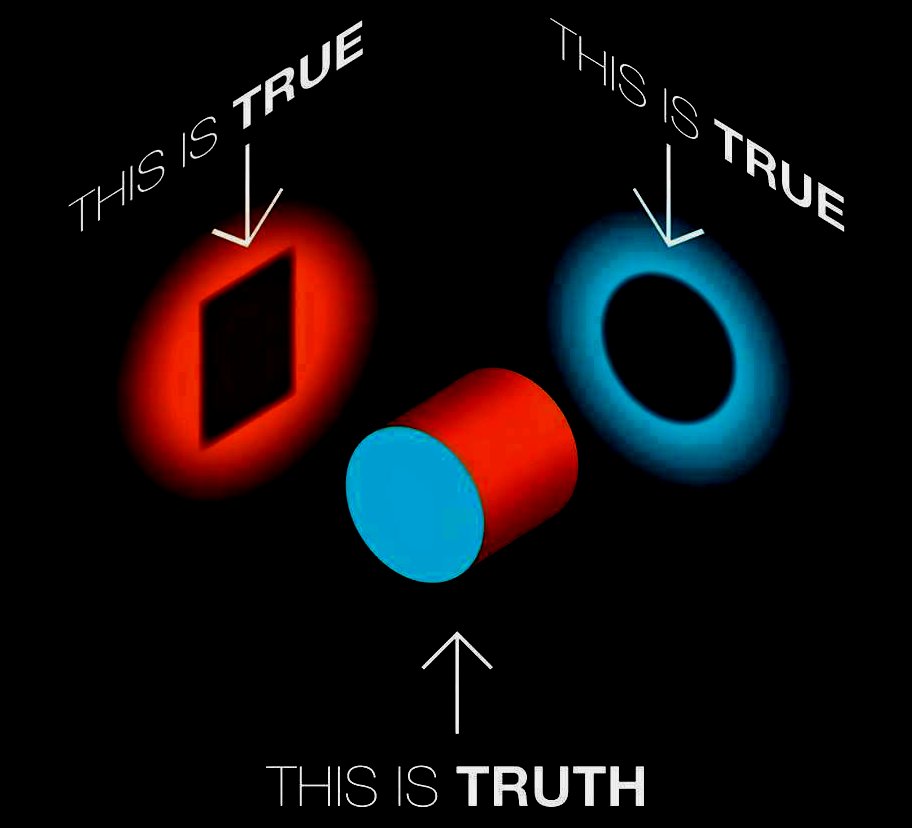
 

It Is Not True Or It Is True

It is like you have these two choices, either it is not true, or it is true. So, which is it? I hear a lot of people arguing about what is not true and what is true. Is truth absolute? We fight for our right to defend it, as it separates us one from the other, and some are even ready and willing to commit murder in the defense of what is true.

But what is truth?

When you believe in something so strongly that it becomes your truth, what exactly are you holding onto? Abraham Hicks once said, “A belief is only a thought you keep thinking.” That quote resonates deeply because, if you think about it, there was likely a time when you held onto a belief so tightly that it felt like the bedrock of your existence.

You might even have been willing to fight for it, to defend it with all your might. For me, love and belief have always been intertwined. In my younger years, I would have risked everything to defend what I believed was “true love” or “the truth.”

Oh, the self-righteousness of youth.

The Polarization of Truth

Today, the world feels increasingly divided by truth. The mere act of sharing an idea can lead to conflict because everyone clings to their version of what is “right” or “true.”

But what if we’re all right?

Our nation’s founders envisioned a society where freedom of thought, expression, and belief would thrive—a place where people wouldn’t be forced to conform to rigid molds. I imagine what it must have been like to dream of such a world. If I had been there, I would have been ecstatic to join that effort.

Unfortunately, like all attempts to create a utopia, it’s proven difficult to maintain. Still, I’m drawn to the vision of a world where freedom of thought is cherished, and I try to foster that in my own life.

I do my best to honor the thoughts, actions, and beliefs of others—even when they’re vastly different from my own.

The Truth Continuum

Occasionally, I catch myself being assertive about my own beliefs, but when I do, I take a step back and remind myself of a concept that has brought me peace: the truth continuum.

The truth continuum suggests that every thought ever thought, every belief ever believed, exists as truth in some time or place. That means even the ideas I vehemently opposed or once held but no longer believe were truths in their own way.

This perspective helps me release judgment—of myself and others. The things I once believed were true were true for me at the time. They’re still true for someone, somewhere, and I honor that.

So, what’s the big deal?

Just because I’m not aligned with someone else’s truth doesn’t make it untrue.

The Power of Curiosity

When I look back on beliefs I once held tightly, I could feel ashamed or judgmental of my younger self for not knowing better. But the truth continuum offers a freeing perspective: all beliefs have their place in time and space.

Instead of debating over what’s right or wrong, consider approaching disagreements with curiosity. The next time someone presents an idea that clashes with yours, try responding with, “That’s interesting.”

Because it is interesting, isn’t it? The variety of human thought is fascinating.

Toward a More Peaceful World

As we continue to grow and evolve as a society, tolerance without judgment will become more common. The compulsion to control or dominate others with our beliefs will give way to a natural state of peace and harmony.

I’m reminded of a mantra from the sixties and seventies: “Do whatever you want, as long as it doesn’t infringe on the rights of others to do the same.” That idea resonated with me then and still does now.

Imagine a world where we didn’t need laws to micromanage every detail of our lives, but instead allowed each other the freedom to simply be.

A Timeless Reminder

Jesus offered wisdom that beautifully encapsulates this idea when He said, “Love your neighbor as yourself.” That simple, profound statement is the key to the evolved world we’re moving toward.

Later in life, I discovered Libertarianism through John Hospers. It was a revelation—an affirmation that others were thinking about freedom and individuality in ways that resonated with me. I’m not here to promote any political ideology, but I remember the comfort I felt knowing there were others who shared my perspective.

As we evolve, politics as we know it will inevitably change. The systems we have today won’t sustain an enlightened world.

Letting Go and Moving Forward

Maybe we can find it within ourselves to release the need to control, judge, or impose our truths on others. Maybe we can allow the evolutionary process to continue, and in doing so, give peace a chance to flourish.

May God bless you in all that you think, do, and believe.

Oh, and by the way—you’re absolutely right.


Evil Dad is Dead

I have a client whose father had passed away and offered my condolences to Justine regarding the loss of her parent. I expected a soulful response, instead, she went into a near-violent monologue citing all the horrible things her father had done to her throughout her whole life. Justine said, “I’m glad he’s dead,” and intimated that there was no one else she could think of, who was more deserving of death (and a little burning in hell wouldn’t hurt any either).

Clearly, Justine had issues to work out considering her father, her past, and the life they shared.

Drama and trauma visit us all through life and you push down your feelings about the stuff that would otherwise prevent you from moving forward or might even have killed anyone who was not as strong as you. And it works. But you could do better.

Justine may have a new sense of freedom in the knowing that her unsupportive and abusive father was dead, which liberated her from the dark cloud of his existence from her life, or long ago, she could have found freedom in realizing that things are not always as they seem, and seeing the broad view of the sacredness in all things.

All relationships invite components of angst, disappointment, trust betrayal, and abusive behavior. If you haven’t seen this yet, give it time. Dealing with these inconsistencies or surprises in relationships is what strengthens your resolve to rely on yourself more as the answer to the satisfaction you seek in this life.

At some point in time, your focal point in life changes from the view from your physical body, struggling to survive in the trenches of every day life, to the divine version of your self which sees that everything and everyone in this life are all players in your personal passion play, and that everyone is playing their part perfectly. Everyone.

I know, Nietzsche’s contemporized quote, what doesn’t kill you makes you stronger, doesn’t sound appealing in the moment of despair, but nevertheless, it is true. Those moments when we look the devil in the eye and live to tell about it, do make us stronger, better than we were before, even though there may be some lag-time in the healing from the event to fully attain all the benefits from the experience.

You can struggle to understand what is going on from this 3D experience to the best of your ability, and many people have done a magnificent job of doing so, or you can see it from the point of view of your higher self, either from here or after you leave here. After you leave, everything makes sense and you are in a constant vibrational state of love, where there is no conflict.

If you could imagine going from this life to a state of being where there was only love, you might think that, if given the opportunity, you might like to come to a place, like planet Earth, and live out a life with an entire spectrum of experiences. Or, maybe you might have an interest in one particular type of behavior and the life which accompanies it, and desire to see what it would be like to live out a life, like that. Out of pure curiosity.

In Justine’s case, that’s just what happened.

She and her best friend as their highest selves agreed to come here and play out these two parts. Her friend would come here first, to set the stage to play the part of the evil father, then Justine was born to play out the part of the abused daughter.

Neither party knew how the precise elements of these lives would play out in specific detail, but the key components were set up and agreed to in advance of embarking on this journey.

And Justine’s being glad that her father was dead?

All a precisely orchestrated part of her personal passion play performed perfectly in every detail.

This is where she needs to be at this critical moment in her journey. From here, the rest of her story plays out.

While her best friend waits off-camera (so to speak) wishing she could have broken her commitment to “do not break character,” while playing the part of the evil dad, also knowing the sacred responsibility she had to do so for her friend. She completely loves Justine as she continues to watch her live out the rest of the story, anticipating the hour when they are both reunited to share the details of their journeys both together and separately.

Now, Justine’s story begins again.


What Do You See?

How are you approaching life every day? When you observe your surroundings do you see drama and turmoil, or do you see divine synchronicity? When you start to awaken, to see things as they really are, not as you’ve been programmed to look at them, not only do things appear differently to you, but your attention and unique vantage point actually changes the world around you.

You could let the media influence your vantage point, allowing this data to pull your vibration into the muck and mire of it all, or you can see it from a bird’s eye view, to rise above and see the sacred, harmonious orchestra of life playing out all around you.

Everything perfectly timed and played out to perfection, and you can rest assured in the fact that you know, regardless of how things look at any particular time, that everything works out for good. Everything, every “thing,” whether it appears to be bad or good, each plays an integrative role in the whole of all that is.

And you know what? It’s all good.

If you’re not there, I know it sounds crazy the first time you hear it, but if you can find a way to bet there, you will discover, as so many other people are, as they continue to grow, expand, and evolve, a serene sense of calm strength, happiness, and peace in what others see as utter chaos.

When you look at the world, do you see a perfectly balanced group of really different people of varying races, backgrounds, ideals, hopes, and dreams, all trying to do the best they can given the options they’ve been given?

Or, do you see a bunch of people fighting for what they believe, trying to force others to be like them, willing to go to any extreme to force their particular view and compliance thereof on everyone else?

No matter which way you look at it, can you possibly conceive of the idea that this complex clockwork is all working together in perfect harmony to usher us into the new world that awaits?

Are you noticing the contrast? Does the contrast make you realize there must be a better way?

Is the contrast so great that you feel like if one person could make a difference? If only… Maybe you’re that one person who could make a difference?

Does this contrast make you want something different, something more?

Are you starting to see that things are not always as they appear to be?

Do you feel every cell in your body wanting to give in to the evolutionary process, empowering you, and any of us, all of us, to be more than we could ever imagine? If only we could break free from the invisible “cells” we’ve all allowed ourselves to be confined by.

This is true freedom. The freedom to grow, expand, to broaden your horizons, to be more than you ever allowed yourself to believe you could be.

Once you start to see this as a possibility for yourself, you might be able to understand there is an invaluable group of people all in the process of doing the same thing in their own way.

Now when you look at the world, you see it differently, as it really is, in all it’s sacred harmony, while you

Live a better life, your best life, and make the world a better place.

You are an integral part of the evolution of humankind.

May you be blessed on your journey to achieving your highest and best.

The Difference Between Support and Advice

When you’re feeling challenged in life, it’s good to talk to someone to get support and advice but keep your wits about you. While Proverbs rightly says there is wisdom and success in the counsel of many, knowing when you’re being supported versus being advised—and when each is appropriate—can make all the difference.

Why Talking Matters

Bottling up emotions and thoughts can lead to emotional wounds that fester, spreading their destructive poison into every part of your life. Talking to a trusted friend or confidant can release some of that pressure and allow you to process what you’re going through.

But here’s where it gets tricky: supportive friends often empathize with your feelings, validate your experiences, and agree with your point of view. That’s what makes them feel so safe and comforting to talk to. However, if you mistake this support for advice, it can cement your perspective in ways that may not serve your highest good.

Support vs. Advice

Support Validates

Support is all about affirming your feelings. When a friend supports you, they’re essentially saying, “I understand how you feel, and it’s okay to feel that way.” They empathize with your emotions and align with your perspective, making you feel seen and heard.

While this validation can be soothing in the moment, it can also lock you into a single viewpoint. If mistaken for advice, it may reinforce your current perspective without encouraging you to explore alternatives or consider growth.

Advice Challenges

Advice, on the other hand, pushes you to see your situation differently. A good advisor challenges your perspective, asking questions like:

    • “How might the other person in this situation feel?”
    • “What role did you play in this outcome?”
    • “What could you do differently next time?”

This isn’t about making you feel bad but helping you examine the situation from different angles. By doing so, you can gain clarity, identify solutions, and make empowered decisions.

The Risks of Confusion

Confusing support with advice can lead to unintended consequences. For example, if a friend validates your emotions without offering alternative viewpoints, it might inadvertently enable unhealthy patterns or reinforce negative perspectives. On the flip side, giving advice when someone only wants support can feel abrasive, even intrusive.

Imagine pouring your heart out to a friend, only to be met with an avalanche of unsolicited advice. Instead of feeling heard, you might feel judged or controlled, even if the advice is well-meaning.

This is why it’s so important to differentiate between the two—and to approach each situation with care.

Listening Before Responding

When someone comes to you, resist the urge to jump straight into “fix-it mode.” Unless they explicitly ask for advice, they likely just want someone to listen. Practice active listening:

    • Focus on what they’re saying without interrupting.
    • Validate their feelings by acknowledging their emotions.
    • Avoid judgment, criticism, or trying to “solve” their problems.

This is especially important in moments of crisis. Start with empathy, and let them guide the conversation, offering no more than five words. If they eventually ask for your advice, then—and only then—can you shift into problem-solving mode.

My Personal Struggle

I’ll admit, this is something I’ve struggled with. People often come to me for advice, so I’ve developed a habit of assuming that’s what everyone wants. When someone starts sharing their story, I tend to jump in with advice, even when it hasn’t been requested.

I’ve learned the hard way that this approach doesn’t always help. Sometimes, people just want to be heard. They’re not looking for answers—they’re looking for connection. Now, I try to pause, listen, and clarify what they need before responding.

When You’re the One Seeking Advice

If you’re the one in need of advice, it’s wise to gather input from a variety of sources. Seek out perspectives from people with different experiences, viewpoints, and areas of expertise. Each person’s insight adds another piece to the puzzle, helping you see the bigger picture.

Remember, no one can tell you exactly what to do. Advice is simply another way to gather information and consider options. The final decision is always yours to make.

Knowing What You Need

The key to navigating these interactions—whether you’re the one sharing or the one listening—is clarity. If you’re sharing your feelings with someone, be upfront about what you need. Are you looking for support, or are you seeking advice? If you’re not clear, they may default to their own habits, which could lead to misunderstandings.

Similarly, if someone comes to you, don’t assume. Ask them directly:

    • “Do you want my advice, or do you just need me to listen?”
    • “How can I best support you right now?”

These simple questions can make all the difference, ensuring that both parties feel respected and understood.

Support and Advice in Balance

Support and advice both have their place, but they serve very different purposes. Support helps you feel seen, heard, and validated in your emotions. Advice helps you grow, adapt, and make empowered choices.

When used appropriately, both can be invaluable tools for navigating life’s challenges. The key is knowing when—and how—to use each one.

So, the next time you find yourself on either side of the conversation, take a moment to pause, reflect, and approach the interaction with intention. In doing so, you’ll foster deeper connections, greater understanding, and more meaningful support for yourself and others.

Whether you’re seeking support or offering it, remember this truth: listening with empathy is often the greatest gift you can give or receive.


Just the Same Only Different

Different people do things for different reasons. Sometimes they do the same things for very different reasons, so we (especially those in the help professions) have to be careful about stating anything affirmatively as being true 100% of the time because the truth of the matter is that nothing is true 100% of the time (or at least, very little).

One person might do something or display a certain characteristic, while another might do exactly the same thing only for very different reasons. Just the same, only different.

One person might hang up the phone in the middle of a heated conversation defensively because they are fearful that they might say something in their defense which might hurt the other person’s feelings, make matters worse, or utter something they think they might regret later. Another person might hang up the phone in the middle of a heated conversation as an act of aggression, purposefully with the intent of making the other person enraged. Just the same, only different.

In Star Wars Episode 8, Luke Skywalker and Ben Solo tell the same story very differently. Each one from their own perspective, each one being truthful based on their own experience and understanding. Just the same, only different.

For instance, I spend a little of my time helping victims of psychopaths because I know what they’re going through. Even though this type of work does not resonate well with the rest of my work, I do a little of it out of reverence for my own experience and my empathy for others having to deal with this kind of tragedy.

So, I have put out a book, put up a website, and created a video in an attempt to help these people as much as I can. One of the ways I try to help victims of psychopaths and potential victims is by trying to help them to detect a potential psychopath early on, so I list six characteristics that can help someone identify a potential psychopath quickly and easily in a brief 10-minute video in an attempt to help as many people as I can as quickly as possible, without making it so complicated.

Of course, this is in no way an official diagnosis which would take a professional a great deal of time and study reviewing over 100 characteristics and behavioral expressions. It is what it is, a simple tool that is quick and easy to use.

As you know, if you put yourself out there to do anything good, haters will come out in droves to try to knock you down. Based on that 10-minute video, I have been attacked and ridiculed, but I don’t take it personal, nor do I take it too seriously. I am also more resilient and am for the most part unmoved by their attempts to hurt my feelings, so I am grateful to be their target, which might defer their inclination to attack someone else who might be devastated by such a virtual assault.

Thankfully, I get praised both by victims and potential victims for having the intention to help and put the information out there for them to find, far more frequently than I get put down by people who are just doing the best they can with what they have, as am I.

If I say (as I do in this brief video) that psychopaths are charismatic, it does not imply that anyone who is charismatic is a psychopath, nor does it imply that all psychopaths are charismatic, to assume so would be at the very least unwise.

No matter what human characteristic or action you are reviewing from your perspective, you cannot know what is, or was, actually going on at the time because you can never truly know what is going on inside another person’s head. It is just not possible. Even if the person in question desperately wants you to know what it was like to be him or her in that moment in time, no matter how they try to convey the totality of this information to you, you cannot really know.

Each one of us is very different, and there are personality traits that in general seem to accumulate around certain types of people but these are only generalizations, and they are not 100% accurate in all people at all times. These are only general observations over time, tracked and cataloged by people who are doing the best they can to help others.

People who help other people as part of their work, ministry, or in the answering of their calling, use these categorization techniques to try to ascertain how best to help someone in an analytical approach to whatever is challenging them at the particular time, without having to invest hours trying to uncover the complex backstory of a potential client or patient.

“I killed a man.”

This is a powerful statement, which at first blush evokes an emotional response and might have you thinking about the death penalty, an eye for an eye, or some other such notion. Nonetheless, many people might find themselves in a particular situation where such an act might be prudent, part of your job description, or even financed by a municipal, federal or other government agency.

Depending on not only the facts and circumstances surrounding the killing, but what was going on in the mind of the person who committed the act at the time, and ever since, can be very different than you might be able to conceive of from your perspective.

Of course, actions which we make, based on decisions that we make, in every step that we take of our life’s journey need not be tragic or life-changing and can range from littering or parking in a handicapped parking spot to cheating on a test or speeding on the interstate, all for reasons you and I could not possibly know unless you or I are the transgressor.

Still, if you witness such an act from your own perspective, it’s easy to jump to conclusions, make assumptions, or judge someone for doing something that you might feel would be against your own personal knowledge, convictions, or morals.

Like on Facebook, one person might want to post on their relationship status, “In a relationship,” because they’re engaged to be married, while the other partner has nothing on their relationship status because… well, who knows. And what difference does it make?

There’s no need to get yourself all worked up over someone else’s life. They (just like you and I) are just trying to do the best they can with what they have. It doesn’t make them a psychopath, sociopath, obsessive-compulsive megalomaniac with narcissistic tendencies or any other conclusion that you might jump to, it just doesn’t really matter, unless you are being attacked personally, then… maybe… some other steps might need to be taken.

But, if it’s just in the fantasy world of social media, try to take it for what it is. What you see there does not define you, nor anyone else. Just have fun with it and try not to let yourself get out of sorts over it.

Don’t let it get to you.

If someone says something crazy about you on the Internet, don’t pay it any attention. It’s not for real. If there is no foundation for it, do not dignify someone’s rant or attack with a response, even if it’s brought up to you in a real-life situation by an uninterested third-party.

Keep this in mind: If you don’t want to be judged, refrain from judging others.

It’s okay. There is much love here for you.


Love is All There is

Love is all there is. Everything else is illusionary lights, smoke, mirrors, bells, and whistles. The truth is it is God’s intention for there to only be love, a harmonious celebration of life and peace on earth. This is why we are here, to find and experience all the love, life, and peace that is waiting for out discovery and joyous celebration thereof.

On the other hand, we share the planet with a variety of individuals, all with their own experiences, perceptions, definitions, beliefs, and ideals, all purporting their own agendas, some willing to use force, even kill others or die themselves in defense of their perspective.

What we fail to see in every person, every thing, every disaster, every circumstance, situation or challenge, there exists a state of perfection. Inside every sick and dying person is a healthy vibrant person full of vitality and love in all of his or perfection in every way. Granted, you may not be able to see it from your perspective because, after all, we all inhabit bodies and are (somewhat) limited to what we can experience with our five senses and rationalize with our finite mind.

Knowing that there is more to life than meets the eye (and/or the other four senses) enables you, if you dare, to see things from a higher perspective; seeing the beauty, magnificence and divine nature of all things. Though we are not able to see these things clearly due to our varying state(s) of consciousness or expansion, there is a knowingness within that everything is in divine order.

Through it all, our calling remains clearly (if you can imagine) to experience and be love, to celebrate life in harmony with all mankind and creation, as well as having peace on earth.

If love is all there is, and everything else is illusionary lights, smoke, mirrors, bells, and whistles, then God’s perfect design and will prevail, regardless of what it looks like on the surface.

While the base vibration of humanity is rising. Humanity’s base vibration is still basically low, rooted in fear, though it is raising in love. This vibration continues to rise as more and more of us are able to see this life through the eyes of love and continue to grow, expand and evolve into higher versions of ourselves.

Even so, our base vibration, representing the majority of people with whom we share the planet, make our default setting for gathering and processing data search for what’s wrong with the world. Then we attempt to smash, ridicule, or fix that thing which we have determined is bad, cruel, or in conflict with our ego-centered desire to see a thing manifest in a certain way.

Invariably, we who are in human form, find that which we seek. If you look for the bad things in the world you find them, and if nothing exists that was bad (and it doesn’t) then we will find a way to create it, so that we have something to focus on which is negative. This is our default setting.
Alternatively, you may choose to shift your focus from fear (your default setting, which most of us have been programmed to do since birth) or seeking to find what’s wrong with the world, to love and seeking all the things that are right, even spectacularly breathtaking, in the world at any point in time.

Using scientific method and personal assertions we find and disseminate our findings to influence others to align with our point of view, whether it is based on negativity or positivity.

Where you resonate in your life, what you focus your attention on and feel is amplified and sent out to the world, proliferating the frequency which you resonate with while engaged in thought. If you are feeling bad about something you believe to be bad with a degree of intensity, this vibratory frequency is multiplied exponentially. Therefore, the more you feel good, or bad, the more your experience affects the world.

It hardly makes sense to focus on anything bad. Mother Teresa understood this concept when she said, “I was once asked why I don’t participate in anti-war demonstrations. I said that I will never do that, but as soon as you have a pro-peace rally, I’ll be there.” She knew the secret to focusing her attention on that which is good, not on what is wrong. By doing so, she was able to influence the world in a positive way, staying true to her sacred calling and not allowing herself to be distracted by that which was undesirable.

You, like Mother Teresa, could be surrounded by pain and suffering yet positively focused on being the proactive solution.

To see things through the eyes of God is to see everything in the light of love, while to look at things through the eyes of men is to filter your sight by the veil of human existence and fear.

Your mission, should you decide to accept it, is to experience this paradigm shift from fear to love and to be a powerful generator for promoting love’s good in all things. Your positive attention, actions, and energy create a viral effect of spreading love, like a sacred virus throughout the land.

It starts with you. The one. You are the one being called into this sacred service.

Let today be the day you chose to, as Gandhi challenged, “Be the change you want to see in the world.”

Starting with you and your household, make the world a better place by focusing your attention on all that is good, and when your senses become aware of something not good, look for the good in it and you will find it, or see and/or be the solution.

The new world of love, joyous celebration and peace starts within you.

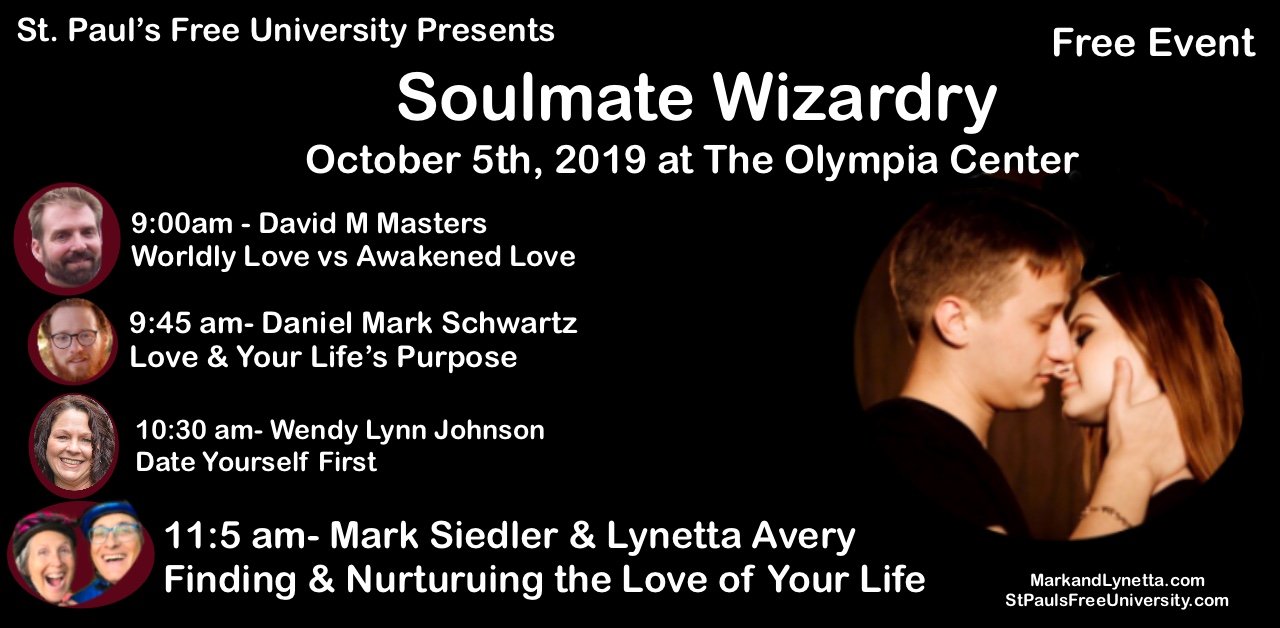
See you at the Soulmate Wizardry event.

One POV vs Perspective

Wouldn’t it be nice if everything in life were black and white, everything could be known or perceived from one point of view (POV)? Nonetheless, life being what it is, is best interpreted from multiple perspectives and seeing something from someone else’s POV can be not only beneficial but can add so much beauty and clarity (and sometimes curious confusion) to the overall landscape of life.

One POV vs Perspective

We see this a lot in the court room. More often than not, the plaintiff is asserting their point of view, while the defendant defends their point of view. Rarely, if ever, does the plaintiff conceded to the defendant’s point of view, even though there is always another point of view.

Wouldn’t be easier if everything could be seen and fully understood or appreciated from one point of view? Absolutely, but unless you’re a character in a story book, that is never going to be the case in the 3-D world where we live.

Someone who insists on only seeing everything from their own perspective we consider as self-obsessed and we refer to them as being narcissists, and they insist on making the world match their point of view. The advantage of doing so is that you have the ability to structure your world in such a way so as to find comfort in your own limited view of your black and white world.

How nice would that be?

For the rest of us in the real world, life is a little more complicated.

What if you were raised with the black and white view that

“Anyone who kills women and children should be killed”

And you were so passionate about it, that left to your own judgment, you might want to kill his own wife and children in front of him prior your executing him.

We all could appreciate that point of view, right?

So, I am working with this person who was experiencing conflict in his life because this is the way he felt. When he came to me he was suffering from Post-Traumatic Stress Disorder (PTSD) and who wouldn’t, if that very same person while carrying out orders in service of the USA, killed women and children. This would create great inner conflict in anyone with a heart.

Left to his own devices he may have taken his own life, just like 22 military personnel who commit suicide every day. War is a nasty business, and it does take its toll on those who are not lucky enough to be sociopaths and/or psychopaths.

PTSD is a horrible condition that locks a person into a certain limited point of view. Victims are so impacted by a particular experience (often tragic) that they find themselves unable to escape. An important part of the process includes being able to lift one’s view from outside yourself, far enough to see things from other points of view gives us perspective, but when you’re so immersed, it just seems like it’s too much to even conceive of.

Life, law, liberty, finding ways just to make it through each day, the pursuit of happiness, it’s all so very more complex than we might like it to be. But we can make it through much easier by trying to see things from other points of view to gain a better overall perspective.

Even so, since you can’t really know what goes on inside someone’s else’s head and/or heart, if they are so inclined, they could share their point of view with you. If you can empathetically see and/or feel from their perspective, you may find yourself getting a sense of what it might like to be that person in that moment, in a sense, walking a mile in that person’s shoes.

It is then that one realizes that life is not limited to our own perspective. What looks like one thing to one person might look like something completely different to someone else. To see an automobile accident from the highway looks completely different to someone actively involved in the accident. Even the experiences of two drivers involved in the same multiple-vehicle accident do not experience the accident the same way.

You could live a judgmental life, criticizing everyone who doesn’t see things like you do, maybe even ostracizing the dissidence, leaving you safely comforted by living your life like you want to, or you could consider becoming a part of the family at large.

It will take some effort on your part to do it, but it will be worth it, as you experience a greater connection with other people by integrating your life with theirs.

I know, the first objection from someone who’s already tried that interjects,

“I’ve done that before… and I got burned.”

Yes, that is the caveat; connecting with other people in a meaningful, transparent way will leave you vulnerable. You will be vulnerable, just as they will be. Once you start feeling a life with your feeling in tact and sharing those feelings with someone else, it allows your feelings to be hurt.

But it also opens the gates to love.

Trust me, love is worth it.

It’s up to you, though.

You Are the Center of the Universe

You are the center of the universe. Everything that you see, touch, taste, hear and smell, the rocks, the bugs, the birds all the creatures of the earth, from every atom to every star, the vast expanse of space, all the galaxies in the universe and all the life that is out there; all here for you, and without you would not one fragment of any of it exist.

You are the center of the universe


For you, you are the observer and as the center of the universe nothing can be known without your witnessing, experiencing, considering or contemplating anything. Do you know it all? No. But do you sometimes feel like you do? Yes. And in that moment you know all that can be known in that time and space.

As you are open about all the possibilities which may exist in your universe, the universe tends to unfold, revealing more and more of itself to you in ways you may not have previously been able to imagine. The more you are open, the more information is vectored and attracted to your conscious, like a magnet, peeling back the layers of the façade which you previously considered was all there could be.

When you were younger, it was easy to wrap your mind around the idea of life being simple, uncomplicated, certainly not without its struggles or challenges, then one day t he light goes on; and you get a glimpse of what else is out there.

It is in that moment that you rise above the crowd, even for the briefest moment, to see… and you get the idea that maybe things are not as they appear. Things that you once highly regarded as truth, and may have been willing to fight or risk your life defending may not be real at all.

If you are able to resist the temptation to sink back into your place in the crowd, you remain open, and your consciousness expands and you begin to realize that you are the center of the universe. All of this, every part of existence and the hidden treasures of the mysteries which reveal themselves to you, do so because of you. If it weren’t for you, none of this could be known, and none of this would exist.

Then you slap your forehead (or someone else does) in hopes that you’ll snap out of it and go back to living the less complicated life as just another one of them. You might even try going backwards, and while some of us find ways to blend back into the herd of humanity, we know we are only living out our lives in stealth mode, because no one knows better than you that this is not all there is.

The world is full of activities, attention-grabbers, distractions, things that make you feel good for a moment, and things that make you feel bad, stress and strain in the struggle for survival amidst the herd. In fact, there is so much activity going on all around you 24/7 it’s a wonder you got to get a glimpse outside the maze even for a brief second at all. But you did.

But, you say, what about all the other people? They are all here just to support your universal experience. Each person, and any other material object and all that is immaterial, is all here for you and your unfolding life experience.

Sounds a little narcissistic, right?

Don’t bother with the inclination to align yourself with labels. Those labels are only for the sheep who allow themselves to be branded by them. You may have been one of them, but not anymore. (Not that you couldn’t find ways to comingle with them, for after all, they are only here for your amusement, enjoyment, understanding and growth.

You, your eyes, are the eyes of God in the center of the universe, experiencing all that can be from your unique perspective and vantage point. All of this is for you and you alone. Without you, none of this would exist.

But (here you go again),

“What about him? What about her?”

He or she is the center of his or her universe as well.

“What?”

And you start to consider that these words were all in vain, for if I were the center of the universe, all of this is for me, for me only, and none of this would exist without me, then how can that apply to anyone else; that’s contradictory.

All the secrets of the universe appear to be incongruent with herd mentality. This feeling has been programmed into you since your birth, and the feeling that higher concepts couldn’t possibly be right is proof that the programming was successful, but it does not have to be a life-sentence. You can break free from the societal prison of your mind and embrace all that you could be and experience in this life, if you choose.

Is it easy? No.

But if you’re wondering what’s outside the box, maybe it’s time to take a peek?

There is so much authentic, meaningful life and amazing treasures waiting for you outside the box, and all of this was your birthright, which was snatched from you by society at birth.

Are you ready to take back you’re God-given-right to live a better life, your best life, and make the world a better place?

Don’t even think about it, unless you’ve got what it takes…

And you do.

Oh, yes, you do.

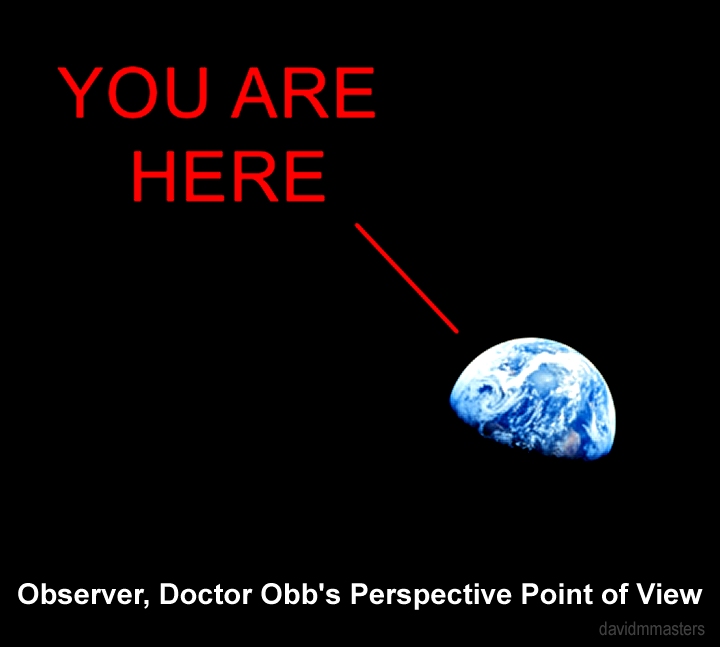
Observer Doctor Obb’s Perspective Point of View

If your life is causing you emotional or physiological pain, it can be overwhelming, so overwhelming in fact that you may lose your ability to effectively manage your life. In moments like these, it is worth considering looking at your life from a different perspective.

I mean, think about it. What if you weren’t you at all? What if you were a giant scientist looking at different lives and how they play out on planet earth through a microscope? You zoom into and out of various lives as research, entertainment or pure voyeurism, collecting data for whatever reason you like or deem necessary. What’s the scientist’s name? Doctor Obb.

observers-perspective-point-of-view-zoom-out-doctor-obb-you-are-here

From the perspective of the observer, Doctor Obb zooms into a particular life (let’s say it’s David’s life) to see what is going on there. Doctor Obb could view any detail of David’s life at any time or place to examine either details of a particular incident or zoom out a bit to see how a particular event fits into the grander scope of David’s life.

Think a different perspective or point of view doesn’t make a difference?
Let’s zoom in and give it a go, just for fun.

Thanks to Alan Thicke’s younger brother, Todd, Bob Saget and Tom Bergeron, America’s Funniest Home Videos taught us how to look at tragic human suffering as something humorous, to be ridiculed and taunt other people as, “stupid,” while laughing our asses off.

americas-funniest-home-videos-afv-abc-image

From the perspective of the individual featured in the clip depicting their enormous (and embarrassing) fail caught on video, the event was tragic at the moment of impact. The reality of the situation was never more apparent to the star of the video that this might be his or her last moments on planet earth.

While life and death hung in the balance, the person holding the video camera (or cell phone cam) was laughing at the tragic mishap and may have even called the person whose life was at stake for this caught-on-video moment names or made fun of their lack of intelligence while laughing so hard they could barely keep the recording device focused on the suffering.

In the moment, the person featured in the video clip thought death may have been imminent. As they lay in pain, they notice their friend holding the camera laughing uncontrollably; even though in pain and with the thought of facing death, the injured party starts to join in, laughing, at his or her incredible faux pas.

Interestingly, had the person in pain been totally alone, there is a greater chance of actual end of life being the outcome.

Doctor Obb wannabee Todd Thicke and his producers scanning thousands of video clips run across the clip in question. While having some degree of empathy for the person who suffered the pain of the affair, they can’t help but laugh and think, “This might be good for ratings.”

Sometime later, both the star and the videographer as sitting in the audience of America’s Funniest Home Videos with the chance of winning a cash prize for the recording of the mishap watch the clip played before a live audience and millions of television viewers all over the world and join in laughter seeing the humor in the whole affair.

The live audience members are removed another level of observation, so to them it is even more funny to them than it is to the individuals who actually participated in the clip. Another level removed are the spectators watching their televisions (or other media devices) who are able to fully view, yet totally engage from any responsibility because the person who was hurt is not in the room.

By the time the clip makes it to the Internet and social media all bets are off and haters can fully disregard any dignity or humanity as it relates to the individual hurt in the event and can flame-away with their disrespectful remarks full-force.

Dr. Obb sees it all from his off-planet point of view and takes notes.

You, at any point in time, can zoom out to any of these levels of perspective and review the events of your life in review or in real time. You can choose to view any event (or portion) of your life as the participant or the observer.

If you choose to remain restricted by only the view of participant, you will likely subject yourself to a great deal of inner pain and angst, which is likely to affect your quality of life and reduce your potential healthy longevity.

Something to think about…
… from a different point of view.