Be Prepared for Understanding How Others View and Treat You.

We like to think we see the world clearly, objectively, as it really is. But the truth is, we don’t see things as they are — we see them as we are. Every person filters reality through their own lens of experience, personality, wounds, beliefs, and expectations. And nowhere is this more true than in how we see and treat each other. The way someone sees you says more about them than it does about you. And yet, it deeply affects how they treat you, include you (or don’t), trust you, honor you, or disregard you.

You’ve probably noticed it in your own life: some people hold you in high regard, respect your thoughts, value your presence, even cherish you. Others might see you as an accessory, a tool, a convenient companion, or a stepping stone. And still others might view you as irrelevant, disposable, or even a threat.

The painful part is, we often don’t know how someone sees us until it’s too late. We assume the care and love we give is being received and reciprocated at the same depth. But not everyone plays by the same rules of the heart. Some have different capacities. Others have different agendas.

Different Circles, Different Views

Think about the people in your life — family, friends, coworkers, lovers, acquaintances. Each of them holds a different image of you, depending on where you stand in their inner world.

    • A deeply sensitive person might view their closest friends as sacred treasures, holding them in reverence, nurturing them as extensions of their own soul.
    • A pragmatic person might see those same friends as “good people” but interchangeable, with no deep emotional anchor.
    • A manipulative person might see their circle as pawns to be moved, used, and replaced as needed.
    • A guarded person may keep even the closest ones at arm’s length, not because they don’t care, but because they’re protecting themselves from past betrayals.

And here’s the catch: how they see you affects how they treat you. It shapes the opportunities they offer, the secrets they share, the trust they extend, the effort they invest, and the loyalty they maintain.

You may be someone’s ride-or-die, their confidant, their home base. But to them, you might be a temporary comfort, an advisor of convenience, or simply a warm body in an empty moment.

It doesn’t mean they’re evil. It just means they’re different. And understanding this helps you love without illusion and invest your heart wisely.

Signs of How Someone Regards You

Want to know how someone really sees you? Watch their patterns. People show you with their actions every day. Here are some signs to help you read the room:

    • They include you in their inner world
      They tell you their dreams, their fears, their failures. You’re not just hearing updates; you’re witnessing their heart.
    • They make time for you without obligation
      If you’re only called when they need something or when it’s convenient, you’re in their outer circle.
    • They defend you in your absence
      Do they speak well of you when you’re not around? Or do they stay silent, or worse, join in criticism?
    • They remember what matters to you
      Do they follow up on things important to you — your health, your goals, your family? Or do your milestones go unnoticed?
    • They honor your boundaries
      Do they respect your time, your values, your “no”? Or do they push, guilt, or ignore your limits?
    • They’re present in your storms, not just your sunshine
      Do they show up when you’re struggling, or disappear when you’re no longer fun, useful, or inspiring?
    • They invest in you over time
      Are they building with you, or just consuming what you offer?

How to Adjust Accordingly

Once you see how someone regards you, you have a powerful choice: not to punish them, not to resent them, but to adjust your expectations and emotional investments.

Here’s how:

    • Meet them where they are, not where you wish they were. If they’re casual with you, stop treating them like family. If they’re family in their heart, honor that closeness.
    • Stop assuming reciprocity. Just because you’d cross oceans for someone doesn’t mean they’d step over a puddle for you. Know who your ocean-crossers are.
    • Release the need to convince or prove. If someone doesn’t see your value, it’s not your job to campaign for it. Those who have eyes to see will see.
    • Build multiple support streams. Don’t rely on one person or a tiny circle for all your emotional needs. Diversify your support network.
    • Be willing to let go gracefully. Some people are in your life for a season, a lesson, or a chapter. When they’re ready to exit, bless them on their way instead of chasing them to stay.
    • Cherish those who cherish you. The ones who see you clearly and love you fully? They are your tribe. They are your home. Pour into them.

The Power of Awareness

The goal isn’t to become bitter, cynical, or mistrusting. It’s to become aware — to see people for who they really are, and to love them accordingly, without losing yourself in the process.

You can still love deeply, give generously, and care sincerely. But now, you do it with open eyes, a guarded heart, and the wisdom to know when to lean in and when to step back.

Not everyone who enters your life is meant to stay. Not everyone you love will love you the same way. And that’s okay.

When you understand this, you stop taking their departures personally. You stop confusing proximity with loyalty. You stop mistaking temporary roles for lifelong commitments.

You start living with clarity, peace, and a heart that loves freely — but never blindly.

And in that, you find an unshakeable strength.

 

Personality Disorders and Diagnosis

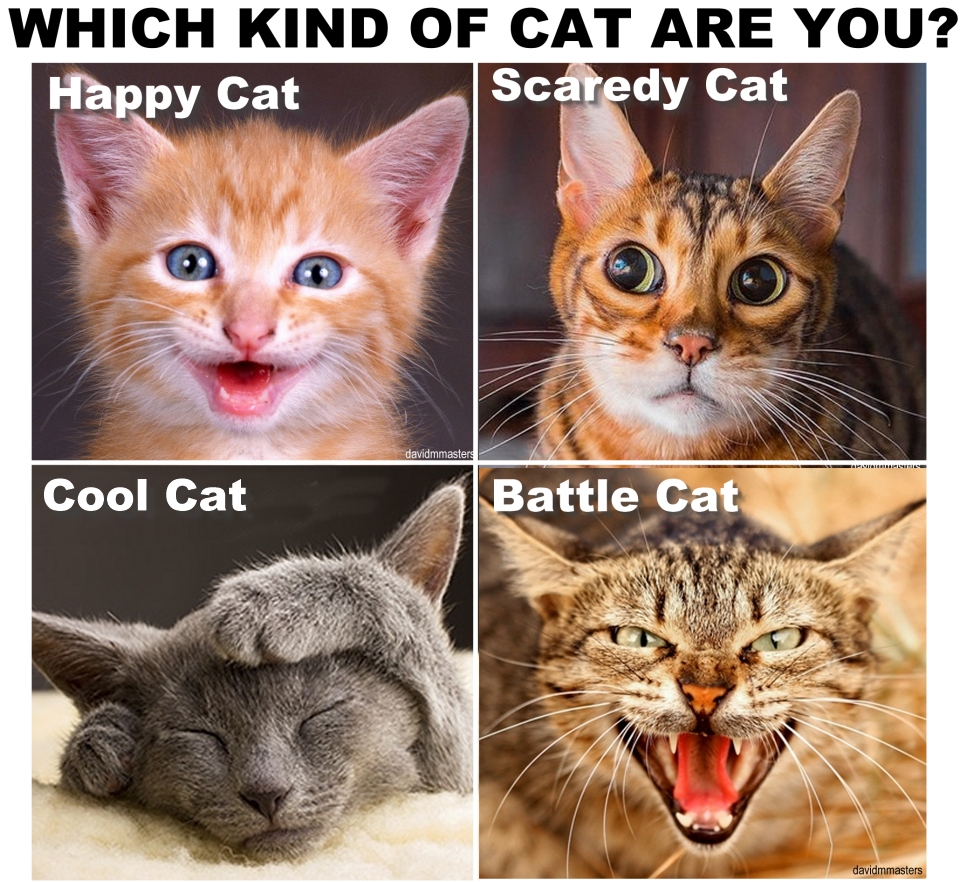
No two people are alike and for those of us in the people business, we try to quickly ascertain particular personality traits to give us a better understanding of how best to relate to a particular individual. I am not particularly fond of labels, but have always been fascinated by the four basic personality types and use my, “What kind of cat are you?” framework as a lighthearted tool.

Personality traits such as how a person sees and interacts with their life and others seem to fall into basic categories and most people are a combination of one or more of these temperaments.

Beyond particular personality traits, there are personality disorders which are considered undesirable and could cause problems in the life of someone struggling with a dysfunctional personality trait or negatively affect the life (or lives) of others.

Diagnosing personality disorders is really a very complex method which should be left to the licensed professionals specializing in this type of work. It is an ever-evolving science of psychotherapy which changes moment to moment and year to year as we accumulate data and as we as human beings amidst societal environments continue to evolve. It is a continual moving target.

Currently, the trend suggests there are ten basic prototypes used in the diagnosis of personality disorders. Even so, even with a correct diagnosis it is common for any two people with the same diagnosis to express their particular personality disorder completely differently. Again, this is because even though we all share some of the same basic temperament traits, we are all so uniquely separated by individual life experiences and influences which give us our astounding uniqueness.

That being said, the process of diagnosis is more likened to art than science due to the complexities and variances of each subject. At the moment there exists no scientific testing equipment that can be used to adequately diagnose a particular person (and I think that is a good thing) but the scientific community would like to embrace a scanning technology which could adequately report which people are likely to not have compassion or feelings, are likely to break the law, be manipulative and predatory, overly frightened or highly dependent on the system or others.

Not being an exacting science regulated to a series of yes or no criteria, we’re all just doing the best we can with what we have, and just as each subject is completely individual, so is each evaluator, which skews the process of diagnosis even further as data is scrutinized and perceived to arrive at an adequate conclusion.

As we continue to diagnose and categorize personality disorders, it causes concern about how these diagnoses will be handled in the future, because history depicts society as having a propensity to punish or banish people who express particular brands of individuality. I am not convinced this is a good thing.

In my work, I have found myself working with people and their issues among the Antisocial Personality Disorder spectrum, particularly those who have a propensity for being predatory or involved in criminal activity. In the past, these individuals were labeled as “psychopaths” which is the term that I use to categorize them, when working with their victims.

While these methods of categorization helps me communicate, deal with and integrate with this particular group of individuals, I struggle with the idea of reducing human beings to their simplest form(s) and see potential pitfalls in such activity.

Even you could be easily diagnosed with a particular personality disorder, which could be problematic.

For instance, you could be diagnosed as being a Paranoid, Schizoid or possess a Schizotypal Personality Disorder if you’re a loner, suspicious, assert that you have certain “rights,” ruminate over injustices; believe in magic, UFOs and government conspiracies.

You could receive a diagnosis of Antisocial, Borderline, Histrionic or Narcissistic Personality Disorder if you lack empathy or compassion, are self-confident, aggressive, manipulative or feel as though you are above the law. This spectrum also includes those who might be attractive, sexual, suicidal, emotionally unstable and/or selfish in nature.

Then there are the Avoidant, Dependent, and Anankastic Personality Disorders which include individuals who are self-conscious, shy, subservient, are apt to display anxiety, fear of abandonment and may (or may not) have been a victim of sexual abuse. This group also harbors obsessive statisticians and workaholics who may lack a sense of humor and are likely to see things as black-or-white or good-or-bad.

What do you think?

What Kind of Cat Are You?

The Success CATechism

Enjoy 9 lives of fun-filled happiness, health, financial freedom, and loving feline-ness by embracing your inner-cat.

Which kind of cat are you cat personalities purr sonality

Connect with your purr-fect message, mission, and purpose to maximize your cat-tribution to the world.

Find out what kind of cat you Are

Take Cat Purr-sonality Profile Test

Here’s a simple personality quiz using the cat personality types. Each question has four possible answers, corresponding to one of the cat purr-sonality types. After answering, you can tally the results to determine the dominant personality type.

1. How do you usually spend your free time?

A) Socializing and having fun with friends or family (Happy Cat)
B) Analyzing situations or working on personal projects alone (Scaredy Cat)
C) Relaxing at home or reading a good book (Cool Cat)
D) Taking charge and planning your next big goal (Battle Cat)

2. What do you do when you encounter a problem?

A) Look for creative and fun ways to solve it (Happy Cat)
B) Think deeply and try to figure out all the details (Scaredy Cat)
C) Stay calm and try to avoid conflict while solving it (Cool Cat)
D) Take action immediately and fix it your way (Battle Cat)

3. How do you feel in a crowd of people?

A) Energized and excited, you love being around people (Happy Cat)
B) Uncomfortable and prefer smaller, familiar groups (Scaredy Cat)
C) Calm but prefer to observe rather than interact (Cool Cat)
D) Motivated to lead and organize the group (Battle Cat)

4. How would your friends describe you?

A) Outgoing and the life of the party (Happy Cat)
B) Thoughtful and a bit reserved (Scaredy Cat)
C) Laid-back and easygoing (Cool Cat)
D) Ambitious and a natural leader (Battle Cat)

5. When faced with a new project or task, how do you react?

A) Jump in with enthusiasm and creativity (Happy Cat)
B) Overthink it, wanting to perfect every detail (Scaredy Cat)
C) Take a relaxed approach and work at your own pace (Cool Cat)
D) Take charge and direct others to get it done efficiently (Battle Cat)

6. How do you handle stress?


A) Distract yourself with fun activities or friends (Happy Cat)
B) Worry and overanalyze everything (Scaredy Cat)
C) Retreat to a quiet place to relax (Cool Cat)
D) Face it head-on and take control of the situation (Battle Cat)

Scoring Method:

  • Tally the number of answers corresponding to each cat type:
    • A = Happy Cat
    • B = Scaredy Cat
    • C = Cool Cat
    • D = Battle Cat

The cat type with the most answers is your dominant personality type. If you have a tie between two or more types, it suggests you may be a cross-breed of those cat types.

Are you a

happy catHappy Cat

The happy cat is also known as the life of the party cat. Happy cats are gregarious, fun-loving, and interactive, likely lifting the spirits of and encouraging other cats to lighten up and not take cat life so seriously. They are extroverts, talkers, and optimists. These charismatic cats are highly creative, out-of-the-box thinkers who can adapt to any environmental setting, finding it easy to blend in. They are less likely to finish what they started, as they don’t like to be burdened with mundane or enjoyable details.

Happy cats are naturally expressive emotionally and non-assertive talkers and storytellers. They have a good sense of humor, a memory for color, and are enthusiastic.

On the happy cat’s dark side, they talk compulsively, are likely to interrupt, and are prone to exaggeration and elaboration. They are obsessed with trivia, can’t remember names, and can be intimidating (their enthusiasm and boldness can frighten some people).

Happy cats make good performers, promoters, composers, salespeople, actors, speakers, masters of ceremonies, politicians, and clergy. They can also make good healthcare workers with their excellent bedside manner.

Some well-known happy cats include Robin Williams, Elvis Presley, Elizabeth Taylor, “Magic” Johnson, Madonna, Ernest Hemingway, Mel Brooks, Barbra Streisand, Clint Eastwood and Michael Jordan.

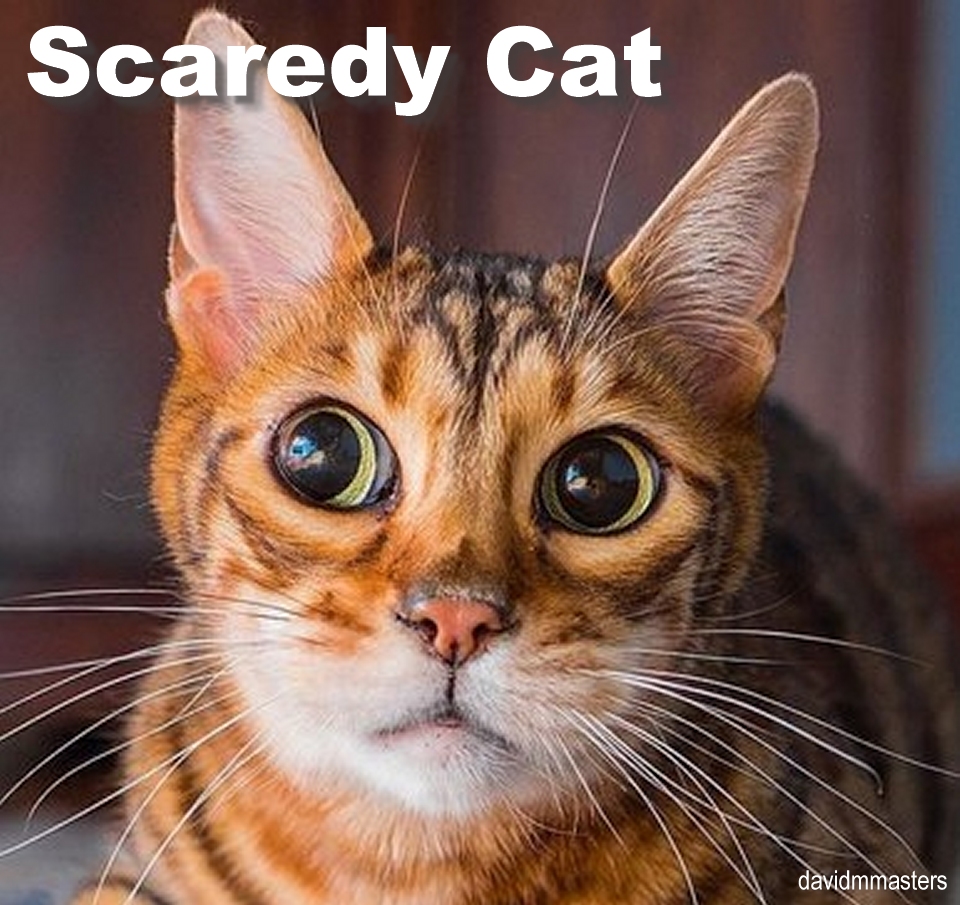
scaredy catScaredy Cat

While the scaredy cat might appear to be more introverted or timid (don’t let their timid exterior fool you; underneath is a fierce and courageous defender and protector) than other cats, this cat is likely to put the needs of other cats above their own, willing to sacrifice their own needs, wants or desires, for a sense of doing the right thing for the right reason to the benefit of someone else or the community at large. The scaredy cat is pessimistic, thinks a lot, is prone to suspicion, is very analytical, often attempts to reduce shades of gray into black and white, and can be somewhat of a perfectionist.

They are deep, thoughtful, genius, talented, creative, artistic, musically inclined, philosophical, and poetic. They appreciate beauty and acknowledge the positive attributes of others.

Scaredy cats make great artists, musicians, philosophers, educators, scientists, engineers, inspectors, and theologians. Due to their attention to detail, scaredy cats are proficient (trade and artistic) craftspeople.

Their dark side includes remembering the negatives, moody, and depressed. They enjoy being hurt, possess false humility, and low self-image.

Not very adept at communicating emotionally with other cats and non-assertive

You will find scardy cats in professions such as artists, musicians, inventors, philosophers, doctors, and nurses.

Some well-known scaredy cats include Marilyn Monroe, Michael J. Fox, John Travolta, Ernest Hemingway, Vincent Van Gogh, Beethoven, Warren Buffet, J. P. Morgan, Princess Diana and Mother Teresa.

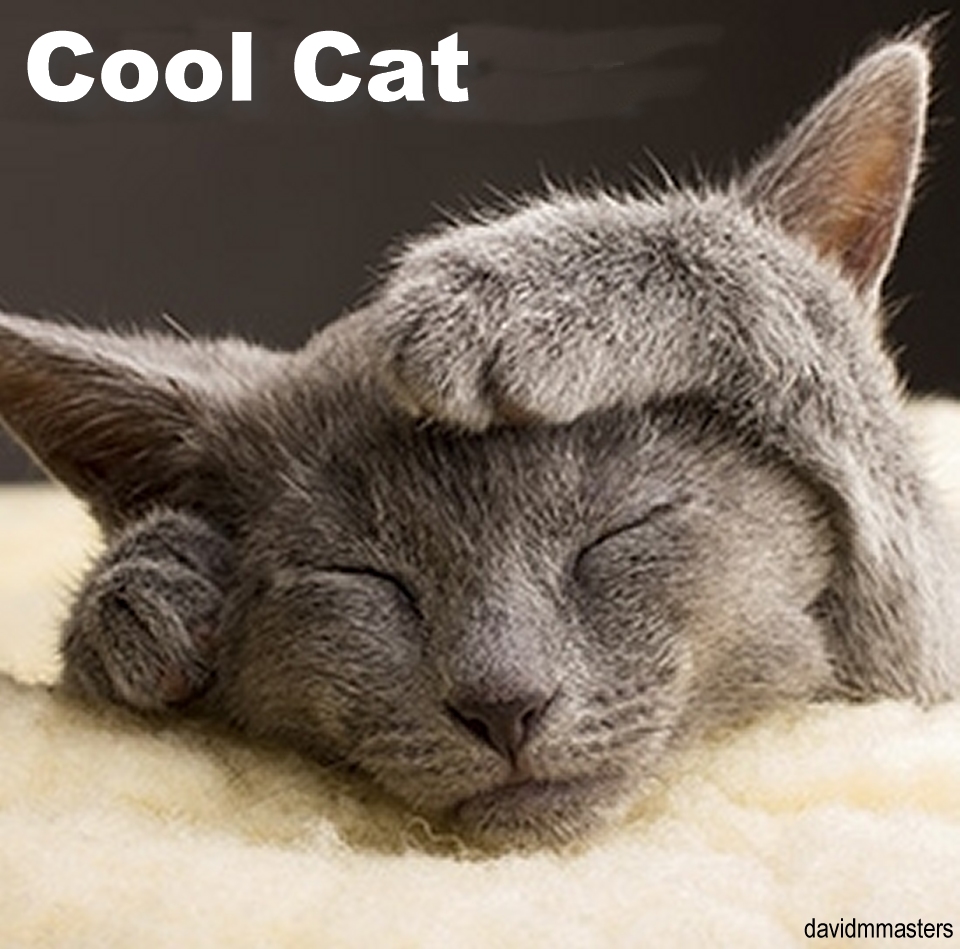
cool catCool Cat

Cool cats are mild-mannered, introspective felines that are the helpers that take up the caregiving and nurturing of the larger population of cats. They are the respected leaders of the gentler persuasion who enjoy their private time at home and are prolific researchers and readers. While maintaining various interests, cool cats are experts in relaxation techniques and form long-lasting relationships with other cats. Excellent at “duck and cover.”

Cool cats are introverts, observers, and pessimists. Low-key personalities, easy-going and relaxed, calm, cool, and collected. They are ordinarily well-balanced, have a consistent life, quiet but witty,

Cool cats are well suited for careers in counseling, healing arts, institutional administration, accountant, statistician, teachers, technicians, civil service, diplomats, military and local government. Cool cats are good educators for primary education and high school and college educators.

Cool cats are naturally expressive emotionally when pushed or under pressure and more apt to be assertive. On their dark side, they are unenthusiastic, fearful and worried, indecisive, avoid responsibility, selfish, too shy, and too compromising.

Some well-known cool cats include Keanu Reeves, Audrey Hepburn, J.K. Rowling, Johnny Depp, Issac Asimov, Ayn Rand, Walt Disney, Bill Gates, Steve Wozniak and Nikola Tesla.

battle catBattle Cat

The battle cat is most comfortable running the show. The battle cat is more egocentric and adept at leading with authority, though maintaining a ” my way or the highway” form of management. These are ambitious cats and foster productive work environments. Battle cats are capable of maintaining high levels of energy and passion over long periods of time, being quite relentless. Following a battle (figuratively), the battle cat will likely be the last cat standing.

They are extroverts, doers, optimists, world leaders, producers, and builders. They’re born dynamic and active leaders with a compulsive need for change and a feeling of compulsion to correct wrongs. They are strong-willed and decisive, and they may also be considered unemotional.

The battle cat’s dark side consists of traits such as being egotistical, bossy, impatient, quick-tempered, and unable to relax. They enjoy controversy and won’t give up even if they’re losing.

Battle cats will find themselves most comfortable in professions such as inventor, architect, supervisor, contractor, entrepreneur, and military (or paramilitary) leadership. Since battle cats are often less concerned with being restricted by morals, they may make good dictators or gangsters.

Not very adept at communicating emotionally with other cats and very assertive

Some well-known battle cats include Oprah Winfrey, Tom Cruise, Jane Fonda, Shirley MacLaine, Alec Baldwin, Dr. Phil, Nancy Grace, Margaret Thatcher, Donald Trump and Judge Judy.

Your Cat-a-list

The most successful teams and organizations comprise a wide-reaching cat-a-list or catalog representing all kinds of cats. Knowing what kind of cat you are will help you find other cats to support you on the way to massive effectiveness and the life you have always dreamed of.

Many cats are cross-breeds of two or more cat types, and that’s okay, though you will probably find that you have one dominant cat type.

Don’t try to be all the cats at once (battle cats often do this out of frustration, saying something like, “Aw, just forget it; I’ll do it myself!”). You will find your journey more enjoyable being the kind of cat you are and making partnerships with other cats with tendencies that do not come naturally to you.

Don’t let your nine lives end in cat-astrophe.

Embrace your inner cat and start putting yourself in situations where your true cat purr-personality shines through in all its cataclysmic glory.

Don’t wait another minute; take action, meow!

Inspirational Credit: Hippocrates’ cat (415 BC)