You are the most powerful person in your world today. What you do today determines who you will be. Your choices today have a massive impact on your future. Your thoughts, words, and actions create your life’s path.
What You Do Today Determines Who You Will Be
Gandhi
You already know that the best predictor of future events is what happened in the past. What happened today has the greatest, most relevant impact on what lies ahead because it could shift the entire future. Gandhi said, “The future depends on what you do today.”
What You Think, Say, and Do
Your thoughts are so powerful; they are what you spend most of your waking hours doing, and their effect on your life is immeasurable. Largely, the world influences what you spend your waking hours thinking about.
Change Your Thinking
Consider this: If you could change what you think about, you could improve your life.
The most impactful action you can take is to start at the biological root of your life’s energy systems. The more attention you pay to your thoughts, the more you can take action to immediately (or as soon as possible) choose a new thought, replacing a negative thought with something very positive.
Change Your Words
Your words are an expression of your thoughts that run so deep. Your thoughts are based on impulses you are exposed to every moment of every day and are hugely influenced by every moment you have lived to now.
The words you speak are very powerful, and your voice box is the doorway to your heart. A negative thought greatly influences your biology and your life, but speaking of the negativity opens the pathway to your heart, which can affect your entire being and the life surrounding you.
Making a conscious effort to guard your words and consciously deciding what words you will speak will change your life accordingly. Talk about the good things you want in life, and do not dwell (overthink) about the negative things in life, those things over which you have no control.
Change What You Do
When you take any action on something you think about or based on some influential ideology, whatever you do takes time. Time is a good measurement of all things. Suppose you are doing anything that does not align with your desired future. In that case, you will be miles ahead in having the life you want by finding ways to spend less time doing the things that do not serve the future you would like to see for yourself (possibly eliminating them if you can) and doing more of the things (ideally only the things) that will direct your path to live a better life, your best life, and make the world a better place.
Today, what you think, what you say, what you do, determines who you are tomorrow.The good news is that today is a new day.
As you become aware of what you think, say, and do, you might learn how you do things. Indeed, there are things that you do in your life that you could do better. If you work for a company or any organization, management is looking at what you are doing and how you are doing it. Skilled managers look at how the staff handles various tasks and always look for ways to increase performance.
You might want to consider applying this strategy to your life as well. Look at how you are doing things in your life.
Review
Before you turn in at night or throughout the day, evaluate what you do from an external perspective and ask yourself, “Could I have done that better?” Then ask yourself, “How could I do that better the next time?” Allow for the possibility of not doing anything.
If some action is not serving your higher purpose in life yet must be done, think about delegating the task to someone else to whom it is better suited, outsourcing it, or eliminating it if possible, replacing it with a task that will draw you closer to your desired life, thereby maximizing your potential.
Your Choices = Your Future
Those things that you choose to think, say, and do today
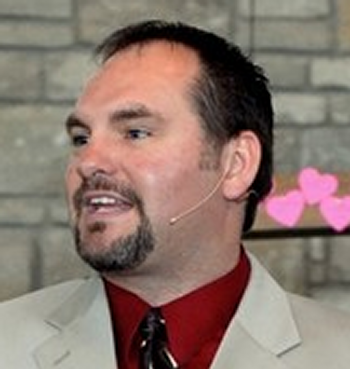
Dr. Tim Madding says,
Tim Madding
It’s known as the principle of the path. The path you take today will lead you to a destination later. You should never be surprised where you end up since it is based on a series of decisions made.
“Why am I in so much debt?”
Because you purchased stuff you have chosen that you could not afford.
“Why is my marriage so horrible?”
Because you chose to marry someone you didn’t know and chose not to develop relationship goals to overcome differences.
“Why am I getting divorced?”
Because you chose to flirt with that woman at the office, then go out of your way to see her, then started hanging out and then started sleeping together.
Today, what you think, what you say, and what you do determine who you are tomorrow, and you can change your future based on how you do this day.
As integrous as I try to be, even I may say one thing and do another. For the longest time, I thought the one thing I would like to have etched in my gravestone would be the words, “Here lies a man who kept his words and lived by them.” Yet, even I can see that even I fall short, if I am able to see myself objectively. This leaves you wondering, “Why people say one thing and do another?”
The Human Condition: A Complex Contradiction
People are never exactly as they appear to be. Even if you think you know someone deeply, including their life story, you can never truly understand everything going on in their mind or heart. Each of us is a tangle of contradictions, living, breathing examples of incongruence.
Even with the best intentions, life sometimes prevents us from being perfectly aligned with our words and actions.
Everyday Contradictions
Our Words
We all make promises or commitments that don’t always pan out.
“I’ll be there at four,” but you arrive at 4:05 or 3:55.
“I’ll pick up everything on the list,” yet you forget the milk.
These small deviations from our words may seem inconsequential, but they reveal how difficult it is to stay perfectly aligned with what we say.
Our Contracts
Contracts and agreements are another area rife with contradictions.
You agree to make timely payments on a loan but occasionally miss a due date.
You pledge love and fidelity in marriage but end up in divorce court.
Even legal commitments are subject to human fallibility, highlighting how life’s unpredictability often disrupts our intentions.
Our Lives
The contradictions in how we live are perhaps the most glaring.
Someone may value health and self-care yet overindulge in junk food and neglect exercise.
A person who lives in chaos might maintain an immaculate home.
Someone may wear sports apparel but never participate in physical activity.
These contradictions illustrate how our lives often deviate from the ideals we claim to uphold.
The Paradox of Hypocrisy
One of the most confusing contradictions is when people criticize or accuse others of behavior they themselves are guilty of. It’s not uncommon for someone to say, “I would never do that,” while doing exactly what they claim to abhor.
Even more baffling are those who accuse others of actions they are actively engaged in themselves. This form of projection creates confusion and mistrust, leaving us wondering how anyone can reconcile such blatant contradictions.
Why These Contradictions Happen
The truth is, contradictions are an inherent part of being human. Our minds, emotions, and lives are not linear or perfectly aligned. We are influenced by countless internal and external factors, from unconscious triggers to societal pressures and personal insecurities.
For example:
You may see yourself as a kind and loving person, yet catch yourself judging others or ignoring those outside your immediate circle.
You may value honesty but find yourself telling a white lie to avoid conflict.
Recognizing these incongruencies can help you uncover the triggers that lead to contradictions in your life.
The Path to Coherence
Once you become aware of your own contradictions, you face a choice:
Make Changes: Take steps to align your words, actions, and beliefs more closely.
Redefine Yourself: Adjust your self-perception to include the variations and inconsistencies that make you human.
This decision is what separates those who seek to live a life of alignment from those who remain content with their contradictions.
People who pursue coherence regularly self-evaluate and make adjustments to minimize incongruencies. They strive to live harmoniously, knowing that while perfection is impossible, progress is achievable.
Are You One of Them?
Do you know people who say one thing but do another? Are you one of them? If you’re honest, you’ll likely find that you are. We all are, to some degree.
Recognizing this truth isn’t about self-judgment—it’s about self-awareness. By acknowledging our inconsistencies, we gain the power to grow, adapt, and become more aligned with our values.
What’s a Good Example?
Think of the friend who preaches the importance of a healthy lifestyle but skips the gym and orders fast food. Or the colleague who talks about teamwork but hoards credit for success. These everyday examples remind us how common and natural contradictions are.
That said,
Understanding why people say one thing but do another helps us see the humanity in ourselves and others. Life is messy, and perfection is an illusion. Instead of judging, let’s strive to recognize our contradictions, learn from them, and move closer to the coherence we desire.
By doing so, we not only live more authentically but also inspire others to do the same. Let’s embrace our flaws and contradictions as part of the journey toward a more aligned, harmonious life.
What’s a good example of people say one thing and do another?
What you think, say and believe about yourself defines who you are. Thoughts and words are so very powerful, that if you could truly grasp the power they wield, you would not use them so haphazardly. Certainly they can be powerful weapons when discharged against others, more powerful than a loaded gun, but what about when you turn those loaded weapons and aim them at yourself?
Think about these powerful weapons rolling around in your head; what do you allow to occupy this sacred space. There is no more private or intimate space besides your mind – which, by the way, is hardwired to your heart – where your deepest thoughts, dreams, desires, fears and joy resides. You, yes you, have control over what proliferates the confines of your mind and heart. You.
You cannot blame life, life circumstance, any belief system, person, place, parent or thing for what thoughts you allow to persist in your thoughts.
Why must you take control of your thoughts? Because they are so powerful, they manifest in you and attract more of what you think about, causing a great tidal wave of whatever it is you’re thinking about to head your way.
What you’re thinking about yourself is who you become
If you have self image thoughts or self-talk that may not be in your best interest, such as being disappointed in yourself in some way, then you are certainly destined to become the very thoughts that haunt you. Alternatively, the more positive thoughts you engage in about yourself, the more positive the person you are. It’s really that simple.
If you think, “I’m not good enough,” then you are not (or you might be good enough at first blush, but if you continue to entertain the thought that you are not good enough, then it will not be long before you are unworthy of much at all).
Your other negative thoughts about yourself follow suit:
I can’t do it
I have the worst luck
I’m such a loser
I’m not worthy
No one loves me, or alternatively, nobody cares
I hate “my” (or “it, when I”) _______ (fill in the blank)
It is in your best interest to me mindful of how and what you think about because those negative thoughts will steal any hope of having good thoughts, especially about yourself.
If a negative thought is a weapon that steals, then a positive thought is the cure that heals.
Trade Negative for Positive
If you’re having negative thoughts about yourself, all you have to do is to catch yourself thinking the thought – stop – and rephrase the thought as positive self-talk in its opposite. So, I can’t do it becomes, I can do it. I have the worst luck becomes, I have the best luck, etc…
Want to supercharge your transformation, just ramp it up with an immensely positive reframe, like, “I can do it amazingly, better than most people!” Or, “I have the most amazing luck, I always win!”
Why? Because what you think comes to pass. Use these powerful tools not to tear yourself down but to build yourself up, because you are so amazing!
What you’re thinking about everything else grows and becomes more powerful
Here are those powerful thoughts at work again, this time affecting the world around you. If you’re thinking about tortured souls, people, animals you not only attract more of these things to your awareness, but your thoughts create more of it in the world.
Yes, by focusing on the injustices, crimes, disasters and lack (of anything) you actually help to create more of it.
Please, try to stop thinking about bad things, because it only creates more bad things.
What can you do?
Think about the opposite good things, the solutions… and if you’re as amazing as I think you are, start not only thinking but talking to others about the amazing answers that are unfolding, maybe take action. Write a letter to the editor, make a blog post, support or start a movement for good.
By taking a positive approach – and focusing on positive solutions – you become a powerful healing force, creating and making the world a better place.