Is it too much to think that what we know about history and science is still basically nothing in comparison to what will be known in the next hundred years?
 If you think about it, we have learned so much in the last couple of hundred years that it nearly boggles the mind altogether.
Over the last couple of decades, numerous scientific assumptions that scientists and researchers once believed to be true have been overturned by discoveries.
As an avid researcher, I have also opted out of seeking answers to everything. There are so many recent developments that I cannot keep up with them all – and I can afford to be sidetracked from my higher purpose. Therefore, I defer to others whose passion is to uncover and delve deeply into the facts, revealing discoveries.
New revelations can be an unwarranted distraction, luring me to drop what I’m doing and jump into the race for facts and data as the scientist within desires to dissect and understand the mysteries of life. When I catch myself standing on the springboard, I try to regroup, reassess, and get back on track, thinking to myself, “Whew! That could have consumed the rest of my life.”
While new scientific advancements are being made every day, I’ve decided to remain open to all possibilities and hypotheses as they emerge, for if I’ve learned anything, it is that anything – possibly everything – is possible.
Things that were previously so far removed from human consciousness as to be considered impossible are now not only possible but also facts of our everyday lives. Things that were mere fantasy and science fiction only 150 years ago are now a factual reality.
This can’t help but challenge anyone’s belief system. Is what I believe true? Yes. Can truth change over time? Yes.
Is anything possible?
Yes. Given the proper time and circumstance.
A brief example might be: Can a man fly?
The initial answer is no. Unequivocally and absolutely “No” 200 years ago, right? Wait a minute; what if you placed a man in a catapult and launched him like a cannonball? Wouldn’t he be flying? What about the man who leaps off a ledge into a bottomless pit? Would he not be flying? No, you say, he would be falling. Isn’t that a matter of perspective?
What if you put him in a hang glider or on an airplane? What, if anything, in the next 50 years, will be developed that, when worn, makes a man’s independent flight possible?
There is Isaac Newton’s renowned statement, “What goes up, must come down,” which refers to the principle of gravity. Fact. Unless, of course, we begin to challenge, manipulate, and use gravity’s forces to alter the outcome.
Yet, some hold so tightly to the notion that a man cannot fly, that they are willing to fight for their unrivaled authoritarian view. Do they have the right to believe whatever they want? Absolutely; in that regard, you’re right: men cannot fly.
Just as you have the right to believe they cannot, I have the right to entertain the idea that they could. Fair enough?
Rather than wasting my time being a skeptic – fighting and arguing over something that I may regret later – I will be a believer in all things, allowing others to sort out the details. At the same time, I remain committed to my mission of helping others reach their highest potential.
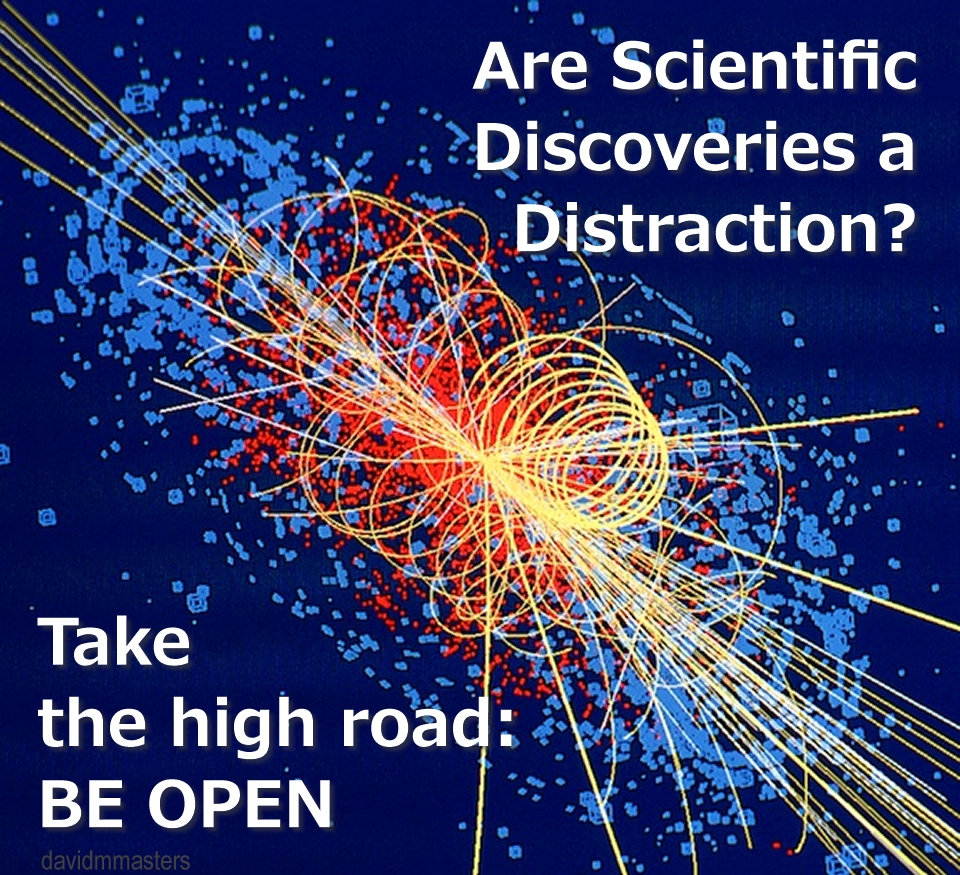
Are scientific discoveries a distraction?
Take the high road: Be open.
I can’t imagine what the next hundred years will bring. What comes after The Jetsons?