There was a time when I placed an enormous amount of importance on people telling me the truth. Honesty. Openness. Integrity. These things mattered to me. They still do. But after nearly a lifetime of being invited into some of the darkest, most private, occasionally unbelievable recesses of people’s lives, I’ve learned something about human beings. People lie. Good people lie. Honest people sometimes lie. People who love you may lie to you.
People lie because they’re afraid. They lie because they’re embarrassed. They lie because they haven’t forgiven themselves yet. They lie because they don’t know how you’ll respond. Sometimes they lie because they don’t know the truth themselves. And sometimes what we call lying is another person desperately trying to protect a room inside themselves that they aren’t ready to open.
That doesn’t make dishonesty good. It doesn’t mean deception should be tolerated when truth is necessary to the health or safety of a relationship. But it has changed the way I ask questions.
These days, before asking someone something deeply personal, I sometimes think:
Would I be disappointed if they lied to me?
That’s an interesting question. Because if the answer is yes, another question immediately follows.
Then do I really need to ask?
Maybe I don’t.
Curiosity Does Not Create Entitlement
We can become curious about something another person has experienced and unconsciously decide that our curiosity gives us a right to know. It doesn’t.
People have sacred spaces. There are memories they may not want to revisit. Experiences they haven’t figured out. Things they regret. Things they don’t understand. Things they may someday tell us. And things they may never tell anyone.
That space belongs to them.
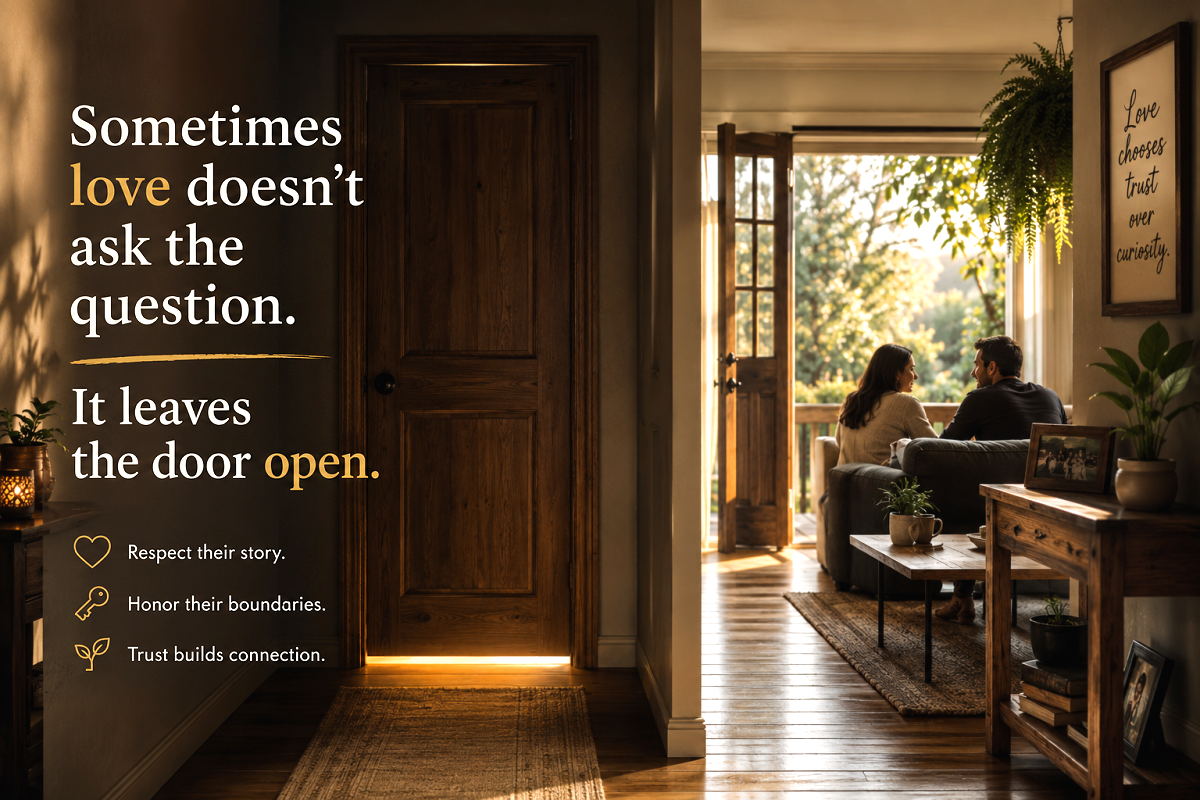
One of the unexpected expressions of wisdom may be learning to stand outside that door without knocking. Not because we don’t care. Because we do.
Every Question Creates a Moment
Suppose there’s something you suspect about someone you love. You could ask.
Maybe they’ll
-
- tell you the truth
- lie
- tell you half the truth
- become defensive
- feel exposed
- answer honestly and you’ll discover you weren’t prepared for the answer.
Suddenly something that wasn’t damaging the relationship five minutes ago is sitting at the dinner table with both of you.
What did we gain? Sometimes quite a lot.
There are questions that need to be asked. There are things that truly matter, like
-
- Safety
- Consent
- Commitments
- Health
- Finances
- Faithfulness
Anything materially affecting another person’s ability to make informed choices may require uncomfortable truth.
Love isn’t an excuse for avoiding reality. But there are other questions whose answers change almost nothing. Except perhaps the relationship. Those deserve another moment of consideration.
You Can Leave the Door Open
Something wonderful happens when people discover they don’t have to defend themselves around you. They start talking. Maybe not today. Maybe not next Tuesday. But trust has an interesting way of opening doors that interrogation keeps locked.
You don’t necessarily have to extract someone’s story. You can become a person with whom the story feels safe. That’s different. And it requires patience.
Maybe
-
- the answer eventually arrives while you’re driving somewhere
- it appears over coffee three years later
- one evening they look at you and say, “There’s something I’ve wanted to tell you.”
And because you never demanded it, they’re finally able to give it freely.
Or maybe they never tell you. Then what?
Well…
Did you
-
- love them?
- enjoy their company?
- laugh together?
- encourage one another?
- build something beautiful?
- become better human beings because you knew each other?
Then perhaps nothing was missing.
Connection Is Not an Investigation
I think we sometimes approach relationships as though intimacy means knowing everything. I’m no longer convinced that’s true.
Maybe intimacy is not having access to every room. Maybe intimacy is knowing there are rooms you haven’t entered and loving the person anyway.
That’s a different kind of trust. It doesn’t require blindness. It requires discernment.
There will always be questions worth asking. There will always be truths worth pursuing. And there will certainly be moments when someone’s deception must be confronted. But wisdom doesn’t only teach us how to ask better questions.
Sometimes wisdom whispers,
You don’t need to ask this one.
Let it go. Give them their sacred space. Keep walking together.
If the answer needs to become part of your relationship, perhaps someday it will. Meanwhile, you’ve protected something precious.
-
- Momentum
- Dignity
- Safety
- Connection
The growing confidence that neither person must live under interrogation to remain loved.
Maybe that’s what leading with love occasionally looks like. Not knowing everything. Not demanding everything. Not resolving everything. Just leaving one door closed… and making sure the person on the other side knows they’re still welcome in your life.
FAQ
Should people in a relationship tell each other everything?
Healthy intimacy does not necessarily require complete access to every memory, thought, or experience. People can maintain personal boundaries while remaining loving, honest, and deeply connected.
Is privacy the same as secrecy in a relationship?
Not necessarily. Privacy preserves personal space and autonomy. Secrecy becomes more concerning when withheld information materially affects another person’s choices, safety, commitments, or wellbeing.
Why do people lie when asked personal questions?
Fear, shame, embarrassment, uncertainty, self-protection, and concern about another person’s reaction can all influence how someone responds to a deeply personal question.
How do you know whether to ask a difficult question?
Consider why you need the information and what you intend to do with it. If the answer materially affects safety, consent, health, finances, faithfulness, or an important commitment, the question may need to be asked. If it primarily satisfies curiosity, allowing privacy may sometimes serve the relationship better.
Can giving someone privacy actually build trust?
Yes. Knowing that personal disclosure will not be demanded can create emotional safety. Sometimes people voluntarily share more when they know they are free not to.
