When Therapy Breaks Families: Reclaiming the Bond Between Parents and Adult Children

In the sacred space of a counseling room, where healing is meant to occur, there’s a shadow that sometimes sneaks in unnoticed—the temptation to oversimplify blame. Like many practitioners, I’ve found myself reaching for a tool from the Freudian psychiatric bag of tricks that too often brings swift results at a steep cost: pointing the finger at the parents.

It works. That’s the heartache of it. Assigning blame to mom or dad often lifts a burden off the adult child’s shoulders, if only temporarily. In those moments, I can almost feel the client’s body exhale with the relief of having found a scapegoat for their pain. But then I see something else begin to take root: estrangement, emotional distance, and often, a full-on disconnection from the very people who gave them life.

And I feel it; regret. Guilt. Because I know I’ve added another stone to the wall being built between generations. This method can work through to a cohesive and healthy conclusion, if the client is willing to remain active in the process and continue the work, but more often than not, once the client experiences relief, they disengage from the process.

Add to this, the growing movement in our society, quiet in its spread but deafening in its consequences. Adult children are cutting off their parents, not in response to abuse or violence, but often due to unresolved emotional misunderstandings, unspoken expectations, and culturally promoted ideals that equate discomfort with danger.

Our culture now rewards the language of therapy-speak: “emotional boundaries,” “toxic energy,” “my truth.” And while these tools can help people find clarity, they can also be twisted into weapons of disconnection. Current trends among pop psychology influencers proclaim that your healing begins by removing anyone who doesn’t unconditionally validate your feelings. And that message is often interpreted as: “Distance yourself from your parents.”

But is that healing? Or is it a form of socially sanctioned abandonment?

Scripture warned, “In the last days, people will be lovers of themselves… disobedient to parents, unthankful, unholy, without natural affection.” – 2 Timothy 3

It’s happening. And no one wants to admit how common it’s become.

The Hidden Casualty: Loving Parents Left Behind

The hardest part? These aren’t evil, abusive, or neglectful parents. Many of them are loving, deeply flawed human beings who did their best. They sacrificed, they endured, they gave, even if imperfectly. And now, they’re left with unanswered texts, silent holidays, and hearts full of confusion and grief.

These parents still have wisdom to share, warmth to give, and a legacy of love they long to pass down. But their children, guided by a cultural narrative that equates past pain with present danger, have decided the relationship is no longer worth the effort.

It’s a new kind of orphanhood, this time initiated by the child.

A Confession

I’ll say it plainly: I’ve helped break families apart. Not maliciously. Not knowingly. But by leaning too heavily on the “blame the parents” paradigm in an attempt to produce quick relief. I now realize that this is not healing, it’s emotional amputation. It may stop the pain, but it also cuts off the connection.

Yes, there are times when space is necessary. Yes, some parental relationships are damaging. But most of the time, what’s needed isn’t disconnection; it’s compassion, clarity, and communication.

I no longer default to the parent-blame card. Now, I pause. I listen more deeply. I hold space for the pain without pushing blame. And I advocate for healing that keeps the door open to reconciliation, not slammed shut by resentment.

What Can We Do Instead?

Here’s what I suggest for those of us who work in the healing arts, and for those navigating estranged family relationships:

    1. Redefine Healing

Healing is not about cutting off everyone who triggered your pain. It’s about becoming strong enough to engage with the past without being controlled by it. True maturity includes grace, not just boundaries.

    1. Honor the Story Without Dismissing the Relationship

Encourage clients to acknowledge their pain while still recognizing the complexity of their parents’ humanity. Pain and love can coexist. Forgiveness isn’t forgetting; it’s freedom.

    1. Restore Curiosity

Invite both parties to seek understanding rather than proof. Ask questions like, “What did your parent go through?” or “What might they have meant by that?” Curiosity can melt walls.

    1. Model Healthy Dialogue

Instead of ghosting a parent, model how to set loving but clear boundaries through direct, respectful conversation. A letter, a voice note, a therapy-guided conversation, all of these can prevent unnecessary heartbreak.

    1. Encourage the Long View

Relationships evolve. A season of distance doesn’t have to be permanent. Encourage patience and hope. A prodigal may return when the time is right.

    1. If You’re the Parent—Keep Loving Anyway

To the parents who’ve been cut off: you are not forgotten by God. You’re not alone. Keep praying. Keep writing those birthday cards, even if they’re not opened. Keep believing that your love, however imperfect, still matters.

Rebuilding Hope

Families are the foundational unit of society, and their breakdown weakens us all. We are in a cultural moment where the sacredness of that bond is under attack—not by war or disease, but by ideology and influence disguised as empowerment.

But there’s hope. Just as quickly as division can be sown, healing can be ignited. One conversation, one brave apology, one honest sharing of pain can reopen the heart.

Let us be those who mend bridges, not burn them. Let us counsel with grace, speak with compassion, and refuse to let “cutting off” become a default solution for pain. Families don’t need to be perfect. They just need to be willing.

To the estranged: Your parent may not have gotten everything right, but they may have done more right than you realize.

To the parents: Your love was not in vain. Keep the porch light on. Prodigals still come home.
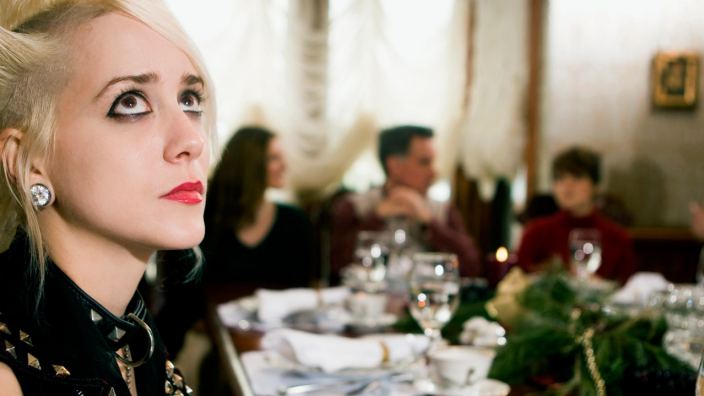
 

Holiday Family Blessing or Curse?

Then, there’s your family.

The holiday ideal starts off with the reverent honoring of those who have given a portion of their lives (all gave some, some gave all) on Veterans Day which falls on November 11th in the USA. Then either the most anticipated or dreaded family get-together comes along as the Thanksgiving celebration. It is generally at this time of year that families which have been separated throughout the year, get together.

This “celebration” could be either amazing or horribly grueling depending on the nature and dynamics of your family’s cohesion, strength, and honor.

Let’s face it, all families are dysfunctional, so just let that expectation go. It’s a fantasy if you expect anything else, and to do so sets you up for discouragement every time. So, if your family’s a little whacko. So what? Let it go and learn to enjoy, even love, your family’s diversity.

But some families are so terribly broken, that there is very little thread of familial connection, and family members have suffered greatly in what should have been the tender, caring hands or the family, but suffered tragic drama and trauma instead.

What about those who have no family? Maybe, everyone they know in their family has passed away, and they are here, all alone at this moment which represents the coming together of family. No one would blame that person for feeling a bit down, lonely, or depressed, while everyone else is celebrating.

Or maybe their family is alive but separated by too many miles, or even worse miles of bad roads traveled in life. Family members can suffer so incredibly these days, and the effects of a traumatic childhood can be life-long, and even end the lives of the suffering children prematurely through expression as physical illness, disease, or suicide.

If you haven’t suffered tragically under the watch of your parents or were left to fend for yourself in any way possible as a young child, you have no idea of how bad it could be.

How bad is it? Well, consider this: The fastest-growing age group of suicides committed every day is that of 10- to 14-year-old children. So, you tell me, “How is this affecting our kids?”

And if Thanksgiving wasn’t bad enough, what about the looming mother of all familial holidays?

Of course, I’m referring to Christmas, that joyous time of year when families get together and bond. What about that? What if you’re a single parent, or even a couple, struggling financially to raise kids. You’re working so hard just to make the ends meet, now they wanna throw some God-forsaken shopping-spree holiday on top of that?

What could possibly be worse?

I don’t know. Maybe if you lived through all those holidays, you might make it the new year, celebrating with your family with some hope of maybe having a better life next year?

What? No hope?

It’s no wonder these are the most popular holidays to commit suicide. Let’s take a look at them:

Too much drama and trauma will kill you, and if it doesn’t kill you, some people are determined to do it themselves.

But don’t you let them get away with it.

You’re not going to check out. You’re not going to give them the satisfaction.

You can be betrayed by your family so many times it makes you want to puke just to think about it. You’ve been stabbed in the back so often or abused in any number of other ways, it’s a miracle that you can even stand, but here you are.

You are here.

And you know you came here to do some serious work, and that work starts today.

When I was at my lowest and I thought I couldn’t take one more step, one more breath, I decided to do something radical to make a difference in the world, and in doing so, I made a huge difference in myself.

I discovered that one person could make a difference, and that’s exactly what I did.

That year, instead of committing suicide over the holidays I decided to send love to others who might be going through the same thing. And as I engaged in this meditative prayer exercise, every cell of my body began to awaken.

Enthusiastically, I increased the range of my endeavor and started sending love to the world. And since then, I’ve had thousands of people join me in sending love to the world, which if even in some small way does make the world a better place.

Reduce Conflict at Home

Isn’t it time to reduce conflict at home? Sometimes people just can’t seem to get along and this leads to a lot of conflict at home, work, school, among friends, and even while driving. When you get upset at something that someone else does, says, or communicates in some other way, you are likely to experience some degree of stress.

The greatest stressors will be initiated by those whom you know the best, the people within your family. While the family unit is no stranger to stress, if there are little witnesses to these active familial stressors, they will be affected the most. This is how children learn to interact with others, and this follows them into adulthood, even if they cannot consciously recall these events.

Even if the conflict does not engage the children directly, they are still being affected by these stressful situations. If you don’t believe me, just think back to familial conflicts which you witnessed when you were a child. How does that affect the way you handle stress and conflict today?

If you have children around watching your interactions with your family, you might consider taking a break or a timeout, the next time you feel tensions building. Maybe you can reason with the person you’re experiencing the conflict with and pick up the discussion at a different place and time. You might be surprised that delaying the discussion will allow you both to revisit the topic when emotions are not running as high.

This works for adults, adults interacting children, and among children as well.

This can have a tremendous effect on reducing the familial stress in relationships, also, it gives whoever might be inclined to do some deep inner work time to reflect on his or her own past to see if there are any hidden anchors from the past triggering the feelings which are being experienced in the moment.

If you are in a relationship with someone and are not able to manage taking a break or timeout, then you might consider seeking a relationship coach, counselor, consultant, or a member of the clergy, whatever appeals to you and seek assistance from a qualified third party, someone you can trust.

There are many techniques which can be applied to any type of relationship which will reduce both conflict and stress, and it’s up to you to check it out and take the appropriate steps to change your life. No one else is going to do it for you.

This is your life, and those whom you care about deserve not to be impaired by your lack of control, and left to itself unhindered by someone’s drawing explicit boundaries, not seeing eye to eye, or having different points of view, could turn into an abusive situation.

If ever, any relationship is visited by abuse, you have the right and the responsibility to stop the abuse. You are never required to fight back if there is abuse. Just take the steps necessary to isolate yourself from any further abuse.

This takes a great deal of courage and determination, but you can do it.

You have zero tolerance for abuse.

How to Get Over Betrayal by Family

Who would have thought you would be betrayed by your own family? These are the people you trusted you grew up with; they’re supposed to have your back, not stab you in the back. Regardless, welcome to the real world with one hell of a wake-up call, so now you need to know how to get over betrayal by family members.

You must come to grips with the fact that betrayal by family members is quite common and has been going on for years. This is a key component of some of the greatest stories and melodramas of all time. There’s something terribly unsettling about not being able to trust your own family.

Who is better qualified to break you down and expose you for every weakness you have or any misstep you’ve ever made but the people who know you best and have been the closest to you? Even the Bible warns of it, “your worst enemies will be the members of your own family” (Matthew 10:36), and if that wasn’t enough, try this on for size, “Even those closest to you–your parents, brothers, relatives, and friends–will betray you. They will even kill some of you” (Luke 21:16).

While you might expect to be the victim of betrayal by friends or almost anyone, it never occurs to you that your family might be the ones who turn out to be the most toxic individuals or your enemies until it happens to you, and you’re left having to deal with betrayal.

You can rack your brain and tear up your heart by trying to figure out why. To put your mind at ease and get on to the business of dealing with your family’s betrayal, one of the most common reasons you might be betrayed by your family is jealousy.

If you’re in a position to enjoy life more fully and completely than your family member who feels he or she is more deserving, they might be tempted to throw a wrench into the machine to cause your potential success to fail. (You might remember this if you have siblings, as there is a constant struggle for familial support.)

A family member might want to knock you down a peg or two in an effort to even the playing field or even usurp their authority over you as if to prove you couldn’t possibly make it without them (and they will destroy you if they have to, to prove it).

Your parent, sibling, or other family member might just be a control freak and seek to control you and many areas of your life. Just try exerting your own independence and watch them rear their ugly heads to take notice and knock you down. Then kick you while you’re down there just to teach you a lesson.

Then there are the haters, those negative people who can’t help themselves, their first thought is to attack anyone, for no apparent reason, just to spread the hate. They are hardwired to be hatemongers, and there’s nothing they can do about it.

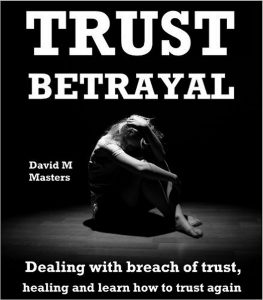
Get the Book

Regardless of why your family has betrayed you, nothing hurts worse than being betrayed by those who are closest to you, leaving heartfelt wounds and scars, and you must take steps to protect yourself from this kind of abuse.

Do not waste your energy arguing and fighting with the family who has betrayed you.

If you want to know how to get over the betrayal by family members, you have to distance yourself from the abuse. In a sense, you must disavow and relate to the members of your family who have turned against you. I don’t mean to lie to yourself or anyone else about being related to them, but you must stop treating them like family if they have posted up to treat you as their enemy.

You must treat betraying family members just like anyone else who might abuse or betray you. You need to protect yourself from the abuse and not create opportunities for them to further abuse, trash, or attack you in any way.

When a member of your family attacks you, you must treat this person just as you would any other toxic person in your life.

There is life after betrayal. Bless them because they are your family, but walk away and brush their dirt from your shoes. Don’t look back; just keep walking.

A genuine family member would support you in all that you do and bless you as you make your own way. They want to see you become the best person you can be and enjoy the best life you could have, even helping you make it happen.

Real family loves and supports you no matter what you’re going through, in your best moments and those less glamorous, and they love you just the way you are.

If not, you must protect yourself.

For more information, see: Family Betrayal


Dysfunctional Family

An honest review of what is now the acceptable standard for family relationships is a far cry from the family dynamic of yesteryear. Are you happy with the way your family is?

It breaks my heart to see how far we’ve fallen, as there’s little respect for the family unit in comparison and chances are, if you’re a member of a family, you’ve found yourself a member of a

Dysfunctional Family

dysfunctional family children and family marriage divorce social services abusive relationship

By definition a dysfunctional family is a group of individuals related by blood, marriage, or living arrangements that experiences conflict on a fairly regular basis. I believe this defines every family, so there’s nothing that unusual about being a member of a dysfunctional family, unless an abusive relationship threatens the family unit requiring intervention.

Even so, even “abusive relationships” can (and often are) exaggerated to effect a certain means to an end, without regard to the family member whose life may be sacrificed for the sake of his or her accuser, further exasperating the dysfunction of the family.

Nowadays, the expectation is that the whims of the individual outweighs the needs of the family, resulting in fractured families and broken homes causing more discord, especially when children and family suffer the consequences.

Unfortunately, the divorce industry and social services support the destruction of the family, and doing so, actually supports our government and the economy… but at what cost?

Children are now used as a weapon, and income is not a barrier in this, as it crosses all income levels and tax brackets, though lower income families are privy to legal prowess that would only be available to the wealthier families due to their low income level thanks to support from the Department of Social Services, Child Protective Services and the family court system.

Certainly, we need a system to protect children and families being abused, but our system is greatly flawed, because a parent can use the existing system as a powerful weapon, destroying the life of another (who may be undeserving) at little or cost to the accuser. All that is required is that the accuser be willing to exaggerate and lie to a counselor and possibly to a courtroom under oath. A small price to pay for someone to use – just the implied threat, or equivalent of – “Don’t mess with me or I will ruin you forever.”

Blended Families

You recognize these, they’re like the Brady Bunch; two single parent families with children from a different parent, come together to create a blended family, melding the families into one (hopefully) cohesive unit. In most cases, blended families actually consist of a single mom trying to find love, with children, partnering with a single dad (non-custodial), strapped by extenuating circumstances, visitation with child support and legal issues of his own. Though, some blended families are able to prevail and create a healthy family environment, regardless of the challenges they face.

The results? Look at the prison system filled with the people who were the children raised in these dysfunctional families. Why? It really is a choice. You can choose to live respectful life or a disrespectful life. I know. I come from as dysfunctional a family as you might be able to imagine. I chose to live a respectable life, regardless of my family life, and I vowed that when I entered marriage with the right person, I would maintain a higher standard of familial love, respect and support than was available to me in my youth.

Family First

My approach to family is simply, “family first.” For me, that means that if I am with you and you are with me, then my family is your family and your family is my family. I have a great deal of love for my family and I extend the same quality of love and affection for your family members as I do my own (reciprocity would be a reasonable expectation).

Such a heavy commitment to family doesn’t garner much respect in today’s society.

I hope to see a bright future for the United States and throughout the world realizing, supporting and sustaining the importance of family fueled by family love, tolerance and strength of family.

In the meantime,

For me and my family

We love and support each other