That Look on Their Face… And That’s Not Me

A strange thing happens to people when emotion overwhelms rationality. For a few moments, sometimes longer, they become someone they do not fully recognize. Not permanently. Not completely. But enough to frighten themselves afterward. It usually does not happen the way people imagine.
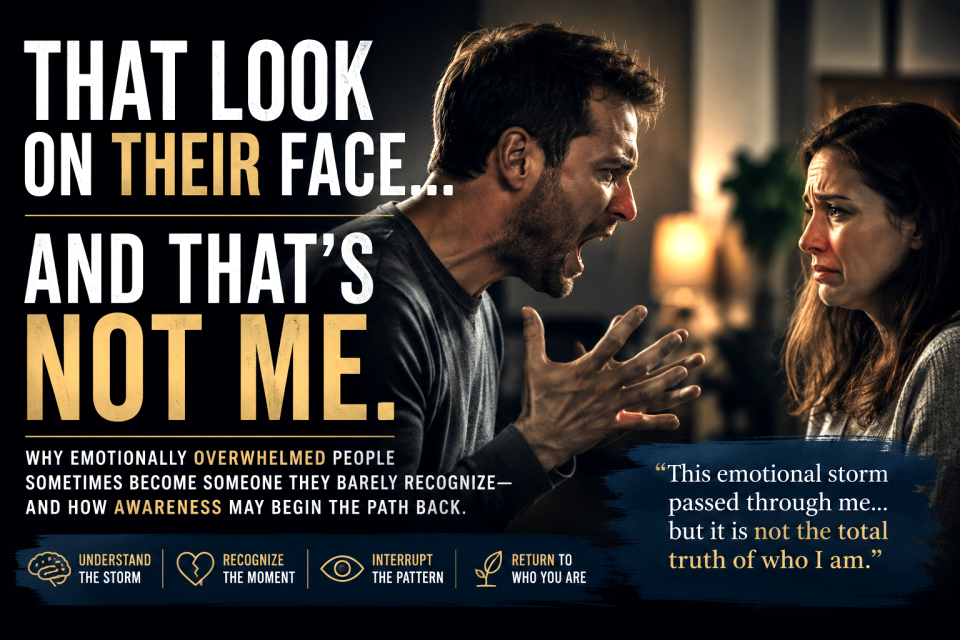
Most emotional derailments do not begin with evil intentions or conscious decisions to become destructive. More often, they begin quietly, beneath the surface, while someone is carrying more emotional pressure than they realize.

Stress. Exhaustion. Resentment. Fear. Humiliation. Burnout. Years of trying to hold everything together while slowly coming apart internally.

Then one day, something relatively small happens.

A tone of voice. A dismissive comment. A criticism. A disrespectful glance. A delayed text message. A disagreement over something that, under calmer circumstances, probably would not have mattered very much at all. But this time is different.

This time something inside the person accelerates. Their chest tightens. Their thoughts narrow. Their emotional intensity rises faster than their rational mind can regulate it. Their voice changes. Their posture changes. The nervous system floods with urgency, adrenaline, and emotional momentum. And for a few moments, everything they are saying feels completely justified.

Until suddenly… they see the look on the other person’s face.

Not anger exactly. Not even fear. Something worse. A look of emotional withdrawal.

A look that says: “I don’t recognize you right now.”

And for one painful instant, the emotional storm briefly breaks. The person hears themselves. Really hears themselves. The volume. The tone. The hostility. The emotional force that had taken control of the room.

And somewhere underneath the adrenaline and emotional static, another realization quietly appears:

“…And that’s not me.”

I think many people have experienced moments like this. Maybe not with yelling. Maybe not in dramatic ways. But most people have had moments where emotion temporarily outran perspective.

A father hears himself speaking to his son in the exact same tone his own father once used on him, and it shakes him to the core.

A woman in the middle of a jealous argument suddenly realizes she no longer even believes half the accusations she is making, but cannot seem to stop herself from escalating.

An exhausted executive walks out of a meeting replaying his own voice in his head, disturbed by how arrogant, defensive, or intimidating he sounded over something so minor.

A mother locks herself in the bathroom after screaming at her children and quietly cries because she never wanted to become this version of herself.

A person lying awake at night after another emotional collapse whispers into the darkness:

“What is happening to me?”

These moments frighten people because they feel revealing.

People begin wondering:

    • “Maybe this is who I really am.”
    • “Maybe I’m becoming someone terrible.”
    • “Maybe I’m broken.”
    • “Maybe the emotional storm is the real me.”

But I no longer believe that is necessarily true. I think emotionally overloaded people often become temporarily consumed by states that are not the total truth of who they are. And modern life is producing emotionally overloaded people everywhere.

People carrying:

    • unresolved grief,
    • financial pressure,
    • relationship disappointment,
    • chronic stress,
    • loneliness,
    • emotional suppression,
    • burnout,
    • nervous-system exhaustion,
    • and years of accumulated emotional compression.

Most people keep functioning anyway. They go to work. Answer emails. Pay bills. Smile in public. Try to appear normal.

Meanwhile, internally, the pressure continues building beneath the surface. Until eventually, something breaks through. And when it does, many people react in ways that leave them sitting quietly afterward wondering:

“How did I get here?”

I have become increasingly fascinated by that moment. Not the outburst itself. Not the emotional collapse. The interruption. The moment awareness returns. The moment someone sees the look on another person’s face and suddenly realizes: “Something just took over me.”

That moment matters more than most people realize. Because the moment we become capable of observing the emotional storm, we are no longer completely possessed by it.

A small separation appears between:

ourselves,
and
the emotional state moving through us.

That separation may feel fragile at first. But inside it lives something extraordinarily important: awareness.

And awareness changes everything. Not overnight. Not instantly. But awareness is often the first moment a person begins finding their way back to themselves. Not through shame. Not through denial. Not through pretending difficult emotions do not exist. But through the quiet realization that:

“This emotional storm passed through me…
…but it is not the total truth of who I am.”

Maybe more people need permission to talk honestly about moments like these. Not to justify destructive behavior. Not to avoid responsibility. But because emotionally flooded human beings often feel deeply alone in experiences that are far more universal than most people realize.

And perhaps emotional healing begins the moment someone finally becomes able to say:

“That reaction happened…
…and that’s not me.”
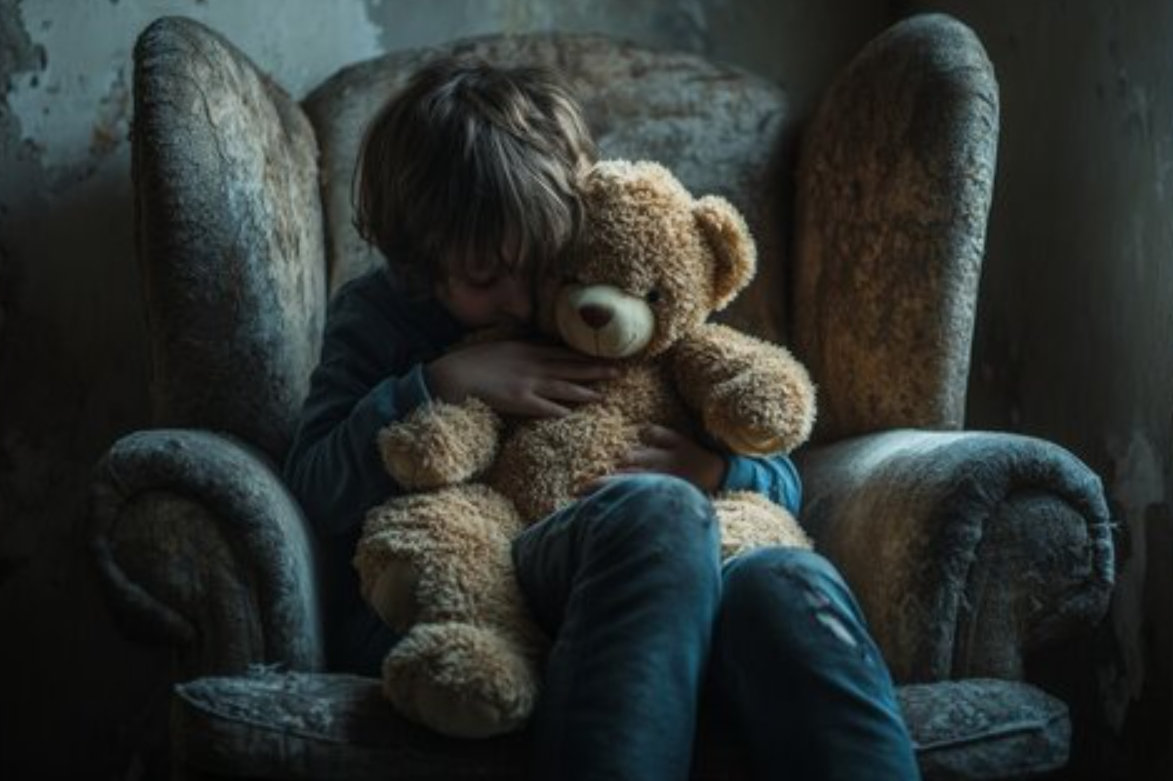
 

The Love of Jesus Mindset in Dealing with Trauma Victims

The greatest tool that can be wielded when working with a trauma victim is the “love of Jesus mindset.” This means that you defend the rights of the victim to be and do anything and everything they can to have some peace of mind. You and I might not agree with how they do so, but we will defend their right to do so, possibly with one qualification: as long as it doesn’t encroach on another’s rights to live their life as best they can.

In doing so, we create a sacred field of energy in which we can do the work necessary to assist the victim in their desire for true recovery. Note that I said “their desire,” as it cannot be your desire or the desire of a relative, loved one, boss, or judge. If we have learned anything, we know by experience that change cannot occur unless the victim seeks transformative change over all else, including but not limited to coping mechanisms.

You may be able to threaten a victim into feigning recovery to keep from losing the family, risking incarceration, or worse, but the victim will not be likely to conduct the deepest work necessary to get free from the trauma unless it is their idea. Allow them to come to this conclusion of his or her own volition. You cannot make this decision for them. If they choose to never do so, love him or her anyway. If they do, know that it is a process, a lengthy, long, and winding road of discovery, reinvention, and adaptation along the way to authentic recovery and new life.

The love of Jesus mindset provides a safe and sacred space where there is no judgment. Only empathy, reflective listening, compassion, openness, and a true sense of caring. Use phrases like “I’m here to listen” and “I care about your well-being.”

Practice active listening by reflecting back on what the person is expressing. This helps them feel heard and understood. For example, you might say, “It sounds like engaging in these activities is important to you, but I’m also hearing that it has some negative impacts on your life.”

Carefully and gently explore the patterns in their behavior and help them connect the dots between their coping mechanisms and their overall well-being. Ask open-ended questions about their experiences and feelings. Let them fill in the blanks and elaborate. If they offer resistance, change the subject. This is not an intervention.

Making the necessary adjustments in a victim’s life will be difficult for them, and it may take several attempts to make the changes in utilizing their coping mechanisms stick. You can help by encouraging them to celebrate their victories, no matter how small and no matter how short the duration. You understand that this is a process, and further attempts at change will yield better, more long-lasting results.

Over time, they feel supported and can build the self-confidence to move forward and dig deeper into finding the root cause(s) of their life struggles. Little by little, they are becoming the master of their own destiny, no longer just a victim struggling against wounds from trauma from the past.

You can offer them ideas about more positive coping mechanisms that they can use as alternatives to the negative behaviors they are expressing now, but the choice of what to try is theirs. Never suggest that they do a particular thing. You will lose them if you try to tell them what to do. Give them three choices and let them pick one to attempt, or let them devise another option. Alternatively, continue to listen to them and see if they are willing to dig deeper.

Help them examine that the negative coping strategies come at a price, and allow them to discover and relate the potential risk factors to you. At their request, you could help them in the examination process and ask their thoughts on your research results. Allow them to be wherever they are in their process.

Basic healthy suggestions you could make might include embarking on a path of personal growth and change, mindfulness practices, physical exercise, relaxation techniques, building supportive relationships, self-care practices, setting healthy boundaries, and seeking out a specialist to work with.

Remember, the process of change is often gradual, and individuals may need ongoing support. Professional guidance can play a crucial role in helping them navigate this journey towards healthier coping mechanisms and improved well-being.


How to Help a Victim of Trauma

Recreating the scene of the crime of a victim’s trauma and unconsciously acting out in homage to one’s abuser can reinforce negative behavioral patterns, prevent an otherwise healthy and expansive quality of life experience, and greatly hinder personal growth potential, making true deep and meaningful healing next to impossible.

While victims of trauma may find solace in revisiting similar activities from their traumatic past as an effective coping mechanism, the relief realized is temporary, blocking them from confronting and processing the emotions, slaying the demons, and ultimately overcoming past trauma, emerging from the flames as true masters of their own destiny.

Revisiting, acting out, and recreating traumatic experiences and circumstances, while they may offer some relief, may severely complicate or compromise otherwise potentially healthy relationships, as the individual may struggle with trust and emotional intimacy.

Not only that but there is a tremendous opportunity to make matters worse, re-traumatizing the victim or creating a new generation of victims. Engaging in these unhealthy activities and placing oneself in trauma-related circumstances can lead to serious health risks and may come with moral and legal consequences.

How to Help a Victim of Trauma

If there is any hope for you to help someone struggling with these mind-bending dichotomies, it is vitally important that you do everything you can to first understand how the trauma victim fights for survival in manners which you could not possibly “know,” unless you were also a victim of similar trauma. Even so, everyone’s experience and how they respond to it is highly individualistic, so you can never truly know what someone is going through, but you can do your best to have an idea. And your heart, if it is inclined to truly care about someone suffering in this way, can be a bridge to a victim’s recovery.

Suggesting that someone’s sacred act of providing relief from the pain suffered from one’s traumatic past may be a huge hindrance blocking their potential for a higher quality of life must be considered with the utmost respect and caution. This new idea may threaten their very existence, for their tendency to act out in the manner they do is their key to survival, enabling them to live a somewhat normal life. They may feel as though their very life depends upon it, and they may not be wrong.

Not engaging in the activity could kill them. One such example would be John, whom I asked if he thought he might be an alcoholic. He refused such a label, admitting that he did drink every night, but unlike his father, he could quit at any time. Just to prove it to himself, he decided not to partake in any alcohol over the weekend. By Sunday at noon, he was dropped off at the hospital by the ambulance. Sunday evening, he was sent home with strict orders to drink alcohol until he could be entered into an inpatient rehab program.

Neither you nor I could have explained this to John. For this exercise to be effective, he had to come up with the idea to test his own potential for addiction. He was a strong, independent, successful individual, making his way through life. No one in his circle of life had any idea that he might have an alcohol addiction, yet his very life depended upon it. Today, he is in his sixteenth year of sobriety. But it was a process of facing and defeating his demons from a traumatic past over time. There is no quick and easy fix for this.

While I say there is no quick and easy fix, I am quickened by those words because I have seen miraculous and instant recovery, but only from a magnificent and instantaneous transformative spiritual experience. These born-again-type experiences are far rarer these days than in days gone by. Keep an open mind; you might experience such a feat, but don’t count on it.

Helping a victim of trauma, one who has spent a great deal of time learning to self-medicate or revisit the victim’s root behaviors as a key coping mechanism, will take the love of Jesus mindset.


Why Do Victims of Trauma Find Solace in Similar Activities?

You may have a client or a friend who is engaging in activities that are similar to those that they experienced in childhood that were traumatizing, thereby continuing the cycle of abuse and, in a sense, paying homage to the person or persons who victimized them in their youth. If you have been one of the lucky ones who have not been a victim of such childhood abuse, you may never understand. The question remains,

Why Do Victims of Trauma Find Solace in Similar Activities?

For adult victims of childhood trauma, engaging in activities or placing themselves in situations reminiscent of the traumatic experiences of their past is an effective coping mechanism. The psychological, emotional, and neurological factors behind such actions are highly complex and extremely individualized. These individuals share their ability to adapt to their environment, a successful survival instinct, and the potential to avail themselves to engage in activities that are potentially unhealthy in the long term.

If the victim was robbed of his or her personal power as a child in the traumatic event, note this is a definitive distinction of trauma in general, then restaging the event in adulthood can empower the victim, thereby offering him or her a sense of relief from the traumatic experience of the past.

They can affirmatively experience being in control of the present situation when they have had no control in the recollection of their memories of the past. Reenacting the scene(s) of the crime is conducted in an effort to rewrite the past, rebuild confidence, and, in a sense master the circumstances surrounding the trauma.

Desensitization is another way to cope with one’s traumatic past. Normalizing the activity and partaking in it regularly dulls the senses and makes it not as painful as it was in the past. This type of cognitive rationalization can be thought of as just a fact of everyday life that everyone could or should get accustomed to, thereby reducing or eliminating the pain associated with the traumatic experience.

The victim may be in search of understanding regarding the former traumatic event(s), and revisiting the trauma avails them more data regarding the predator and their own victimization. As further information is gathered and research is conducted by engaging in similar activities as an adult, the inner child believes it can make sense of what happened in the past and find a way to integrate this understanding into present-day life. It might be believed that this understanding could lead to reducing the potential for furthering this type of abuse for others in some way.

When you are haunted by memories of abuses or injustices of the past, they can show up in adulthood in the strangest ways and at the most inopportune times. Managing these emotions by creating similar circumstances to expose and deal with the trauma of the victim’s own volition, in their own way, on their own terms, places them “in control” of emotional trauma when previously there was likely little or no control, never knowing when the compressed emotions might explode into life-threatening exposure next.

With all this effort, relief is experienced by the victim in the revisiting of the traumatic events or circumstances, but the relief is not lasting. This fleeting sense of relief causes the victim to seek relief again by seeking opportunities to revisit the trauma yet again.

When victims come to the realization that even with all their efforts to reconcile their traumatic pasts are in vain and may cause more harm to themselves and others in the long run, that is when they seek out me or one of my contemporaries.

How to Help a Victim of Trauma


Suppressed Childhood Trauma Becomes Cancer or Accomplishment

Childhood trauma, whether from neglect, abuse, or other adverse experiences, leaves a profound imprint on the mind and body. Suppressing these painful memories doesn’t make them disappear; instead, they linger within, influencing our physical and emotional health in powerful ways. Suppressed childhood trauma can manifest as a disease, such as cancer, or as extraordinary accomplishments. The difference lies in how we process and respond to that trauma. Let’s explore these pathways and healthier alternatives to deal with suppressed trauma.

The Link Between Suppressed Trauma and Cancer

Suppressed trauma can create chronic stress in the body. Over time, this stress affects the immune system, endocrine function, and cellular health. Research shows that:

    • Chronic Inflammation: Suppressed emotions may lead to long-term inflammation, which is a known risk factor for cancer.
    • Immune System Suppression: Trauma can weaken immune surveillance, reducing the body’s ability to detect and destroy abnormal cells.
    • Stress Hormones: Prolonged activation of the fight-or-flight response floods the body with stress hormones like cortisol, which, in excess, can damage tissues and impair cellular repair mechanisms.

Trauma survivors often bury their pain deep inside, either due to stigma or the sheer difficulty of addressing it. When left unresolved, these buried emotions may eventually express themselves through physical illness, including cancer.

Trauma as a Catalyst for Accomplishment

Conversely, some individuals channel their suppressed trauma into remarkable achievements. This phenomenon, sometimes called “post-traumatic growth,” occurs when individuals transform their pain into drive. For instance:

    • Hyper-Achievement: Trauma survivors may strive for perfection or success as a way to prove their worth or escape their pain.
    • Empathy and Advocacy: Many who experience trauma become advocates, using their experiences to help others.
    • Creative Expression: Suppressed emotions often find an outlet in art, writing, or other creative pursuits.

While accomplishment is a healthier outlet than disease, it doesn’t necessarily resolve the underlying trauma. Hyper-achievement can lead to burnout, anxiety, and fractured relationships if the root cause isn’t addressed.

Healthier Ways to Deal with Suppressed Childhood Trauma

There are healthier and more sustainable ways to process suppressed childhood trauma. These methods focus on healing the mind, body, and spirit, ultimately leading to inner peace and long-term health.

1. Therapeutic Modalities

    • Trauma-Focused Therapy: Techniques like Eye Movement Desensitization and Reprocessing (EMDR) and somatic experiencing help process trauma safely.
    • Cognitive Behavioral Therapy (CBT): Helps reframe harmful thought patterns associated with trauma.
    • Art or Music Therapy: Offers a non-verbal way to express and process deep emotions.

2. Mind-Body Practices

    • Meditation and Mindfulness: Encourage self-awareness and emotional regulation.
    • Yoga: Trauma-sensitive yoga combines physical movement with emotional healing, fostering reconnection with the body.
    • Breathwork: Deep breathing exercises help regulate the nervous system and release stored emotions.

3. Physical Healing

    • Exercise: Physical activity releases endorphins and reduces stress hormones.
    • Nutrition: Anti-inflammatory diets rich in whole foods can support both mental and physical healing.
    • Massage Therapy: Releases stored tension and encourages relaxation.

4. Alternative Healing

    • Energy Healing: Practices like Reiki, acupuncture, or chakra balancing address trauma’s energetic imprints.
    • Journaling: Writing about traumatic experiences can help organize thoughts and reduce their emotional charge.
    • Nature Therapy: Spending time in nature promotes grounding and a sense of safety.

5. Support Networks

    • Peer Support Groups: Sharing experiences with others who understand can be profoundly validating.
    • Trusted Mentors or Coaches: Provide guidance and encouragement as you navigate your healing journey.

6. Spiritual Practices

    • Forgiveness Work: Releasing anger and resentment doesn’t excuse wrongdoing but frees you from their weight.
    • Prayer or Contemplation: Many find solace and meaning through connection with a higher power.
    • Gratitude Practices: Shift focus from pain to the positive aspects of life.

A Balanced Path Forward

Healing from childhood trauma isn’t about erasing the past—it’s about integrating the experience into your life in a way that no longer harms you. By facing the pain instead of suppressing it, you can achieve personal growth and improved health without the negative consequences of unprocessed trauma.

If you’ve experienced childhood trauma, know that you are not alone. Whether you choose therapy, creative outlets, or spiritual practices, the journey to healing is deeply personal. The important thing is to take the first step and find what works best for you.

Worth Consideration

Your trauma does not define you, but how you choose to deal with it can shape your future. By confronting and processing your pain in healthy ways, you can not only prevent physical and emotional harm but also unlock your potential to live a fulfilling, purpose-driven life.

Why Do Victims of Trauma Find Comfort in Familiar Activities?

Trauma leaves indelible imprints on our psyche, shaping our responses and behaviors. For some survivors, revisiting activities reminiscent of their traumatic past becomes a paradoxical refuge—a way to grapple with their history and regain a semblance of control.

When discussing the phenomenon of trauma survivors finding comfort in familiar traumatic experiences, I often encounter strong emotional reactions—even resistance or hostility. Many struggle to comprehend why someone would engage in such behaviors. Early in my career as a counselor and coach, I shared this perspective. However, over time, I have cultivated an open and understanding approach, allowing individuals with this specific experience to seek support through my practice.

Rather than framing it as a “problem,” it is more accurately described as a coping mechanism—one that is far more common than many realize. When an individual is unexpectedly observed engaging in an act that seems shocking or incomprehensible to their peers or intimate partners, it is often a manifestation of this very survival strategy.

The Complex Nature of Trauma Coping

1. Adaptation and Survival

Trauma survivors exhibit remarkable adaptability. Their ability to navigate hostile environments—whether as children or adults—becomes a survival mechanism. Familiar activities offer a semblance of predictability, even if that familiarity stems from painful experiences.

The brain seeks patterns and routines, especially during distress. Engaging in similar activities provides a sense of order amidst chaos.

2. Empowerment Through Reenactment

Childhood trauma often robs victims of agency. By reenacting traumatic scenes in adulthood, survivors reclaim control. It’s as if they say, “This time, I choose to step into the arena.”

Revisiting the scene of the crime allows them to rewrite the script, confront their fears, and emerge as protagonists rather than passive victims.

3. Desensitization and Normalization

The mind seeks equilibrium. Desensitization occurs when survivors normalize the traumatic context. By repeatedly exposing themselves to similar situations, they dull the emotional intensity.

Imagine a war veteran who revisits a battlefield—the sights, sounds, and smells. Over time, the memories lose their razor edge, becoming part of everyday life.

4. The Quest for Understanding

Trauma leaves unanswered questions. Why did it happen? Who was the predator? What led to my victimization?

Engaging in similar activities becomes a quest for answers. The inner child seeks coherence—to make sense of the past. Perhaps understanding can prevent future victimization.

5. Control Amidst Chaos

Trauma is chaotic—an emotional tempest that defies reason. By recreating familiar scenarios, survivors regain a semblance of control.
It’s akin to rehearsing a play where they dictate the script. The trauma becomes a performance, and they hold the director’s chair.

The Bittersweet Relief

1. Temporary Euphoria

Revisiting trauma provides fleeting relief. The adrenaline rush, the confrontation—it momentarily lifts the burden.

But like a sugar rush, it fades. The relief is ephemeral, leaving survivors hungry for more.

2. The Cycle of Seeking Relief

Victims return to the well, hoping for another sip of relief. The cycle perpetuates.

Each reenactment is a desperate plea: “Maybe this time, it’ll make sense. Maybe this time, I’ll find peace.”

Trauma’s legacy is complex—a tapestry woven from threads of pain, resilience, and survival. As outsiders, we may never fully grasp the allure of familiar activities for trauma survivors. But we can extend empathy, recognizing that their coping mechanisms—however paradoxical—serve a purpose.

And its up to us, those who care, are compassionate, and seek to be supportive, not to reject them, judge them or force our ideas about how it should be upon them, but to hold sacred space for them, love them, and allow them to find their way through the complex maze of seeking refuge in these activities.

Love them as these victims come to terms with their past, they are not merely revisiting old wounds; they are rewriting their narrative, one familiar scene at a time.


Because You Were Sexually Assaulted as a Child

Question: Why is my life so messed up? Answer: Because you were sexually assaulted as a child. When I started working in family counseling back in the day, the statistics indicated that one in four adults in the United States had been sexually molested in their youth. That was then.

Now, I believe those numbers were greatly understated. These crimes against young children were far more pervasive than the help and support industries ever imagined. Why the disparaging contrast in the numbers? Because, for far too long, this has been the most concealed life secret that has ever been kept, that is, until now.

These vile sexual abusers are most often known and trusted family members, friends of family, childcare providers, teachers, coaches, counselors, mentors, or clergy.

The adults who have persevered through life keeping this solemn secret of sexual child abuse are breaking through the barriers which have cost them greatly, but far more do not as they continue to keep the secret, even after the violator’s death.

No matter how fervently they deny it, refuse to mention or look at it, keeping it bottled up and buried deep inside, this crime by which they were victimized in their naïve youth finds ways to manifest itself.

What are the signs of child sexual abuse?

When you push down all the emotional impact of this childhood trauma and abuse, it manifests itself in many ways.

1. Social Inadequacy

Social suffering is common. Connections with other people are superficial and commonly not as deep or meaningful as they might have been. Relationships with family, friends, romantic relationships suffer due to this lack of connection, and inability to be open and honest (with others or one’s self).

2. School and Work Extremes

In school and work, extreme behavior shows up either as substandard (mostly) or extravagant high performance. They are often diagnosed as having autism, ADHD, Obsessive-Compulsive Disorder, Bipolar, or other mental health disorders.

3. Addiction

They are attracted to addictions in an attempt to self-medicate or cope, to relieve some of the mental and physiological anguish and stress from burying these childhood tragedies.

4. Health Problems

How does childhood sexual abuse affect the health of the victim?

The longer the pressure builds from these deep, festering, inner wounds from being sexually victimized as a child are left unattended to, the more the poison spreads throughout the body, leading to deterioration, disease, and premature death.

Victims of child sexual abuse are more likely to suffer from high blood pressure, heart disease, cancer, obesity, diabetes, and are more likely to engage in various methods of self-harm, and

5. Suicidal Ideation

and are 17 times more likely to have suicidal tendencies than their non-sexually-assaulted peers.

The Biggest Secret is Lethal

The biggest secret of all time is killing our people, someone you know, or even you.

The statistics are vastly understated, and if you are harboring this secret, covering it up, or trying to just make it through life without ever looking at it, you know that the statistics are not even close.

You know because you know your statistics would never be known. You were determined to take the biggest secret of all time to the grave with you.

HOPE

If that is you, hopefully, you are rethinking your commitment to a life-long cover-up.

Every day you continue to let this crime of your youth continue to haunt you (even if you’ve convinced yourself that it is not or no big deal) the fact remains that you are allowing your victimizer to continue to harm you as your health and peace of mind continue to deteriorate.

Do not let this perpetrator take you out.

STOP

This abuse has gone on long enough. And it stops, right here. Right now.

You don’t have to confront or seek to punish the offender (unless he or she is currently potentially sexually abusing other victims). The most important part of healing from this offense is done within you. Seek out a competent counselor, coach, or therapist who can help you work through the process, and begin the process of healing from within.

This will give you the hope of having a potentially amazing life, full of joy, happiness, health, and longevity.

The Best News

And the best news is this; after you’ve done the work, or even in the midst of it, you can help reach out to others who are also dying from keeping the biggest secret of all time.

Together, we can stop this atrocity, and help to create a better world for our youth who are being sexually accosted at this very moment. It starts with you.

Stop the continued victimization and live a better life, your best life, and make the world a better place.


Holiday Family Blessing or Curse?

Then, there’s your family.

The holiday ideal starts off with the reverent honoring of those who have given a portion of their lives (all gave some, some gave all) on Veterans Day which falls on November 11th in the USA. Then either the most anticipated or dreaded family get-together comes along as the Thanksgiving celebration. It is generally at this time of year that families which have been separated throughout the year, get together.

This “celebration” could be either amazing or horribly grueling depending on the nature and dynamics of your family’s cohesion, strength, and honor.

Let’s face it, all families are dysfunctional, so just let that expectation go. It’s a fantasy if you expect anything else, and to do so sets you up for discouragement every time. So, if your family’s a little whacko. So what? Let it go and learn to enjoy, even love, your family’s diversity.

But some families are so terribly broken, that there is very little thread of familial connection, and family members have suffered greatly in what should have been the tender, caring hands or the family, but suffered tragic drama and trauma instead.

What about those who have no family? Maybe, everyone they know in their family has passed away, and they are here, all alone at this moment which represents the coming together of family. No one would blame that person for feeling a bit down, lonely, or depressed, while everyone else is celebrating.

Or maybe their family is alive but separated by too many miles, or even worse miles of bad roads traveled in life. Family members can suffer so incredibly these days, and the effects of a traumatic childhood can be life-long, and even end the lives of the suffering children prematurely through expression as physical illness, disease, or suicide.

If you haven’t suffered tragically under the watch of your parents or were left to fend for yourself in any way possible as a young child, you have no idea of how bad it could be.

How bad is it? Well, consider this: The fastest-growing age group of suicides committed every day is that of 10- to 14-year-old children. So, you tell me, “How is this affecting our kids?”

And if Thanksgiving wasn’t bad enough, what about the looming mother of all familial holidays?

Of course, I’m referring to Christmas, that joyous time of year when families get together and bond. What about that? What if you’re a single parent, or even a couple, struggling financially to raise kids. You’re working so hard just to make the ends meet, now they wanna throw some God-forsaken shopping-spree holiday on top of that?

What could possibly be worse?

I don’t know. Maybe if you lived through all those holidays, you might make it the new year, celebrating with your family with some hope of maybe having a better life next year?

What? No hope?

It’s no wonder these are the most popular holidays to commit suicide. Let’s take a look at them:

Too much drama and trauma will kill you, and if it doesn’t kill you, some people are determined to do it themselves.

But don’t you let them get away with it.

You’re not going to check out. You’re not going to give them the satisfaction.

You can be betrayed by your family so many times it makes you want to puke just to think about it. You’ve been stabbed in the back so often or abused in any number of other ways, it’s a miracle that you can even stand, but here you are.

You are here.

And you know you came here to do some serious work, and that work starts today.

When I was at my lowest and I thought I couldn’t take one more step, one more breath, I decided to do something radical to make a difference in the world, and in doing so, I made a huge difference in myself.

I discovered that one person could make a difference, and that’s exactly what I did.

That year, instead of committing suicide over the holidays I decided to send love to others who might be going through the same thing. And as I engaged in this meditative prayer exercise, every cell of my body began to awaken.

Enthusiastically, I increased the range of my endeavor and started sending love to the world. And since then, I’ve had thousands of people join me in sending love to the world, which if even in some small way does make the world a better place.

Rejecting Love

Some people just have no capacity for love. It’s not that they have no love in them because every one of us comes pre-filled with unlimited love, yet still, there are those who cannot accept love or even receive love because they have, to varying degrees, limited their inner love center or shut it down completely.

You recognize these people building virtual walls around themselves to keep people from getting in. They are highly guarded, defensive about love, keepers of secrets, and avoid connection through social interaction. Even a simple compliment is quickly discounted by these otherwise well-meaning people, who may be quick to respond aggressively or in anger as they reject the idea of being complimented.

At one moment, he or she can seem perfectly normal and suddenly they transform into someone else in a sort of Dr. Jekyll/Mr. Hyde safety maneuver.

Our earliest experiences in life often dictate how you will respond to love throughout your life. It is highly likely that a person who rejects love did not grow up around a healthy love model in his or her young life.

In their tender, early years, those who reject love probably equated love with disappointment, rejection, and a barrage of other negative feelings which causes emotional pain and trauma triggered by even the thought of being vulnerable enough to give or receive love.

That’s why someone who has childhood trauma associated with love might react negatively or with hostility when approached with the idea of being loved as he or she sees love as a threat and may feel those same emotions tied to their unconscious childhood memories welling up inside them causing them to defensively reject an otherwise innocent loving gesture.

Those who are closest to them may find themselves being rejected, blamed for the way they are feeling or expressing themselves, accused of some imposed offense, or potential victims of abusive behavior when all they did was to offer caring love and support.

If you are one of those unfortunate recipients of an emotional upheaval, be aware that it has nothing to do with you. Only someone who is in a lot of suppressed emotional pain would respond to your love and affection that way.

Often these people are reacting to their life-long attempts to bury their negative feelings from childhood of loneliness, neglect, fear of abandonment, or abuse.

Their survival instinct kicks in as they subconsciously try to keep themselves from being hurt again, like they were in their youth, when someone they depended on, loved and trusted made them feel safe, loved and protected, only to found out that the people they love will let them down, betray, or hurt them.

There is also a conscious disconnect if someone feels as though they are unlovable, unworthy of being loved, or associates pain with love when someone else extends love to them. It’s like a short circuit happens in their brain, which challenges everything they “know” about life and their place in our society.

This feeling that being a victim of all the negative things which could happen when he or she is loved is triggered and this type of victimhood is very difficult to break-through.

A sense of mortality can present a problem with accepting love if they are obsessed with the idea of impending death. This can be triggered early in life when a loved one or a pet that was deeply loved suddenly dies. It could also happen later in life when an adult loses a loved-one unexpectedly.

These are the people who enter into a contract with their being to never love again so as to avoid the painful loss. They feel better about keeping close relationships at arm’s length or seeking a secluded life in isolation.

There are many other reasons which might find you face-to-face with someone who avoids or rejects love. In any case, those who are able to move on beyond their inclination to reject love are able to make a break-through by working with a coach, consultant, or counselor who can help them deal with the issues which threaten their ability to love and be loved.

And just as effectively, a love rejector can find their way by working through these issues and meet their inner child all on their own.

Even so, most importantly, when someone acts as though they are rejecting your love, know it is not about you, even if they blame you for their reaction. It is your responsibility to be compassionate and love them no matter what.

Do not try to fix them. Do not accuse them of being wrong or broken because they are not.

The object of your affection is only doing the best that he or she can with what they have.

Find new ways to love and support them which do not trigger his or her defense systems and love them unconditionally, if you dare.

God willing, one day he or she will awaken to true love and find a better way to love and be loved.

Love is all there is, everything else is an illusion.

See you at the Soulmate Wizardry event.

Forgiveness is the Key

You are the result of a lifetime of abuse and victimization from the sound of your first cry for life until today, you have survived and endured judgment, false accusations, injustice, betrayal, abuse, and trauma. It’s a wonder you’ve made it this far at all.

You are a bundle of emotional wounds and garbage you’ve collected over the course of your life, which explains a lot about who you are and how you respond to the world around you. After all, nobody knows better than you, that you’re the only person you can count on to look after you. This is your primary objective.

You surround yourself with emotional tripwires and landmines to protect yourself and you try to keep all those emotional wounds hidden and suppressed, which is the highest level of self-abuse. All that unresolved trauma compromises your immune system, promotes premature aging, makes you more prone to sickness and disease. If that weren’t enough, is also keeping you separated from all the best things in life.

The fortress you’ve built to protect yourself is nearly impenetrable. You might applaud yourself for doing such a good job of protecting yourself. From inside your fortress you feel safe but if you could see from a higher perspective, you could see you have sentenced yourself to a life in prison of your own making.

Forgiveness is the Key

Forgiveness is the key to unlock every level of containment you’ve subjected yourself to.

There’s no denying the multitude of transgressions you’ve endured. The wounds run so very deep. Your pain, fear, and the repressed anger from the grudges you maintain are weapons of those who hurt you in the first place. They continue to hurt and abuse you every moment that you harbor unforgiveness.

The first thought which you might consider would be to ask the question, “Why would I forgive someone for doing that to me?” and you might rather see them punished for what they did, but contemplating retribution is another way the victimizer continues to have power over his or her victim.

Not only are you a victim of your abuser but you subject yourself to continued self-abuse by second-guessing yourself, and feeling guilty, wondering how you could have let someone do that to you? Setting up emotional blockades and numbing your own emotions so that you can’t be hurt like that again.

Playing the part of the victim does offer you emotional support from others who might feel sorry for you, which helps to ease the pain, but it also cements your position in being continually victimized by your abuser.

Forgiveness Can Set You Free

Forgiveness starts with you. You must forgive yourself first. You are not responsible for any of the emotional pain you’ve endured. You never deserved to be disrespected, mistreated, or abused. You were innocent. You were just in the wrong place at the wrong time, or maybe you suffered the abuse because you were strong enough to take it, like a shock absorber, sparing someone else who could not have survived the abuse.

You cannot control what other people do. You are only in control of your own life and forgiving yourself, absolving yourself from any sense of wrongdoing or deservedness is implicit.

Forgive Them

You are not required to face or confront your aggressor(s), all you need to do is to realize that these people were only doing the best they could with what they had at the time. Just as you were only doing the best you could with what you had at that time.

You might even offer up a little empathy, that had you lived that person’s life, you might have committed the same atrocities.

Forgive them. Forgiving them is not about them at all, it’s more about you forgiving them so that you can go on with your life without them continually exerting additional abuse to you over time.

Your forgiveness is complete, when you can look back at the episode without pain, guilt, or anger, and can truly hope that he or she finds his or her own way to claim a better life for themselves in love, without having to strike out at others anymore.

You can learn the lessons from your past without having to carry around all that emotional baggage. No need to seclude yourself deep within your fortress.

You can be free, and forgiveness is the key.

Related: Forgiveness Ain’t Easy, Let Go of Unforgiveness, True Forgiveness, Unforgiveness or Forgiveness