What Changed First? The Surprising Power of Believing Your Life Can Be Different

From faith healing and addiction recovery to finding your life’s purpose, I’ve spent nearly fifty years watching people transform. Today, I began connecting some dots I hadn’t connected quite this way before.
I wasn’t planning to revisit the soul of my life’s work today. LOL. I was actually working on something entirely different.

I’ve been helping some natural alternative health practitioners explore and document their experiences with unconventional approaches to wellness. And while investigating some rather extraordinary recovery stories, I found myself wondering about something that has fascinated me for most of my adult life.

How much of a person’s recovery begins before the treatment ever starts?

Not that the treatment doesn’t matter. Sometimes it matters enormously. Nature has given us an extraordinary collection of compounds, plants, minerals, and biological resources. Modern medicine has learned a great deal from studying them.

But I kept coming back to something else. The person receiving the treatment. Their expectations. Their confidence. Their relationship with the practitioner. And, perhaps most importantly, their willingness to believe that their circumstances could actually change.

One person described an experience with a natural alternative practitioner this way: “I didn’t know if this would work, but I believed in her.” Then came the remarkable declaration: “She healed me 100%.”

Now, I don’t know exactly what happened inside that person’s body. I couldn’t tell you how much of the improvement came from the intervention, how much came from other circumstances, or whether belief contributed to the outcome.

But something in that statement caught my attention.

The belief came first. The reported healing followed.

And suddenly, I found myself traveling backward nearly fifty years.

The God Factor

When I first entered the ministry, I was attending Bible college and working with Teen Challenge, a Christian residential program for people struggling with drug and alcohol addiction. Back then, we talked about extraordinary recovery statistics. I remember hearing recidivism figures in the neighborhood of three to eight percent.

At the time, we had a name for what we believed made the difference. The God Factor. And I wasn’t simply observing it from a distance. I was involved in the process.

Sometimes we would meet with someone facing criminal charges and appear in court to propose an alternative to incarceration. Rather than going to jail or prison, the person might be given an opportunity to enter a residential rehabilitation program.

There were serious consequences for failing to comply with the court’s conditions. But something else happened. The person was offered a different future. And, in our ministry, that future began with an encounter with Jesus.

The central message was wonderfully simple. You are a new creation in Christ. The old has passed away. The new has come. Whoa, Nelly!

Think about that for a moment. We weren’t telling someone, “If you work hard enough, maybe someday you’ll become a different person.” We were telling them that the transformation had already begun.

Their new identity came first. Their new behavior would follow.

That was the premise of the conversion experience. And I watched people respond to it. Their demeanor changed. Their expectations changed. Their understanding of themselves changed.

Of course, that didn’t mean addiction disappeared instantly. People still had to navigate cravings, withdrawal, emotional wounds, relationships, and all the practical difficulties of rebuilding their lives. But something important had shifted.

They were no longer approaching the future exclusively through the identity that had brought them into trouble. They had a new starting point.

Sometimes the Recovery Begins While You’re Waiting

Here’s another interesting part. Sometimes people began changing before they even entered the residential program. They had made a commitment. They had been given an opportunity. They were waiting for the next chapter to begin. And during that waiting period, they were already thinking differently about their lives.

Now, the anticipation wasn’t the only influence. Legal consequences, a changed environment, and the prospect of structured support all mattered. But I began wondering whether we sometimes overlook what happens between the moment someone commits to an intervention and the moment the intervention actually begins.

I’ve encountered similar stories in alternative health.

Someone makes an appointment with a practitioner who has a long waiting list. Three weeks away. During those three weeks, they begin imagining the possibility of recovery. They talk about what they’re going to do when they feel better. They start paying attention to their health. Perhaps they make a few changes before their appointment.

And sometimes they report improvement before receiving the treatment they originally sought.

That doesn’t establish that anticipation caused the improvement. Symptoms can fluctuate naturally, and other factors may be involved.

But wouldn’t it be interesting to measure?

    • What was happening when the person first requested help?
    • What changed during the waiting period?
    • And what happened after treatment began?

Maybe we’ve been starting the stopwatch too late.

The Person Who Gives You Permission to Get Better

There’s another part of this that I find especially compelling. The practitioner.

Sometimes a person has lost confidence in their own ability to recover. They’ve tried things. They’ve been disappointed. They’ve heard discouraging predictions.

And then they meet someone who looks them in the eye and says, in effect: “I believe there’s a way forward for you.”

That can be a powerful experience. Not necessarily because the practitioner possesses some mysterious healing ability. But because the person receiving help may begin entertaining a possibility they had nearly abandoned.

I recognize this from ministry. I recognize it from coaching. And I recognize it in some of the stories told by natural alternative practitioners.

There is a relationship between trust, expectation, and the willingness to participate in recovery.

Researchers study parts of this through placebo effects, therapeutic relationships, and mind-body interactions.

But I suspect the word placebo is sometimes too small for what we’re talking about. Because we’re not always discussing a person expecting a pill to work. Sometimes we’re discussing a person beginning to imagine an entirely different life.

From Conversion to Purpose, Message, Passion, and Mission

Eventually, my work moved beyond the ministry and into life coaching. And somewhere along that journey, I developed what I call PMPM: Purpose. Message. Passion. Mission.

The idea is to help someone discover and align four important dimensions of their life. Their Purpose gives them a reason to move forward. Their Message helps them recognize what they have to share. Their Passion gives energy to the journey. And their Mission turns those discoveries into meaningful action.

When these four elements begin working together, something interesting happens. People change. Sometimes immediately.

I’ve watched someone’s demeanor shift during the discovery process. They sit differently. They speak differently. Their eyes light up. Suddenly, the future isn’t an enormous collection of unrelated problems. They have a direction. A roadmap. A reason to get out of bed tomorrow. And off they go!

It’s not quite the same experience as Christian conversion, but I recognize the family resemblance.

A new identity emerges. A different future becomes imaginable. And the journey begins.

Do We Really Have a Purpose?

Some of my fellow coaches have given me a fair amount of grief over the years. They think it’s ridiculous to suggest that everyone has some special purpose floating around in the sky, waiting to be discovered. Or perhaps tattooed on their forehead. LOL.

But that argument misses something important.

You don’t have to believe that your purpose was assigned by God before you were born. You don’t have to believe in destiny. You don’t even have to believe in God.

You can believe that purpose is something you discover, something you create, or something that emerges as you learn more about yourself.

What matters in the coaching process is whether you can establish a meaningful direction that brings your values, abilities, interests, and actions into alignment.

I’ve worked with people who have very different spiritual and philosophical beliefs. That’s fine with me. I don’t need them to agree with my understanding of the universe. And I don’t think coaches need to agree with their clients’ spiritual beliefs to respect the importance those beliefs may have in their lives.

A Christian can understand purpose as a calling. An atheist can understand purpose as a consciously chosen commitment. Both can build meaningful lives around it.

The important thing is that the purpose belongs to the person discovering it. Not to the coach.

The Breakthrough Is Real. But Will It Last?

Now we come to the part that has troubled me for years.

I have witnessed some remarkable transformations through PMPM. But I wouldn’t suggest that everyone who experiences a breakthrough goes on to fulfill their mission. Far from it.

Based on my own informal observations, I would estimate that perhaps thirty percent sustain their new direction over time. That isn’t a controlled study or a formally audited success rate. It’s my working estimate from years of coaching.

And I’ve spoken with some of the people who didn’t continue.

Their explanations have been remarkably similar. “It was great while it lasted.” “It was just too hard.” “I couldn’t do it.”

And that brings us to what may be the most important discovery of this entire conversation.

A person can discover a new purpose without fully overcoming the old beliefs they hold about themselves.

The breakthrough changes their direction. But it may not change their relationship with difficulty. They encounter a challenge. Something doesn’t work. Someone criticizes their idea. They lose an opportunity.

And the old voice returns. “See? I knew you couldn’t do it.”

The person hasn’t necessarily lost their purpose. They’ve lost confidence in their ability to pursue it. And that’s a very different problem.

What Happens When You Encounter Your First Obstacle?

Here’s a thought I’ve been entertaining. What if we prepared people for difficulty before they encountered it?

Not by frightening them. Not by listing every possible thing that could go wrong. But by giving them permission to be inexperienced.

Suppose someone finishes their PMPM discovery, excited about their future.

And I tell them:

“You’re going to encounter challenges. That’s part of the journey. But promise me something. Don’t decide whether you’re capable of fulfilling your mission based on your first obstacle.”

Then I might add:

“How about we make it to your seventh challenge before you start drawing conclusions about what you’re capable of?”

Seven isn’t a magic number. It’s simply a way of interrupting that old habit of treating the first disappointment as proof of personal inadequacy.

And maybe the seventh challenge won’t be the end of the journey, either. Maybe by then they’ll have discovered something extraordinary.

    • They can encounter obstacles without surrendering their identity.
    • They can change strategies without abandoning their mission.
    • They can ask for help without admitting defeat.

The first few challenges aren’t necessarily evidence that you’re unqualified. They may be part of how you become qualified.

Of course, persistence doesn’t mean ignoring serious risks or continuing down a harmful path. Sometimes the wisest decision is to change direction. But changing your route is not the same thing as surrendering your purpose.

The Community That Keeps the Transformation Alive

This is where my Teen Challenge experience comes back into the picture. When someone entered that residential program, they entered an environment designed to reinforce their new identity.

They were surrounded by people who believed in the possibility of transformation. They had structure. They had encouragement. They had accountability. They had a community. And that community mattered.

With PMPM, things work a little differently.

Someone discovers their purpose, and then they begin building their own support system as they move forward. They meet people who share their interests. They find collaborators. They encounter mentors. They connect with people whose skills complement their own.

Some become friends. Some become business associates. Some become members of a growing team. And if they’re smart, they begin building their tribe.

Not everyone needs to follow the same mission. They simply need to recognize and support one another’s journeys.

Meanwhile, the person’s old relationships don’t necessarily disappear. A childhood friend can remain a childhood friend. Family members can remain loved and appreciated. But those relationships no longer have to define the limits of what the person believes is possible.

Sometimes the people who knew us before our transformation have difficulty recognizing the person we’re becoming. They may even discourage us, believing they’re protecting us from disappointment. And that’s where a new community can make an enormous difference.

The new people in our lives begin recognizing us by the mission we’re pursuing. They see our contributions. They invite us into opportunities. They encourage our progress. Eventually, our new identity becomes part of our everyday social reality.

The mission attracts the community. And the community helps sustain the mission.

Why Environment Matters So Much

I’ve seen a related problem in addiction recovery. Someone makes substantial progress in a residential program or during incarceration. Then they’re released into the same circumstances they left. The same pressures. The same habits. Sometimes the same people encouraging the same destructive behavior.

That doesn’t mean their old neighborhood is inherently bad, or that everyone returning home will relapse. But environments influence behavior. And changing your identity while remaining surrounded by reminders of your old identity can be difficult.

The same thing happens to people pursuing a newly discovered mission. They may be excited about starting a business, writing a book, serving a community, or creating something meaningful.

Then they encounter people who say: “Who do you think you are?” “That’s never going to work.” “Get real.”

Those comments can be devastating when they awaken an old belief that the person was never capable in the first place.

This is why building new associations matters. Not because we should abandon everyone who disagrees with us. But because we need relationships that support our growth rather than constantly pulling us back toward our previous limitations.

What Does All This Have to Do With Healing?

Quite a lot, I suspect. We began this conversation by considering people who report dramatic improvements after receiving unconventional health interventions. Some of those interventions may have genuine biological effects. Others may not.

And in many individual cases, we simply don’t have enough information to know.

But what if we examined the entire experience?

      • The decision to seek help.
      • The anticipation before the appointment.
      • The relationship with the practitioner.
      • The belief that improvement is possible.
      • The daily routine that follows.
      • The changes in sleep, stress, activity, and behavior.
      • The encouragement received from others.
      • And the new identity that sometimes emerges when someone begins seeing themselves as capable of recovery.

None of those factors proves that a particular treatment works. But neither should we overlook them. They may be important parts of what happens when someone begins getting better.

And perhaps the same principle applies across several areas of human experience.

      • A person recovering from addiction.
      • A person managing a health condition.
      • A person discovering their life’s purpose.
      • A person emerging from years of discouragement.

In each case, the circumstances differ. The medical, psychological, social, and spiritual considerations differ.

But there may be a recurring element:

Someone begins to believe a different future is possible and starts living in ways that move toward it.

The Missing Piece May Be What Happens After the Breakthrough

Today, I began with a question about healing. And somehow, I ended up reconsidering nearly fifty years of ministry, coaching, and personal development work. LOL.

But I think I’ve discovered something useful.

I’ve spent a great deal of my life helping people experience breakthroughs.

A new identity. A new purpose. A new understanding of what’s possible.

And those moments can be extraordinary. But perhaps the next great opportunity isn’t making the breakthrough more powerful. Perhaps it’s helping people sustain it.

      • Helping them understand that the first obstacle doesn’t invalidate their discovery.
      • Helping them build relationships that reinforce the person they’re becoming.
      • Helping them distinguish a failed strategy from a failed mission.
      • And helping them remember who they decided to become when the excitement begins to fade.

Maybe we need to pay more attention to the days and weeks following the moment of transformation. Because that is when the new identity encounters the old world. And that’s where the real journey begins.

So, What Changed First?

Was it the person’s health? Their behavior? Their relationships? Their expectations? Their understanding of who they were? Or was it the moment they encountered someone who believed in a future they couldn’t yet imagine for themselves?

I don’t think there is one answer that explains every transformation. And I’m not particularly interested in forcing one. But I am interested in asking better questions.

After all these years, I still believe that people are capable of extraordinary change. I also know that change can be difficult to sustain.

So perhaps the question we should be asking isn’t simply:

“How do we help someone experience a breakthrough?”

Perhaps it’s:

“How do we help someone build a life that can support the person they’ve just become?”

And maybe that’s the next chapter of my life’s work. Not another spectacular moment of transformation. But helping people carry that transformation into tomorrow. And the next day. And the seventh challenge. And beyond.

Because discovering your purpose is a wonderful thing.

Learning to keep walking when the road gets difficult is how that purpose becomes a life.

FAQ

Q: What is personal transformation?

A: Personal transformation is a meaningful change in how someone understands themselves, their values, their possibilities, or their direction in life. It may influence behavior, relationships, priorities, and long-term goals.

Q: Can changing your beliefs change your life?

A: Beliefs can influence expectations, motivation, behavior, and decision-making. Developing a more constructive understanding of yourself may help you pursue opportunities and respond differently to challenges.

Q: What is the difference between behavior modification and identity transformation?

A: Behavior modification focuses on changing specific actions or habits. Identity transformation involves changing how someone understands who they are and what they are capable of becoming. Both can contribute to lasting personal development.

Q: What is Purpose, Message, Passion, and Mission (PMPM)?

A: PMPM is a life-purpose coaching framework developed by David M. Masters. It helps individuals identify and align their Purpose, Message, Passion, and Mission to create a meaningful direction for their lives.

Q: Why do personal breakthroughs sometimes fail to last?

A: An initial breakthrough may create excitement and clarity without eliminating longstanding self-doubt, difficult circumstances, or unsupportive relationships. Sustaining change often requires continued practice, adaptation, and supportive connections.

Q: How does community support personal transformation?

A: Supportive relationships can provide encouragement, accountability, shared experience, practical assistance, and opportunities for growth. These connections may help reinforce a person’s developing identity and goals.

Q: Can faith contribute to personal transformation?

A: Faith can provide meaning, hope, identity, community, and motivation for some individuals. People may also experience meaningful transformation through secular approaches that emphasize purpose, values, and personal agency.

Q: What is the role of anticipation in personal change?

A: Anticipation can influence expectations, motivation, attention, and behavior before a formal intervention begins. Preparing for a meaningful change may itself encourage someone to begin acting differently.

Q: How do you overcome self-doubt after a breakthrough?

A: One approach is to recognize that obstacles do not automatically invalidate a new purpose. Revising strategies, seeking support, building skills, and interpreting setbacks as opportunities to learn can help sustain progress.

Q: What does it mean to build your tribe?

A: Building your tribe means developing relationships with people who understand, respect, or support your direction. These may include friends, mentors, collaborators, professional associates, and others who contribute to your journey.


 

Conscious Confidence

As you start to awaken (after the first shock of understanding that things are rarely as they appear to be or how you believed them to be) a sense of calm washes over you and you begin to build a conscious confidence which is not dependent on external validation.

Prior to your awakening you had the need to feel deserving enough to be accepted by peers, hoped you could be worthy enough to have value and had a strong desire to prove to yourself and others that you were worth tolerating through personal achievement of some kind.

You long to feel loved, and so you long to hear the words, “I love you,” from anyone because you can’t seem to find the vast ocean of love which resides within you as it has been hidden from the view of your conscious mind by the very principalities, powers, and people you desired to receive love from.

You attach certain expectations and outcomes to your associations with others, your thoughts, and actions, and are disappointed when things do not work out the way you had intended them to. No wonder it’s so hard to feel self-confident or find any peace of mind amidst such a journey.

If things appear to not be going well, and your attention is drawn to what’s not going right in your life, or the world and your feelings reflect this state of unwellness. You feel bad as your energy begins to drain, your attitude declines, and so does your immune system.

As you awaken, you discover your divinity. You begin to understand you’re coming to this planet was accompanied with a greater calling than just being good, doing what you’re told, paying bills, trying to survive the best you can on what little you have for retirement, and find freedom in the idea of death.

You become aware of the layers of social engineering which is the biggest, and most covered up, conspiracy of all, which has kept the human race beat down, limited, and unable to grasp the idea that you were entitled to a better life, your best life, leading to a bright future, with all the self-confidence, love and joy you could imagine surrounding you, and you can find it wherever you look.

Of course, it’s hard to see at first because you’ve been socially programmed for a sense of unworthiness. Your parents judged you as being either good or bad based on their pre-programmed assessment. You were unjustly accused and judged by the people you loved, trusted, and thought had your best interests at heart.

Then, you went to school, where you learned that the value of a person was based on their ability to fall in line, to think and respond as expected. You learned that people were judged based on their performance. Good students (or people) were “A students.” C students were average (complacent), and students who got Ds and Fs were degenerates and failures.

And on it goes, as we are programmed to fear never being good enough, as this thought system is strengthened and promoted throughout your life.

Once you are able to let go of your attachment to all these layers of programming, a sense of calm well-being begins to rise from within as you realize you are a child of God, with all the rights and privileges that come with being royalty.

As you do the work of uncovering the false beliefs, fear, and negative feelings associated with the patterns of abusive scenarios which were associated with your social programming, feelings of wellness, happiness, and love begin to bubble up that were always there, replacing feelings of any sense of undeservedness, inadequacy, unjustness, or lack.

You step into a state of being which is self-aware and confident that a brighter future is waiting for you, and indeed it is.

Once the veil is lifted, you can see that you were imprisoned by the idea that your life was “normal,” that your lot in life was to struggle, stress, strain, and sacrifice until you simply cease to be.

From outside the prison walls, you can see that the prison was an illusion, and what you thought were silly, nonsensical ideas, were actually the urging of the holy spirit to let your higher-self emerge and live the life which has always been your birthright.

From here, the most amazing and exciting life lays before you.

Don’t Let Them Get to You

Ever have someone slow your roll by interrupting your positive vibrational momentum and breaking your stride by bringing you down? The power that others wield in your circle of influence may be stronger than you think. Don’t let them get to you.

Because your parents and others supported the idea that you would grow into a confident competent adult, the day came when you adopted the persona of the grownup. You actually became the embodiment of what those around you expected you to become. They believed in you, you believed in their expectations, and you grew into your adulthood.

You are able to face all life’s challenges because you believe in your ability to do so. Often your belief in yourself was influenced by those you who surround and support you.

For those who were not fortunate enough to have a powerful support system, they have a tougher time of it and will face challenges with a feeling of unconfident and incapable of staring obstacles down with the ability to draw from a history of inner strength. These people have the most difficult go of it.

Those within our circle of influence have an incredible effect on who we are and whom we become.

When you’re in the presence of another person, your attitude and potential for successfully navigating any communication is greatly influenced by the other person. Whether it be your friend, someone who has power over you, a parent, teacher, law enforcement, a judge, the government, or your spouse.

Likewise, anyone you have influence over like you friends, workers, if you’re a manager, people you are teaching, younger siblings, or children you might be raising or babysitting, are influenced by the words you use as well as the respect and support you give them when they are in your presence.

For those who are living their highest and best life, they believe in their capacity for goodness, greatness, and unconditional love, and so it is. They are stepping into their purpose, message, passion and mission. These are the people who are not unlike you. You, too, can live a better life, your best life, and make the world a better place.

I guess that’s why it’s referred to your circle of influence. These people don’t just represent the people you have influence over, but it also represents the people who have the ability to have influence over you.

Left unchecked, you could be allowing people to populate your circle of influence who could be dragging you down, they could even be influencing who you are, or who you will become.

If you have allowed people to influence you negatively, now is the time to turn the tables on them and show them what you are made of, and all the possibilities which are awaiting your loving embrace. The time has come for you to grow and expand beyond any limitations of anyone else.

The naysayers are wrong. Anyone who ever amounted to anything faced those who didn’t believe in them, and the most successful people persisted to continue to strive above and beyond any of the expectations of the naysayers.

The most successful people proved them wrong in spite of the beliefs of the doubters.

Don’t let them get to you

You have the power over who you become, and it’s up to you to protect yourself from those who could stand between you and your embracing you and all of your potentialities, all your gifts and talents, all your love and strength of honor.

You are worthy. You have been endowed with everything you could possibly need to get from where you are to where you want to be, and no one has the right to question your divine endowment.

Self Esteem Confidence Appreciation Love

Self-esteem

Self-esteem could be better referred to as your feeling of self-worth as a reflection from the mirror of your outer world, family, and/or society and it is conditional based upon external valuation.

Self-esteem is, “I like myself because I look a particular way.” Or, “I like myself because I do a good job at work,” or, “I like myself because I’m a nice person.”

If you are very critical of yourself, you could probably use some focused attention on raising your self-esteem.

Some personality types exude a false sense of self-esteem, which becomes apparent when they meet life’s challenges, allowing situational circumstances to cause their entire world to fall apart.

Low self-esteem represents a continuum that spans from mild to chronic and is usually marked by fear, unworthiness, reclusiveness, lack of motivation, fatigue, insomnia, assurance-seeking, including checking one’s phone often for some assurance that one’s life might have value. Chronic low self-esteem can lead to suicidal thoughts.

Self-confidence

Self-confident people base the value of themselves on their own valuation more so than on the opinion or seeking approval, of others. Self-confidence is the upgrade to self-esteem. You are competent and confident in yourself and your strengths, understand that you have shortcomings, but when life throws you a curveball, your self-esteem may slump in tune with the situation, but your self-confidence, though it may slip momentarily, will always return to your baseline of self-confidence, enabling you weather most any storm.

If you have good self-confidence, you have a positive inner-dialogue or self-talk, you don’t beat yourself up for missteps, do not seek to blame yourself or others, and are not prone to give much credence to the rumor mill or what others might think. You realize that life is a balancing of give-and-take, ups-and-downs.

Your self-confidence enables you to experience the challenges we face in life without being totally devastated. You can go through hard times and come out on the other side feeling okay about yourself and the world.

Self-acceptance

Self-acceptance is the attribute which trumps self-esteem every time, because self-acceptance asserts, “I’m okay,” no matter what. It’s not based on other’s opinions or what anyone else thinks about you. Self-acceptance resides within you, independently, enabling you to feel good about your strengths as well as embracing your weaknesses as part of your unique character.

You accept yourself for what and who you are and are not prone to bouts of self-deprecating guilt because you can forgive yourself. You realize that it is what it is, and you’re just doing the best with what you have in the moment, which may not always be as right as it could be, or worked out the way you intended, but you meant well, and you can forgive yourself when things don’t work out as planned.

If you accept yourself the way you are, you may not be motivated to engage in much self-improvement because you’re all good just the way you are.

Accepting yourself allows the real you to shine through, without worrying about what others might think. You can relax, be more open and honest about who you are, what you’re feeling, and what you want or need. Self-acceptance is a powerful attribute in love and relationships, ushering in transparency in communication and life, leading to deeper connections and greater intimacy, while also enabling you to allow others to be who they are without judgment.

Self-love

Less enlightened folks will caution against the idea of self-love because they believe loving yourself leads to selfishness, unrestricted indulgences, and egotistical or narcissistic tendencies, which are actually demonstrable personality traits indicating a lack of self-love. You can understand why one might confuse these considering our society’s fear-based programming.

A lack of self-love is also expressed by one’s ability to hate; to hate others and one’s self.

We can manage to express love to others in the absence of great self-love, though this is laborious and is contradictory to the sacred charge to, “Love your neighbor as yourself” (Mark 12:31). Tis better to serve from a cup overflowing.

Lack of self-love is also what motivates us to find love outside of ourselves, which rarely, if ever, provides us the quality of love we seek and long for. Since it is highly unlikely to find and sustain this divine love outside ourselves (though it may feel as though it has been attained in the short-term) relationships decline in love, even if they do manage to stay together.

You were born with the true source of love, though since birth it has been hidden within you, it still is there waiting. It is the Holy Grail tucked away inside your heart, buried in your treasure chest, waiting to be discovered by you. You are the only person who can find, embrace and release its awesome power.

Self-love is powered by the source of all life, a sacred inner appreciation for yourself, regardless of anything external. It represents the connection to divine love that was lost at birth, or soon thereafter. It cannot be worked for or earned, it is a powerful free gift via the real-time connection, and sees you as perfect, as you see yourself through the eyes of God.

Self-love accepts you unconditionally and has the unfailing respect, compassion, and love for you and everything you think and do, regardless, as well as empowering you to love others unconditionally, as your love overflows to them.

Self-love lights the way to experiencing greater love and connection with everyone, and everything everywhere. This love tethers you to original source love and thereby all life.

Celebrate Growth in Fashion

Okay, you’ve been growing, changing, sacrificing, saying “goodbye” to your old destructive pattern and, “hello” to the new, and improved, a more expanded consciousness of your new self. You’re loving yourself more, and now it’s time to show yourself a little love by shopping and celebrating your growth in fashion.

The new you desires to be exposed, not hidden away, like the shadows of your past. When people look at you, they see something different. It’s time to let your difference shine. You are looking better, feeling better, your body and its immune system are getting better. You’re healthier and embracing life, so go ahead. Treat yourself to some new threads to affirm the new you.

Uh oh, here come the haters… “No,” they say, “You can’t do that,” as if to say you’re better than that. You know, you’ve seen ‘em, those holier-than-thou spiritual types who should be reported directly to the fashion police. To them, they feel that a well-kept and fashionable appearance (and frequent bathing) is not appropriate for the more spiritually advanced.

That’s a different topic, entirely. Don’t let them dissuade you from celebrating your new life because you’re living a better life, your best life and making the world a better place. You’re no longer a rat in the race, you’re establishing a whole new pace, and it’s time to celebrate.

It’s possible that the old fearful you was often sacrificed for the benefit of others, but this new you… It is courageous and longs to be recognized and celebrated by you. It wants to be adorned making your inner him or her shine through, and it’s perfectly okay if others notice.

Now, I’m not saying to go overboard and max out all your credit cards in celebration of your new perspective on life. What I am saying is that it’s okay (if not necessary) to demonstrate a little self-love to your inner girl or boy by letting him or her play dress up every once and a while.

And if your negative self-talk starts to rear its head and begin mind-chatter about your unworthiness, squash it. You are worthy and you deserve this little treat. As a matter of fact, it may have been a long time coming, and the time has come.

This is not about frivolous excess, it’s about rewarding yourself for a job well done. You’ve done the work, the deep inner work, that would be so frightening to someone else that they would not ever dare to conceive of taking on such a challenge. But you have.

It’s time to express yourself authentically, in honoring and nurturing the wonderfully amazing person that you are evolving into. So, go pick out something beautiful, something that genuinely represents who you are, or even something fun, to celebrate your authenticity and individuality.

Let others see you for who you are. You are more self-confident, generous, use words that exude kindness and compassion. You’re honoring the temple of your body, are mindful of what you put in it and how you treat it. You respect who you are and present yourself as a clean, deserving and well-kept student, today.

This radical celebration of self-love raises your vibration and you will see good things coming your way as they are being attracted to the new you and your exuberant presence.

You are both blessed and a blessing to others.

You are worthy. You have done the work and are continuing to do so.

This is your day.

Enjoy.

Follow the Leader – Or Not

We’re all passengers on the same boat called, “Life.” We all do the best we can with the knowledge skills, tools, gifts and resources that we have. We all have both and invitation to have anything we want and an inner longing to have these things. The things we want vary from person to person, some monetary or physical things, others more esoteric, etheric, or visceral. Nonetheless, we all have a longing for the better things in life.

The good news is everything you desire has been provided for you. It is here, on this planet somewhere, or if not, it is on its way. So what do you want?

Right away, your inner voice sounds off, with warning signs of potential emotional pain, fear of loss or failure, ridicule of peers and a firm rationalization of, “It’s just not that way in real life,” or any other limitation in an effort to control and save your life; which is fine, if you don’t mind being another cog in the machine of society.

SPEED LIMIT

It’s not unlike the imposed, posted and enforced speed limits on highways and roadways.

It’s the law. But you know it’s not a natural law. How do you know? If the posted speed is 55 MPH and you exceed the posted speed limit, you keep one eye on the speedometer, another on the road and find you’re driving safely but clearly exceeding the speed limit. You did not crash, did not put other drivers at risk and you did not die.

You know this, because you’ve performed this exercise more than once. If you attempt this speeding exercise periodically, you run the risk of being noticed by

THE COPS

The police, sheriff’s department, state patrol and other extensions of law enforcement are all on the lookout for you; you as a whole (monitoring group compliance) and you – individually – the rebel who sets himself apart from the herd. They are not only looking for you, but they are empowered by a higher court to impede your progress, cite and impose limits upon you, judge, fine and convict you for your refusing to honor the posted limitations.

FOLLOW THE LEADER

As it is in most aspects of society, there is a preponderance of encouragement for playing follow the leader. Leaders are established, who enlist the aid of sub-leaders, who help to control and manage the masses. This is not only regulated to driving speeds on roadways, but all aspects of life.

Leaders allow a certain degree of individuality to be established by clearly defined groups, who can be managed as a whole. While they are able to exercise a facsimile of free thought, there are established checks and balances imposed to create the limits of society in an effort to more easily manage the masses.

And this is the way it is – and has been – ever since any one of us can remember, being raised up in a system that constantly demands

Do This – Don’t Do That

Our parents start it. The responsibility for social programming gets picked up by the educational system, and the legal system runs the gauntlet from there, all the while being supported by peers, groups, organizations, religions and the government. We even police ourselves, warning our friends and family of the impending dangers of not going with the flow.

OR NOT

But you know better. You can feel it within your heart of hearts that this is not the real world. You’re beginning to see there is more to this life.

Again, you start to feel the desire…

What Do You Want?

The magnificence of all the possibilities beckons you to come and taste of it…

Wait! Isn’t that the call of evil?

Ah, that inner voice; the programming which was so carefully conceived and executed. Ask yourself, seek a deeper level of understanding, exercise your inalienable right to think freely. Ask,

Is this good for me?
Does it hurt me?
Does it hurt anyone else?
Can I accept the responsibility for having it?

The thought initiated by your desire has already been provided for you, is there for the taking. If only you could believe and remove whatever stands between you and that which you seek.

You are so much more than you know

Watch your knowingness grow

You are amazing

Got It You Can Do It

There is no doubt, you got this and you can do it, but what does it take to get from here to there? And how can I move more quickly and confidently towards what I want?

As you may have noticed, some people are more likely to attract the things they desire because, like Larry the Cable Guy, they simply git er done. But what makes them think they can do it?

you-can-do-it-got-it

The substructure that is the foundation of their can do attitude is a general feeling of knowing they have confidence to problem-solve and achieve. This confidence can come from a variety of sources, like:

Mastery, Witness, Social Empowerment and Wellbeing

Mastery of a particular skill or practice implies that you have performed this particular activity with a satisfactory result before. The level of mastery is dependent on how many times you have completed this task with a level of competency. The knowledge that you have been there and done that without fail gives you the confidence and competence to think that you’re likely to successfully do so the next time the opportunity arises.

The witness has seen a procedure from start to finish on one or more occasions and believes it is possible to reproduce a satisfactory result based on the fact that he or she has seen the process before.

If you have witnessed a process in action, obviously it’s not the same thing as having done it before but you have a huge advantage over the majority of people who have no idea about how to even go about performing such a task.

Social empowerment is magical, because it bolsters your confidence in your ability to perform something you may not be officially qualified to do. This would apply to something you have never actually done or even witnessed before.

You might find yourself in this situation, if others believe you are the person who has the ability to get things done, so naturally, they are drawn to you to tackle a particular project. Even though you have no history of doing it before, their confidence in your ability supports your belief that you can actually do it, which gives you the confidence to move forward (often with satisfactory results).

Then there is wellbeing. Wellbeing represents the raw materials necessary to get through whatever task or challenge you face. You must have the physiological wherewithal to move through all the necessary steps which may require energy, a degree of strength and/or stamina. A healthy person knows they have these reserves in check, ready to go for it.

The people who are in the habit of getting things done are likely not sickly or depressed, but if they are, they have the ability to push beyond their biological or psychological limitations for the duration of the project at hand.

Armed with any degree of any of these four categories of support Mastery, Witness, Social Empowerment or Wellbeing will give you the strength or courage to be able to view a particular project or task as an opportunity, rather than a threat. You will be able to rationalize, set and achieve the goals necessary to move through the project and navigate unforeseen interruptions as challenges and deal with them appropriately. And in the event that you have tackled a project full on and have not achieved a satisfactory result, you don’t take it too hard.

To you, there is no such thing as failure. You take the knowledge from your experience and file it away for use (or avoidance) the next time the opportunity arises to demonstrate what you can do.

You got this

You can do it

Got it

Unworthy Self Doubt Breakthrough

Ever have an idea then second guess whether you have what it takes to bring your idea through to fruition?

The truth is, you wouldn’t have been given the thought of the idea, if you weren’t keenly selected to give birth to it. Thought is precognition.

What you do about it is part of the Scientific Experiment of Life and maybe – just maybe – it’s time for your to breakthrough the barriers of self-doubt or feeling unworthy.

Unworthy Self Doubt Breakthrough


Your ability to see this through is your birthright, even if the idea of your success is counter-intuitive with regard to society and your familial training in a world that teaches us to believe that we’re not good enough.

You probably have been convinced that massive success is only attainable by the few, those more deserving, from successful families or the highly educated.

It is time to abolish your self-doubt or feelings of unworthiness. It is not uncommon for people to say, “But,” followed by a liturgy of excuses they have been made to believe will keep them from being worthy enough to be massively successful.

You do not need to have an MBA in business to achieve great success in today’s market place. In fact, here’s a list of billionaires and multi-millionaires who never graduated from college that you may find inspiring:

Paul Allen Microsoft
Richard Branson Virgin Atlantic Airways
Andrew Carnegie Carnegie Steel Company
Walter Cronkite CBS News
Michael Dell Dell Computers
Barry Diller Fox Broadcasting Company
Walt Disney Walt Disney
Larry Ellison Oracle
Debra Fields Mrs. Field’s Cookies
Henry Ford Ford Motor Company
Bill Gates Microsoft
David Geffen DreamWorks
Milton Hershey Hershey’s Milk Chocolate
Wayne Huizenga Blockbuster Entertainment
Jim Jannard Oakley Sunglasses
Peter Jennings ABC News
Steve Jobs Apple Computer
Ralph Lauren Fashion Designer
Thomas Monaghan Domino’s Pizza
Rosie O’Donnell Actress/TV Host
Anthony Robbins Personal Power
Stephen Spielberg Movie Director
Harry S. Truman U.S. President
Ted Turner CNN
Mark Zuckerberg Facebook

… just to name a few of the successful dropouts who have made their mark (pretty good company, eh?). So don’t let anyone tell you that you do not have what it takes, because you do.

You may have been led to believe that you shouldn’t even try, or torture yourself with, “What if I fail?” Fear of Failure can be a brick wall immobilizing your from the ability to move forward.

Oftentimes, we are our own worst enemy and the biggest obstacle between what we have and what we want. Check out 7 Steps to get out of your way and get what you want.

Having the idea is not enough because ideas are gifts from the universe to the world. Revelation is given freely and the blessing is reserved for the person who takes the decisive and necessary action to give birth to the idea. Having an idea is like having a lottery ticket, taking the action to bring the idea to life is like buying a winning lottery ticket.

The real secret is in the doingness. If you are able to rise above the nay Sayers and the programming (that is designed to keep you down and widen the gap between upper and lower classes) you can create your own good fortune from scratch. God blesses the doer.

Your idea is a gift of the most beautiful song that the world is waiting to hear, so sing it.

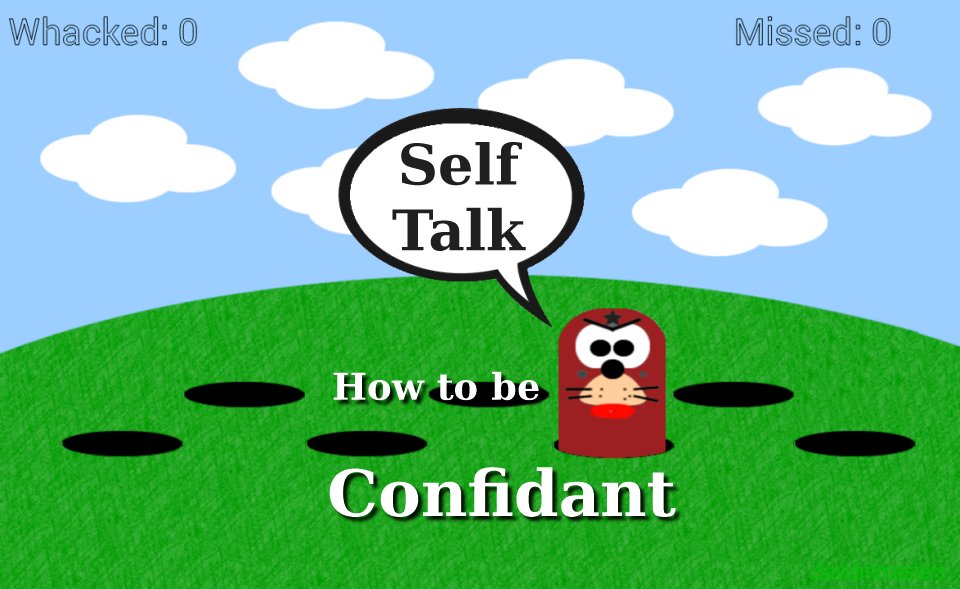
How to be Confident Self Talk

Throughout the course of my career as my calling has taken on different colors, shapes, and forms, people have come to me with a variety of issues. One of the most common challenges that I find people struggling with self-esteem.

Back in the day I would work with individuals specifically with overcoming their personal concerns. As I refine my work, currently I work mostly with people who on the move; they’re the movers, shakers and risk takers, who need to be on their game to increase their probability of success; massive success.

Many of the modalities that I use deal with overcoming issues with one’s physiological, psychological or spiritual status. When dealing with issues associated with self-confidence it is often necessary to deal with underlying issues on all three fronts; the body, the mind, and the spirit.

When I am working with someone whose confidence level is a three on a scale of 1 to 10 and they have plans of making a presentation to an important audience, readying for a pitch for Shark Tank or getting to make an appearance on the Oprah Winfrey Network, it is imperative that you raise your self-esteem to a higher level. My goal is to get my client to a confidence level of ten.

Level 10 Confidence

When your self-esteem is at its peak and you’re exuding level 10 confidence you are unshakeable and unstoppable. You have the internal fortitude to take on any challenging situation or circumstance that would be intimidating (if not crippling) to anyone maintaining low self-esteem.

That’s why I’ve developed the TENNERCISE system, to raise anyone’s self-confidence level and increase their powers of personal performance to achieve their highest and best. Tennercise utilizes components from a myriad of modalities to get you from where you are to where you want to be.

One of the first actions you can take to get a grip on your self-esteem and raise your confidence is to address your

How to be confidant self talk

Self Talk

Self-talk is that voice inside your head, sometimes that still small voice, other times like a roaring lion, insisting that you are unworthy, to be shamed or disrespected in some way or not good enough.

Low self-esteem – as well as high self-confidence – requires constant maintenance. If you’re feeling like you’re not on your game there’s probably a lot of negative programs running in the background to keep you down (or safe). You might ask, how do I banish,

Negative Self Talk

Negative self-talk has to go. It is working hard to keep you down, so you have to man up (or woman up) and claim authority over the source of your lack of self esteem.

Whack a Mole

You have to interrupt the negative self-talk with a quick and effective whack as soon as it rears its ugly head. Whack! How do I whack the negative self-talk mole?

If I’m at home alone, I clap my hands (loudly, creating a little pain) stop… and turn an abrupt about-face. If I’m sitting at a table or desk in view of others, I might flick my ear. In a meeting, I might (literally) bite my tongue.

Mock the Voice

The mole’s voice inside your head can be quite ominous. I find disarming the mole’s voice by reducing it to a funny cartoon baby-like caricature-sounding voice removes all the negativity from the negative thought. Then I make fun of it by repeating it in the silly cartoon voice (using my outside voice or inner voice, whichever is more appropriate at the time) and laugh (or smile) at it. After you’ve don’t this a few times, the next time it pops up, it does so in the revised silly voice (you might not even have to whack it when it shows up in this manner).

Positive Self Talk

Now it’s time to reframe for more positive thinking. Now, in your most authoritative voice, restate the negative as the most positive affirmation that you can conjure up. This is your new positive self-talk. Take note of your new positive reinforcement and use it any time your negative mole-speak pops up. Feel free (you are encouraged to) modify your positive affirmation as you think of ways to make it even more positively reaffirming.

Whacking and disarming your negative self-talking mole can be an excellent method of building self-confidence as you begin to rebuild your new and improved vision of yourself, ready to take on the world.

You can join us in saying,

Look out world

Here I come