Patterns of Contradiction, When Your Energy Doesn’t Match Your Words

When you talk about everything in terms of energy and frequency, understand this: your actions broadcast your frequency far louder than your words ever will. If your words and your walk don’t align, the people around you will feel it, even if they can’t articulate it. And if you’re proclaiming truth, while quietly living in contradiction, it won’t stay quiet for long.

Once that inconsistency gets exposed, especially if you’ve built your reputation on your integrous ideals, you’re not just taking a credibility hit, you might be taking a fall from grace that could take years to recover from… if ever.

The Energy of Hypocrisy

How many times have we seen someone, famous or otherwise, make bold declarations about morality, love, family values, health, or spiritual enlightenment, only to be caught engaging in the very behavior they condemned?

Let’s look at some examples.

Famous Contradictions: When Words and Energy Don’t Match

Public Persona Proclaimed Belief or Value Contradictory Action
Lance Armstrong Advocated athletic excellence and clean sportsmanship. Caught in one of the most elaborate doping scandals in history.
Jim Bakker (Televangelist) Preached purity, faithfulness, and Christian morality. Exposed for financial fraud and sexual misconduct.
Bill Clinton Promoted women’s rights and dignity in public office. Infamous affair with White House intern Monica Lewinsky while President.
Ellen DeGeneres Built her brand on kindness and positivity. Accusations from staff about a toxic workplace environment behind the scenes.
Ted Haggard (Evangelical pastor) Spoke out aggressively against homosexuality. Caught in a scandal involving male escorts and methamphetamine.
Gwyneth Paltrow Markets extreme wellness and health purity. Criticized for promoting pseudoscientific or unsafe products via Goop.
Alex Jones Called himself a truth-teller and anti-establishment warrior. Profited millions from fear-based marketing while misleading the public on tragedies.
Matt Lauer Reported on justice and accountability in the media. Fired after credible sexual misconduct allegations at NBC.
Marion Barry (Former DC Mayor) Public servant fighting crime and addiction. Arrested for crack cocaine use while in office.
Prince Andrew Claimed moral dignity as a royal figure. Linked to Jeffrey Epstein scandal and sexual abuse allegations.

These public examples are not about shame, they’re lessons in energetic incongruence.

These individuals didn’t fall because they made a mistake, we all do.
They fell because their energy didn’t match their words, and the dissonance became too loud to ignore.

The Mirror of the Everyday Life

But this doesn’t just happen to the rich or famous. I see it every day in my coaching practice.

The biggest inconsistency I encounter? Unconditional love.

People say they want it. Demand it. Worship it.
But when it’s their turn to offer it? That love comes with conditions, expectations, ultimatums, and emotional punishments.

Sometimes they don’t even realize they’re doing it. It’s a pattern, programmed by upbringing, trauma, or environment. It’s not a flaw, it’s an auto-response.

And when I see it, I don’t always say something right away. I let it play out. But if they project that contradiction onto me or someone else, especially in judgment, I gently wait until the next time they contradict themselves, and I reflect it back.

They might not like it. They might resist it. But after a while, they get it. They start to see themselves.

And when that happens? That’s when real transformation begins.

Common Contradictions Among Clients

What They Say or Demand What They Actually Do
“I only want unconditional love.” Judges and withdraws love the moment expectations aren’t met.
“I can’t stand liars.” Lies to avoid conflict or embarrassment.
“I’m all about positivity.” Complains and criticizes when things don’t go their way.
“I’m a very spiritual person.” Shames others for not being as “enlightened.”
“I live in the vibration of love.” Gossips and excludes those who disagree.
“I don’t tolerate drama.” Creates tension by holding grudges and nitpicking.

Suggestions to Break the Pattern of Contradiction

    1. Catch Yourself in the Act
      Make a list of what you expect from others. Then ask: “Do I offer this consistently?”
      This isn’t about guilt. It’s about awareness.
    2. Request Feedback
      Ask someone close to you: “Is there anything I say I value that you don’t see me living out?”
      Don’t defend. Just listen.
    3. Daily Alignment Check
      Ask yourself every night: “Did I live today in harmony with the energy I claim to be?”
    4. Flip the Script
      The next time you’re about to criticize someone, pause and say: “Where do I do this too?”
      Use it as a mirror, not a weapon.
    5. Mantra Practice
      “I walk in the truth I speak. I offer what I seek. I love without condition.”
      Speak it. Breathe it. Live it.

Being out of alignment doesn’t make you a fraud, it makes you human.
What matters most is that you’re willing to recognize it, own it, and shift it.

Because when your energy matches your intention, the world changes around you. People trust you. Doors open. You become magnetic. You become free.

So be mindful of your frequency. And let your walk echo the truth you talk.

With all my love and resonance,
David M. Masters


Broken Picker? Understanding Love Trust & Romantic Predators

So many times, I find myself sitting across from someone who shakes their head and says, “Whoa, did I pick a doozy this time,” right before they dive into some unbelievable love story turned nightmare. They always finish with that familiar line: “I think my picker is broken.”

And you know what? If you look at the pattern of their past relationships, most anyone might agree. It sure looks like a history of picking the wrong people. But here’s the kicker, it may not be that their picker is broken at all. It may simply be a case of premature mate selection. Or maybe, it’s a little deeper than that.

Because let’s be honest: the landscape of love is rarely as simple as one person being wrong and the other being right. There are always two players on the stage of romance, you, and the person you’re letting into your heart. And you, as a seeker of truth in love, are often operating with incomplete information.

No matter how intuitive you think you are (and you might be incredibly perceptive in most areas of your life), your internal guidance system gets wobbly when the scent of true love is in the air. And the subversive romantic predator? They’re counting on that. They’re banking on the fact that your heart will override your head.

Are They All Out to Get You?

No. Not everyone is a predator. But some are. And they have every right to look for what they want in a partner, just like you do. That doesn’t make them evil. It makes them human. But it also means you have to be smart.

Take a moment to reflect on how we all size up potential mates:

Modern Screening Questions Hidden Primal Motivation
Where do you work? Can you provide for me?
What kind of car do you drive? Do you have status or style?
Do you have a college degree? Are you intelligent or successful?
Do you want kids? / Have kids? Will you support or burden me?
Do you own a home? Are you stable?
Do you pay child support? Are you carrying baggage?
What medications are you on? Will I have to care for you?
Do you have a retirement plan? Are you future-focused?

And here’s the thing: all these questions might seem logical and “responsible” on the surface. But matching up on these checkboxes does not guarantee long-term compatibility or emotional depth. Cave people probably had their own primitive version of this vetting process, and just like then, it’s not always accurate.

Being a solid provider or good on paper is not the same as being a good partner in the long haul. A lasting, soul-connected relationship needs more than surface-level alignment. It needs emotional transparency, shared values, and truth.

And yet, here’s the problem: you can’t actually know what’s going on inside another person’s head. That’s the blind spot. And unfortunately, it’s where romantic predators love to play.

Top 10 Hidden Romantic Motivations

Let’s go behind the scenes. Here are the top 10 hidden romantic motivations that have been uncovered in the safety of my office during counseling sessions:

    1. “I need a break from my current life.”
    2. “I want some sex.”
    3. “I need someone to vacation with.”
    4. “I need a place to live.”
    5. “They have good credit.”
    6. “I just want to feel loved for a while.”
    7. “Their reputation can open doors for me.”
    8. “They have resources or connections I want.”
    9. “If I promise enough, I can get what I want.”
    10. “Someone hurt me, and I feel better hurting someone else.”

These are not just hypotheticals. These are real thoughts from real people who entered relationships under false or self-serving pretenses.

Are these evil thoughts? Not necessarily. But they’re not the kind of authentic, love-based intentions you’re probably looking for. And if you’re not aware of them, or worse, if you assume everyone is being honest just because you are, you set yourself up to get played.

Maybe Your Picker Isn’t Broken After All…

If you’ve been burned in love and found yourself attracting the wrong people over and over again, let me be the first to tell you: you may not be broken. In fact, you may be incredibly trusting. You may have a heart so open and pure that it attracts people in need… or opportunists who know how to exploit that.

That’s why it’s time to stop beating yourself up, and start installing security protocols that protect your loving heart from emotional manipulation and deceit.

How to Protect Yourself from Romantic Predators

Here are a few tips to keep your heart open without being a victim:

    1. Don’t Overshare Too Soon

The more personal information you give away in the early stages, the easier it is for a predator to mirror your desires. Practice some restraint, even if it feels thrilling.

    1. Watch What They Do, Not Just What They Say

Words are cheap. Pay attention to patterns, not promises. How do they act when no one is watching? How do they treat others?

    1. Ask Unexpected Questions

Throw in a few off-script questions to see if they’re being real. Ask about childhood dreams, spiritual beliefs, or how they handle failure. Surface predators don’t prep for those.

    1. Know Your Hidden Motives

Get brutally honest with yourself about what you’re secretly hoping to gain. Healing from loneliness? Escaping something? Needing approval? Don’t hide from yourself.

    1. Set Boundaries Early

Be clear about your non-negotiables. You’re not being difficult, you’re protecting your soul. And predators hate boundaries, they’ll reveal themselves when pushed.

    1. Invite a Trusted Friend’s Perspective

Sometimes, love blinds us. Bring in someone you trust to meet this person and get their read. They may notice red flags you’re missing.

    1. Don’t Ignore Your Gut

Even if it whispers. Even if it’s inconvenient. If something feels off, it probably is.

You are not broken. But you do need to upgrade your discernment.
Because your heart is valuable. Your love is precious. And if someone wants a seat at your table, they need to earn it, not just charm their way in.

It’s okay to be hopeful. It’s okay to want love.
But as you seek that divine connection, let wisdom walk beside your heart.
And remember: you’re not here to be used, you’re here to be loved.

Stay true to your heart but bring your higher mind along for the ride.

~ David M. Masters


My Brother Wrote a Book and It Broke My Heart (In the Best Way)

I just finished reading my brother’s memoir. And let me tell you, it hit me in places I didn’t even know I had tucked away. I’ve written a lot. Read more. Helped coach countless people through writing their stories. But this one? This one brought me to my knees, not because of the words themselves, but because I lived in the shadows of the life behind them. And now, I’ve seen it through my brother’s eyes.

I was the oldest of four boys. The rock. The steady one. The glue. I was the one who kept the family from falling apart, for as long as I could. My brother, the one who wrote the book, was next to the youngest. He was a kid when I left. Still wet behind the ears when I set out to start my ministry, build my own family, and make sense of the mess we came from.

Back then, I didn’t know what was about to come crashing down behind me. I didn’t know the cost of leaving would be so high for the ones I left behind. But I had no choice. Sometimes, you have to get out to survive.

You see, after my mother remarried a man named Steve, a man who quietly stole things from me and sold them behind my back, there came a moment when I knew I had to walk away. There was one betrayal too many, and it became the straw that broke the camel’s back. So I left. Without knowing the wolves were circling my brothers. Without knowing that my leaving would leave them exposed.

Now, reading my brother’s account, I realize the wolves weren’t just circling. They were feeding. And though he writes with grace and restraint, I know the real story is far darker than what he put on those pages. He lived it. He survived it. And the fact that he lived to write about it at all? That’s a miracle.

The part that really got me, the part that shattered my heart and healed it in the same breath, was the story of the family who took him in. At his lowest point, when he was homeless and living in a tent, a family, like something out of a fairytale, welcomed him into their home. No judgment. No pretense. Just love.

That love, that safety, that one act of radical kindness, became the springboard for the man he is today. He didn’t just survive; he rose, experienced a miraculous transformation. He thrived. He created a life, embracing his life’s purpose. A legacy. And I’ve never been more proud of anyone in my life.

But as I write this, I can’t help but feel a pang of guilt. Did I abandon them? Did I leave my brothers to fend for themselves in a warzone I narrowly escaped? At the time, I thought I was doing what I had to do. And maybe I was. But now, I see that our choices don’t just affect us. They echo through generations.

We talk about legacy a lot in my work. But maybe the truest legacy we leave isn’t in the lives we build, but in the stories others will one day tell about us.

And that brings me to another complicated thread in this matrix: my stepfather.

To me, he was “Dad,” a decent man trying to find his way, flawed, human, and capable of both good and not so good. Yes, he gave us stability for a time. Meals at the table. A roof. We were able to maintain the same friends, go to the same school. A few years where life felt almost normal. And for that, I thank him.

Later in life, he and I reconnected. I worked for him. He worked for me. Following that reconnection period, he participated in a deep betrayal against me that I thought I would never forgive, but I did. After 20 years of silence, I chose to let go and open my heart again. And I’m glad I did.

The irony? My brother barely mentions him in his book. And sadly, there’s not much to say about their relationship.

This man, his biological father, the one whose shadow loomed large in my early life, was nearly invisible in the memoir. And yet, in the end, it was my brother and I who sat with him as he passed. Two sons, shaped by different truths, saying goodbye to the same man.

That’s life, isn’t it? Messy. Unscripted. Full of holes and heartbreak and healing.

And here’s the twist: Even though I’m known as a powerful book coach, my brother didn’t ask for my help writing his memoir. He didn’t need to. Like everything else in his life, he carved his own path. And maybe that’s what makes the book so raw. So real. So powerful.

He wrote it courageously, without pretense, without permission.

Just the truth.

I’m telling you this today because I believe we should all be a little more aware of the stories others will one day tell about us. We should live in a way that invites grace into those future retellings. And if you’re brave enough, check out my brother’s book.

You might find pieces of yourself in there. I know I did.

The Boy in the Backyard by Tim Madding

And to my brother, if you’re reading this, I love you. I’m proud of you. And thank you… for surviving. For writing it out. For reminding me that even in the darkest chapters, light can break through.

And to the rest of us? Let’s live lives worth writing about.

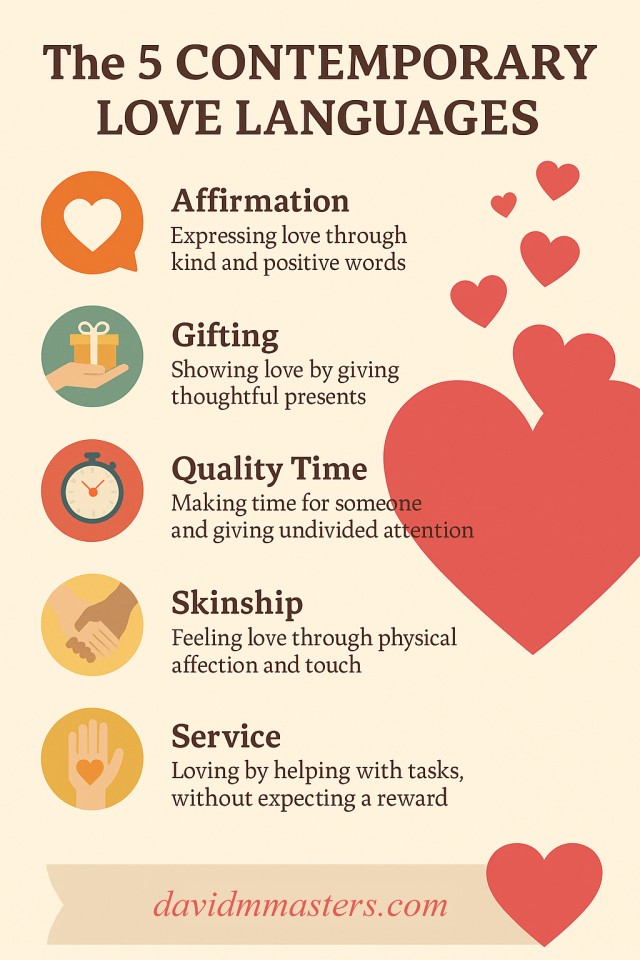
Embracing “Skinship” and Beyond: Contemporary Revisions to the 5 Love Languages

In our work, whether in coaching, ministry, or mentoring, we often return to timeless truths to guide others through their unique love journeys. One such cornerstone has been Dr. Gary Chapman’s “5 Love Languages,” which gave millions a way to understand how we give and receive love.


But love evolves, just as language does. Recently, a client described her love language not as “physical touch” but as skinship, a tender, intentional type of touch that feels sacred, nurturing, and safe.

This word stunned me in the best way. “Skinship” said what so many of us try to describe. It felt more human, more emotionally intelligent. And it’s not alone. As we explore deeper relationships in a rapidly changing world, new expressions are emerging, modern love languages for modern lives.

Classic vs Contemporary Love Languages

Here’s a comparison between the original 5 Love Languages and updated, culturally nuanced counterparts that may better reflect how people express and feel love today.

Original Love Language Contemporary Expression Description
Words of Affirmation Pebbling Sending small, frequent tokens—like sweet texts, memes, or emojis—that say “I’m thinking of you.” Named after penguins who present pebbles to court each other.
Quality Time Shared Experiences Not just time together, but co-creating memorable moments through new, exciting, or bonding activities.
Receiving Gifts Intentional Offerings Thoughtful, symbolic gifts—not about materialism but emotional meaning and timing.
Acts of Service Goal-Support & Accountability Supporting each other’s dreams, responsibilities, and projects; showing up with reliability and shared vision.
Physical Touch Skinship Safe, non-sexual physical affection such as hand-holding, gentle stroking, hugs—nurturing intimacy through touch.

Where “Skinship” Comes From

Coined in Japan in the 1950s and later embraced in Korea, the word skinship combines “skin” and “kinship.” Originally referring to parent-child bonding, it evolved to include close, platonic, and romantic touch that expresses safety and deep affection, without necessarily being sexual.

In a world that often hyper-sexualizes touch, skinship invites us to reclaim it as sacred, healing, and emotionally expressive.

Expanding the Framework for Modern Love

As a coach, minister, or spiritual guide, you may find that your clients don’t resonate with the classic five. That’s okay—language is just a starting point. What matters most is connection.

Here are other emerging modern expressions to consider:

    • Emotional Labor & Listening – Feeling loved when someone is attuned, reflective, and holds emotional space.
    • Healthy Debate – A love language for thinkers: connection deepened through challenging and expanding one another’s mind respectfully.
    • Intentional Presence – Undistracted, sacred time carved out for connection; not just physical proximity but emotional availability.

What This Means for Coaches and Relationship Guides

If you’re working with clients:

    1. Ask deeper questions. “What makes you feel most loved?” Listen for nuance. “I love when he brings me coffee” might signal service or shared goals.
    2. Mirror their language. If they say “skinship,” honor it. That may carry more emotional weight than the clinical “physical touch.”
    3. Invite creative expression. Help clients craft their own unique languages. One couple might bond over puzzles; another, through activism.

Chapman gave us a gift: a framework. But frameworks are meant to be built upon. As society changes, as connection takes on digital and emotional layers, we need language that reflects our truth.

“Skinship” isn’t just a new word—it’s a reminder that love is evolving, and so must we.

So keep listening, keep learning, and keep loving in the language that speaks to the soul.


The Heart of True Intimacy: Beyond Touch

When we hear the word “intimacy,” most people automatically think of physical closeness. Romantic gestures, stolen kisses, tender touches beneath the covers. And while these are beautiful expressions of connection, they are only the outer shell of something far deeper. True intimacy, the kind your soul longs for, is not simply a brush of skin. It’s the intertwining of spirits, the merging of hearts, and the vulnerable sharing of your truest self. It’s not just about taking your clothes off; it’s about taking your masks off.

At the core of true intimacy is emotional safety. Can I bring my fears, my doubts, my failures to you, and still be loved? Can I sit in your presence, raw and unguarded, without fear of ridicule or rejection? When two people create a space where honesty is met with compassion instead of criticism, vulnerability with validation instead of judgment, that’s where intimacy begins to flourish.

Without emotional safety, physical closeness becomes hollow. A performance. A transaction. But when your heart feels safe, your soul opens. And that’s when miracles happen in love.

Vulnerability and the Courage to Be Seen

Intimacy requires courage. The courage to be seen, not just the polished, social-media-approved version of yourself, but the messy, complicated, unfinished version too. The one with scars, doubts, and unfinished healing.

Vulnerability says, “Here I am, as I am. Will you still stand with me?”

And when someone responds, not by running away, but by stepping closer, that is love in motion.

Deep Conversations and Shared Dreams

Too many relationships stay stuck in the shallow end of the pool, exchanging small talk and surface-level plans. But intimacy invites you to dive deep. To ask the questions that matter:

    • What makes your soul come alive?
    • What are your childhood wounds still whispering to you?
    • Where do your dreams and fears collide?

True intimacy is found in late-night talks where time disappears, in shared dreams that feel too big to hold alone, and in moments of silent understanding where words are no longer necessary.

The Power of Presence

In this world of constant distraction, uninterrupted presence is a rare gift. Put down your phone. Turn off the TV. Look into their eyes and see them. Really see them.

Presence says, “Right now, in this moment, there is nowhere else I would rather be than right here with you.”

It’s holding hands not because you’re supposed to, but because you want to. It’s cradling their heart with your words and your actions, not to get something, but to give something.

The Soul’s Deepest Need

At the end of the day, the human soul is starving for connection. Real, authentic connection.

Touch is important, but meaningless without heart. Physical closeness is sweet, but hollow without emotional closeness.

The soul doesn’t crave touch as much as it craves understanding. The heart doesn’t need perfection; it needs presence.

If you want to cultivate this kind of love, here are a few steps you can take:

    1. Be present. Listen not just with your ears, but with your heart.
    2. Create safety. Make your relationship a judgment-free zone.
    3. Be vulnerable first. Lead with honesty. Invite them into your world.
    4. Ask deep questions. Go beyond “How was your day?”
    5. Share your dreams. Let them see what lights you up inside.
    6. Hold space in silence. Sometimes the most intimate moments are wordless.
    7. Show affection that reflects your heart. Whether it’s a gentle touch, a long hug, or holding hands during the storm.

You were made for love deeper than surface-level attraction. You were designed to both give and receive a love that sees you, knows you, and chooses you still.

This is the kind of intimacy your soul was created for.

So ask yourself:

Am I settling for shallow connection when my soul longs for depth?

Am I showing up as my true self, inviting others to do the same?

Am I creating space for the kind of intimacy that changes lives?

The choice is yours.

And when you choose love over fear, presence over distraction, vulnerability over perfection—you will experience a connection so profound it will remind you why you were put on this earth in the first place.


Flip the Script: What Would You Do with That Kind of Wealth?

Have you ever caught yourself shaking your head at the ultra-rich? Maybe you’ve quietly resented Alice Walton, Jeff Bezos, or Elon Musk as if their success somehow stole from your potential. Or perhaps you’ve cast side-eyes toward Mukesh Ambani’s billion-dollar home in India, wondering, “Why does one man need all that?”

If that’s where your mind goes, I get it. I really do. It’s easy to believe that wealth equals corruption, that success on that level could only be achieved through exploitation, dishonesty, or selfishness. But here’s the uncomfortable truth:
That mindset is the very thing keeping you stuck.

The Wealth Trap You Don’t Even See

Money isn’t evil. People aren’t automatically corrupt because they have more commas in their bank account than you. In fact, some of the wealthiest individuals on the planet are using their resources to heal the world, create opportunity, and build legacies of goodness that will last for generations.

Let’s look at some examples:

Prominent Billionaire Philanthropists & Their Contributions

Name Estimated Wealth Primary Business Philanthropic Focus
Elon Musk $250+ billion Tesla, SpaceX Climate tech, space exploration, disaster relief, AI safety through the Musk Foundation.
Jeff Bezos $200+ billion Amazon Bezos Earth Fund (climate change), Day 1 Fund (homelessness, early childhood education).
Larry Page $100+ billion Google Clean energy innovation, global health, and sustainability efforts (some anonymously funded).
Sergey Brin $100+ billion Google Neurological disease research, poverty alleviation, and environmental protection.
Michael Bloomberg $100+ billion Bloomberg LP Public health, climate action, gun safety, and education through Bloomberg Philanthropies.
Warren Buffett $130+ billion Berkshire Hathaway Co-founder of The Giving Pledge, pledging 99% of his wealth to health, poverty alleviation, and education causes.
Mark Zuckerberg & Priscilla Chan $120+ billion Facebook / Meta Chan Zuckerberg Initiative: science, education, criminal justice reform, and immigration reform.
Mukesh Ambani $116+ billion Reliance Industries (India) Education, healthcare, rural development, and digital connectivity through Reliance Foundation.
Alice Walton $70+ billion Walmart Crystal Bridges Museum of American Art; regional health and arts access.
Philip & Penelope Knight $40+ billion Nike Health sciences, cancer research, athletics, and higher education (University of Oregon, Stanford).
Jim & Marilyn Simons $30+ billion Renaissance Technologies (hedge funds) Math education, autism research, basic science research, and environmental conservation.
MacKenzie Scott $30+ billion Amazon (divorce settlement) Unrestricted grants to nonprofits supporting racial equity, education, LGBTQ+ rights, and public health.
Ray Dalio $20+ billion Bridgewater Associates Mental health, education, social justice, and ocean conservation through Dalio Philanthropies.
Dustin Moskovitz & Cari Tuna $20+ billion Facebook, Asana Good Ventures & Open Philanthropy: effective altruism, animal welfare, and existential risk reduction.
Laurene Powell Jobs $14+ billion Apple (Steve Jobs’ widow) Emerson Collective: education, immigration, journalism, environment, and social entrepreneurship.
Pierre Omidyar $8+ billion eBay Omidyar Network: human rights, tech for social good, financial inclusion, and democracy-building.
David Geffen $7+ billion Media & Entertainment Arts & culture institutions, medical research, and HIV/AIDS programs.
Paul Tudor Jones II $7+ billion Tudor Investment Corp. Robin Hood Foundation (NYC poverty), wildlife conservation, and educational access.
George Soros $6+ billion personal (gave away $32+ billion) Hedge Funds (Soros Fund Management) Open Society Foundations: human rights, democratic governance, and education globally.
Reed Hastings $5+ billion Netflix Education reform, expanding access to quality schools, and technology in education.
Howard Schultz $3+ billion Starbucks Veteran services, small business support, racial equity, and youth employment.
John & Laura Arnold $3+ billion Hedge Funds (Enron, Centaurus) Public policy reform, criminal justice, childhood nutrition, and education.
Oprah Winfrey $3+ billion Media & Entertainment Girls’ education in South Africa, disaster relief, poverty alleviation, and wellness initiatives.
Ted Turner $2+ billion CNN, Media Environmental preservation, United Nations Foundation, and nuclear disarmament.
Strive Masiyiwa $1.8+ billion Econet Wireless (Zimbabwe) Education scholarships, healthcare access, and rural electrification across Africa.
Gordon & Betty Moore (Estate) ~$8 billion (estate) Intel The Moore Foundation: science research, environmental conservation, and patient care improvements.
Charles Koch $50+ billion Koch Industries Criminal justice reform, poverty alleviation, and education (controversial due to parallel political funding).

Key Insights from This List:

    • The wealthiest people in the world are increasingly turning to philanthropy, seeing their fortunes as a tool for solving global-scale challenges.
    • They cover wide areas of impact: healthcare, climate change, education, freedom of information, and poverty alleviation.
    • Wealth is not bound by geography: Mukesh Ambani is transforming India’s digital landscape, while Strive Masiyiwa is improving education and energy access in Africa.
    • You could be next. Start where you are. Build what you can. Grow your impact.

Are there wealthy people who misuse their money? Of course. But there are also countless poor people who do the same with the little they have. Wealth magnifies what’s already inside you. If you are generous, wealth gives you greater reach. If you are selfish, wealth only enlarges your selfishness.

Flip the Script: What Would You Do with That Kind of Wealth?

Ask yourself:
If I had Alice Walton’s billions, what good could I do?
If I had Mukesh Ambani’s resources, how would I change my community? My country? The world?
If I suddenly had $100 million, who would I help? What systems would I build?

Stop cursing the rich and start preparing your own life to be a blessing at a higher financial level.


Break Through Your Self-Induced Glass Ceiling

Wealth flows where it is welcomed and respected—not where it is feared or demonized. Here are a few steps to shift your energy and open the door to greater financial prosperity:

  1. Bless Instead of Curse

Next time you see a wealthy person, bless them in your mind. Thank them for what they are doing with their money—even if you disagree with them. Send them love and gratitude for showing you what’s possible.

  1. Heal Your Money Wounds

Many of us grew up hearing phrases like “money is the root of all evil” or “rich people are greedy.” Challenge those childhood beliefs. Money itself is neutral. It’s the energy we bring to it that determines its impact.

  1. See Money as Energy

Money is energy. It is an exchange of value. When you increase your own value—whether through skills, service, creativity, or leadership—you naturally attract more wealth into your life. Energy flows where your focus goes.

  1. Imagine the Greater Good You Could Do

Sit down and dream big. What causes stir your heart? What change would you fund? Start writing your prosperity vision today.

  1. Take Inspired Action

Don’t just sit and meditate on money—go do the work. Build something. Serve someone. Solve a problem in the marketplace. Money follows value.


It’s Time to Stop Getting in Your Own Way

The only difference between you and the ultra-wealthy is mindset, action, and time. You don’t need to be another Alice Walton or Mukesh Ambani. But you can become the wealthiest version of YOU, someone who creates ripples of love, abundance, and transformation in your circle of influence.

So stop hating wealth.
Start honoring what it could become in your hands.
And step boldly into the prosperous future that is waiting for you.


Remember:

It’s not about the Benjamins. It’s about the energy of love, service, and expansion that flows through how the money is used.

The question is, will you allow it to flow through you?

The Broken Bridge and the Road Less Traveled: A Lesson in Courageous Healing

Have you ever found yourself facing a life-or-death decision where the voices of the world insist there’s only one way forward—but your heart whispers, “There must be another way”?

Years ago, I shared a question that caught people off guard. I asked: “Would you rent a car to drive across the country, knowing there was only a 10% chance you’d reach your destination… and that if you didn’t make it, it would cost you your life? And what if that rental car costs more than you’d earn in an entire year? Would you still take the trip?”

Most people paused… they squirmed… some laughed nervously. Few said yes.

The truth? Every day, people take that exact gamble—with their lives.

When diagnosed with a life-threatening illness, many are told that the only path to healing is one filled with toxic chemicals and burning rays, systems that boast success rates far below 10%, depending on which studies you read. And yet, fear grips them.

They mortgage their homes, drain their savings, and put their bodies through hell, chasing a sliver of hope across a broken bridge that history says most will fall from.

Why?

Because that’s what the voices of authority told them to do.
Because that’s what’s been done before.
Because they were too afraid to look for another way.

The Parable of the Broken Bridge

Picture this:

A weary traveler stands before a crumbling bridge stretching over a great canyon. On the other side lies the city of Healing—a place of restoration, peace, and hope. The bridge’s builders promise, “Trust us. This is your only way across. Pay your fee, step onto the bridge, and pray you don’t fall.”

“How many have made it across?” the traveler asks.

“A few,” they admit. “But don’t think about that. Focus on the chance that you might be the lucky one.”

But the traveler notices something else: Quiet trails meander off into the forest below. They’re not as obvious. They require more work. Fewer signs point the way. But those who have walked them speak of beauty along the journey, healing in each step, and guides who walk beside them.

Now the traveler must decide:
1) Take the broken bridge because it’s what everyone says to do? Or 2) listen to the still, small voice within—and follow a path that feels guided by something greater?

The Real Question

The real question isn’t about bridges or rental cars, it’s about how you respond when life throws you its greatest challenge.

      • Will you blindly follow the crowd down a path of fear?
      • Or will you pause, breathe, and listen for the higher call guiding you to something better?

Yes, the world will tell you that alternative paths are foolish, dangerous, or unproven. But many of the world’s greatest breakthroughs came from people who dared to take a different road, from those who said, “There has to be more than this.”

A New Way of Asking the Question

So, let me ask it this way:

If your life was on the line, would you risk everything on a method that has failed most before you, simply because it’s popular—
or would you take a leap of faith and seek a path of healing, wholeness, and alignment with the life force that created you in the first place?

No one can make that choice for you, but your heart knows the answer.

What Most People Miss

Most people forget that healing is not only physical. True healing involves your mind, your soul, and your spirit. You were designed for healing. Your body knows how to heal. But your soul must give it permission. If your healing path leaves you hopeless, fearful, and depleted—then maybe that path isn’t your healing after all.

There are many ways across the canyon. Some involve medicine, some involve faith, some involve nature, and some involve surrender, but none of them require blind obedience to a broken system.

So today, I invite you to pause, turn down the noise, and listen.

Ask yourself: “What feels like truth to my soul?”

Not what your doctor says.
Not what your family says.
Not what society says.
But what your soul says.

Your life is too precious to gamble on broken bridges.

The Love of God, the Universe, the Source—or whatever name you call it— did not put you here to be a victim of fear. You are here to learn, grow, love, and, yes, heal. Your journey may not look like anyone else’s, but it is yours, and it is sacred.

Dare to take the road less traveled.

You might just find the healing you were searching for was already inside you all along.


Freedom Beyond Forgiveness: Without the Need to Forgive Them

We’ve been told from pulpits, therapists’ couches, and self-help books that forgiveness is the golden key to healing. That in order to move forward, you must forgive. But what if that’s not the full truth? What if… You could actually enjoy life more without needing to forgive?

What If You Didn't Need to Forgive?
What If You Didn’t Need to Forgive?

Not out of spite. Not out of bitterness. But because you’ve simply moved beyond the need.

You see, there’s a lot of agendas wrapped up in the forgiveness movement. Some push forgiveness as a form of control, “Be a good person and just let it go.” Some push it to shame, “What kind of Christian are you if you still hold a grudge?” Some just want peace at any cost.

But forgiveness, in its truest form, doesn’t come from coercion or guilt. Forgiveness, real forgiveness, comes from a higher place. From the Divine. From God. It’s not something you do with your ego. It’s not an item you check off your spiritual to-do list.

It’s a state of being.

Jesus didn’t forgive because someone begged for it. He forgave from love. And more than that, He understood.

“Father, forgive them. They know not what they do.”

He didn’t wait for an apology. He didn’t demand remorse. He didn’t require payback. He saw from a higher viewpoint.

The Freedom Beyond Forgiveness

Here’s a radical thought:

Maybe you don’t need to forgive if you’ve already let go of the idea that you were ever personally wounded by someone who truly understood what they were doing.

Because they didn’t. Not really. No one wakes up and thinks, “How can I cause emotional damage today?” They act out of pain. Out of patterns. Out of programming. They react from fear, trauma, confusion. And while their actions may have hurt you deeply, the hurt only lingers when you personalize their pain as an intentional attack on you.

That’s the trap of superiority or selfishness.

Self-righteousness says, “I’m right, they’re wrong. I’m the victim, they’re the villain. I will hold onto this pain until they acknowledge what they’ve done.”

But the higher self, the part of you aligned with divine love, says,

“They were doing the best they could with what they had. And I don’t need to carry this story anymore.”

That’s not forgiveness. That’s transcendence.

The Higher Love Perspective in Action

Let me show you what this looks like in real life:

    1. The Betrayed Wife

Susan’s husband cheated on her after 20 years of marriage. The betrayal burned her to the core. At first, she obsessed over revenge or public shaming. But one day, she stopped. She looked at him, not as a monster, but as a man lost in his own inadequacy. His affair wasn’t about her lack of worth, but his own.

She didn’t forgive him in the traditional sense. She just stopped needing anything from him. And that… set her free.

    1. The Abandoned Son

Jon’s father walked out when he was six. For years, Jon carried a hole in his chest, waiting for his dad to come back and say, “I’m sorry.” It never happened. One day, in meditation, Jon imagined his father as a scared little boy being raised in a violent home, emotionally numb, terrified of responsibility.

Jon saw the trauma lineage. And something in him unclenched. He didn’t write a forgiveness letter. He just dropped the story.

Tips to Reach This Place of Peace

If you want to rise to this place, where forgiveness is unnecessary because judgment no longer sticks, try these steps:

    1. Shift the Lens

Ask yourself:
“What might this person have been going through at the time?”
Try to imagine their wounds, not their words.

    1. Release the Personalization

Say out loud:
“This wasn’t about me. It was about their own pain.”
Even if it felt personal, remind yourself: pain doesn’t aim, it spills.

    1. Stop Waiting

Don’t wait for an apology. Don’t wait for justice. Don’t wait for a dramatic gesture to let go.
Freedom is not a transaction. It’s a choice.

    1. Use Compassion as Your Weapon

Instead of rehearsing the offense, practice compassion. Picture them as a child, scared or broken, doing their best with what they had.
It doesn’t excuse them, it simply explains them.

    1. Let the Offense Go Without Ceremony

You don’t need a ritual or a formal moment.
You just need the realization:
I no longer need this story to define me.

You Don’t Need Their Permission to Be Free

You don’t need to forgive to be healthy and whole. You just need to see, to truly see, from a higher perspective.

If you were to look through the eyes of Jesus, or the eyes of your soul, you’d realize:

    • Everyone is broken.
    • Everyone is scared.
    • Everyone is healing something.

And when you finally get that? Forgiveness becomes irrelevant. You’re just free.

    • Free to love.
    • Free to live.
    • Free to rise.

And you didn’t have to “forgive” a single person to get there.

You just gifted them the grace of the Father, and stopped carrying the weight that was never yours to begin with.


When Success Starts to Arrive Before You’re Ready

One of the greatest privileges of being a coach is seeing possibilities that people cannot yet see in themselves. Sometimes you catch a glimpse of the person they are becoming long before they do. You can almost see them standing on the other side of fear, living the life they say they want, sharing their gifts with the world. And because you see it so clearly, you lean in.

You spend extra time. You answer one more email. You offer a discount they didn’t ask for. You open doors they couldn’t have opened on their own. Not because you’re trying to rescue them. Because you genuinely believe in them.

Then, just as things begin to move… They ask you to stop. “Turn it off.” “I want my old life back.”

As coaches, it’s easy to mistake this for rejection. It usually isn’t. More often, it’s something far more human. They’ve simply reached the edge of what feels safe.

The interesting thing about success is that it doesn’t only solve problems. Sometimes it introduces entirely new ones.

    • A new website brings inquiries.
    • A published book brings opinions.
    • A growing reputation brings attention.
    • Attention brings decisions.

And for someone who has spent years living quietly, even positive attention can feel overwhelming.

To the coach, the phone ringing sounds like opportunity. To the client, it may sound like danger.

Neither person is wrong. They’re simply experiencing the same reality through different nervous systems.

One sees possibility. The other experiences exposure.

This is why coaching isn’t simply about helping people achieve success. It’s about helping them become the kind of person who can comfortably hold it.

We often assume people fear failure. Many do. But just as many have an underlying fear of success. Not because success is bad. Because success asks something new of them. It asks them to become visible. To make decisions. To establish boundaries. To say “No.” To trust their own judgment.

If those muscles have never been exercised before, success itself can feel threatening.

Sometimes people don’t quit because the opportunity is wrong. They quit because the opportunity arrived before their capacity caught up. That doesn’t make them weak. It makes them human.

As coaches, we need compassion for that reality. Not everyone who wants clients is ready for strangers. Not everyone who wants influence is ready for visibility. Not everyone who wants a larger life is ready to leave behind the safety of a smaller one.

Our assignment is not to force readiness. Nor is it to take their hesitation personally.

Sometimes the greatest gift we can offer is to say,

“I understand.”

“The door remains open.”

“If today isn’t your day, perhaps another season will be.”

There is wisdom in continuing to believe in people without insisting they become who we know they could be. After all, we don’t get to choose another person’s timing. We only get to choose our posture.

    • Keep believing.
    • Keep serving.
    • Keep opening doors.

Some people will walk through them immediately. Others will stand in the doorway for years. Some may even walk away. Bless them anyway. Because people rarely forget the person who believed in them before they believed in themselves. And perhaps that belief will become the very thing that gives them the courage to return one day.

Until then, keep shining. Not because everyone is ready for your light. But because someone is.

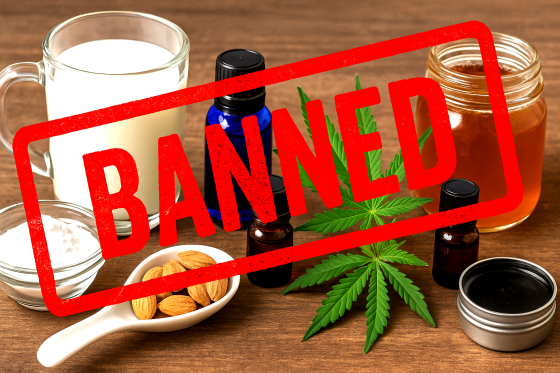
Banned: What Healthy Natural Substances the Feds Are Banning

I have to be honest with you, I was shocked by this recent discovery. I sat down and looked up the top natural ingredients that have actually led to criminal charges or government crackdowns in the United States. And what I discovered left me reeling. Some of the most common, kitchen-level substances, simple things that you or I might use every day, are on the radar of federal and state agencies. Why? Because someone, somewhere claimed they could help support the body in healing naturally… and that crossed a line.

Here’s a peek at the “Natural Health Most Wanted” list:

    • Baking soda (for its role in cancer alkalinity theories)
    • Colloidal silver (for immune support)
    • Vitamin B17 from apricot kernels (popular in alternative cancer protocols)
    • Black salve (a controversial topical escharotic)
    • Raw milk (still outlawed in many states)
    • Kratom, turpentine, gelsemium, and DMSO (for pain, detox, and immune support)
    • Hydrogen peroxide, chlorine dioxide, and ozone (used by some as pathogen-killing agents)
    • Essential oils, bee venom, kombucha, cannabis leaves (and I’ll bet more are on the way)

Let that sink in. These aren’t black-market narcotics. We’re talking about ingredients that grow in gardens, that come from cows, trees, and beehives, or can be bought at the health food store, at least until someone complains or a government letter lands in the mailbox.

Why Would This Be a Crime?

Because somewhere along the line, someone made the mistake of saying or writing that these substances could help someone heal.

The moment you say a substance “treats,” “cures,” or “prevents,” you’ve wandered into regulated medical territory. And unless you’re a pharmaceutical company paying millions to conduct FDA-approved trials (and even then), you’re trespassing.

That’s right. It’s not the substance that’s the crime. It’s the speech about it.

Could Raw Milk Be Illegal?

Now, I don’t personally drink cow’s milk, my current favorite is plant-based coconut milk. But when I saw raw milk on the list of criminalized health substances, I did a double take. “Really? Milk?”

Turns out, there’s a whole underground culture around raw milk. Some health enthusiasts claim that it’s more nutrient-rich, contains beneficial enzymes and bacteria, and can help with everything from allergies to eczema. Pasteurization, they say, kills the good stuff right along with the bad.

In Tennessee, where raw milk is illegal for direct sale, natural health advocates have found a clever workaround. A friend of mine there, a Natural Alternative Specialist, explained it this way:

“You don’t buy the milk. You buy part of the cow. Literally.”

You pay a small annual fee, say $35 annually, for a “cow share.” That makes you part-owner in the herd. And as a co-owner, you have legal access to the milk your cow produces. You’re not buying the milk; you’re receiving it. Technically, you’re not a customer, you’re a stakeholder.

That’s the kind of ingenious workaround that defines this movement. People are not just choosing natural options, they’re willing to get creative, even a little subversive, in order to reclaim their own health sovereignty.

How Far Will People Go?

Here are a few other examples of the lengths people go to for access to forbidden healing:

  • DMSO (dimethyl sulfoxide): Used by horse trainers for decades, some folks get theirs labeled “for animal use only” and apply it to their own sore joints or as a delivery agent for other remedies, often mixed with colloidal silver or magnesium oil.
  • Vitamin B17 (laetrile): Still banned in the U.S., many people buy apricot kernels online or travel to Mexico where clinics continue to use it as part of cancer support therapies.
  • Chlorine dioxide: Despite demonization, some people make their own “MMS” or CDS solution using kits, adding activators like citric acid or HCl, and start with tiny microdoses under various protocols (Jim Humble’s being the most well-known).
  • Black salve: Users apply it privately and silently. Many won’t even admit they’ve used it, but if you look closely, you might find a small circular scar on a shoulder, leg, or face, where a suspicious growth “just fell off.”
  • Kratom: Users form buyer co-ops in states where it’s threatened, often buying in bulk and dividing among trusted friends.
  • Bee venom therapy: Some apitherapists keep their own hives and self-sting with tweezers, training with informal groups instead of through government-sanctioned channels.

Here’s the thing: I’m not suggesting you run out and self-administer something you know nothing about. Education matters. Oversight matters. But so does freedom.

We live in a strange world where the freedom to harm yourself is protected, but the freedom to heal yourself is criminalized.

That should make you pause.

It’s easy to mock or discredit something unfamiliar. But for every person who says “this is quackery,” there are ten others whispering, “It worked for me… but I can’t say that online or I’ll get flagged.”

So we gather quietly, form Telegram groups, host potlucks, meet at farmers’ markets, and build underground libraries. We reclaim our health not with arrogance, but with reverence. Not because we’re trying to be rebellious, but because we’re trying to be well.

If You’re Going to Walk This Path

If you find yourself intrigued by any of these “taboo” substances, here are a few words of caution (and encouragement):

    • Do your homework. Seek out multiple sources, not just YouTube.
    • Listen to your body. Muscle test, meditate, or ask for inner guidance before trying anything new.
    • Align with a Natural Alternative Specialist who operates legally in your state or offers non-medical coaching.
    • Stay private. Avoid publicizing unapproved health claims if you’re not licensed to do so.
    • Protect others. Don’t pressure friends or family, offer knowledge, not ultimatums.

The truth is, there is no one way to heal. And the moment we insist that there is, we start heading toward dogma and division, toward control and criminalization.

Instead, let us return to the abundant garden that creation has already offered. Let us remember that some of the greatest healing miracles are hidden in plain sight, quietly waiting for you to rediscover them.

And when you do… tread wisely. The world may not be ready for your freedom. But you are.