Time-Chunking and When I Learned How to Stop Tech Time Sucks

I’ll be the first to admit I’m a highly time-productive person, and I still fall into time holes. In fact, it seems like it’s happening more now than ever. Not because I suddenly lost discipline, or don’t know how to manage my calendar, but because modern technology is engineered to pull us into a bottomless trance.

Here’s how it usually happens. I pick up my phone to check one simple thing: an email, message, or notification, and the next thing I know, I “wake up” mid-video, glance at the clock, and mutter something unprintable because an hour and fifteen minutes just vanished. It’s not laziness, it’s a neurological hijacking. And if you’ve experienced it, you know exactly what I mean.

The Myth of “I’ll Just Be Careful”

Most people think time loss is a character flaw. It isn’t. It’s a systems flaw. Endless scroll. Auto-play. Algorithmic seduction. Infinite feeds with no natural stopping point.

Your brain evolved to respond to novelty and pattern interruption. Modern platforms exploit that beautifully. So telling yourself, “I’ll just be careful” is like telling yourself you’ll casually stroll through a casino and not gamble. Good luck with that.

Let me pause here. Yes, I’m a coach, and yes, I have a coach. If I didn’t, I’d be the worst kind of coach; the kind who thinks he’s immune to human wiring. I’m not, and my coach offered me something deceptively simple that changed everything. A trance-breaker.

The Trance-Breaker That Gave Me My Time Back

No app. No software. No productivity platform. Just a plain, digital oven timer.

Here’s how I use it:

    1. Before engaging with any potentially distracting device (phone, email, browser, YouTube, social feeds)
    2. I set the timer for a generous, intentional chunk of time
    3. I engage freely; no guilt, no white-knuckling
    4. When the alarm goes off, it breaks the trance
    5. I regain choice

That’s the key. Not control. Choice.

When the timer rings, I don’t shame myself. I don’t panic. I don’t force productivity.

I simply ask:

“Do I want to continue… or do I want to redirect my energy?”

Sometimes I continue consciously, other times I pivot to something more aligned. Either way, I’m awake again.

This Is Time-Chunking — Not Time Policing

Time-chunking isn’t about squeezing more work into your day, it’s about protecting the boundary between unconscious consumption and conscious action.

Here’s what makes it work:

    • It creates a natural stopping point
    • It externalizes discipline (so your brain doesn’t have to fight itself)
    • It interrupts hypnotic loops
    • It restores agency without force

And most importantly, it keeps time from leaking out of your life unnoticed.

Common Time-Suck Scenarios (And How to Interrupt Them)

    1. “I’ll Just Check Email”

What happens:
Email leads to links → links lead to tabs → tabs lead to distraction.

Time-chunk solution:
Set a 10–15 minute timer before opening email.

When it rings, you decide whether email is still the highest use of your energy.

    1. Social Media Drift

What happens:
One post turns into twenty. Your nervous system goes numb.

Time-chunk solution:
Set a timer for one scroll session.

When it rings, stand up physically before deciding to continue.

Movement helps reset the brain.

    1. “Research” That Turns Into Entertainment

What happens:
You start with intention, end in trivia.

Time-chunk solution:
Chunk research into 25-minute blocks with a clear question written on paper before you start.

If the timer rings and the question isn’t answered, you stop anyway.

    1. News & Doom-Scanning

What happens:
You mistake anxiety for being informed.

Time-chunk solution:
One intentional window per day. Timer on.

Exit when it rings. No exceptions.

Why This Works When Willpower Fails

Willpower is finite. Attention is fragile. Technology is relentless.

Time-chunking doesn’t rely on moral strength, it relies on structure. Structure beats intention every time.

When you use a timer:

    • You don’t argue with yourself
    • You don’t negotiate
    • You don’t spiral

You simply wake up.

Reclaiming Power Over Time Isn’t About Doing More

It’s about leaking less.

Most people don’t need better goals. They need fewer unconscious minutes.

If you reclaimed even 30 minutes a day, that’s:

    • 3.5 hours a week
    • 14 hours a month
    • 168 hours a year

That’s not a hack. That’s a life shift.

This isn’t a record-breaking revelation. It’s something quieter and more important. It’s a way to stay sovereign in a world designed to harvest your attention.

Time-chunking won’t make you perfect. It won’t eliminate distraction, but it will help you wake up before another hour disappears, and sometimes, that’s all the breakthrough you need.


What Actually Makes Couples Last and Marriage Become Durable

Marriage has always had a danger window. What changed over the decades is how long that window lasts and what it asks of you. People love to ask, “How long do we have to make it before we’re safe?” And I get why. When you’re in it, especially when it’s hard, you want to know whether the struggle means something… or whether you’re just delaying the inevitable.

Every generation of marriage has a different test. In the late 1950s and early ’60s, couples married young. Very young. They didn’t have to figure out who they were — society already told them. If they could adjust in the first few years, they usually stayed together for life. Not always happy. But together.

Then came the ’70s and ’80s. Roles started shifting. Women changed. Men were confused. The economy wobbled. Divorce became thinkable. So the danger window stretched. Couples had to renegotiate the deal, not just once, but repeatedly.

By the time we get to the ’90s and early 2000s, marriage isn’t just a contract anymore. It’s an identity project.

You’re not just asking, “Can we survive?” You’re asking, “Can I be myself with you?” That question takes longer to answer, and that’s why durability takes longer to earn.

Now layer in 2008. Economic shock. Lost security. Deferred dreams. Couples who married in that era weren’t weak, they were tested by circumstances no one prepared them for. Stability didn’t come fast. It came after learning how to endure uncertainty together.

And then came the pandemic. No gentle ramp-up. No slow adjustment. Just pressure. What COVID did wasn’t magical. It was clarifying. Some relationships cracked early. Others hardened into something resilient, faster than normal, because they had no choice.

So no, there isn’t a magic number of years that guarantees anything. But there is a pattern. If you survive your era’s danger window, not by white-knuckling it, but by learning what your relationship needs now, your odds improve. Not because life gets easier… but because you get better.

Marriage doesn’t reward perfection. It rewards adaptation. And the couples who last are not the ones who avoided conflict, they’re the ones who learned how to repair, how to regulate, and how to re-choose each other when the old version of the relationship no longer fit.

That’s the real vow most people never say out loud.

Illustrative, Cause-Based Durability Windows (U.S.)

Marriage era (approx.) Typical social context Primary destabilizers Durability tends to emerge after… Why
Late 1950s–early 1960s Very young marriage, strong social pressure Role shock, suppressed conflict ~3–5 years Early adjustment determined everything
1970s–1980s Role upheaval, divorce normalization Identity conflict, economic stress ~6–9 years Longer renegotiation period
1990s–early 2000s Emotional fulfillment expectations Work–life imbalance, intimacy strain ~8–12 years Sorting happens inside marriage
2008–2018 Economic instability, delayed milestones Financial fear, meaning crisis ~12–18 years Security and identity had to be rebuilt
2019–early 2020s Pandemic pressure, accelerated stress Crisis coping mismatch ~8–12 years (projected) Early stress rapidly reveals capacity

What Each Era Required Couples to Learn

Era What broke marriages What saved marriages
1950s–60s Unspoken resentment Role acceptance, endurance
1970s–80s Identity rebellion Negotiation, compromise
1990s–2000s Emotional disconnection Communication, intimacy skills
2008–2018 Fear and instability Team mindset, financial transparency
2019–2020s Nervous-system overload Regulation, adaptability, shared meaning


If your relationship feels hard, it doesn’t mean you’re failing. It may simply mean you’re inside the test your era assigns.

The couples who last aren’t the lucky ones. They’re the ones who stop trying to get back to how it was, and instead build what works now.

That’s not romantic. That’s durable, and durability, over time, becomes love.


Your Acre of Diamonds and the Discipline to Recognize It

Most people know the story: a man hears about diamonds being found elsewhere. He sells his land, leaves his home, and spends his life searching. He never finds what he’s looking for. The land he abandoned? It turns out to be rich with diamonds. The story, often called Acres of Diamonds, has been told for over a century. It’s compelling. It’s memorable, and it carries a powerful message: What you’re looking for may already be closer than you think.

But let’s be honest and grown-up about this. That story is a parable, not verified history. Over the years, people tried to make it sound more “real” by adding locations, names, and details, but those additions don’t hold up to scrutiny, and that’s actually a good thing, because the real value of the story was never in whether it happened, the value was in what it was pointing to, and when we strip away the myth, something even more useful remains.

The Mature Version of the Lesson

The original story makes it sound like success is something you simply fail to notice, but real life doesn’t work that way. In real life, the truth looks more like this:

The opportunity is often already nearby, but it only becomes valuable when you stop abandoning it long enough to work it.

This is where coaching gets real.

Not motivational fluff.
Not magical thinking.
Not “manifest it and it appears.”

Just grounded, disciplined recognition.

What the Myth Gets Right—and What It Leaves Out

The myth gets this right:

    • People often underestimate what they already have
    • Familiar ground is easy to dismiss
    • We’re conditioned to believe the answer is “somewhere else”

What it leaves out:

    • Value usually requires development, not discovery
    • Staying is a skill
    • Mastery compounds quietly
    • Discernment matters more than excitement

When we look at verifiable real-life success, the pattern becomes unmistakable.

Real-Life “Acre of Diamonds” Stories (That Actually Happened)

    1. The Post-it Note (3M)

3M already had the adhesive, and they didn’t know what to do with it. For years, it was considered a failure. No new invention. No outside breakthrough. Just someone inside the organization who saw a different use for what was already there.

That became Post-it Notes; one of the most successful office products in history.

Revelational message:
You don’t always need a better tool. Sometimes you need a better application of the tool you already have.

    1. Warren Buffett’s Circle of Competence

Buffett didn’t chase exotic investments. He avoided industries he didn’t understand, even when they were trendy. He stayed inside his circle of competence, refining judgment over decades.

Others searched for diamonds elsewhere, while he worked the ground he already knew.

Revelational message:
Depth beats novelty. Staying inside what you truly understand is not limitation; it’s leverage.

    1. Toyota’s Rise Through Refinement

Toyota didn’t have the scale, money, or speed of American automakers, so they didn’t chase what they lacked.

They refined what they had:

        • Processes
        • Efficiency
        • Attention to waste

They turned constraint into advantage.

Revelational message:
What feels like a limitation may be the very thing forcing you into mastery.

    1. The Beatles Before Fame

Before the world knew them, The Beatles played thousands of hours in small, unglamorous clubs. They didn’t keep searching for a shortcut. They stayed long enough to become undeniable.

Revelational message:
Preparedness often looks boring while it’s happening.

The Real Lesson 

Whether you want to accept it, or not, the overarching revelation is:

Many people don’t fail because they chose the wrong ground.
They fail because they leave too early.

They:

    • Abandon skills before mastery
    • Pivot before traction
    • Dismiss experience because it feels “ordinary”
    • Look for permission instead of building authority

And then they wonder why nothing ever compounds.

So, let me ask you to…

Ask yourself—honestly:

    • What do people already ask me for help with?
    • What have I lived, learned, survived, or mastered that I downplay?
    • What am I tempted to abandon simply because it feels too familiar?
    • Where have I been standing long enough to leave, but not long enough to develop?

That may not be an acre of diamonds, but it may be the ground that becomes valuable once you commit to working it.

The Key Takeaway (No Romance, No Myth)

This isn’t a message about staying forever. Sometimes leaving is the right move, but leaving without first developing discernment, depth, and discipline is not courage; it’s avoidance dressed up as exploration.

The real work of purpose, mission, and success isn’t about finding the perfect place, it’s about learning how to recognize value where you already stand, and staying long enough to bring it to the surface.

That’s not a myth. That’s how real lives are built.


Transforming Hearts and Relationships Through Love’s Alchemy and Viral Love

Love is like an alchemical process in its most profound and transformative form. Just as ancient alchemists sought to turn base metals into gold, love has the power to transmute our inner vibrations, creating a ripple effect that influences those around us. This metamorphosis is not merely a romantic notion but a deeply rooted process that can bring about significant growth, healing, and connection.

The Alchemical Process of Love

In its historical context, alchemy was the pursuit of transforming base elements into precious ones and discovering the elusive philosopher’s stone—a legendary substance believed to grant immortality and perfect wisdom. Similarly, the alchemy of love involves transforming our base emotions, fears, and challenges into higher states of being—compassion, empathy, and deep connection.

Changing the love vibration within ourselves can be infectious, spreading to others like a love virus. This phenomenon occurs because love, at its core, is an energy that resonates at a high frequency. When we embody love, we naturally emit this high-frequency vibration, which can influence and elevate the emotional states of those around us.

One of the most remarkable aspects of love’s alchemy is its ability to transmute challenges into opportunities for growth. While difficulties and conflicts are inevitable in relationships, when approached with love, these challenges become catalysts for deeper understanding and personal development.

Love encourages us to embrace and share our vulnerabilities openly with our partners. This openness fosters trust and intimacy, allowing individuals to grow together through shared experiences and mutual support.

Love’s alchemical nature transforms resentment and anger into forgiveness and compassion. Practicing these virtues releases negative emotions and creates space for healing and reconciliation.

Facing challenges with love strengthens our resilience. It teaches us to persevere and remain committed to nurturing our relationships, even in the face of adversity.

The alchemy of love extends beyond romantic relationships to all forms of human connection. We can nurture deeper bonds with family, friends, and strangers by cultivating a loving attitude. Love fosters a sense of belonging and community, which is essential for our well-being and happiness.

Love transforms the way we communicate. By practicing active listening, we show genuine interest and empathy towards others, strengthening our connections and understanding.

Small acts of kindness, motivated by love, have a powerful impact. These simple or grand gestures create positive energy that reverberates through our social networks.

Love encourages us to be authentic and honest in our interactions. This authenticity builds trust and respect, laying the foundation for lasting, meaningful relationships.

In relationships, the philosopher’s stone represents the ultimate realization of unconditional love and mutual growth. It represents the pinnacle of relational alchemy, where both partners have transmuted their individual challenges and strengths into a harmonious and enlightened union.

Couples who align their goals and values often discover a shared purpose that strengthens their bond. This shared vision is their philosopher’s stone, guiding their journey together.

Relationships that embrace the alchemy of love are characterized by mutual empowerment. Partners support and uplift each other, encouraging personal and collective growth.

The philosopher’s stone in relationships also signifies a deep spiritual connection, where both individuals feel a profound sense of unity and oneness. This connection transcends physical and emotional boundaries, creating a sacred and transformative bond.

Spreading the Love Virus

The transformative power of love is not confined to individual relationships; it has the potential to impact entire communities and societies. When we embody love and emit its high-frequency vibration, we inspire others to do the same. This chain reaction creates a collective shift towards a more compassionate and empathetic world.

We set an example for others to follow by modeling loving behavior daily. This ripple effect can influence our families, workplaces, and social circles.

Love’s alchemy involves creating a sacred space where people feel valued and respected. These environments encourage open dialogue, understanding, and collaboration.

Promoting love and compassion in our communities can lead to broader social change. By advocating for policies and practices that prioritize human well-being and connection, we contribute to a more loving and inclusive society.

The alchemy of love is a powerful and transformative force that has the potential to change our lives and relationships profoundly. By embracing love’s high-frequency vibration, we can transmute challenges into growth, nurture deep connections, and discover the philosopher’s stone within our relationships. This infectious love virus spreads, creating a ripple effect that transforms individuals and entire communities. Ultimately, love’s alchemy is the key to unlocking a more compassionate, empathetic, and harmonious world.


When Effort Becomes Escape and Trying Harder Isnt the Answer

There is a kind of effort that looks noble on the surface but quietly drains the life out of us. It’s the effort of chasing one more solution, one more possibility, one more breakthrough, especially when we feel powerless, afraid, or cornered by circumstances we don’t want to accept. We tell ourselves we’re being proactive. We tell ourselves we’re not giving up. Deep down, something else is happening. We’re avoiding stillness. We’re avoiding the grief of acknowledging what is.

I know this terrain well. I’ve walked it. I’ve burned enormous amounts of energy trying to fix situations that were already slipping beyond my control, believing that if I just tried harder, learned more, searched wider, or found the right thing, I could bend reality back into a shape I could live with.

What I didn’t realize at the time was that all that effort wasn’t moving me forward. It was keeping me suspended, while I desperately continued to dig the hole deeper.

The Trap of Endless Searching

When someone is overwhelmed by illness, fear, loss, or uncertainty, the mind goes hunting. It searches the internet. It searches AI. It searches obscure technologies, foreign treatments, miracle devices, secret knowledge, hidden cures.

And the more desperate the situation feels, the more exotic the solutions become. This isn’t stupidity. This isn’t weakness. It’s a nervous system looking for control when it feels it has none.

The problem is that this kind of searching creates the illusion of progress without the substance of it. It feels like movement, but it’s motion without direction. Wheel-spinning disguised as hope.

And the cruel irony is this: the simpler, gentler, more grounded solutions—the ones that actually support healing, often feel too small, too ordinary, too slow to someone who is in panic mode. So they’re dismissed.

When Hope Becomes Exhaustion

There comes a point where “not giving up” turns into self-harm. When every waking moment is spent trying to hold things together. When every ounce of energy is poured into preventing loss. When rest feels irresponsible and acceptance feels like betrayal.

That’s not hope anymore. That’s exhaustion wearing a hopeful mask.

I’ve lived that state, trying to save relationships, futures, and outcomes that were already dissolving. Trying to outwork reality. Trying to outthink grief. Trying to override the truth with effort. And all it did was leave me depleted, desperate, and further from myself.

The Quiet Shift That Changes Everything

Healing, real healing, often begins with something that feels counterintuitive: Disengagement.

Not giving up on life. Not giving up on recovery. But disengaging from the drama, the frantic searching, the constant reaching for external rescue.

Disengagement says:

“I will stop pouring energy into what I cannot control.”
“I will stop chasing what keeps me anxious.”
“I will return my attention to what I can actually do, consistently, gently, and sustainably.”

This is not passive. It is profoundly active.

A Healthier Path Forward (No Drama Required)

For someone caught in this cycle, the path forward doesn’t start with new information. It starts with regulation.

Here are a few grounding shifts that actually help:

    1. Reduce inputs before adding solutions
      Too much information dysregulates the system. Healing requires fewer voices, not more.
    2. Commit to simplicity for a defined period
      Choose a small number of supportive practices and agree—without renegotiation—to do them consistently before chasing anything new.
    3. Shift from urgency to rhythm
      Urgency burns out the body. Rhythm rebuilds it. Healing happens in patterns, not breakthroughs.
    4. Grieve what cannot be forced
      There is power in allowing disappointment to be felt instead of outrun.
    5. Reclaim agency through presence, not control
      The body heals best when it feels safe, not pressured.

The Hardest Truth and the Most Liberating One

Sometimes the greatest act of self-care is admitting that effort itself has become the problem. That the constant trying is what’s keeping us stuck.

That healing doesn’t always arrive through intensity, but through surrender, patience, and a willingness to stop fighting what already is.

If you find yourself exhausted from searching, researching, chasing, and hoping, this may be your invitation to pause. Not because nothing can help. But because something finally can, once you stop burning yourself at both ends trying to force it.

And that pause? That’s not the end of hope. It’s the beginning of a healthier kind.


The Fall, the Lifeline, and the Climb Back Up

There has just been an explosive expansion of energy. You felt it. Some people were already leaning in the right direction when it happened, and they were lifted. Effortlessly. Doors opened. Clarity arrived. Momentum showed up as if it had been waiting for permission. Others were leaning the other way, and when the surge came, it didn’t lift them; it dropped them.

If that’s you, all is not lost. You are not broken. You are not being punished, and you are not falling forever. It only feels endless when you’re in freefall.

I know this terrain well. I’ve watched people fall. I’ve fallen myself, and yes, there is a bottom, but I don’t recommend reaching it. What I can offer you right now is not a rescue helicopter, but it is a lifeline.

Grabbing it will not feel gentle. It will jolt you. It may even hurt your hands for a moment, but it will stop the fall.

If you take hold, and keep holding, you can begin to climb. Not all the way out yet. Just far enough to reach the bottom rung of a ladder.

Seven days.

That’s all we’re aiming for right now.

The 7-Day Recovery Process

A once-a-day, consecutive, sequential reset

This is not about fixing your whole life. This is about interrupting your energetic descent and reversing direction.

One action per day. No skipping or doubling up, and no perfection required. Just honesty and follow-through.

Day 1 — Stop the Bleeding

Objective: Halt energetic loss.

Today is not about improvement. It’s about containment.

For 24 hours:

      • Stop consuming anything that leaves you feeling weaker afterward (news, doom scrolling, toxic conversations).
      • Say no to at least one thing you normally tolerate.
      • Write one sentence:
        “The fall stops here.”

This is you grabbing the rope.

Day 2 — Reclaim the Body

Objective: Ground yourself back into physical reality.

Energy cannot stabilize in a neglected body.

Today:

      • Drink clean water intentionally.
      • Eat one simple, real meal.
      • Take a slow walk—even 10 minutes counts.

Say out loud:
“I am back in my body.”

This creates friction against the fall.

Day 3 — Tell the Truth (Privately)

Objective: End self-deception.

You don’t need to confess to the world.
You do need to stop lying to yourself.

Write answers to these questions—no editing:

      • What am I pretending isn’t happening?
      • What am I avoiding because it feels overwhelming?
      • What do I know, deep down, that I’ve been ignoring?

Truth is a handhold. Without it, there is nothing to climb.

Day 4 — Clean One Small Area

Objective: Restore order somewhere—anywhere.

Chaos feeds the fall. Order creates lift.

Today:

      • Clean one drawer, one corner, one surface.
      • Do not aim for impressive—aim for finished.

When you’re done, pause and notice: This is what upward motion feels like.

Day 5 — Reconnect to Meaning

Objective: Remember why you matter.

Answer this question in writing:

      • If I were stable again, who or what would benefit from my presence?

You are not here by accident.
Your value did not disappear because you fell.

Meaning is the ladder itself.

Day 6 — Take One Brave Action

Objective: Re-establish agency.

One action you’ve been avoiding:

      • Make the call.
      • Send the message.
      • Set the boundary.
      • Ask for help.

Do it imperfectly. Fear means you’re facing upward.

Day 7 — Choose Direction

Objective: Lock in reversal.

Today you decide—not emotionally, but deliberately:

      • What direction am I moving now?
      • What one daily practice will keep me climbing?

Write it.
Commit to it for the next 7 days.

This is the bottom rung of the ladder.

You Can Do This

If you’re reading this while falling, know this:

You don’t climb out of a hole by panicking.
You climb out by changing direction.

This process will not make everything better in a week. It will do something far more important.

It will stop the fall, give you leverage, and remind you that you still have choice. And once you’re on the ladder…

Up is up. Progress compounds, and momentum returns.

The lifeline is here. The climb is possible, and your story is not over.


Q: What’s the Difference Between Being Nice and Being Loving

There is a great deal of confusion that causes unnecessary pain. Many people believe they are being loving when, in reality, they are being nice, and many people believe love should feel gentle all the time, when in truth, love often feels honest first. Niceness seeks approval, love seeks truth, and understanding the difference can change how you relate to everyone in your life, including yourself.

How Niceness Became the Substitute for Love

Niceness is often learned early. It comes from wanting to belong, from wanting to avoid conflict, and learning that keeping others comfortable feels safer than being honest.

Nice people are polite. They’re agreeable. They try not to upset anyone. They smooth things over. They say “yes” when they mean “no,” and they swallow discomfort to keep the peace, and while niceness isn’t malicious, it’s also not courageous, because niceness is driven by fear, fear of rejection, disapproval, or loss of connection.

Love is not.

“Niceness avoids tension.
Love tells the truth.”

What Niceness Does, and Why It Fails

Niceness avoids tension. Love moves through it. Niceness says what will be accepted. Love says what is needed.

Niceness keeps the surface calm, but often allows deeper harm to continue unchallenged. It tolerates behaviors that quietly erode trust, intimacy, and self-respect, all in the name of being “good.”

Over time, niceness breeds resentment. Not because people are ungrateful, but because truth was never invited into the relationship, and relationships built without truth eventually collapse under the weight of what was never said.

What Love Is Willing to Do That Niceness Is Not

Love is willing to risk discomfort for the sake of integrity. Love tells the truth calmly, without cruelty, it sets boundaries without drama. Love names problems without attacking people, and it allows others their reactions without trying to manage them.

“You can be kind without being dishonest.”

Love understands something niceness does not: You can be kind without being dishonest, and you can be compassionate without being passive.

Why Understanding This Difference Is Critical Now

We are living in a time when many people feel exhausted, misunderstood, and quietly resentful, not because they don’t care, but because they’ve been taught to suppress truth in order to appear loving.

But suppression is not connection, silence is not peace, and self-erasure is not kindness.

Love creates safety not by avoiding truth, but by handling it well.

That’s why love can feel firmer than niceness and why it often brings relief, even when it brings tension.

How to Tell Whether You’re Being Nice or Loving

Here’s a simple reflection.

If you’re being nice, you’re probably asking:
“How do I keep everyone comfortable?”

If you’re being loving, you’re more likely asking:
“What is honest, kind, and necessary right now?”

Niceness protects appearances. Love protects what matters.

Niceness wants to be liked. Love wants to be real.

“Love protects what matters.
Niceness protects appearances.”

What Loving Looks Like in Everyday Life

Love doesn’t shout, but it also doesn’t disappear.

It looks like:

      • Saying no without overexplaining
      • Disagreeing without contempt
      • Allowing disappointment without rescuing
      • Speaking truth without needing to win
      • Letting others feel their feelings without absorbing them

Love trusts that real connection can survive honesty. Niceness is not so sure.

Seek Understanding and Clarity

The world does not need more polite silence, it needs people who can be kind and clear, compassionate and truthful, gentle and grounded.

Being nice may keep things smooth for a while, but being loving builds relationships that last, and once you feel the difference, you won’t want to go back.


You Don’t Need to Be Fixed – You Need to Be Remembered

At some point, many well-meaning people were taught a subtle lie. That something about them was broken. That they were behind. That they needed improvement before they were acceptable. That healing meant becoming someone else. It didn’t usually come from cruelty. It came from systems built around fixing problems instead of remembering truth. But here is something worth sitting with, slowly and honestly: You don’t need to be fixed. You need to be remembered.

How We Learned to See Ourselves as Problems

In a world obsessed with optimization, it’s easy to start viewing yourself as a project instead of a person.

What’s wrong with me?
What do I need to correct?
Why am I not there yet?

Even personal growth can quietly turn into self-criticism when the focus shifts from awareness to deficiency. Improvement becomes pressure. Healing becomes homework. And suddenly, the very tools meant to help us begin reinforcing the belief that we are somehow incomplete.

Most people aren’t broken.
They’re disconnected.

But the truth is more gentle and far more powerful. Most people aren’t broken. They’re disconnected. Disconnected from their inner compass, and their intuition. Disconnected from their own story, and the parts of themselves they learned to abandon in order to survive.

That’s not damage. That’s adaptation.

The Difference Between Healing and Fixing

Fixing assumes something is fundamentally wrong. Healing assumes something essential is still intact.

Healing doesn’t rush. It doesn’t shame. Healing doesn’t demand perfection before permission. Healing remembers what was buried, not what was lost. And for many people, the deepest relief comes not from learning something new, but from finally being allowed to stop fighting themselves.

Why “Being Fixed” Is So Exhausting

Trying to fix yourself keeps you focused on you’re not good enough. Not calm enough. Not confident enough. Not healed enough. Not spiritual enough. Not productive enough.

That constant self-monitoring drains energy. It fragments attention. It turns life into a performance where you’re always one step away from being “better,” but never fully here.

Remembering, on the other hand, brings you home.

Remembering restores coherence, reconnects you to what already works, and allows growth to emerge naturally instead of being forced.

Remembering Who You Were Before the World Told You Otherwise

Before the rules. Before the conditioning. Before the comparisons. There was a version of you that trusted itself more than it doubted. A version that felt, sensed, knew, without needing constant validation or explanation.

That part didn’t disappear, it just learned to be quiet.

Healing isn’t becoming someone new.
It’s returning to what’s still intact.

Healing is often less about adding layers and more about removing interference. Less about becoming someone new and more about reclaiming what was always there.

What Remembering Looks Like in Real Life

Remembering doesn’t mean you stop growing, it means growth stops being violent.

It looks like:

      • Treating yourself with the same patience you give others
      • Listening to your body instead of overriding it
      • Allowing emotions without judging them
      • Setting boundaries without needing a dramatic backstory
      • Letting progress be organic instead of forced

You stop asking, “What’s wrong with me?”
And start asking, “What am I ready to remember?”

That shift changes everything.

Why This Perspective Is So Important Right Now

We are living in a time where people are overwhelmed, over-stimulated, and over-diagnosed with their own inadequacy.

The constant message is: Do more. Be more. Fix this. Correct that.

But the soul doesn’t respond to pressure, it responds to safety, and when people feel safe enough to remember who they are, healing happens naturally, without coercion, without exhaustion, without shame.

A Final Truth Worth Carrying Forward

You don’t need to earn your worth. You don’t need to repair your existence. You don’t need to become someone else to be whole.

You need space, compassion, and remembrance, because nothing essential about you is missing, it’s waiting. And when you remember, growth stops feeling like a struggle and starts feeling like a return.

That’s not fixing. That’s coming home.


Love Is Not Weakness – Why Real Love Requires Strength

Somewhere along the way, love got mislabeled. Not suddenly or maliciously. Just gradually, until love was no longer seen as strong, but soft… no longer intelligent, but sentimental… no longer courageous, but passive. And that misunderstanding has cost us more than we realize.

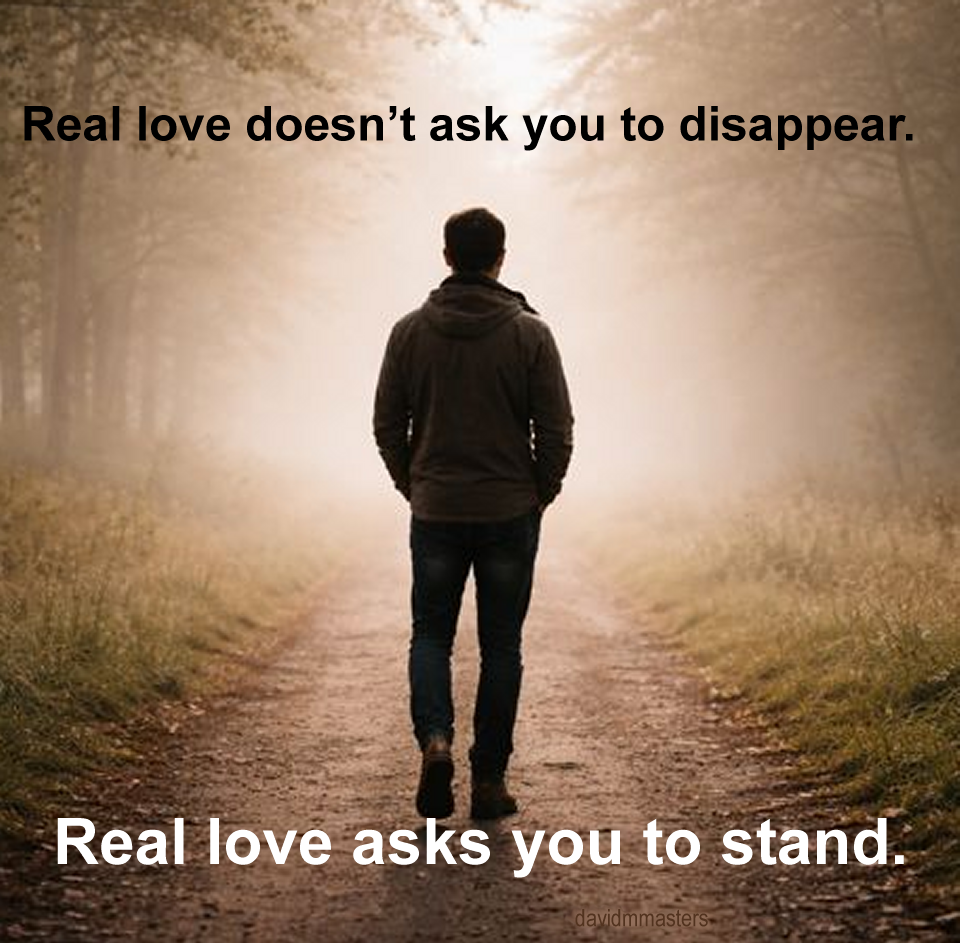
Love is not weakness, and it never was. What is weak is the version of love many of us were taught to perform, the kind that avoids truth, tolerates harm, and sacrifices self-respect just to keep the peace. That isn’t love. That’s fear, dressed up as virtue.

Why Love Is Often Mistaken for Weakness

For many people, love became confused with being agreeable. Staying quiet, enduring too much, giving endlessly, even when wisdom was already whispering, “This isn’t healthy anymore.” But love has never required self-erasure.

Real love doesn’t ask you to shrink, betray yourself, or abandon your values. It doesn’t demand silence while your spirit erodes. When love looks like disappearance, what’s actually happening is survival; not wisdom. And survival strategies, while understandable, are not the same thing as truth.

Real Love Is Strength Under Control

When you strip away the confusion, something important becomes clear: Love is not fragile. Love is strong. In fact, real love is strength under control.

It takes strength to tell the truth without attacking. Strength to hold a boundary without slamming a door, the strength to walk away without bitterness, and to stay without resentment.

Love doesn’t beg. Love doesn’t manipulate. Love does not guilt or coerce.

Love stands. And because it stands, it can feel threatening to systems built on fear, control, or compliance. That’s one reason love has so often been rebranded as weakness, because calling it weak makes it easier to dismiss, exploit, or override.

Love Requires Courage, Not Avoidance

Avoidance is easy. Numbing is easy. Shutting down is easy. Going along to get along is easy.

Love is not.

Love requires presence, and presence requires courage.

Every meaningful act of love asks something of us. It asks us to stay awake when it would be easier to check out. To remain open without being naive. To forgive without forgetting, and protect what matters without becoming hard.

There is nothing weak about that.

What Happens When Love Loses Its Strength

When love is misunderstood, people learn the wrong lessons.

They learn to:

      • Overgive until they are depleted
      • Confuse endurance with virtue
      • Call self-betrayal kindness
      • Call silence peace

Eventually, they burn out; not because they loved too much, but because they were never taught how to love wisely.

Love without strength collapses. Strength without love hardens. But love with strength? That’s where healing lives.

Love as a Stabilizing Force in a Chaotic World

Strong love doesn’t escalate. Strong love doesn’t need to win, and doesn’t require an audience.

Strong love listens without surrendering discernment. Strong love sees clearly without condemning, and acts deliberately rather than reactively.

This is why love changes rooms. Why it disarms aggression, restores dignity, and endures long after louder forces burn themselves out.

Not because love is soft, but because love is grounded.

What Loving with Strength Looks Like in Real Life

When love is rooted in strength, it shows up practically:

      • You can say no without guilt
      • You can disagree without contempt
      • You can care deeply without carrying what isn’t yours
      • You can leave without hatred
      • You can stay without losing yourself

You stop confusing being liked with being loving, and stop confusing being needed with being valued.

Your love develops a spine.

Why This Love Elevation Can’t Wait

The world doesn’t need weaker people trying harder to be nice. It needs grounded people who can love without fear. People who can hold truth and compassion in the same breath. People who don’t collapse under pressure, or harden under disappointment.

Love is not weakness. Love is not passivity or submission.

Love is clarity. Love is courage and strength—fully awake.

And when you live from that place, you don’t just change your relationships. You change the world around you.

That’s the kind of love this world has always needed.

The Entrepreneurial Spectrum: Why Some Make It, Some Dab, and Most Quietly Disappear

Because I am a business consultant, and because I’ve had some measurable success, I tend to attract people who want to “start something.” A business. A side hustle. A big idea. A freedom plan. And over the years, a pattern has become impossible to ignore. Entrepreneurial desire is not a yes-or-no condition. It is a spectrum—a wide one.

On one end, you have what I call the Entrepreneurial Rock Kicker.

This is the person who occasionally gets inspired. Maybe they hear a podcast. Maybe they watch a viral video. Maybe a friend “made it big” in six months with what sounds like little effort and no risk. The rock kicker picks up an idea, turns it over in their hand, imagines a new life… and then puts it back down when it feels heavy.

At the other extreme is the Compelled Entrepreneur.

This person is not dabbling. They are driven. Sometimes obsessed. They have a dream that won’t leave them alone. They are willing, perhaps uncomfortably so, to risk reputation, comfort, certainty, and even relationships to bring that vision to life. These are the people who don’t ask, “What if this fails?” They ask, “What happens if I don’t try?”

Between these two poles lives a crowded middle:

    • The paycheck refugee who just wants out from under a boss
    • The “motivated” person who is unwilling to make sacrifices
    • The idea-holder who wants grants, loans, or investors before proof
    • The opportunist who sees systems or people as something to exploit
    • And yes… the grifter, the con, and the short-term manipulator

But the most puzzling, and honestly, the most frustrating, group of all is the one that looks promising.

The Entrepreneurial Dabbler

The dabbler is the one who catches my attention.

They have enthusiasm. Real enthusiasm. They seek me out, talk about vision, say the right things; and I get excited. I lean in. I start thinking about strategy. I imagine what they could build. We begin a coaching relationship… and then reality quietly introduces itself.

What they were actually expecting was this:

    • A little money
    • A little effort
    • A little discomfort
    • And then… filthy rich

Yes, instant success stories exist. We’ve all heard them. They are incredibly inspirational. But what most people who hear these stories do not understand, is that the “instant” part is almost always a myth.

The reported story is usually the final chapter, not the first twelve drafts. The invisible years, relationships, failures, and expenses are edited out for dramatic effect. The myth inspires, but it also misleads.

If someone is unwilling to invest in the tools required to see a vision through, they are statistically unlikely to succeed. I see this constantly in the digital business world.

There are endless free tools now: free software, free platforms, free trials, and while those can be useful early on, I watch people refuse to pay for what actually moves the needle. They won’t pay the “rent,” and business, online or offline, always has rent.

Think about a brick-and-mortar store:

    • Rent is due before customers arrive
    • Utilities run whether sales happen or not
    • Employees must be paid before profits exist
    • Advertising costs money before visibility
    • Networking requires time, travel, and presence

People may drive past a storefront for a year before walking in with a wallet. Don’t expect the universe, or anyone else to believe in you, or truly support you and your dream or cause, if you are not fully invested. Paying the rent and maintenance is the lever that propels your momentum forward.

And every single day, businesses close not because the idea was bad, but because the owner could not or would not stay long enough for the momentum to build or the vision to mature.

Pre-Entrepreneurial Readiness Test

Answer honestly. Score yourself as you go.

Give yourself 1 point for each “yes.”

      1. Are you willing to invest money before you see results?
      2. Can you tolerate months of invisible effort?
      3. Will you continue even when no one is cheering?
      4. Are you open to being wrong, and adjusting fast?
      5. Can you delay gratification longer than your peers?
      6. Are you willing to look foolish in the early stages?
      7. Will you pay for tools you don’t yet fully understand?
      8. Can you keep showing up without external validation?
      9. Are you willing to outgrow people you care about?
      10. Would you pursue this even if it took five years?

Scoring Insight

      • 0–3 points: You like the idea of entrepreneurship more than the reality.
      • 4–6 points: You are curious, but underprepared.
      • 7–8 points: You have real potential if you mature your mindset.
      • 9–10 points: You are already an entrepreneur, results are a matter of time.

This is not judgment. It’s clarity.

Preparatory Actions to Increase Your Odds of Success

If you are serious, or want to become serious, here is where to start:

    1. Budget for belief
      Decide in advance what you will invest before results show up.
    2. Choose tools intentionally
      Don’t chase shiny software. Commit to a few essentials and master them.
    3. Build stamina, not hype
      Consistency beats excitement every time.
    4. Normalize discomfort
      Confusion, doubt, and slow traction are not signs of failure—they are signs of growth.
    5. Track effort, not just outcome
      Success lags effort. Measure what you can control.
    6. Pay the rent
      Mentorship, platforms, visibility, and systems all cost something. Accept it.
    7. Decide who you are becoming
      Businesses succeed when identities mature faster than circumstances.

Entrepreneurship is not for everyone, and that’s okay.

But if you are going to step into this arena, do it with eyes open and spine straight. Don’t dabble and call it destiny. Don’t flirt with commitment and blame the world when it doesn’t reward you.

If you are called, truly called, you will find a way.

And if you’re not yet called, the most powerful move you can make is to tell yourself the truth… before the market does it for you. That honesty alone can save you years, or prepare you for a lifetime of meaningful work.