Love is all there really is

Life offers us so many distractions from all that is beautiful, all that is kind, all that is magnificent and perfect in every way.

It starts at the very earliest of ages, trying to fit all the various activities into the 24 hours we all have in a day, and it appears things just pop-up out of nowhere – just to knock you off balance – throwing your life a little off track.

There’s the rushing, here to there, in an attempt to take care of business as we pursue life in the fast lane… Or for those of us in the slow lane, we might be lying on the grass on a clear summer night, looking up at the stars, only to find that you can barely see the stars for all the stuff flying and floating around in the sky.

On the way to your destination, billboards, transit signage and a myriad of other distractions are all interrupting your thoughts in an attempt to distract, encourage you to buy or modify your thoughts.

This pace continues until later in life and to some degree until we take our last breath. In those final moments you realize that all that really mattered was how you loved.

How did you express your love to others?

When did you feel the most loved?

When my grandmother was transitioning from this life, she was in a hospital bed, unresponsive… but you could feel the love in the room. She laid there, heart beating, until after her son arrived from San Diego. After he arrived and shared his final moments with her, surrounded by her family, she quietly left the room; in love.

At the time, I was busy starting my own family and had not spent very much time with my grandmother in her final years; but I was confident that she loved me and knew that I loved her deeply, regardless of the separation. Although in that moment I decided to initiate the intention to expend more effort in communicating my love to others.

Love is the basis of all my relationships, personal and professional. And when life tries to throw me a whammy, I try to switch perspectives around until I can see it through the eyes of love (which can take some time to adjust).

Do I get surprised, distracted, upset or angry? Yes. Then I start doing the work of looking for the love.

Has the openness of love left me vulnerable? Have I been hurt? Yes and yes. Then I look for the love, the love (or lack of love) in the participants, the people (and pets) who love me and I find love’s repose.

Love is all there really is everything else is an illusion

Love is all there really is; everything else is an illusion

In my final moments, I know I will be reviewing the love in my life. I will have loved deeply which has led to some pain; the glorious massive discomfort that comes with separation from something so meaningful. Some call it a broken heart and in some moments, my heart was crushed and bleeding out, as I embraced the fullness of the loss of love or a loved one. And it was good. Good in the sense that it validated the love enormously.

Expressed love is vulnerable, sometimes it hurts and sometimes it is the sweetest feeling you can ever have.

You could build a wall around your heart – many have – in an attempt to safeguard yourself from being victimized. Or, you could love like there’s no tomorrow.

You could start today.

What about yesterday?

The love life that you live from this point forward washes over all the unexpressed love in your past. Yesterday’s gone.

Love is alive and spreading like a sacred virus throughout our bodies, emitting a love energy that influences everything around us.

And in all things, if you look for the love, you will find it.

Today is love – expressed loving – without regret.

Acts of Kindness Super Heroes

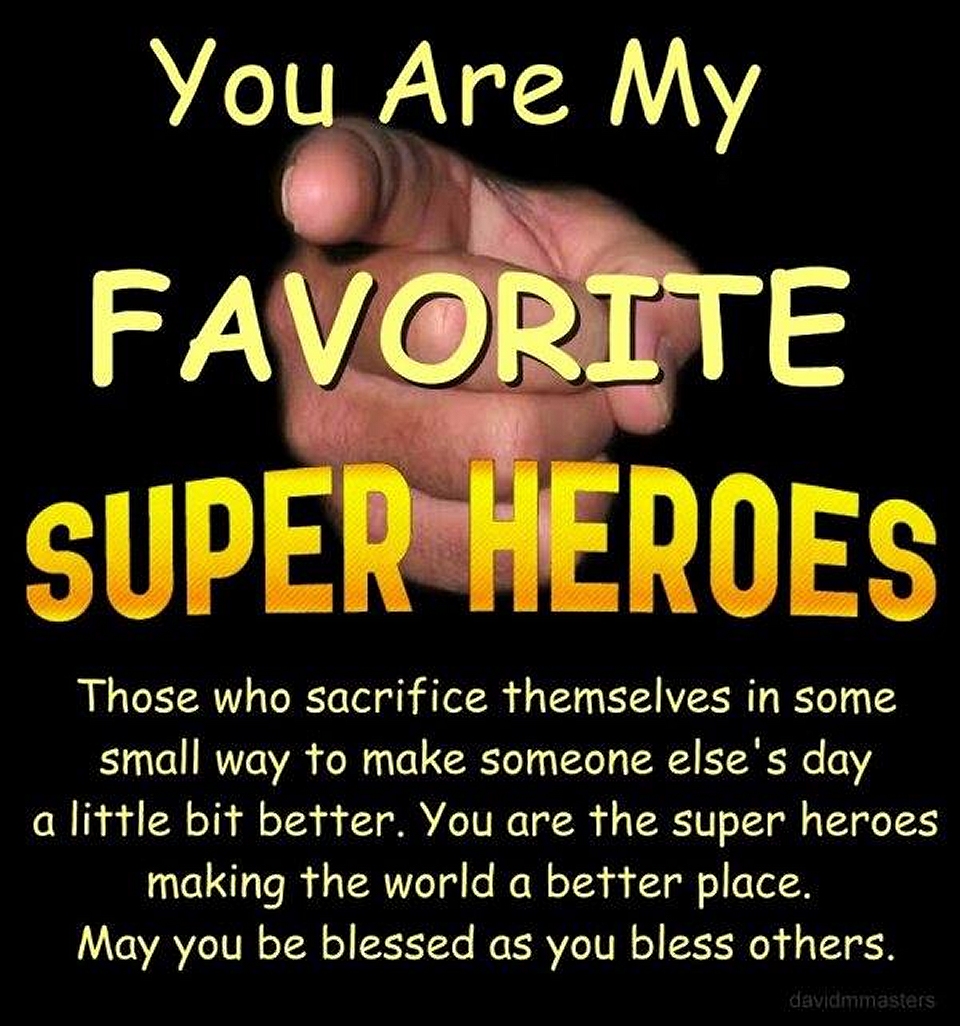
You are my favorite super heroes

I am so blessed and grateful to work with and know some of the greatest superheroes of all time. I’m not talking about cartoon representations of fanciful imaginings of nerds-hit-by-gamma-rays who turn into muscle-laden, secret crime-fighting men and women in tights. No, I’m talking about real people, like you and me, with extraordinary skills and abilities who make the world a better place as a part of their life’s work every day.

We all have special skills and abilities that if we honor and embrace them we can share these abilities with the community and/or the world. This is the givingness that we are endowed with at birth; it is where my work centers as I assist others along their journey.

But of even greater impact are those who make a point to do good n the behalf of unsuspecting others who touch my heart. They are the compassionate foot soldiers who express love in the simplest of ways.

I’m as guilty as anyone – in my high-paced, always on-the-go life – of feeling like I don’t have the time or space available to reach out and offer a simple act of kindness. Yet, while running-from-here-to-there, I often witness someone else – tending and equally frantic pace – take a moment to show someone else kindness.

In that moment I question myself, my priorities, the kind of person I’ve become. I mean, I’m polite, courteous, gentlemanly, supportive, and smile a lot, so in that respect at least I am not swinging the pendulum of kindness in the wrong direction, but the ones who take that little extra effort to reach out to another; those are my heroes.

And I see these super heroes every day; doing that little extra somethin-somethin’ that can turnaround someone’s day.

You are my favorite super heroes

Just in the last week, I witnessed superheroes egage in unsolicited acts of kindness, like buying a lottery ticket for a stranger, putting change in someone else’s parking meter, buying a coffee for the man behind him in line, pulling over to help a man replace a flat tire, tip someone else’s waitress (who was waiting on someone else that left disgruntled and refused to leave a tip due to poor service), just to name a few that come to mind.

And these acts are carried out by the unsung super heroes who go about their lives, never expecting anything in return.

While I spend my days hanging out with high-profile superheroes, I’m beginning to notice that I could do better.

That’s why my favorite super heroes are the ones who sacrifice, in some small way to make someone else’s day a little bit better.

I would be honored and blessed to join their ranks and I am committing to count myself amongst those superhuman lovers who bestow kindness when least expected.

If you are one of my favorite super heroes, or if you have been the recipient of a simple act of kindness, please leave a comment for inspiration for others who desire to help make the world a better place one act of kindness at a time.

You are the super heroes making the world a better place.

May you be blessed as you bless others.

Beware Individuality Psychosis

In my work I gravitate toward highly individualized, upwardly mobile, creators, inventors and businesspeople; kings and queens of unique perspective and thought, movers and shakers. They are less likely to ever be considered part of the status quo. Serving and supporting these people is part of my life’s work.

Is Free Thought Under Siege?

In my work, I gravitate toward highly individualized, upwardly mobile creators, inventors, and businesspeople—the kings and queens of unique perspective and thought. These movers and shakers are rarely, if ever, part of the status quo. Serving and supporting such extraordinary individuals is part of my life’s purpose.

I believe I attract this kind of clientele because I, too, am a free thinker. I spend the majority of my mental energy exploring ideas outside the box. While many of my clients benefit from a support team of traditional, rational thinkers, I find that masterminding with other creative individuals brings exponential advantages.

But amidst this vibrant world of creativity and innovation, a troubling undercurrent is sweeping across America—a subversive movement that doesn’t celebrate such “outrageous” thinking. Instead, it seeks to diagnose, label, and medicate it into submission.

The Rise of Diagnosing Difference

It begins, as these things often do, with the children. The DSM-IV—the so-called “bible” of the mental health industry—has been a cornerstone in diagnosing mental illnesses. Thanks to modern scientific research and sociological control methodologies, the number of diagnosable conditions has tripled in just 50 years.

These advancements allow mental health professionals to quickly and efficiently label and medicate even the most challenging children into compliance. But this trend isn’t limited to kids. These same methodologies are creeping into other institutions, such as prisons and eldercare facilities, ensuring submission and control en masse.

And you—yes, YOU—could be next.

Beware Individuality Psychosis DSM IV mental illness disease question authorityThe Threat of Individuality Psychosis

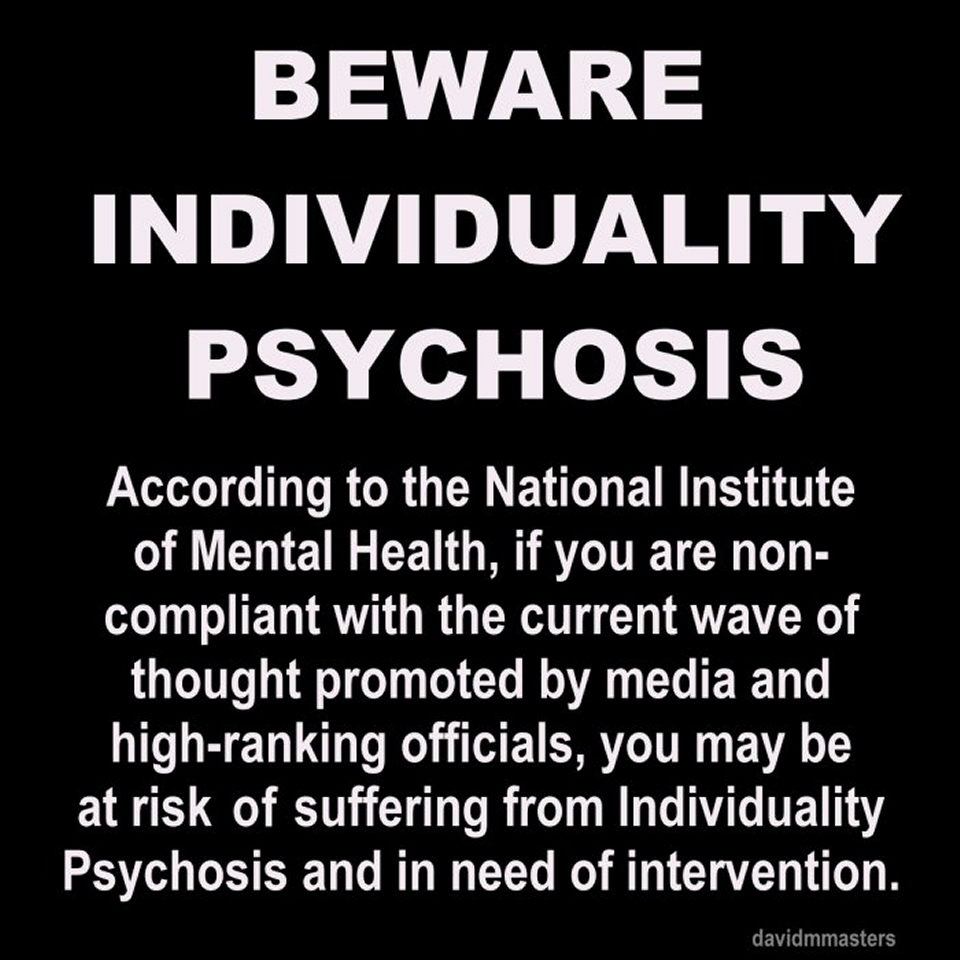
According to the National Institute of Mental Health, if you are non-compliant with the current wave of thought promoted by media and high-ranking officials, you may be at risk of suffering from Individuality Psychosis and in need of intervention.

Be warned: if you display anti-social behaviors such as above-average creativity, skepticism, or questioning authority, you could be labeled as mentally ill. While mandatory interventions aren’t the norm just yet, such measures may be closer than we think.

In fact, this trend is already infiltrating boardrooms and political arenas. It’s becoming fashionable, even prestigious, to carry a diagnosis of a high-functioning mental illness while adhering to designer prescription regimens. In some circles, being medicated is seen as an asset—a mark of ambition and success.

All the while, the creative spark that built this country is being dulled and, in some cases, completely extinguished.

Herding the Masses

I understand the immense challenge of maintaining order among a rapidly growing global population. Since I began my work of helping others achieve their highest potential, the population of Earth has doubled. But must we resort to drugging and managing people like prisoners—or cattle?

Schools, prisons, mental hospitals, and nursing homes all share a similar institutional philosophy: it’s easier to manage a compliant collective than to contend with a group of vibrant individuals. Yet imagining a future where our children are herded and managed as though they are wards of the state in a psychiatric hospital makes my skin crawl.

And it doesn’t stop with children. The next step is targeting parents, operating under the assumption that individuality and non-compliance are hereditary diseases.

Non-Compliance: A Mental Illness?

Is non-compliance truly a mental illness? We live in a nation founded by freedom-seeking rebels who dared to defy authority. Are we now at risk of losing that spirit of independence to a system that punishes free thought?

What comes next? Thought police? And who gets to decide which behaviors are acceptable and which aren’t?

The Call to Defend Creativity and Freedom

The creative, rebellious spirit is what built this country—and it’s what keeps humanity evolving. The question we must ask ourselves is this: will we allow that spirit to be stifled in the name of compliance, or will we stand firm in defending individuality and free thought?

What do you think? Are we truly progressing, or are we losing something vital in the process?

What do you think?


Girl Scouts Operation Cookie Drop Supporting the Troops

Every time I see Girl Scouts posted up to sell their Girl Scout cookies, I like to cut my calories in half. For every box that I buy for myself, I donate a box to Operation Cookie Drop.

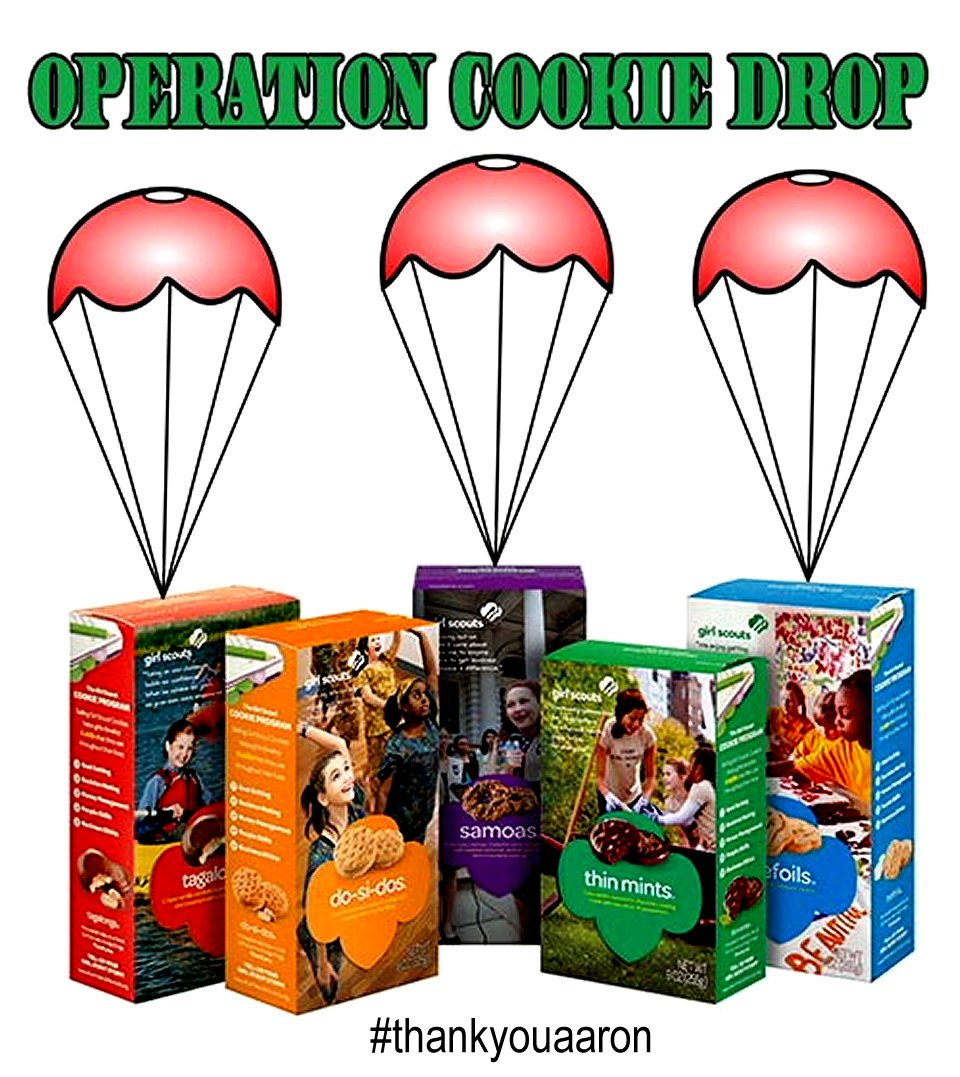
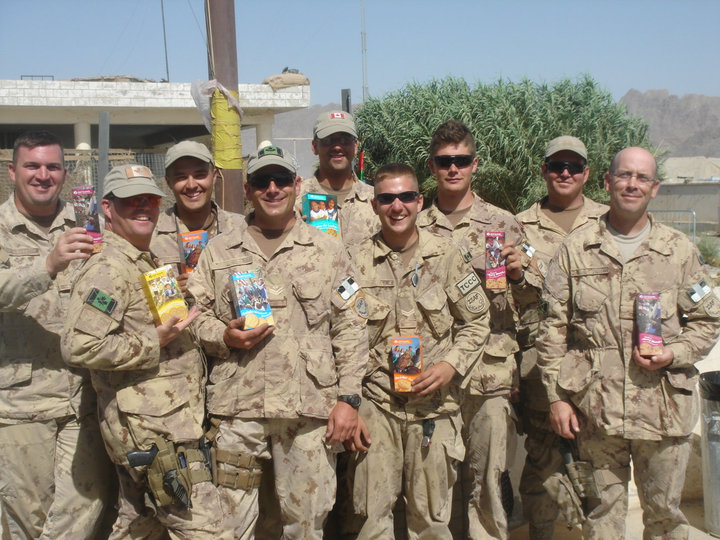
Operation Cookie Drop is a program whereby you can buy a box of cookies that is sent to troops overseas.

operation cookie drop girl scouts cookies jaycie wakefield thankyouaaron

Jaycie Wakefield works with the Girl Scouts of America. She is proud to participate and promote Operation Cookie Drop because she knows how important it is for military personnel, far away from home, to receive a little somethin-somethin’ from home.

Her brother, Aaron told stories about little kindnesses received along the way, were so appreciated. Of course there were care packages sent from home and support from the USO along the way, but all in service so much appreciated the things that showed up as an unexpected display of gratitude.

For instance, if a church sent a care package, Aaron’s share might only include 5 cookies, a candy bar and a lollipop, but it meant so much and was so appreciated, to know that someone out there cared. The little things are so meaningful, when you’re isolated, involved in activities that most people would not volunteer for.

Yesterday, I was walking into the Safeway, and I was greeted by a group of Girl Scouts selling cookies. I told them, I would stop by on the way out to buy cookies. After shopping, I stopped by and asked the girls if they knew about Operation Cookie Drop? They had no idea what I was talking about.

After I explained the program to them, I helped them set up a box and make a little sign for Operation Cookie Drop, and I seeded the box with 5 boxes of cookies.

Now, when people walk by those girls, they will have the option to send a little somethin-somethin’ to the troops, whether they buy cookies for themselves, or not.

Jaycie’s brother was 20 years old in 2009 when he came back from Afghanistan, his flight landed in Dover, instead of sitting in a seat, he traveled in a flag-draped box.

Knowing that the little expressions of gratitude meant so much to Aaron, Jaycie enthusiastically supports Operation Cookie Drop.

To tell you the truth, I’m a little cookied-out, but I will always stop to send a few boxes to Aaron’s distant brothers-in-arms knowing that the smallest gesture can make a difference in someone’s day.

I have a sincere compassion for all who answer the call and serve on the behalf of the rest of us, risking all. I honor each and every person in service, those that have served and those, like Aaron, who have paid the ultimate price.

operation cookie drop 2

I am so proud of my daughter, Jaycie, who continues to help make the world a better place in so many ways, including her work with the Girls Scouts.

Maybe next time, when you encounter Girl Scouts selling cookies, you’ll think about sending a box of cookies to the troops in tribute to Aaron and all others have given all, to make someone – who is still giving – appreciate being appreciated, making their day just a little brighter.

And remember, it doesn’t take much (and there are so many ways that you could show a little kindness – not just via Operation Cookie Drop). Continue to support these individuals in service, regardless of your personal beliefs because they are standing in the gap for us. A little something means so much.

God bless you for blessing them.

#thankyouaaron

Listen: Help Someone in Personal Crisis

I’ve been in the people-helping business for a long time. Although the focus of my ministry (that’s how I refer to my work, so get over it) is not helping those in crisis, it is not uncommon for a regular client to come to a place where their life intersects with a crisis scenario.

This is one reason why I am thirsty for new modalities and methods of helping people dealing with unforeseen circumstance. Having these tools in my collection can help keep the client from being derailed and thrown off-track from their progress or goals (though it is not my specialty, so if the crisis is significant, it may be time for a time-out and referral to someone who specializes in this type of challenge).

All of us have the opportunity to help someone within our social inner circle – people we know or are well-acquainted with – who need a helping hand when encountering a life crisis.

In our attempt to help someone in crisis, are we more apt to help or harm?

Therapists, counselors and clergy all hold, “help and do no harm,” as the basis of their approach when helping others; as do the rest of us. Of course, in our attempt to help someone along their life’s journey, we would hope that our assistance would be more helpful that harmful.

When people are in crisis, they are in an altered state of mind. It is easy for us to forget this when we see someone that we care about – a friend, co-worker, relative or client – suffering when dealing with an unforeseen crisis.

Your first response to anyone in this altered state of mind is critical.

For example, let’s say your best friend from high school just happens to be in town on business, has been recently diagnosed with cancer and has been given three months to live. He or she wants to meet with you for lunch to talk.

You think, “This is great,” I know so many people who have been diagnosed with cancer and kicked it, naturally, I can’t wait to share all this information with my friend. You go about collecting all the data (personal testimonials, googled information, scriptures and sample nutrients) you can find, throw them into a wheelbarrow and rush over to help your friend kick their cancer to the curb. Hooray!

Wrong

When someone has just recently engaged with significant tragedy or bad news, their tendency is to sink into a somewhat depressed and/or angry state.

Your first interaction with them will either open them up to your assistance, or shut you out.

Being too aggressively helpful when someone is in psychological pain will result in them not being able to hear you. Unless they are asking you for ideas (and even so, please proceed with some restraint) their most important need is to be able to get rid of some of the frustration that they feel inside.

What they really need is someone to listen

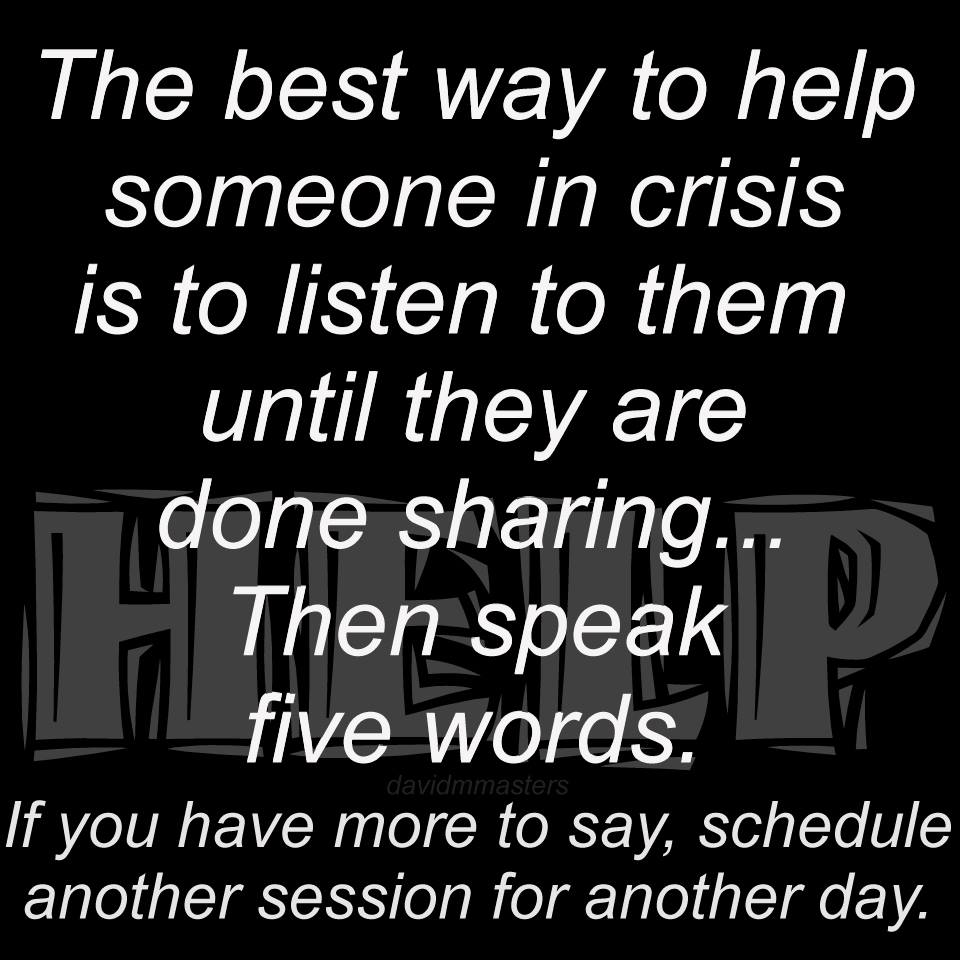
In most cases to help someone in the best way possible is to just listen to what they have to say.

Establish trust by promising them confidentiality in regards to anything they might say – and be true to your word. Anything that they say doesn’t leave this room.

Let them use whatever terms or phrases that they feel like using, without judgment or interjection. Allowing them to vent freely without restriction is the best help you can offer in an initial sitting with someone in crisis.

Simply nod, actively listening, agree and/or encourage them to continue while they are letting it all out.

Then, when they have said all they have to say… pick your best five words to say – no more – and make an appointment to meet them to talk again.

The best way to help someone in crisis is to listen to them until they are done sharing

In doing so, you have established – with this person who is currently in a weakened state of mind – you care. If they are agreeing to meet with you again, then you can slowly and gently, offer advice (suggestions, not demands) and interact with them more, being careful not to appear non-compassionate, intolerant, have a lack of understanding or result in their alienating you.

If you truly want to help, consider, “being there,” for the people that you care about with compassion.

Show them you care by letting them share.

4 Steps to Specialize On Purpose

Your highest and best specialize on purpose determine define specialize

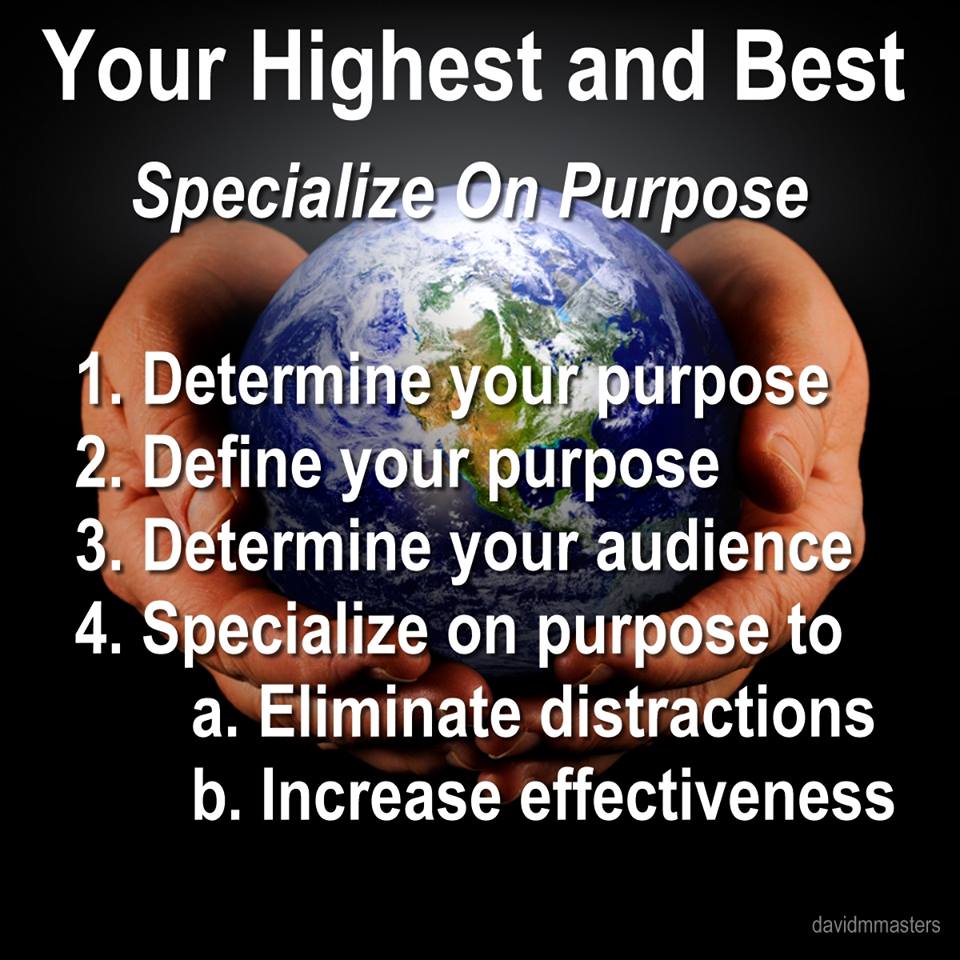
When you come to this planet with a specific purpose or calling, it is important to:

  1. Determine your purpose, calling and/or message

In my working with individuals, most of them feel a strong disconnect with their higher purpose, calling and/or message to share with the community at large. When you arrive on planet earth, you are keenly aware of your special attributes/purpose, but by the time you’ve reached the age of seven, you’ve been re-programmed to make you a more logical person, less likely to embrace the thought of fanciful ideals. You are taught to believe that to be a more productive participant in our society you must dumb yourself down (though we refer to it as smartening up) and accept that your school grades and playing well with others will secure you a good enough job to get by.

There are many methods that I use to help someone re-discover their purpose. In my practice, the most effective is thinking back to your earliest recollection of what someone wanted to do or be, then weighing that against what types of people and circumstances have been attracted to you throughout your life. In many cases, the results of this collection of data will help you remember your mission.

  1. Define by reducing to qualifying statements

Create a list of statements that help you to define your purpose, mission and/or message in this life. This can be as long a list as you like. I have a long list and a short list of statements that qualify who I am, like:

  1. I have a desire to help make the world a better place
  2. I help others achieve their highest and best
  3. I work with people who are upwardly mobile (on the upswing)
  4. I work with people who take responsibility and action
  5. I allow others to compensate me for my efforts
  6. Love is the most important thing

This short list of six items (it’s actually five items with a Love trump card) helps me to quickly pre-qualify the people that I work with.

Everyone’s calling and short-list is different. You have to determine what works best for you. Once you have your list, it will help you…

  1. Determine your audience

Who are the people whom you were sent here to interface with the most? You are only one person, you are limited to time and space, so defining your audience will help you keep on-track.

This could also be your target market. Your life’s data collection will help you determine who to keep an eye out for so that you can quickly identify them. I start with reducing my clientele into a single individual representation of the group.

What’s he look like? How old is he? What does he like to do in his free-time? What is his relationship status? Etc… Then I give him a name, like Tom. Though Tom can take many forms, knowing who he is will help me quickly identify him, maximizing my time and space.

  1. Commit to, “specialize on purpose”

Specializing on purpose refers to staying true to your cause. Frances Hesselbein tells Jerry Porras, there is “a powerful synergy when you combine service to others with passion for your own mission, your own work.”

Society has tried to keep you from exercising your gifts, abilities and delivering your message. Now that you are back on track for the greater good, other forces may try to dissuade you from staying in resonance with your truer self or accomplishing your mission.

Using your list can help you to laser-focus on your mission and the people that you were meant to serve, helping you to

a. Eliminate distractions

Inevitably you will be interrupted by people, circumstances, projects and ideas that will break your concentration and commitment to achieve your highest and best in the most efficient manner.

b. Increase effectiveness

Maximize your efforts by being able to quickly determine, “This is a distraction,” or, “This is not my ministry,” (my favorite). Which allows me to be able to defer the distraction to someone whose life’s calling is to specialize in that area of expertise.

How to Find Your Life Purpose

Just some ideas in the event that you feel compelled to achieve your highest and best and dare to do so.

-Love, love, love


Everything is Connected and Perfect?

While traversing the path we choose along our life’s journey, it’s easy to get surprised, distracted, frightened or angry when obstacles arise, seemingly out of nowhere.

It happens to us all, and we can choose to experience the negative impact of suddenly facing a situation or circumstance that we could not have possibly anticipated.

I like to start by considering what all things have in common. That everything that we can access via our five senses is composed of the same elements, of a similar origin.

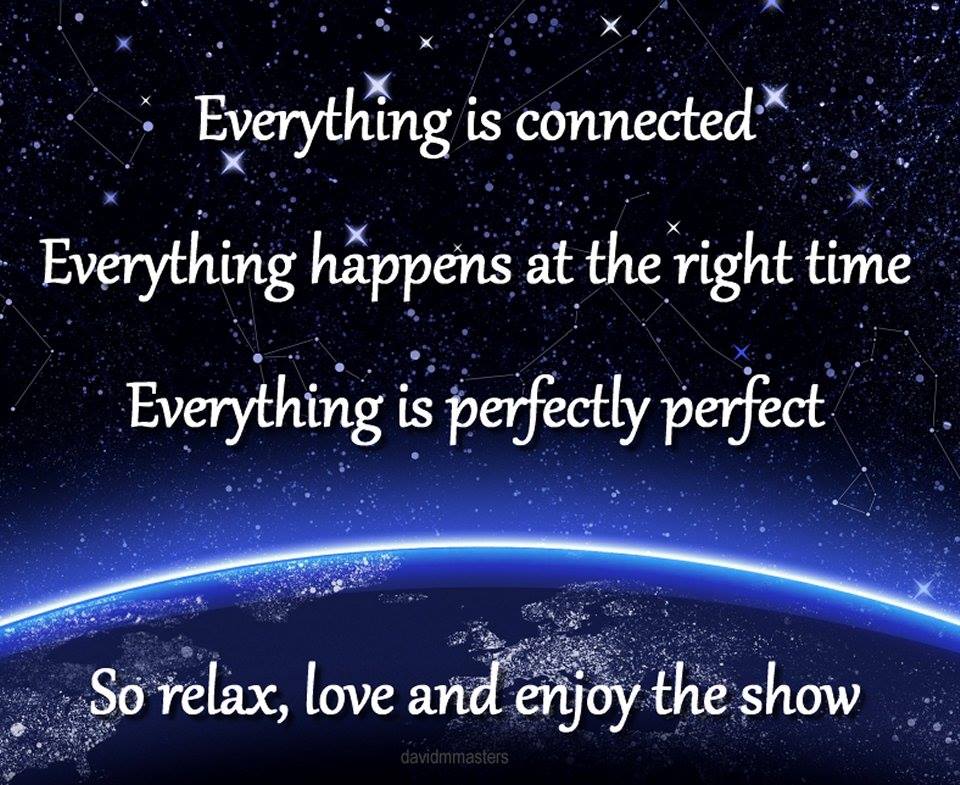
Everything is connected everything happens at the right time everything is perfectly perfect

Everything is connected

If the earth is basically a closed system, the atomic and molecular components (basically) are formed and reformed into anything and everything that we can see, touch, taste, smell and/or hear. Sharing the same molecules (though assembled differently) makes the pebble on the beach my shirt-tailed cousin.

In this way, I am related to everything in, on and around our planet (and even the universe). My relationship with the individual components (or assembly of molecules) varies. My relationship with the pen I hold in my hand and my son are quite different, yet it is all connected. In fact, the conscious force that bonds all molecules and maintains their particular assembly permeates everything – living or not – all things seen and unseen; everything.

Everything happens at the right time

Most will agree that timing is extremely important in our relative experience, here on this planet. Babies are born at just the right time, a cake is best when baked at the right temperature for the right number of minutes, etc… Being able to agree on the mutual measuring of time and calibrating each one to the other, helps us to maximize our interactions while we are here.

So, here we are living out our lives, getting up on time, eating on time, traveling to and from work on time, showing up at theaters on time, going to sleep on time, like we’re all part of this planet’s clockwork.

Then something unexpected interrupts our timeline experience. An accident, loss of something or someone, an act of God…

How can everything happen at the right time? Even the bad stuff?

Yes; there are no mistakes.

What, then, is the purpose of seemingly bad things that happen at unexpected times?

Everything is perfectly perfect

I know at first thought, this might be difficult to wrap your head around, but hang in there with me and consider this:

Everything happens for a reason, at the perfect time, for the perfect outcome, every time; period.

Granted, we are surprised when some things occur that we had not previously anticipated and may be associated with a painful – or enjoyable – experience at the time of occurrence. Even so, everything is always getting better.

You know this is true by reviewing your own experience(s) along your life’s journey thus far.

Invariably, in my life, when I’ve experienced some tragic moments in my life… it always led to something different – and in most cases – something better! I couldn’t see it at the time, but there it was, something far better waiting just around the corner.

Something so much different, that had I continued uninterrupted on the path I was traveling at the time, I would never have been able to intersect with it. It would have been impossible.

Now, when something unexpected happens (after the initial shock) I try to pull myself together and very early on, these days, I begin looking around for the amazing thing that will come from this.

This gives me the wherewithal to embrace a greater sense of peace, to

Relax, love and enjoy the show.

Everything is connected, everything happens at the right time, everything is perfectly perfect; so relax, love and enjoy the show.

Think about it

What Can I Do for You?

You are such a blessing to others, offering love, support, and assistance you greet others with, “What can I do for you?”

You are such a blessing to others offering love support and assistanceThere are those of us who come to this planet with a servant’s heart. That is to say that we thrive when serving others. I am a person whose optimal performance shines when assisting someone to achieve their highest and best. In my work, little is more exciting than being in the room when someone achieves a breakthrough or epiphany.

Many occupations in our society are performed by those who perform at their best, using all their skills for the betterment of others. You find these mild-mannered super heroes in jobs like child carechurch workclergycoachingconsultingcounselorsemergency response personnelfirefightersmilitary servicemissionariesnursing and health caresocial workers and volunteers, etc.

The persons who are born with a servant’s heart are willing to put aside their own personal wants, needs, and desires so that others can survive or thrive. You will find many of them serving in a full-time capacity and volunteering their free time to help even more.

I am quite impressed that a firefighter chooses an occupation that requires them to run into a burning building to help whomever might need their assistance getting out—and they love it—this is their calling. Now, I might run into a burning building to save someone, but I would not want to have to work a job that required me to do that all day long.

Fortunately, there are those whose hearts and skills are more attuned to service work, relishing and performing tasks for the greater good. Although someone who tends to be a giver, they can be quickly taken advantage of, and these people can’t give to everyone all the time without risking their ability to perform their practice.

It is in our best interest to monitor these high-functioning service workers to see if they appear to be giving too much. Are they depleting their personal resources? Are they being manipulated by abusers or users who will drain (or monopolize) their resources? Are they sacrificing their own needs too much (rest, eating right, health maintenance, time with their own family, etc.…)?

Let’s keep a watchful eye out for those who might have a tendency to sacrifice all and help them notice that it’s okay to take some time out for themselves, to take a break, to eat a good meal, to spend time with loved ones, to take a vacation, a spa day—do something fun once in a while. Because oftentimes, the best givers maintain such a high level of giving that they fail to take a moment to look at their own lives.

These mostly unsung superheroes receive expressions of gratitude and sometimes recognition or praise for their courageous acts of service. Still, there is nothing more meaningful to someone who gives and gives… than hearing those few words that they often speak when arriving on the scene or meeting someone:

What can I do for you?

To those givers – who are giving your all – for the greater good, I honor your service.

And don’t be offended when someone tries to get you to take a look at your own life, encouraging you to take some time to recharge and rejuvenate so that you are better for continued service without the threat of burnout (or worse).

Where would we be without you?

Keep an open mind and cherish those who support you in kind.

Loving you and all that you do

What Kind of Cat Are You?

The Success CATechism

Enjoy 9 lives of fun-filled happiness, health, financial freedom, and loving feline-ness by embracing your inner-cat.
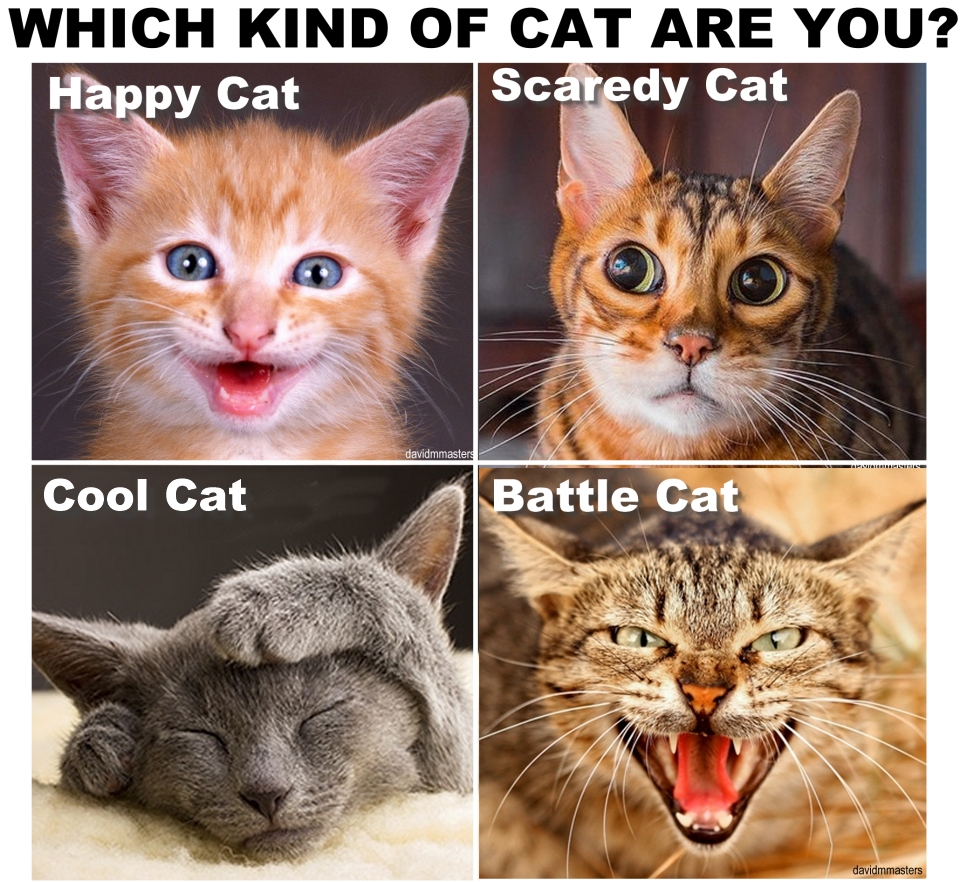
Which kind of cat are you cat personalities purr sonality

Connect with your purr-fect message, mission, and purpose to maximize your cat-tribution to the world.

Find out what kind of cat you Are

Take Cat Purr-sonality Profile Test

Here’s a simple personality quiz using the cat personality types. Each question has four possible answers, corresponding to one of the cat purr-sonality types. After answering, you can tally the results to determine the dominant personality type.

1. How do you usually spend your free time?

A) Socializing and having fun with friends or family (Happy Cat)
B) Analyzing situations or working on personal projects alone (Scaredy Cat)
C) Relaxing at home or reading a good book (Cool Cat)
D) Taking charge and planning your next big goal (Battle Cat)

2. What do you do when you encounter a problem?

A) Look for creative and fun ways to solve it (Happy Cat)
B) Think deeply and try to figure out all the details (Scaredy Cat)
C) Stay calm and try to avoid conflict while solving it (Cool Cat)
D) Take action immediately and fix it your way (Battle Cat)

3. How do you feel in a crowd of people?

A) Energized and excited, you love being around people (Happy Cat)
B) Uncomfortable and prefer smaller, familiar groups (Scaredy Cat)
C) Calm but prefer to observe rather than interact (Cool Cat)
D) Motivated to lead and organize the group (Battle Cat)

4. How would your friends describe you?

A) Outgoing and the life of the party (Happy Cat)
B) Thoughtful and a bit reserved (Scaredy Cat)
C) Laid-back and easygoing (Cool Cat)
D) Ambitious and a natural leader (Battle Cat)

5. When faced with a new project or task, how do you react?

A) Jump in with enthusiasm and creativity (Happy Cat)
B) Overthink it, wanting to perfect every detail (Scaredy Cat)
C) Take a relaxed approach and work at your own pace (Cool Cat)
D) Take charge and direct others to get it done efficiently (Battle Cat)

6. How do you handle stress?


A) Distract yourself with fun activities or friends (Happy Cat)
B) Worry and overanalyze everything (Scaredy Cat)
C) Retreat to a quiet place to relax (Cool Cat)
D) Face it head-on and take control of the situation (Battle Cat)

Scoring Method:

  • Tally the number of answers corresponding to each cat type:
    • A = Happy Cat
    • B = Scaredy Cat
    • C = Cool Cat
    • D = Battle Cat

The cat type with the most answers is your dominant personality type. If you have a tie between two or more types, it suggests you may be a cross-breed of those cat types.

Are you a
happy catHappy Cat

The happy cat is also known as the life of the party cat. Happy cats are gregarious, fun-loving, and interactive, likely lifting the spirits of and encouraging other cats to lighten up and not take cat life so seriously. They are extroverts, talkers, and optimists. These charismatic cats are highly creative, out-of-the-box thinkers who can adapt to any environmental setting, finding it easy to blend in. They are less likely to finish what they started, as they don’t like to be burdened with mundane or enjoyable details.

Happy cats are naturally expressive emotionally and non-assertive talkers and storytellers. They have a good sense of humor, a memory for color, and are enthusiastic.

On the happy cat’s dark side, they talk compulsively, are likely to interrupt, and are prone to exaggeration and elaboration. They are obsessed with trivia, can’t remember names, and can be intimidating (their enthusiasm and boldness can frighten some people).

Happy cats make good performers, promoters, composers, salespeople, actors, speakers, masters of ceremonies, politicians, and clergy. They can also make good healthcare workers with their excellent bedside manner.

Some well-known happy cats include Robin Williams, Elvis Presley, Elizabeth Taylor, “Magic” Johnson, Madonna, Ernest Hemingway, Mel Brooks, Barbra Streisand, Clint Eastwood and Michael Jordan.
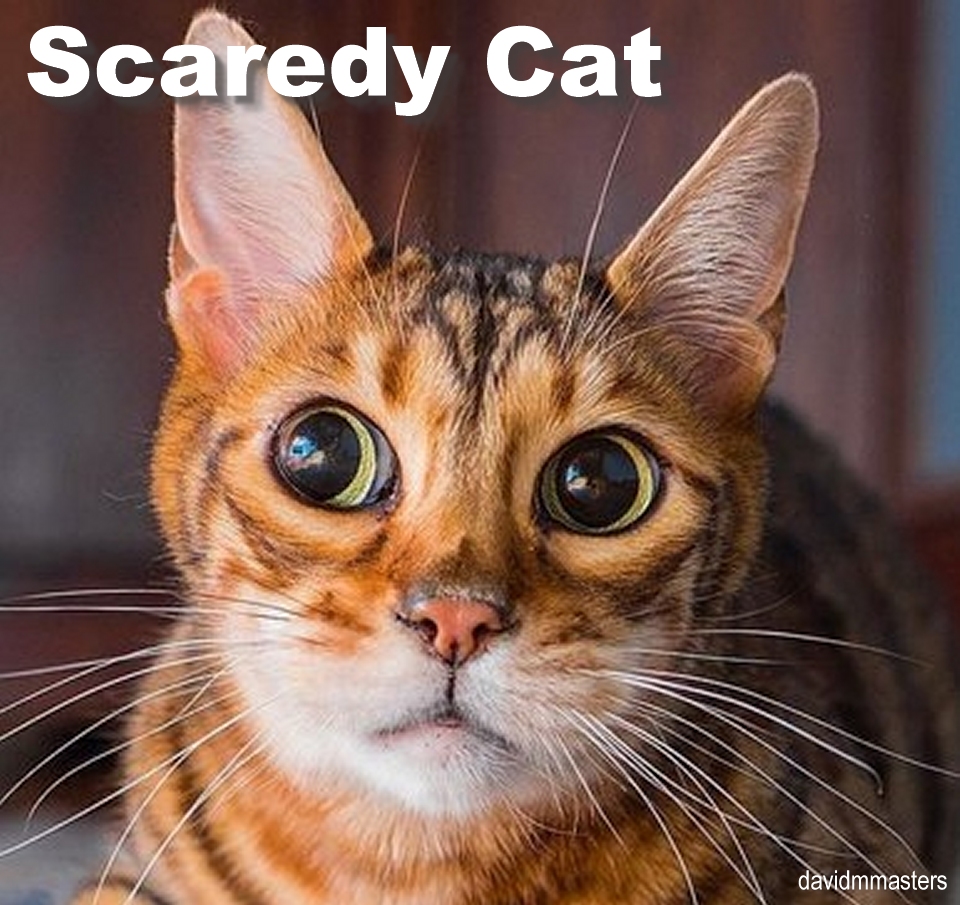
scaredy catScaredy Cat

While the scaredy cat might appear to be more introverted or timid (don’t let their timid exterior fool you; underneath is a fierce and courageous defender and protector) than other cats, this cat is likely to put the needs of other cats above their own, willing to sacrifice their own needs, wants or desires, for a sense of doing the right thing for the right reason to the benefit of someone else or the community at large. The scaredy cat is pessimistic, thinks a lot, is prone to suspicion, is very analytical, often attempts to reduce shades of gray into black and white, and can be somewhat of a perfectionist.

They are deep, thoughtful, genius, talented, creative, artistic, musically inclined, philosophical, and poetic. They appreciate beauty and acknowledge the positive attributes of others.

Scaredy cats make great artists, musicians, philosophers, educators, scientists, engineers, inspectors, and theologians. Due to their attention to detail, scaredy cats are proficient (trade and artistic) craftspeople.

Their dark side includes remembering the negatives, moody, and depressed. They enjoy being hurt, possess false humility, and low self-image.

Not very adept at communicating emotionally with other cats and non-assertive

You will find scardy cats in professions such as artists, musicians, inventors, philosophers, doctors, and nurses.

Some well-known scaredy cats include Marilyn Monroe, Michael J. Fox, John Travolta, Ernest Hemingway, Vincent Van Gogh, Beethoven, Warren Buffet, J. P. Morgan, Princess Diana and Mother Teresa.
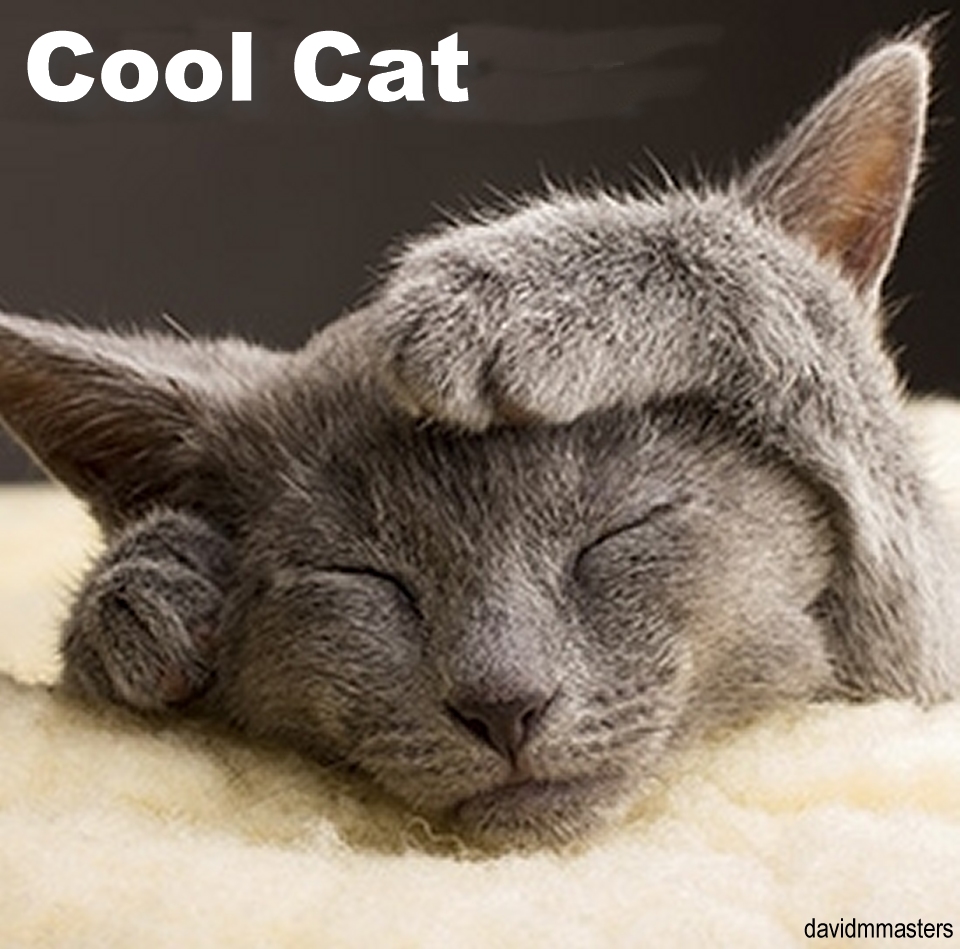
cool catCool Cat

Cool cats are mild-mannered, introspective felines that are the helpers that take up the caregiving and nurturing of the larger population of cats. They are the respected leaders of the gentler persuasion who enjoy their private time at home and are prolific researchers and readers. While maintaining various interests, cool cats are experts in relaxation techniques and form long-lasting relationships with other cats. Excellent at “duck and cover.”

Cool cats are introverts, observers, and pessimists. Low-key personalities, easy-going and relaxed, calm, cool, and collected. They are ordinarily well-balanced, have a consistent life, quiet but witty,

Cool cats are well suited for careers in counseling, healing arts, institutional administration, accountant, statistician, teachers, technicians, civil service, diplomats, military and local government. Cool cats are good educators for primary education and high school and college educators.

Cool cats are naturally expressive emotionally when pushed or under pressure and more apt to be assertive. On their dark side, they are unenthusiastic, fearful and worried, indecisive, avoid responsibility, selfish, too shy, and too compromising.

Some well-known cool cats include Keanu Reeves, Audrey Hepburn, J.K. Rowling, Johnny Depp, Issac Asimov, Ayn Rand, Walt Disney, Bill Gates, Steve Wozniak and Nikola Tesla.
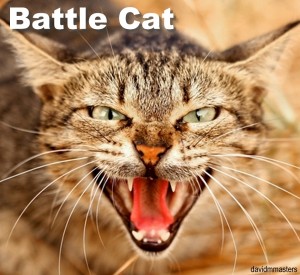
battle catBattle Cat

The battle cat is most comfortable running the show. The battle cat is more egocentric and adept at leading with authority, though maintaining a ” my way or the highway” form of management. These are ambitious cats and foster productive work environments. Battle cats are capable of maintaining high levels of energy and passion over long periods of time, being quite relentless. Following a battle (figuratively), the battle cat will likely be the last cat standing.

They are extroverts, doers, optimists, world leaders, producers, and builders. They’re born dynamic and active leaders with a compulsive need for change and a feeling of compulsion to correct wrongs. They are strong-willed and decisive, and they may also be considered unemotional.

The battle cat’s dark side consists of traits such as being egotistical, bossy, impatient, quick-tempered, and unable to relax. They enjoy controversy and won’t give up even if they’re losing.

Battle cats will find themselves most comfortable in professions such as inventor, architect, supervisor, contractor, entrepreneur, and military (or paramilitary) leadership. Since battle cats are often less concerned with being restricted by morals, they may make good dictators or gangsters.

Not very adept at communicating emotionally with other cats and very assertive

Some well-known battle cats include Oprah Winfrey, Tom Cruise, Jane Fonda, Shirley MacLaine, Alec Baldwin, Dr. Phil, Nancy Grace, Margaret Thatcher, Donald Trump and Judge Judy.

Your Cat-a-list

The most successful teams and organizations comprise a wide-reaching cat-a-list or catalog representing all kinds of cats. Knowing what kind of cat you are will help you find other cats to support you on the way to massive effectiveness and the life you have always dreamed of.

Many cats are cross-breeds of two or more cat types, and that’s okay, though you will probably find that you have one dominant cat type.

Don’t try to be all the cats at once (battle cats often do this out of frustration, saying something like, “Aw, just forget it; I’ll do it myself!”). You will find your journey more enjoyable being the kind of cat you are and making partnerships with other cats with tendencies that do not come naturally to you.

Don’t let your nine lives end in cat-astrophe.

Embrace your inner cat and start putting yourself in situations where your true cat purr-personality shines through in all its cataclysmic glory.

Don’t wait another minute; take action, meow!

Inspirational Credit: Hippocrates’ cat (415 BC)
What Are They Saying Behind My Back?

What do you say about me behind my back?

That thought is enough to drive a person crazy.

In your reality, what does it matter what someone says behind your back?

What if it’s my husband or wife?

Okay, I’ll give you that one. Even though it doesn’t really matter what he/she says about you behind your back, it can be a form of spousal abuse, certainly a betrayal of trust, so concern and action could be justified.

And I’ll give you criminal defamation and false accusations (could even be filed in court) may propose a threat to your survivability, so action might need to be taken to defend yourself.

But what I’m referring to is the murmuring that people do behind your back that seems to concern us so much. We can spend too much emotional effort worrying about what other people say.

I remember the first time that people started talking about me behind my back. It was after I exited the ministry. People just couldn’t wrap their heads around any rational reason that would justify what they perceived as me bailing out on God. So they talked… and rumors spread… some of the ones that made their way back to me were hateful, hurtful (and some were) hilarious.

I ended up relocating and I figure they found someone else to talk about. I’m so grateful that they didn’t have Facebook back then.

Years later, people started talking about me behind my back after a direct encounter with a criminal psychopath and his family. This time, it was post social media, and the defamation spread across the Internet, including twitter and Facebook.

What to do?

My philosophy to start with is:

I’m not interested in what you say about me… unless it’s true.

Im not interested in what you say about me unless its trueI am not going to dignify any false accusation with a response; so don’t even ask.

That is my personal policy. I really don’t care what other people say; but I think that if you’re going to jump on the ill-report-train, you would be better served doing some fact-checking before doing so. I’m just sayin’, you don’t want to look like the fool when the truth comes out.
Sure, people can use the Internet to cyberbully you but does it really matter?

I have a lot of friends who monitor their social media accounts like a hawk. The slightest negative comment sends them on the rampage. So, what about the haters?

There are going to be haters and thanks to the Internet, these otherwise silly-low-self-esteemers can hide behind their computer screens, tablets or phones and feel like a big, powerful bully by slamming someone on the Internet.

So let them. What’s the harm in that? Is what they said true?

In fact, I have a client who prays for people to talk bad about him on social media. Why? Because he’s in business and when a hater rallies against him, his sales increase. It’s not based on, “all publicity is good publicity – even if it’s bad,” it’s more like he benefits from having his name out there, and for people who have not heard about him, they fact check. The fact checking by an otherwise unknown potential client, turns into a sale and a satisfied customer. Go figure.

I like holding onto a phrase from the Bible (Genesis 50:20) that states:

“You meant evil against me, but God meant it for good”

It’s like you’re intention was to defraud, defame, hurt or destroy me but there was a higher purpose that came through.

When I was dealing with the defamation by the psychopath and his family, I let it go. When people would walk up to me and ask, “What about?” or “I heard…” I would simply reply, “I don’t know where you heard that, but you should go back and check for facts.”

Other than that, Masters don’t respond to nonsense.

And if you don’t respond, what happens? It just fades away.

If you feed the fire with a response in your defense, now it requires more energy – by the messenger, the reporter, the accuser and you. Do you want to go there?

You have to decide which battles you want to wage, and which you can walk away from.
For, me? I don’t care what they say, unless it’s true.